What a Rubber Lagged Pulley Does on a Conveyor
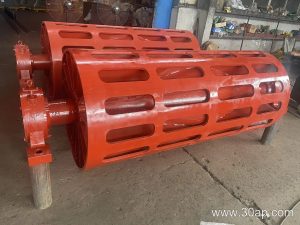
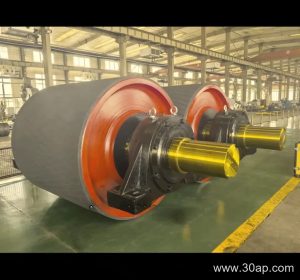
A rubber lagged pulley is a conveyor pulley whose shell is covered with a rubber layer to improve grip between the pulley and the conveyor belt. In most installations the lagging is applied to the drive pulley, where the added friction helps transmit torque without excessive belt slip. The same rubber-covered construction is also used on tail pulleys, bend pulleys and tension pulleys, but the duty differs at each location, so the lagging specification should follow the actual working conditions rather than a single default recipe.
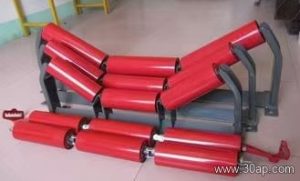
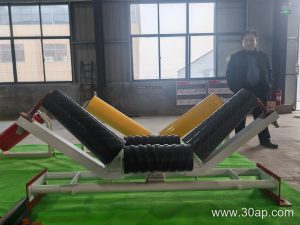
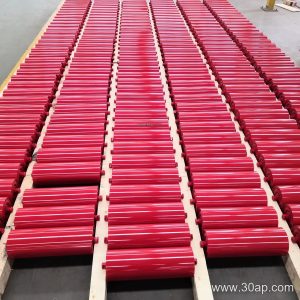
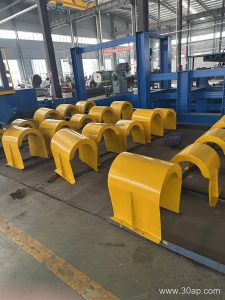
In a quarry, a cement plant or a power plant coal handling line, a slipping drive pulley can stop the whole transport chain. That is why operators pay attention to lagging condition during inspections, together with belt splices, idler roller rotation and conveyor bracket alignment.
Construction and Surface Forms
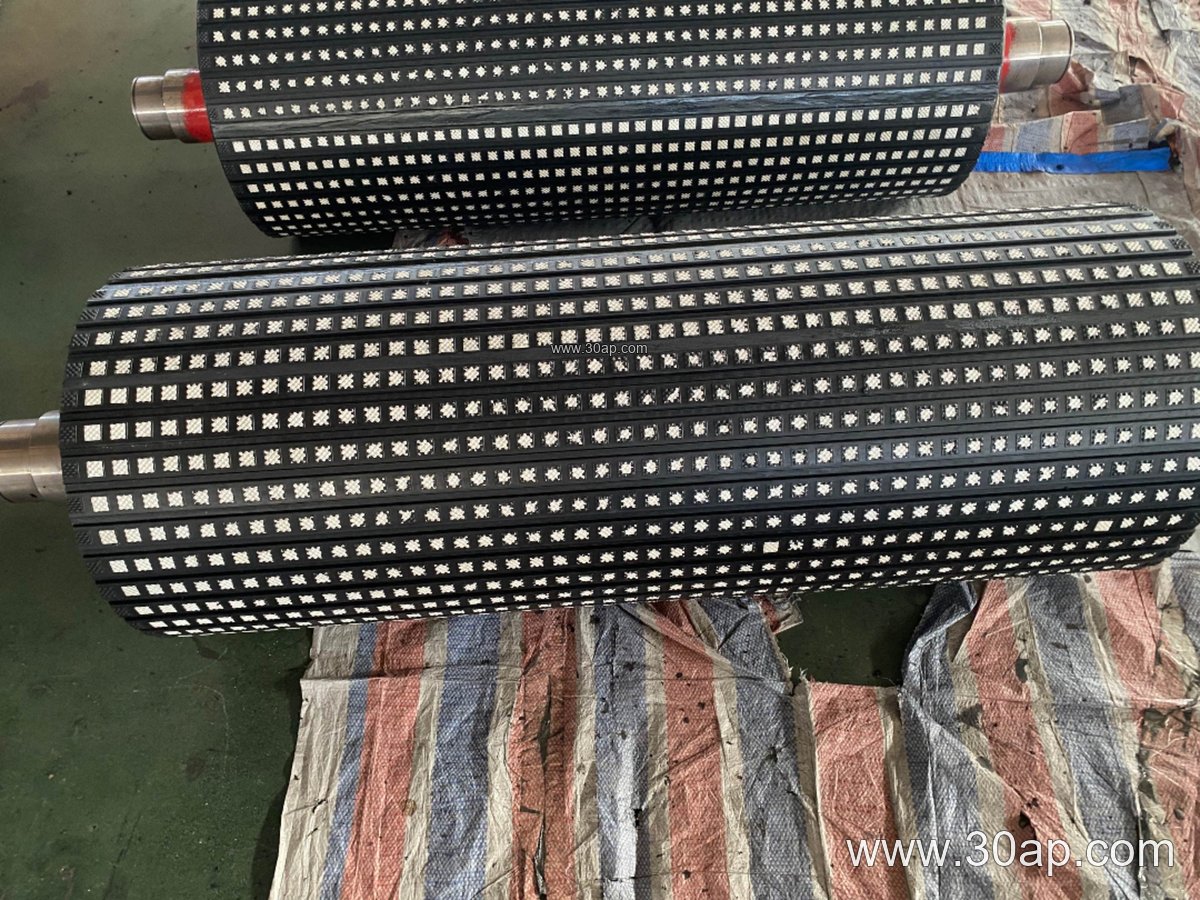
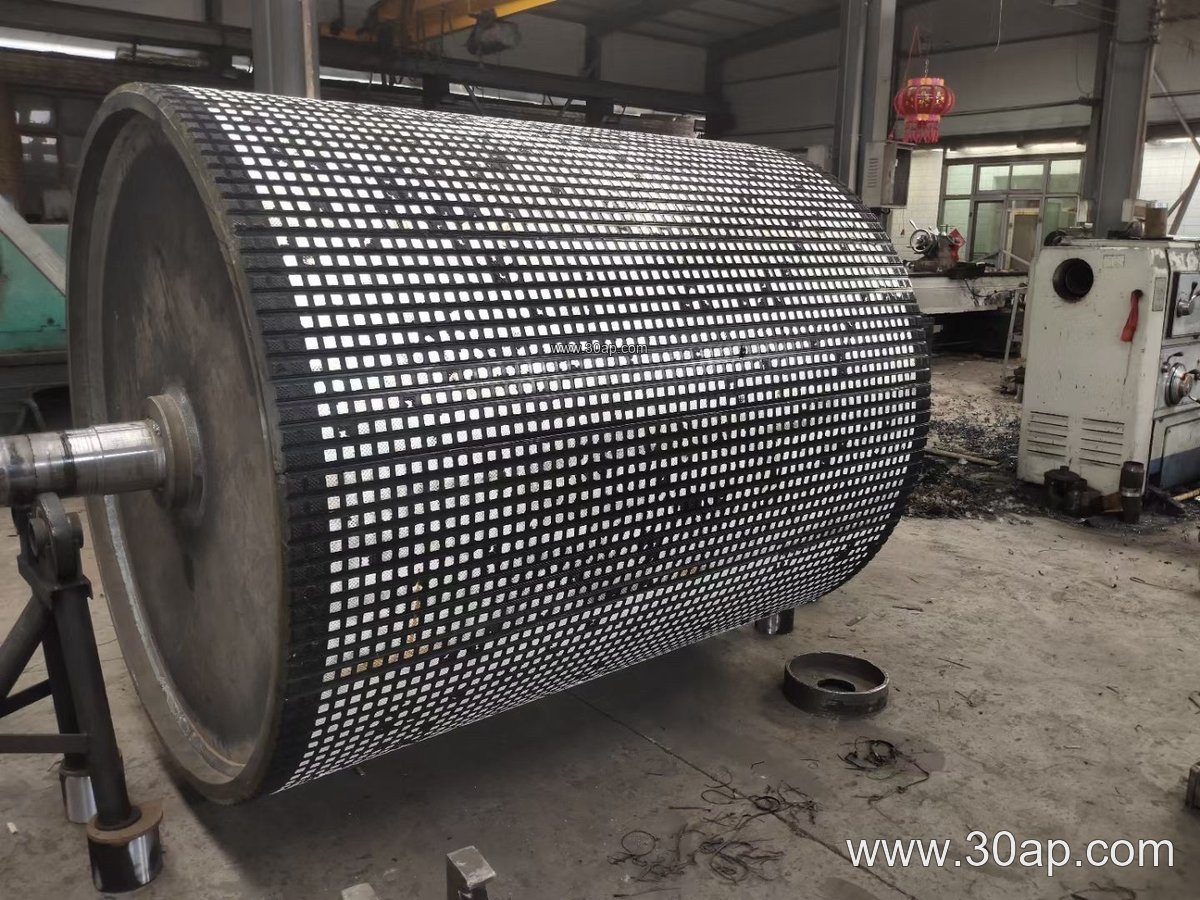
The pulley body is normally a welded steel shell with end discs and a shaft, machined for balance and runout. Rubber lagging can be applied in several ways: hot vulcanized rubber, cold bonded rubber, cast rubber, or plain sheet rubber. Surface patterns include smooth, diamond, herringbone and ceramic lagging. Diamond and herringbone profiles help evacuate water and fine dust from the contact zone, while plain lagging suits drier duties where a simple friction layer is enough.
Common lagging thicknesses are 8, 10, 12, 15 and 20 mm. Thicker lagging gives more wear allowance, but it also affects pulley diameter and belt tracking, so the choice should match the design rather than be chosen by habit alone.
Typical Size References
Sizes below are common reference values. Actual pulley diameter, shaft diameter and face width are confirmed by torque, belt tension and shaft load calculations.
| Item | Common reference values |
|---|---|
| Belt width | B400, B500, B650, B800, B1000, B1200, B1400, B1600, B1800, B2000 |
| Pulley diameter | Ø200, Ø250, Ø315, Ø400, Ø500, Ø630, Ø800, Ø1000, Ø1250 |
| Lagging thickness | 8, 10, 12, 15, 20 mm |
| Shaft diameter | Ø50, Ø60, Ø70, Ø80, Ø90, Ø100, Ø120, Ø140, Ø160 |
| Example combinations | B800 × Ø500, B1200 × Ø1000, B1400 × Ø800 |
Face width usually exceeds belt width; for example, B800 pulleys often run about 950 mm face width and B1200 pulleys about 1400 mm. These are typical proportions, not fixed pairings, and one belt width can be matched with different pulley diameters depending on tension and wrap angle.
Drive, Tail and Bend Positions Are Not Interchangeable
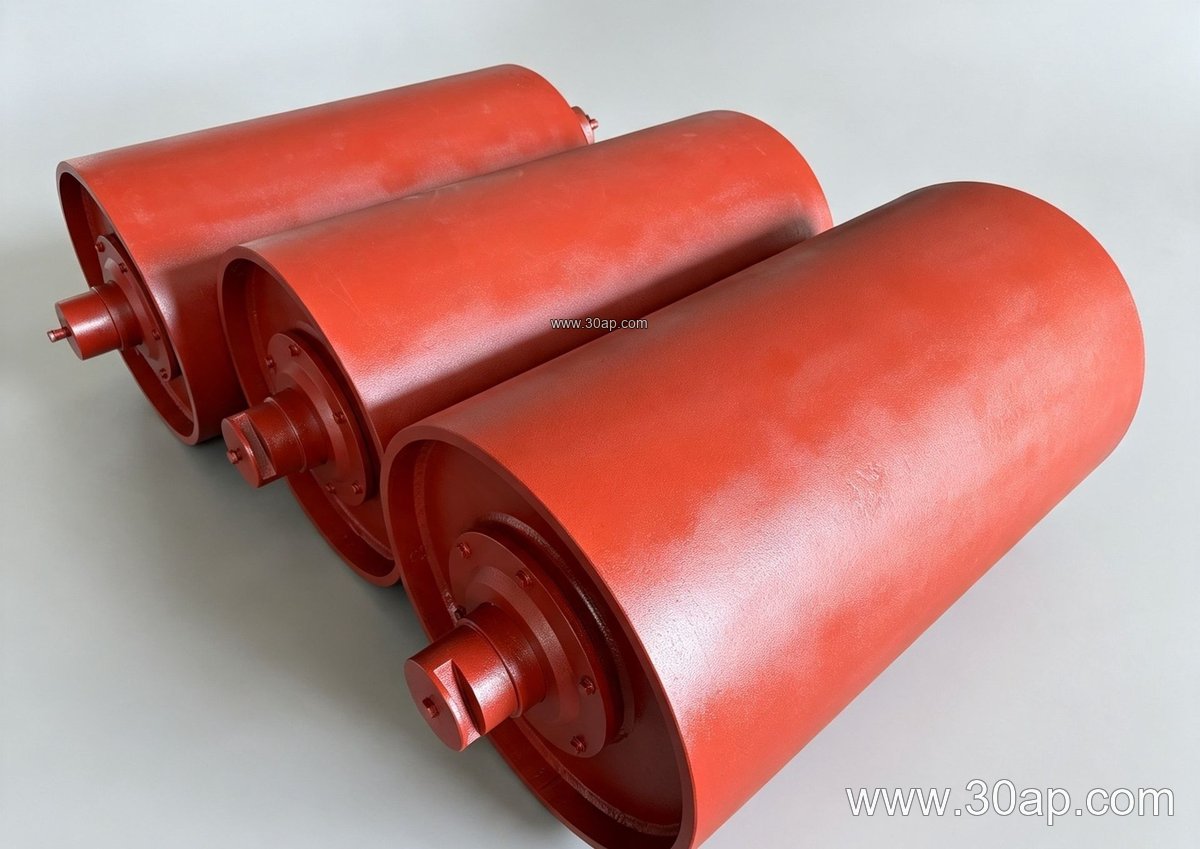
On the drive side, the rubber lagged pulley must handle high torque and keep friction stable under dust or moisture. A tail pulley may use lagging mainly to protect the shell and reduce material build-up, while a bend pulley generally sees lower torque and often uses a thinner cover. A tension pulley needs enough friction to keep the belt from slipping during take-up movement. Each position has its own load profile, so a pulley selected for the head end should not simply be reused at the tail.
Where the belt carries abrasive bulk material, pairing a wear-resistant cover with an abrasion resistant conveyor belt can extend service life on both components. In coal mining or underground coal mining work, flame retardant conveyor belt and anti-static conveyor belt requirements usually dominate the selection, and the pulley lagging should be compatible with those safety conditions.
Selection Points for Buyers
- Confirm the installation position and whether the pulley is a drive, tail, bend, take-up or snub pulley.
- State the belt width and working tension so the shell, shaft and lagging can be sized together.
- Choose the lagging pattern for the environment: diamond or herringbone for wet, dusty duties; plain for clean, dry running.
- Check that the rubber compound suits the material being carried, especially where oil, heat or fine abrasive dust is present.
- Ask for the balancing grade, shaft keyway details and bearing housing dimensions before ordering.
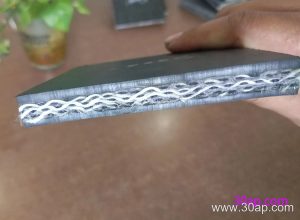
For heavy-duty mining conveyor belt lines, a thicker cover and a robust shell are usually worth discussing early, because later changes to a completed pulley are costly. The same applies to long overland systems using steel cord conveyor belt or EP conveyor belt constructions, where belt tension is high and slip tolerance is low.
Maintenance and Inspection
Inspect lagging for cuts, glazing, embedded stones and uneven wear. Worn diamond tips lose grip quickly, and a polished surface on the drive pulley is a common cause of belt slip. Check that the conveyor belt is tracking centrally, that idler roller bearings turn freely, and that conveyor brackets are tight. After replacing lagging, verify pulley diameter and belt tension again, since a thicker cover changes the effective circumference.
A well-matched rubber lagged pulley protects the belt, reduces slip and keeps the conveying line running in quarries, coal preparation plants, cement works and power stations alike.