What a Double-Row Return Idler Does
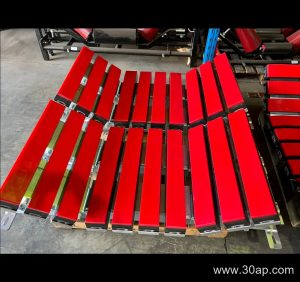
A double-row return idler is a return-side roller assembly that carries the empty strand of a conveyor belt on two rows of rollers instead of a single flat roller. It sits under the belt after the material has been discharged, supporting the belt as it travels back toward the tail. Because the load is shared between two rows, the belt runs on a wider, more stable support surface, which helps on long spans and on belts that are prone to misalignment on the return run. In a quarry, a cement plant or a coal handling system, this return idler roller is often chosen where a plain flat return roller would let the belt sag or wander.
The name is descriptive: two parallel rows of rollers, mounted in a common frame, form the carrying surface. The assembly is a return idler, not a carrying idler, and it should not be confused with troughing sets on the top run. It is also distinct from a V-shaped return idler, which uses angled rollers to centre the belt; the double-row design uses two roughly horizontal rows for support rather than a V profile for tracking.
Construction and Main Parts
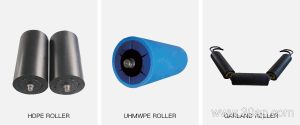
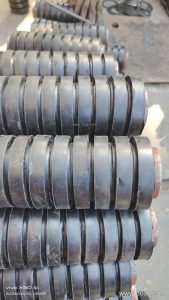
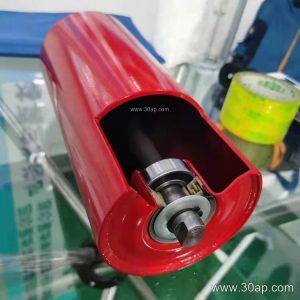
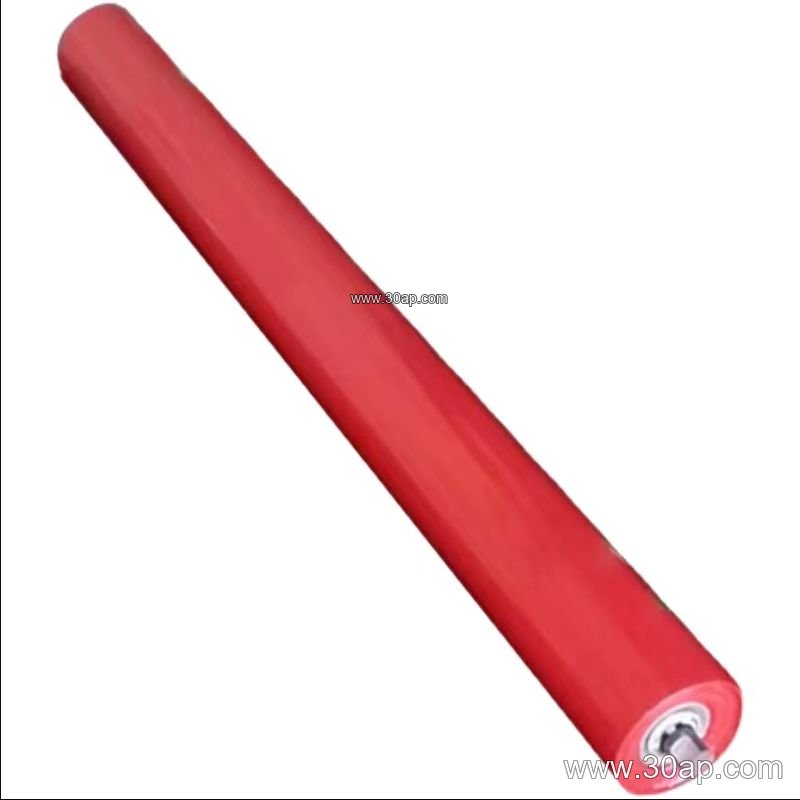
The frame is usually a fabricated steel bracket arrangement that holds two rows of idler rollers at a fixed spacing. Each roller follows the same basic build as other return rollers: a steel tube shell, a shaft, bearing housings at both ends, and a sealing arrangement to keep dust and water out. Roller shells are commonly steel, and depending on the duty they may be fitted with rubber rings or other surface treatments for grip or noise reduction. Bearings are typically deep-groove ball bearings in sizes such as 6204, 6205, 6305, 6306, 6308 or 6310, matched to the shaft and load rather than to belt width alone.
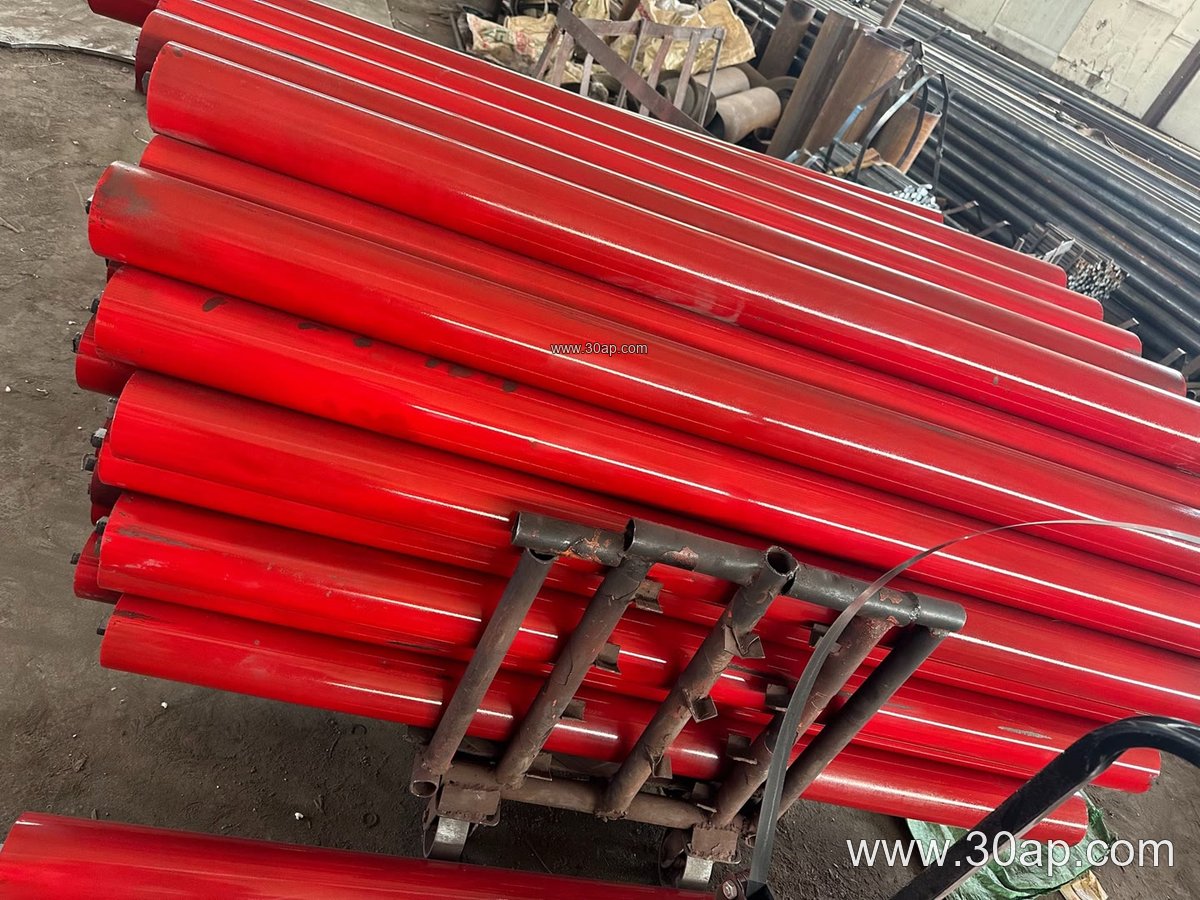
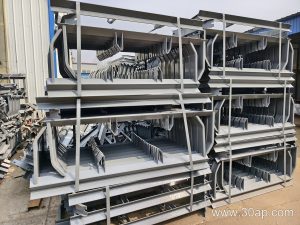
Because the assembly carries the belt on two rows, the frame must be rigid enough to keep both rows parallel. A twisted or worn frame will load one row more than the other and shorten bearing life. The mounting brackets should match the conveyor bracket spacing on the return side, and the overall height must suit the return belt line so the belt is supported, not lifted or pinched.
Where It Fits on the Conveyor
Return idlers are installed along the return strand at intervals set by the belt sag and the belt’s own stiffness. A double-row unit is often considered where the return span is long, where the belt is wide, or where wind and side loads make a single roller less stable. Typical settings include:
- Aggregate and sand lines feeding screens and crushers, where dust and fines are constant.
- Coal preparation and power plant coal handling, where belt tracking on the return side matters.
- Cement plants and limestone yards, where abrasive dust attacks seals.
- Port and stockyard conveyors with wide belts and exposed return runs.
On these conveyors the return idler works together with the conveyor pulley at the drive and tail ends, the conveyor bracket supports, and the belt itself. A worn or seized return roller can damage the belt cover, so inspection of the return run is part of routine maintenance. Abrasion resistant conveyor belts and flame retardant conveyor belts are common on these lines, and the return idler must suit the belt width and load without marking the surface.
Common Sizes and Selection Points
Return roller diameters are usually chosen from a standard range such as Ø63, Ø76, Ø89, Ø102, Ø108, Ø127, Ø133, Ø159, Ø178, Ø194 and Ø219 mm. Belt widths commonly run from B400 to B2400, with B650, B800, B1000, B1200 and B1400 among the most frequent in bulk handling. The table below gives typical reference pairings; these are examples, not fixed rules, and the final choice depends on belt speed, load and frame design.
| Belt width | Common return roller diameter | Typical application note |
|---|---|---|
| B500 | Ø63 to Ø89 mm | Light aggregate and small conveyors |
| B650 | Ø76 to Ø108 mm | Sand and gravel lines |
| B800 | Ø89 to Ø133 mm | Cement and coal handling |
| B1000 | Ø108 to Ø159 mm | Power plant and quarry conveyors |
| B1200 | Ø127 to Ø178 mm | Heavy bulk material duty |
| B1400 | Ø133 to Ø194 mm | Port and stockyard conveyors |
| B1600 and above | Ø159 to Ø219 mm | Wide belts with long return spans |
Buyers should confirm the shaft ends, bearing type and frame mounting with the conveyor maker. It is not correct to assume a fixed shaft diameter from belt width, and one belt width can work with more than one pulley or roller diameter. The return idler spacing, the belt tension and the environment (dust, moisture, temperature) all affect bearing and seal choice. For hot or oily duties, a heat resistant conveyor belt or oil resistant conveyor belt may be in use, and the roller seals should be selected accordingly.
Buyer Checklist
- Confirm the assembly is a return idler for the return strand, not a troughing set.
- Check the roller diameter, shell material and bearing size against the actual load.
- Match the frame and mounting brackets to the conveyor bracket spacing.
- Ask about sealing for dust, water and fines in the plant environment.
- Plan inspection intervals for the return run to catch seized or worn rollers early.
A well-matched double-row return idler keeps the return belt steady, reduces sag and helps protect the belt cover over a long service life. For related belt and roller options, see our rubber conveyor belt, steel cord conveyor belt and conveyor pulley pages.