What a 500mm Diameter Conveyor Pulley Does on the Line
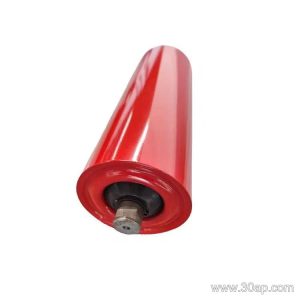
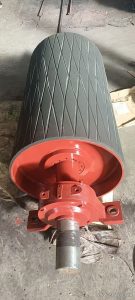
A 500mm diameter conveyor pulley is a mid-range drum that sits between the smaller bend and take-up drums and the large head pulleys found on high-capacity trunk conveyors. In practice it is often a drive or head pulley on medium-width belts, and it also appears as a tail or tensioning drum where wrap angle and belt tracking matter. The size is a working compromise: large enough to reduce bending stress in the belt and give good contact area, compact enough to fit inside a reasonably sized conveyor bracket and frame.
The nominal 500mm figure refers to the outside diameter of the shell, usually measured over the lagging if the drum is supplied covered. Buyers should confirm whether the quoted diameter is bare shell or finished with rubber, because the difference affects belt path geometry and take-up stroke.
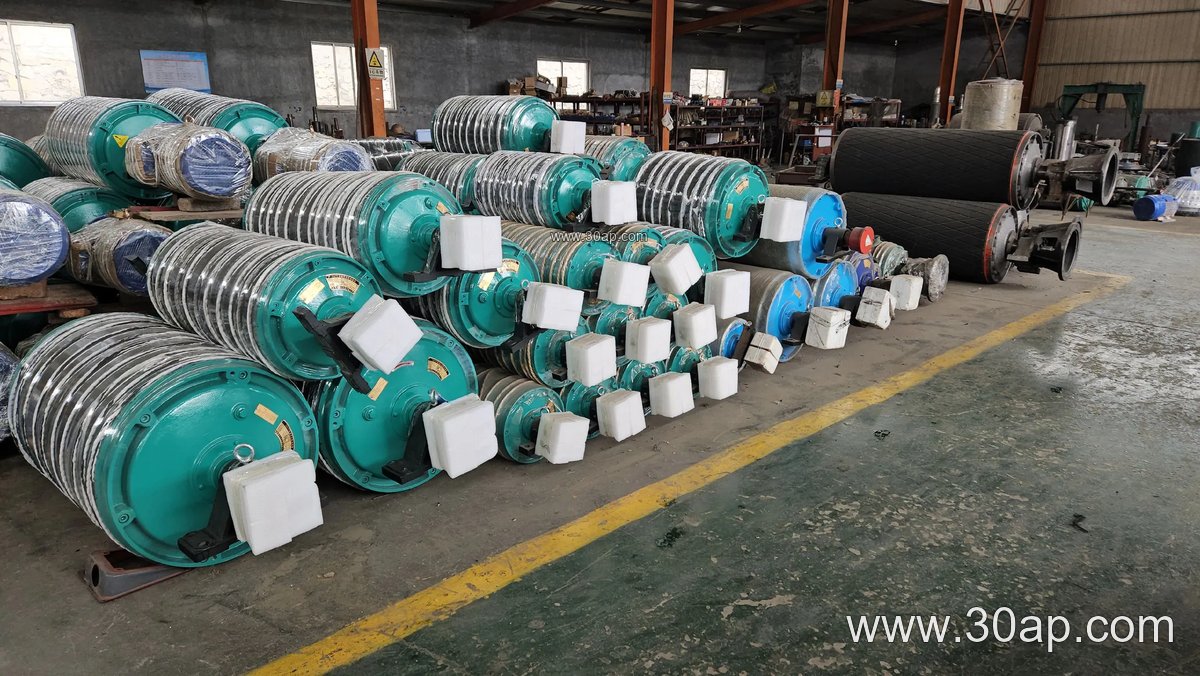
How the Drum Is Built
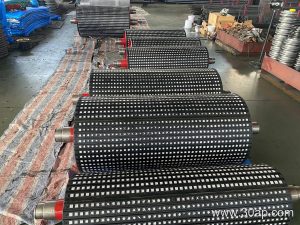
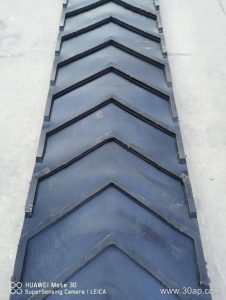
Most units are welded steel assemblies: a rolled shell, two end discs, a through shaft or stub shafts, and a hub arrangement that transfers torque. The shell is machined or ground for concentricity, then balanced for the intended belt speed. Standard surface options include plain finish, cold-bonded rubber, hot-vulcanised rubber, diamond groove lagging, herringbone lagging and ceramic lagging, with cover thickness commonly 8, 10, 12, 15 or 20 mm depending on grip and wear requirements.
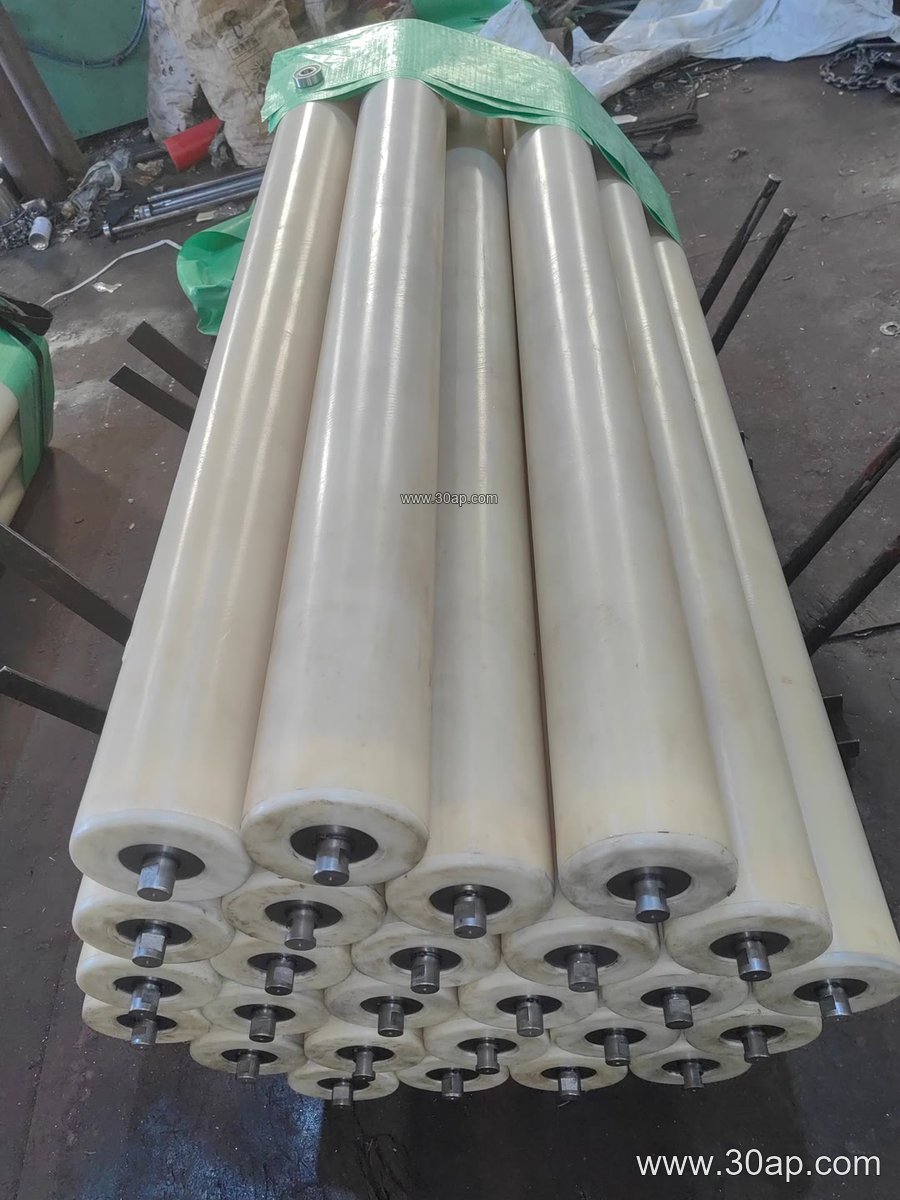
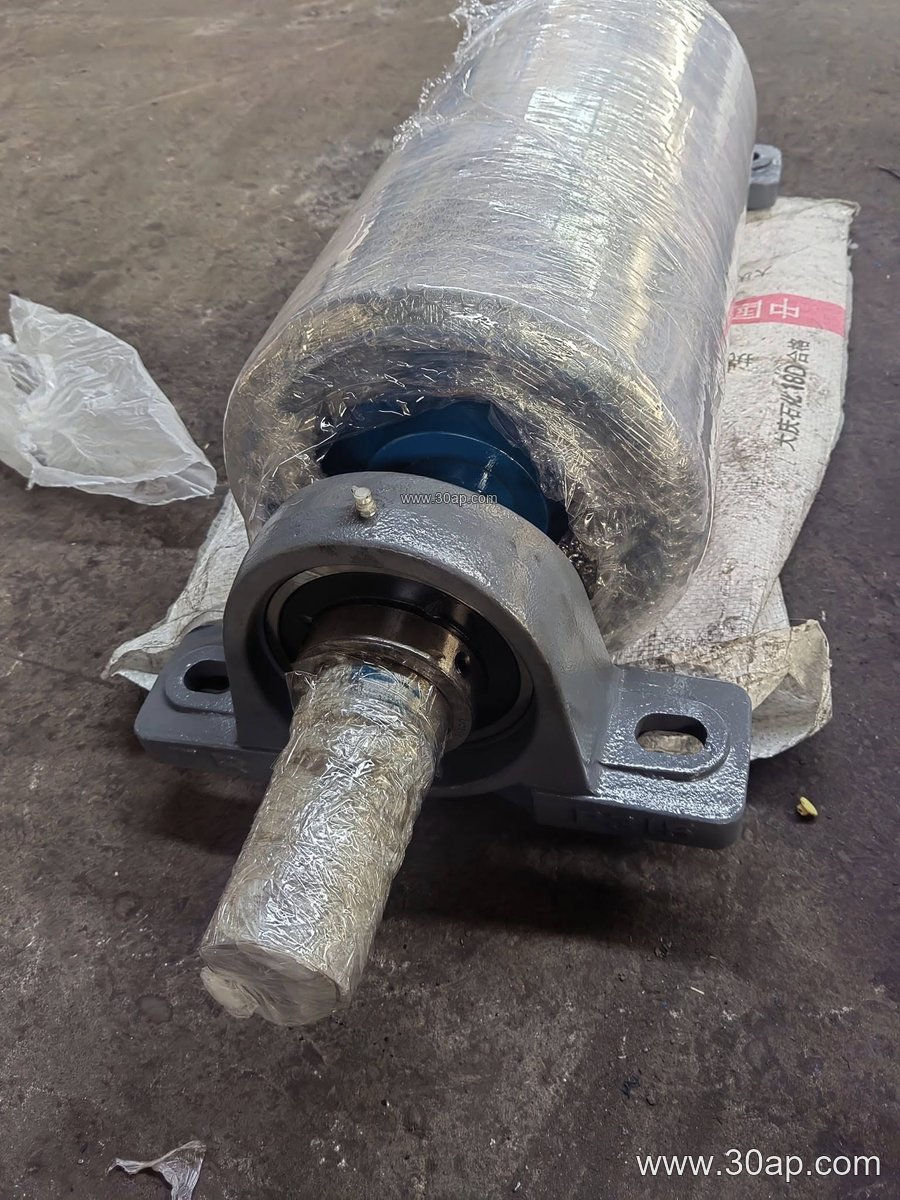
Shaft diameter is not a function of belt width alone. It follows from drive torque, radial load, bearing span and the required fatigue life, so a 500mm drum may be built on shafts from roughly Ø80 up to Ø160 or more. The bearing housings, keyways and locking elements should be specified together with the drum so the whole assembly fits the conveyor bracket without field modification.
Typical Reference Dimensions
The table below shows indicative combinations only. They illustrate how face width and shaft size are usually scaled; they are not fixed pairings and every project should be confirmed by the pulley designer.
| Belt width | Approx. pulley face width | Common diameter range | Indicative shaft size |
|---|---|---|---|
| B650 | about 750 mm | Ø400 to Ø500 | Ø80 to Ø100 |
| B800 | about 950 mm | Ø500 to Ø630 | Ø90 to Ø120 |
| B1000 | about 1150 mm | Ø500 to Ø800 | Ø100 to Ø140 |
| B1200 | about 1400 mm | Ø630 to Ø1000 | Ø120 to Ø160 |
Face width is normally wider than the belt so the belt edge stays supported. A B800 × Ø500 unit is a common mid-duty configuration, while a B1200 line would usually run a larger head drum such as Ø1000 and keep the 500mm size for a bend or snub position.
Where It Fits in the Plant
In a limestone quarry or sand and aggregate line, a 500mm diameter conveyor pulley frequently serves as the drive drum on a transfer conveyor feeding a screening station, where belt widths around B800 to B1000 are typical. In a coal preparation plant or power station coal yard it may be the tail drum on a reclaim belt, chosen for good self-cleaning behaviour and adequate wrap. Cement plants use similar drums on clinker and raw meal conveyors, and tunnel muck lines often adopt this size where space at the discharge end is limited.
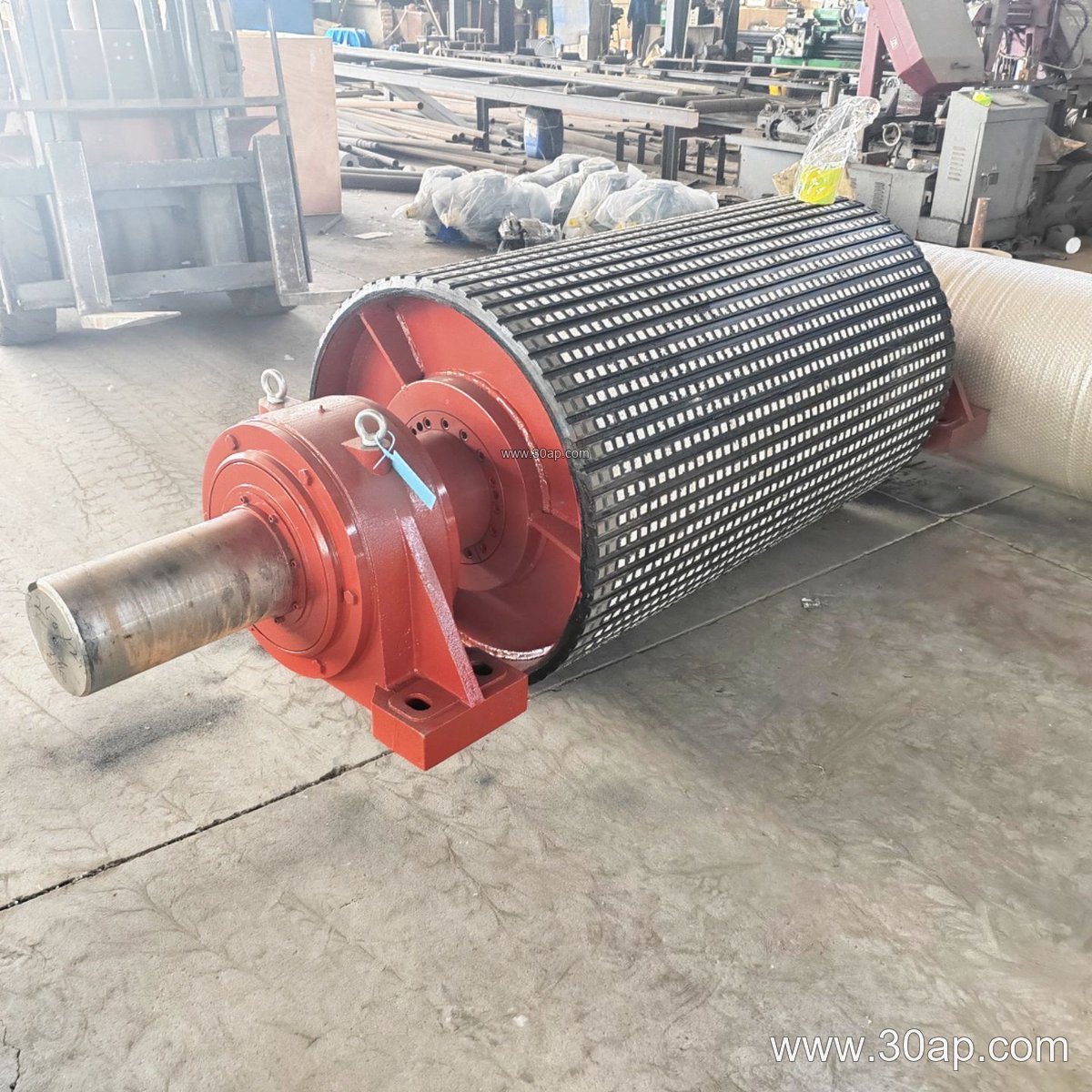
The same diameter is also seen as a bend or snub pulley that increases wrap angle on the adjacent drive, and as a tension drum in a screw or gravity take-up. These roles are not interchangeable: a drive pulley carries torque through the shaft and hub, a tail pulley mainly guides and supports the returning belt, and a bend pulley only redirects it. Selection must follow the duty, not the diameter.
Buyer Checklist
- Confirm the actual belt width and required face width, and state whether the 500mm is bare or lagged diameter.
- Define the duty: head, tail, bend, take-up or snub, together with wrap angle and belt speed.
- Provide motor power and starting torque so the shaft and hub can be sized correctly.
- Choose lagging by environment: plain for clean light duty, diamond or herringbone grooved rubber for wet or dusty belts, ceramic for abrasive high-slip service.
- Check bearing type, housing position and the mounting dimensions of the conveyor bracket on site.
- Ask for balancing grade, runout tolerance and inspection records rather than assuming them.
Maintenance is straightforward when the drum is accessible: check lagging wear and groove depth, monitor bearing temperature, verify that the conveyor belt tracks centrally, and re-torque locking elements after the first running period. Replacing lagging on a 500mm drum is generally cheaper than replacing the whole assembly, so keeping the shell and shaft in good condition pays back over the life of the conveyor.