What a Conveyor Frame Does in a Bulk Handling Line
A conveyor frame is the structural backbone that holds the idlers, pulleys and belt in alignment along the length of a conveyor. It is not a single part but a system of beams, brackets and cross members that carries the weight of the belt and the material on it while keeping everything tracking correctly. On a stone crushing line, a quarry or a cement plant, the frame determines how steadily a conveyor belt runs and how easily the whole conveyor can be serviced.
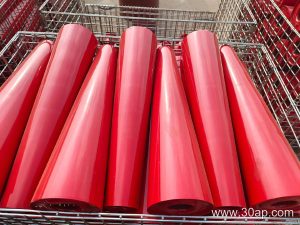
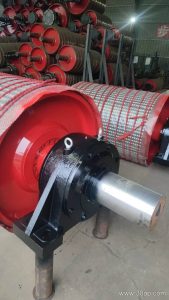
The frame should not be confused with the rotating parts it supports. A conveyor pulley at the drive or tail end, an idler roller along the carrying side and the frame itself are separate items with separate roles. Drive, tail and bend pulleys are not interchangeable, and neither are the various bracket types described below.
How the Frame Is Built
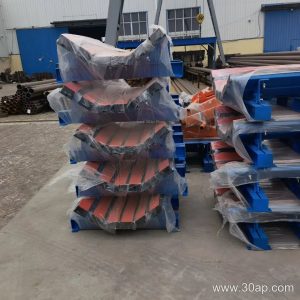
Most frames are fabricated from angle steel, channel steel or folded steel plate, welded or bolted into a rigid structure. The main stringers run the full length of the conveyor, and cross beams carry the idler brackets at the required spacing. Bolt-on designs allow sections to be shipped flat and assembled on site, which is common for long overland conveyors in mining and port applications.
Key structural details include the following:
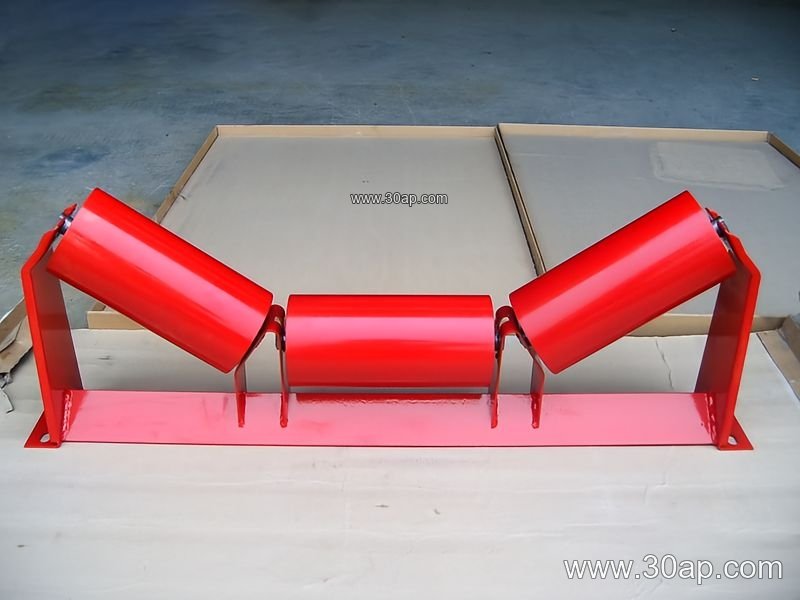
- Stringer and cross beam sections sized to the load and span
- Bracket mounting holes that set the trough angle and idler position
- Legs, bracing and base plates for ground or trestle mounting
- Transition sections where the belt changes from flat to troughed
Hole spacing and cross beam length usually vary with belt width and trough angle, so they are confirmed at the design stage rather than fixed in advance.
Bracket Types and Where They Sit
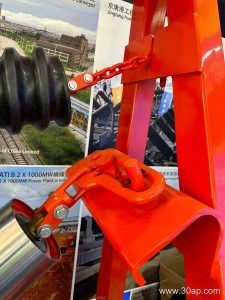
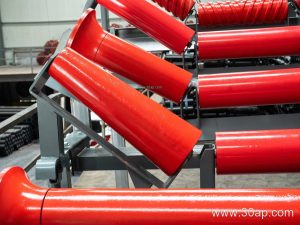
The frame is usually described by the brackets it carries. Carrying side brackets include the trough bracket, the transition bracket and the forward-tilted bracket; return side brackets include the flat return bracket and the V-return bracket. Impact brackets sit under the loading point, self-aligning brackets correct belt drift, and hanging or adjustable brackets suit specific layouts.
Adjustable brackets let the trough angle be set between common values such as 20, 30, 35 and 45 degrees. Forward tilt is typically about 1.5 to 2 degrees. A typical arrangement might be written as B800, 35 degrees, with Ø108 idlers, or B1200, 45 degrees, with Ø133 idlers, but no single belt width fixes one trough angle or one idler diameter.
| Frame element | Common reference values |
|---|---|
| Belt width | B500, B650, B800, B1000, B1200, B1400, B1600, B1800, B2000 |
| Trough angle | 20, 30, 35, 45 degrees (adjustable types) |
| Idler diameter | Ø89, Ø108, Ø133, Ø159, Ø194 |
| Material | Angle steel, channel steel, folded plate |
Choosing the Right Configuration
Selection starts with the belt width and the material being carried. A wide, heavy-duty belt on an iron ore or copper ore line needs a stiffer frame and larger idler diameters than a narrow belt in a small aggregate plant. The trough angle affects how much material the belt can hold, so it should match the surcharge angle of the bulk material.
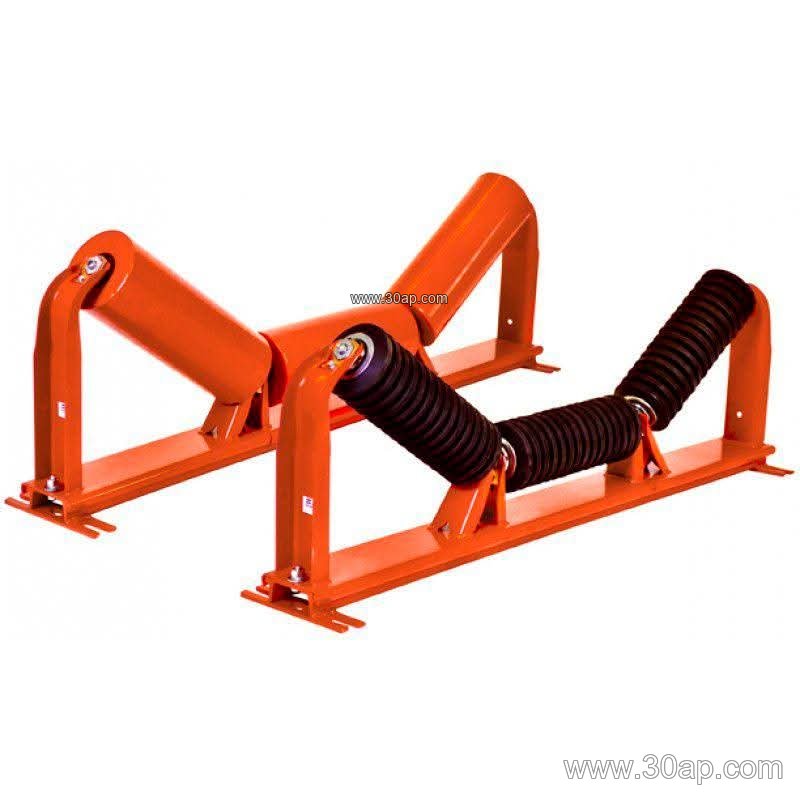
Consider also the loading point, where impact brackets and closely spaced idlers protect the belt, and the transition distance from the tail pulley, which influences belt stress. Frames carrying a steel cord conveyor belt or a heavy multi-ply fabric belt generally need greater rigidity than light-duty installations.
Installation and Maintenance Notes
Alignment is the single most important factor during installation. Stringers should be leveled and squared so that all idlers sit in one plane; a frame that is twisted will cause the belt to drift regardless of idler quality. Check bolt tightness after the first run-in period, since vibration loosens connections.
Inspect brackets for wear and corrosion, particularly in washdown areas or at transfer points. Replace bent or cracked brackets promptly, because a single misaligned bracket can damage an expensive conveyor belt. Keep the frame clear of spilled material so that return idlers and the belt run freely.
Buyer Checklist
- Confirm belt width, trough angle and idler diameter before ordering
- Ask whether the frame is bolted or welded and how sections join
- Check that bracket hole spacing matches the idler type supplied
- Review surface treatment for the site environment, such as a coal mine or a port
- Request drawings showing stringer length, leg height and mounting points
A well-specified conveyor frame is a long-term investment that keeps idlers, pulleys and the belt working together. Matching the structure to the duty, the material and the site conditions is what separates a smooth-running line from one that needs constant attention.