What Conveyor Bracket Procurement Covers
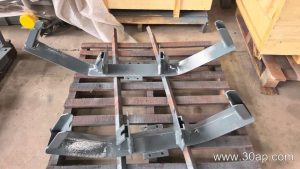
Conveyor bracket procurement is the process of sourcing the structural supports that hold idler rollers in place along a conveyor line. These brackets, often called conveyor support brackets or idler frames, are not a single universal part. They are a family of fabricated assemblies that match the belt width, trough angle, and roller diameter of a specific conveyor section. A buyer who treats them as a generic commodity may end up with frames that do not align with the idler roller mounting holes or the conveyor belt path.
How a Troughing Support Frame Is Built
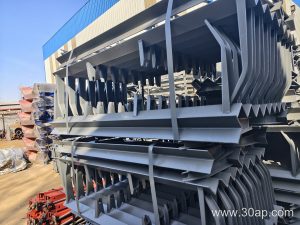
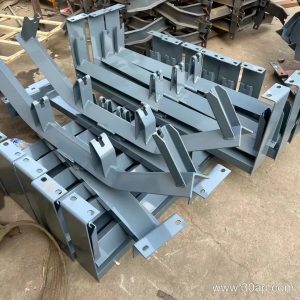
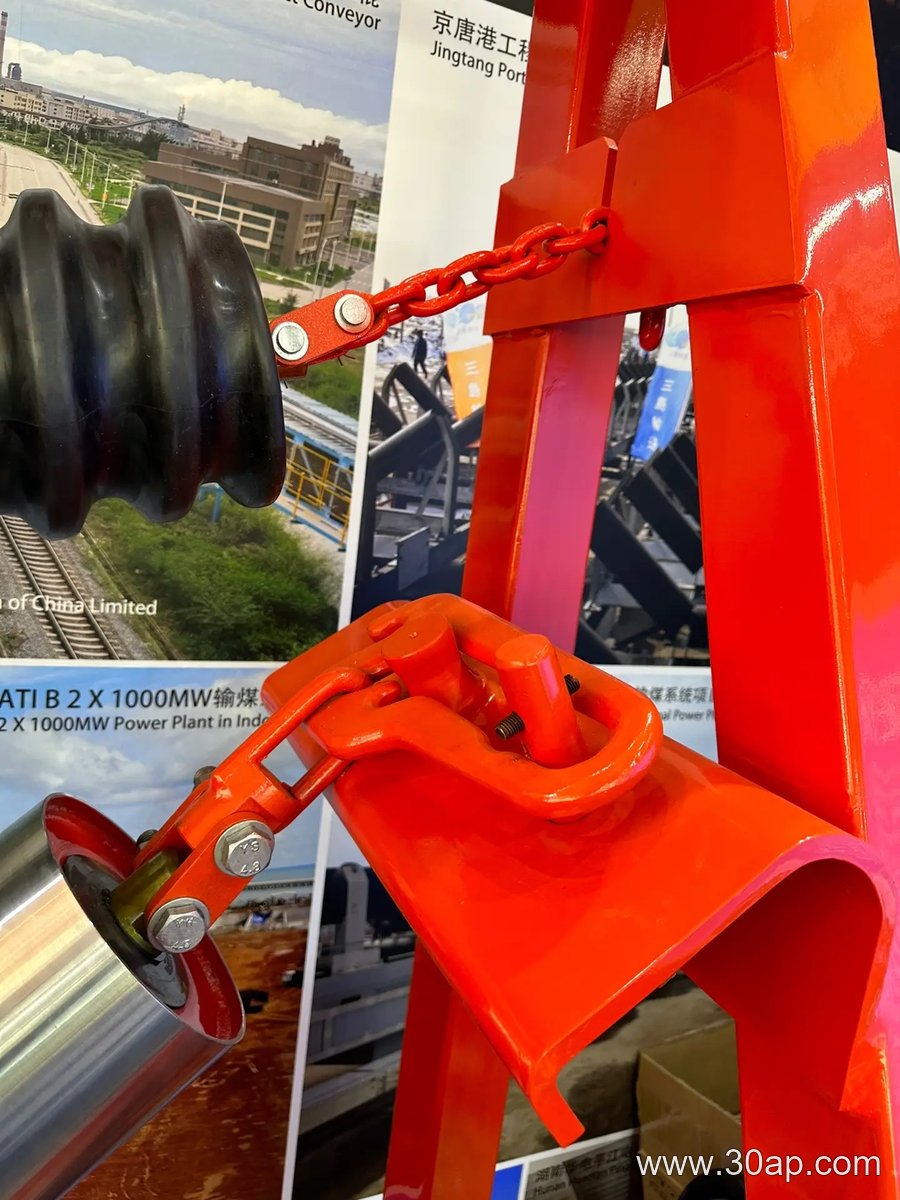
A typical troughing bracket is made from angle steel, channel steel, or folded steel plate. The frame may be fixed or adjustable. Fixed frames hold rollers at a set trough angle, while adjustable brackets allow the angle to be changed within a range. Common trough angles include 20, 30, 35, and 45 degrees. Forward tilt, often around 1.5 to 2 degrees, is a separate feature that can be built into the bracket to help center the belt. The bracket also includes mounting slots or holes for the idler roller shafts. Hole spacing and crossbeam length are not fixed numbers; they change with belt width and trough angle.
Where These Brackets Are Used
Troughing support frames appear in bulk material handling systems such as a limestone quarry, a coal washing plant, or a crushing and screening line. In these settings, the bracket carries the loaded side of the conveyor belt and keeps the belt in a trough shape. Return brackets, by contrast, support the empty side of the belt. A V-return bracket is a different subtype used for belt training on the return run. Impact brackets and self-aligning brackets are other specialized forms. Each has its own mounting pattern and purpose, so they should not be ordered interchangeably.
Key Parameters for Buyers
When preparing a purchase inquiry, the most useful information is the belt width, trough angle, and roller diameter. The table below shows common reference combinations, but these are examples only. A B800 belt does not have to use a 35-degree angle, and a B1200 belt can be paired with more than one roller diameter.
| Belt Width | Trough Angle | Roller Diameter | Typical Bracket Type |
|---|---|---|---|
| B500 | 20° | Ø89 | Troughing, fixed |
| B650 | 30° | Ø89 | Troughing, adjustable |
| B800 | 35° | Ø108 | Troughing, fixed |
| B1000 | 35° | Ø108 | Troughing, adjustable |
| B1200 | 45° | Ø133 | Troughing, fixed |
| B1400 | 45° | Ø159 | Troughing, adjustable |
| B1600 | 35° | Ø159 | Troughing, fixed |
| B1800 | 45° | Ø194 | Troughing, adjustable |
These values are reference data, not a supply promise. The actual bracket design should be confirmed against the conveyor layout and the selected idler roller.
Matching Brackets with Rollers and Belt
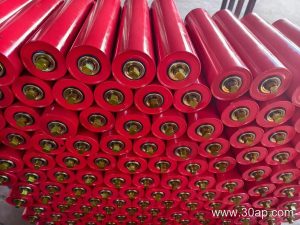
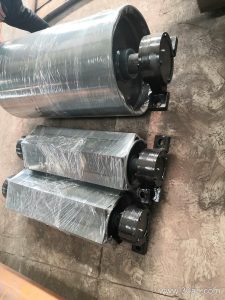
A conveyor bracket does not work alone. It must fit the idler roller shaft, the conveyor pulley alignment, and the conveyor belt width. If the bracket is too narrow or the mounting holes are misaligned, the rollers will not sit at the correct angle, and the belt may drift or wear unevenly. For this reason, procurement should include the roller diameter and shaft end type, not just the belt width. A common mistake is to order a bracket by belt width alone and assume the roller diameter is standard. In practice, a B1000 conveyor might use Ø108 or Ø133 rollers depending on the load and speed.
Adjustable vs Fixed Brackets
Adjustable brackets are useful where the conveyor may need fine-tuning after installation. They allow the trough angle to be set between common values such as 20 and 45 degrees. Fixed brackets are simpler and often chosen for stable, well-defined duty. Neither is universally better. The choice depends on whether the conveyor is a permanent installation with a fixed profile or a system that may be modified later. For a quarry or a tunnel mucking line, adjustable frames can simplify alignment. For a cement plant clinker conveyor, fixed frames may be sufficient.
Procurement Checklist
- Confirm belt width and trough angle.
- Record roller diameter and shaft mounting details.
- Decide between fixed and adjustable construction.
- Specify material: angle steel, channel steel, or folded plate.
- Check whether forward tilt is required.
- Verify hole spacing and crossbeam length against the conveyor drawing.
Conveyor bracket procurement is not about finding the cheapest frame. It is about matching the support structure to the belt, the idler roller, and the conveyor pulley arrangement so the system runs straight and wears evenly. A clear specification at the inquiry stage reduces the risk of returns and field modifications.