What Conveyor Pulley Welding and Machining Involves
A conveyor pulley is not simply a drum with a shaft. In a quarry, coal preparation plant, or cement clinker line, the pulley must transfer torque, guide the conveyor belt, and survive years of dust, moisture, and shock loading. Conveyor pulley welding and machining are the two core fabrication stages that turn a rolled shell, a shaft, and end discs into a dependable drive, tail, or bend pulley. Welding creates the structural joint between the shell, hub, and shaft assembly; machining brings the outside diameter, face width, and shaft seats to the tolerances required for smooth belt tracking and bearing fit.
Welding the Pulley Assembly
Most heavy-duty pulleys use a rolled steel shell with welded end discs and a central shaft. The welding sequence matters because heat input can distort the shell. Fabricators typically tack the end discs, check runout, then complete circumferential welds in a balanced pattern. Submerged arc welding is common for long seams, while gas metal arc welding is used for smaller fillet joints. After welding, the assembly may receive stress relief or controlled cooling to reduce residual stress.
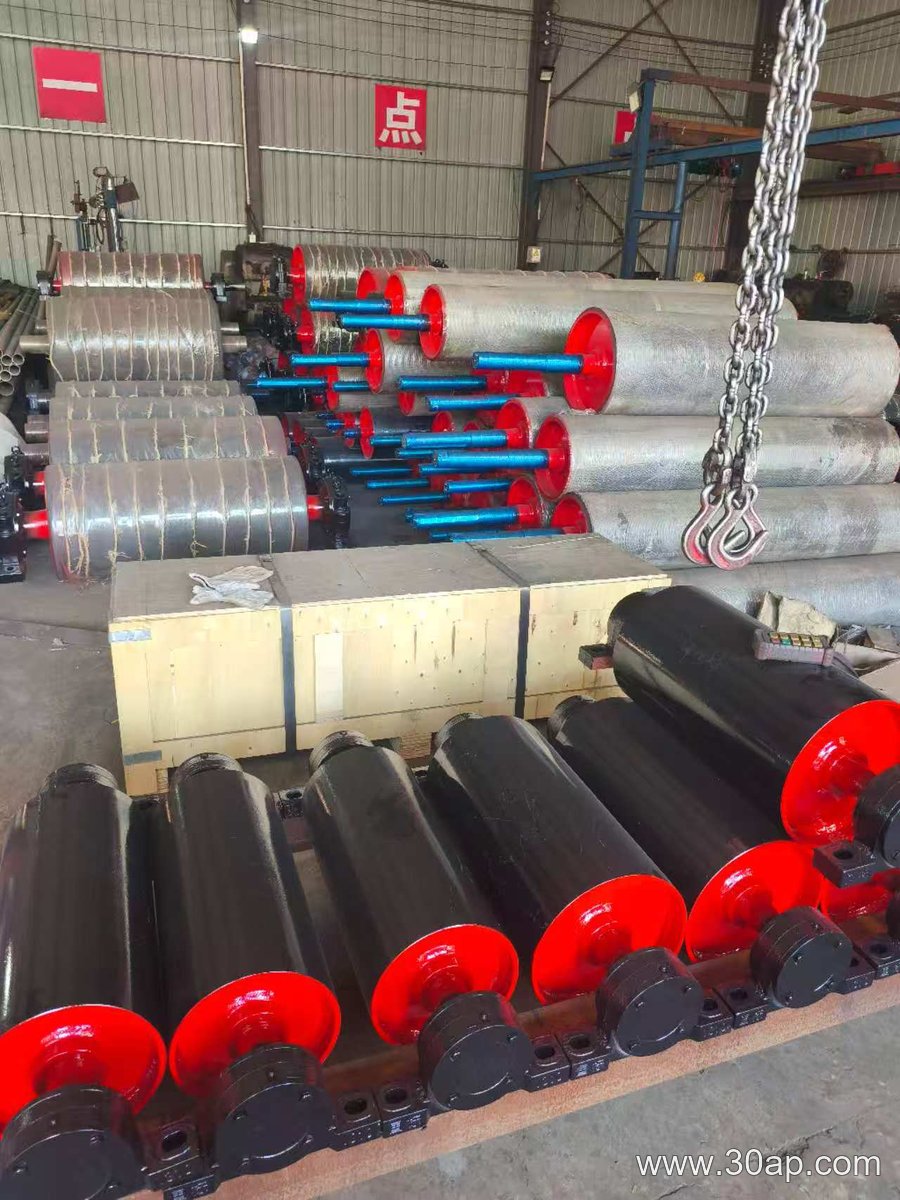
For a drive pulley in a copper mine or a tail pulley in a sand and gravel line, the weld quality affects fatigue life. Poor penetration at the hub-to-disc joint can crack under repeated bending. That is why many buyers ask for weld inspection records and dimensional checks before machining begins.
Machining the Outside Diameter and Shaft
After welding, the pulley goes to a lathe or boring mill. The outside diameter is machined true to the shaft centerline, which is critical for belt tracking and for any subsequent rubber lagging. The shaft seats are turned to the bearing bore tolerance, and keyways are milled if the pulley is driven. Face width is also squared to the axis so the conveyor belt does not wander.
Common diameters for conveyor pulleys include Ø200, Ø315, Ø500, Ø800, Ø1000, and Ø1250 mm, but the correct size depends on belt tension, wrap angle, and available space. A B800 belt might use a Ø500 mm tail pulley, while a B1400 belt in a primary crusher discharge may use Ø800 mm or larger. There is no fixed rule that one belt width matches only one diameter. Shaft diameters such as Ø80, Ø100, Ø140, or Ø180 mm are selected by torque and radial load, not by belt width alone.
Surface Forms and Lagging
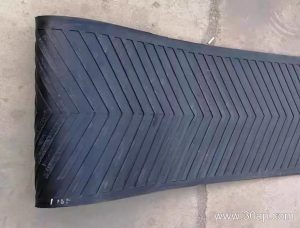
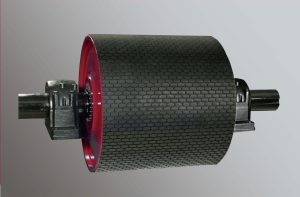
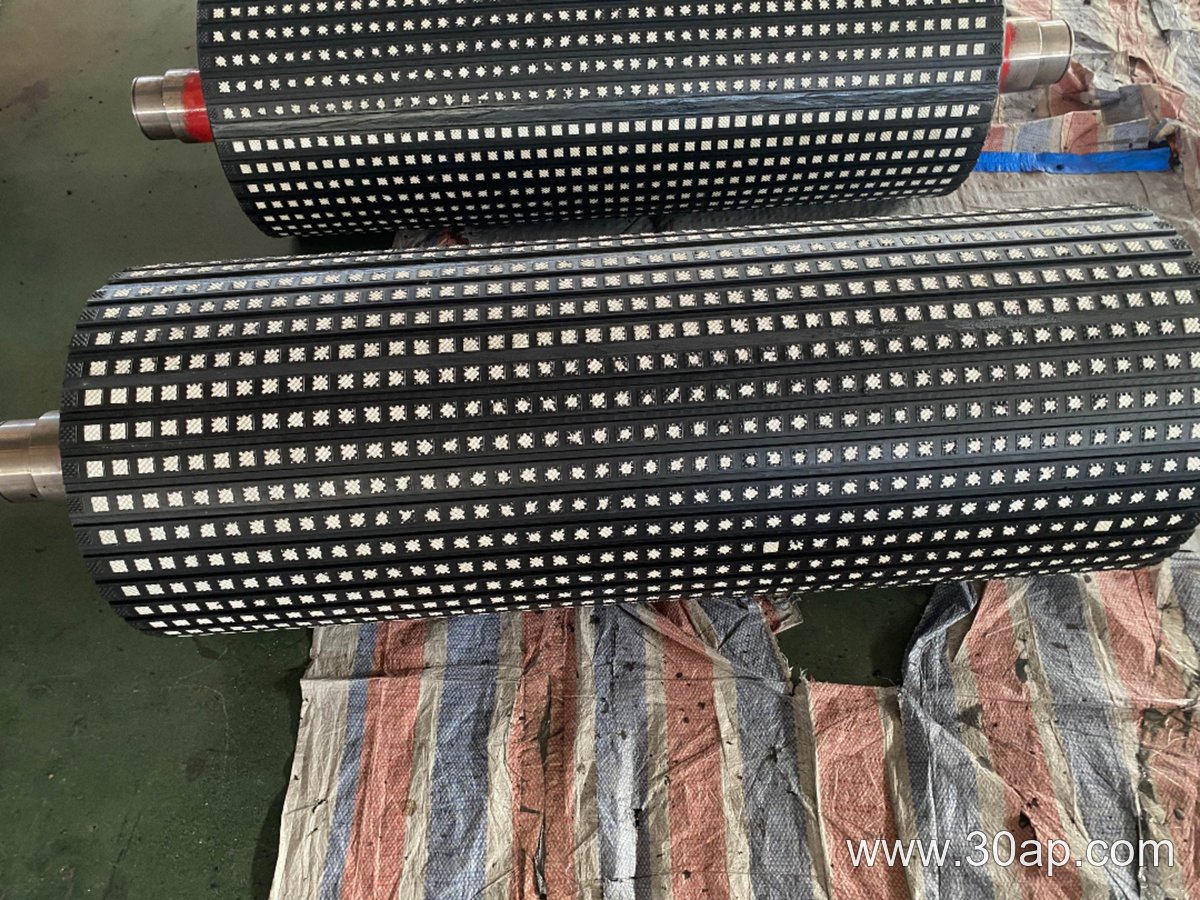
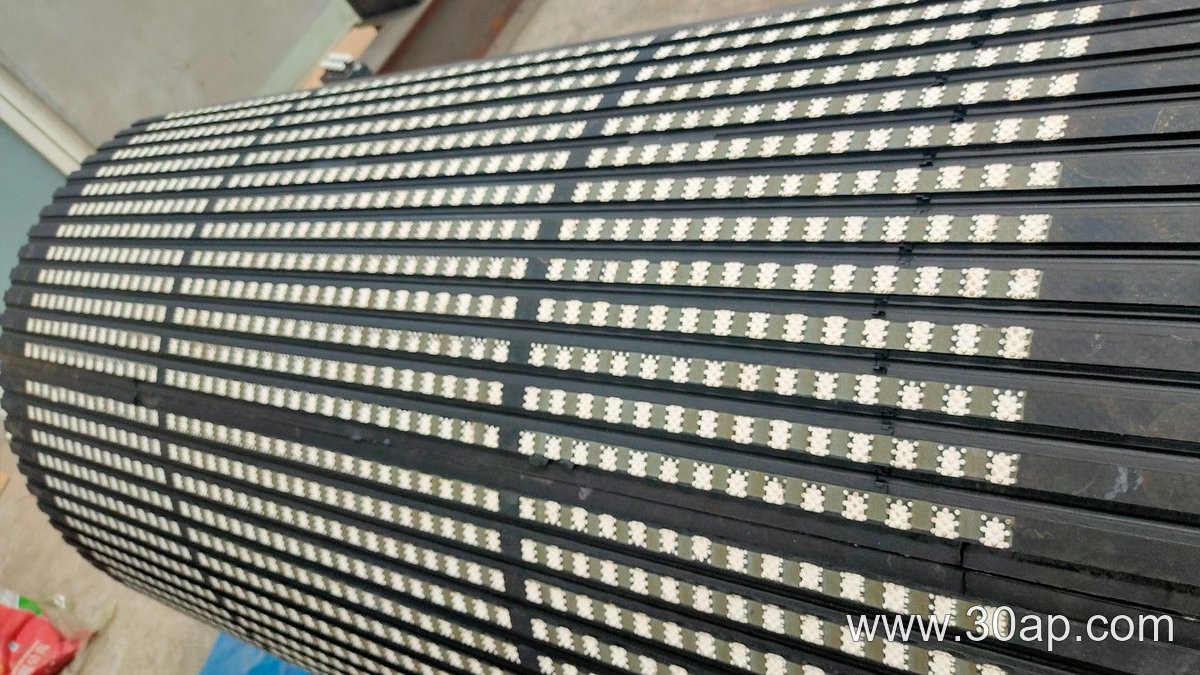
Machining is not only about bare steel. Many pulleys receive lagging to increase friction between the conveyor pulley and the conveyor belt. Plain rubber, diamond pattern, herringbone, and ceramic lagging are common. Lagging thickness often ranges from 8 mm to 20 mm. A drive pulley in a wet coal plant may use diamond rubber to shed water, while a bend pulley might remain plain machined steel.
When lagging is applied, the machined surface must be clean and concentric. Any runout after lagging can cause belt vibration and premature wear on the idler roller and conveyor bracket assemblies nearby.
Where These Pulleys Are Used
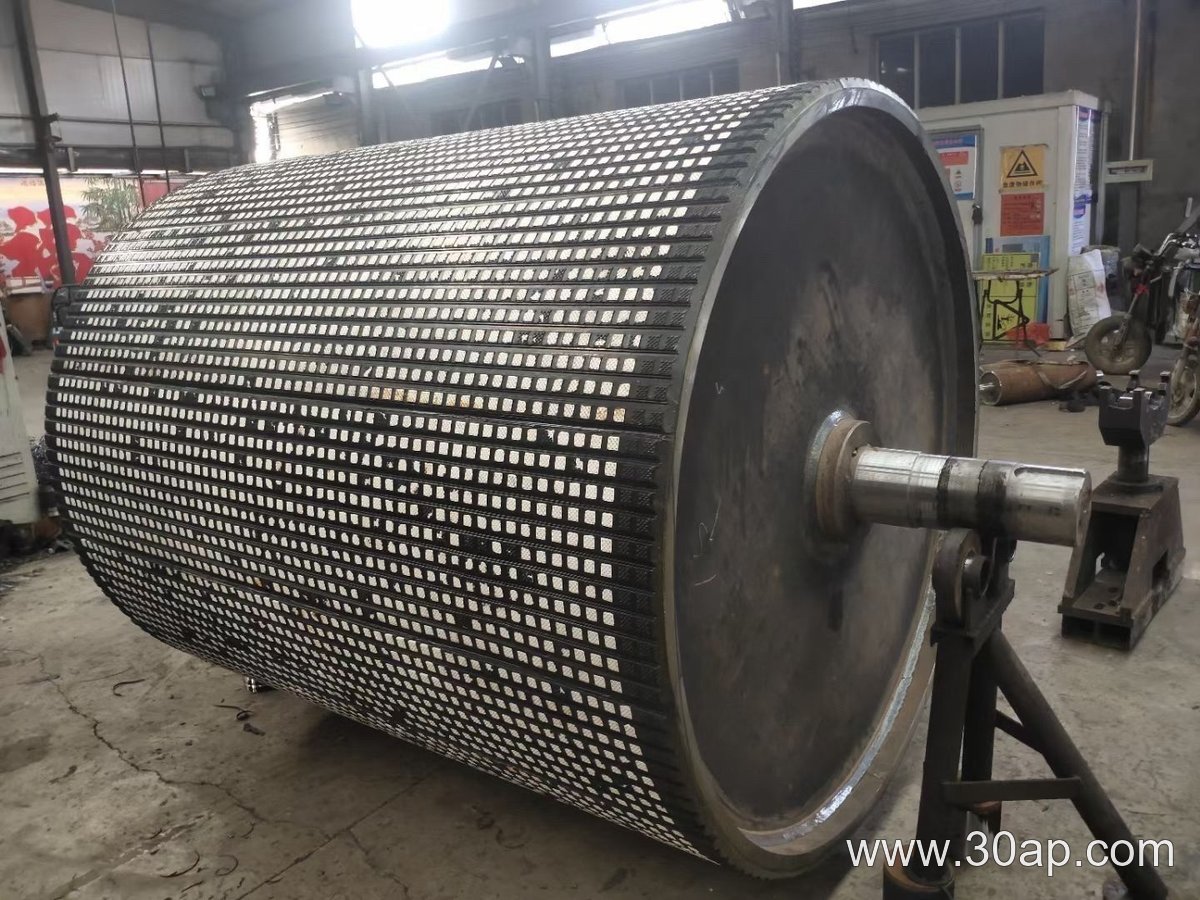
Welded and machined pulleys appear at the head, tail, and bend positions of belt conveyors. In a limestone mine, a head pulley drives the belt; a tail pulley maintains tension; a bend pulley changes direction without driving. In a power plant coal handling system, the same components must resist abrasive dust. The welding and machining quality determines how well the pulley handles continuous operation.
What a Buyer Should Check
- Confirm the pulley type: drive, tail, bend, take-up, or snub. These are not interchangeable.
- Ask for the machined diameter, face width, shaft diameter, and keyway dimensions.
- Specify lagging type and thickness if extra grip is needed.
- Request runout and concentricity tolerances after welding and machining.
- Match the pulley to the conveyor belt width and the actual load, not to a nominal rule.
Conveyor pulley welding and machining is a precision fabrication process. When the weld is sound and the machining is true, the pulley runs smoothly with the conveyor belt, idler roller, and conveyor bracket for a long service life.