What a Conveyor Bracket Assembly Does
A conveyor bracket assembly is the steel interface between the conveyor belt and the structure that carries it. It holds the idler roller at the correct height, spacing, and angle so the belt tracks smoothly and the load stays centered. In practice, this assembly is often called a conveyor idler bracket or roller support bracket, and the name covers both the formed steel frame and its mounting details.
Without a properly aligned bracket, even a good conveyor pulley and a strong belt will wear unevenly. The bracket assembly is not a glamorous component, but it sets the trough shape, controls belt contact, and keeps maintenance predictable.
How the Assembly Is Built
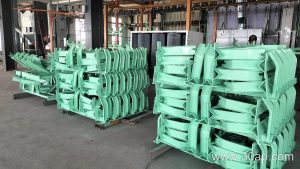
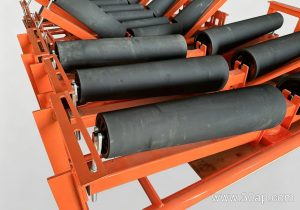
Most assemblies are fabricated from angle steel, channel steel, or folded steel plate. The frame may be a single piece or a bolted combination, depending on the belt width and the required trough angle. Slots and holes are positioned so the idler roller can be dropped in or bolted down without forcing the frame.
A typical carrying-side assembly has three positions for rollers: one center roller and two side rollers set at a trough angle. Common trough angles include 20, 30, 35, and 45 degrees. Adjustable brackets allow the same frame to be set at different angles, which is useful when a conveyor is being reconfigured or when material characteristics change. On the return side, a flat bracket or a V-shaped return bracket supports the empty belt, and a buffer bracket may be used under a loading point to absorb impact.
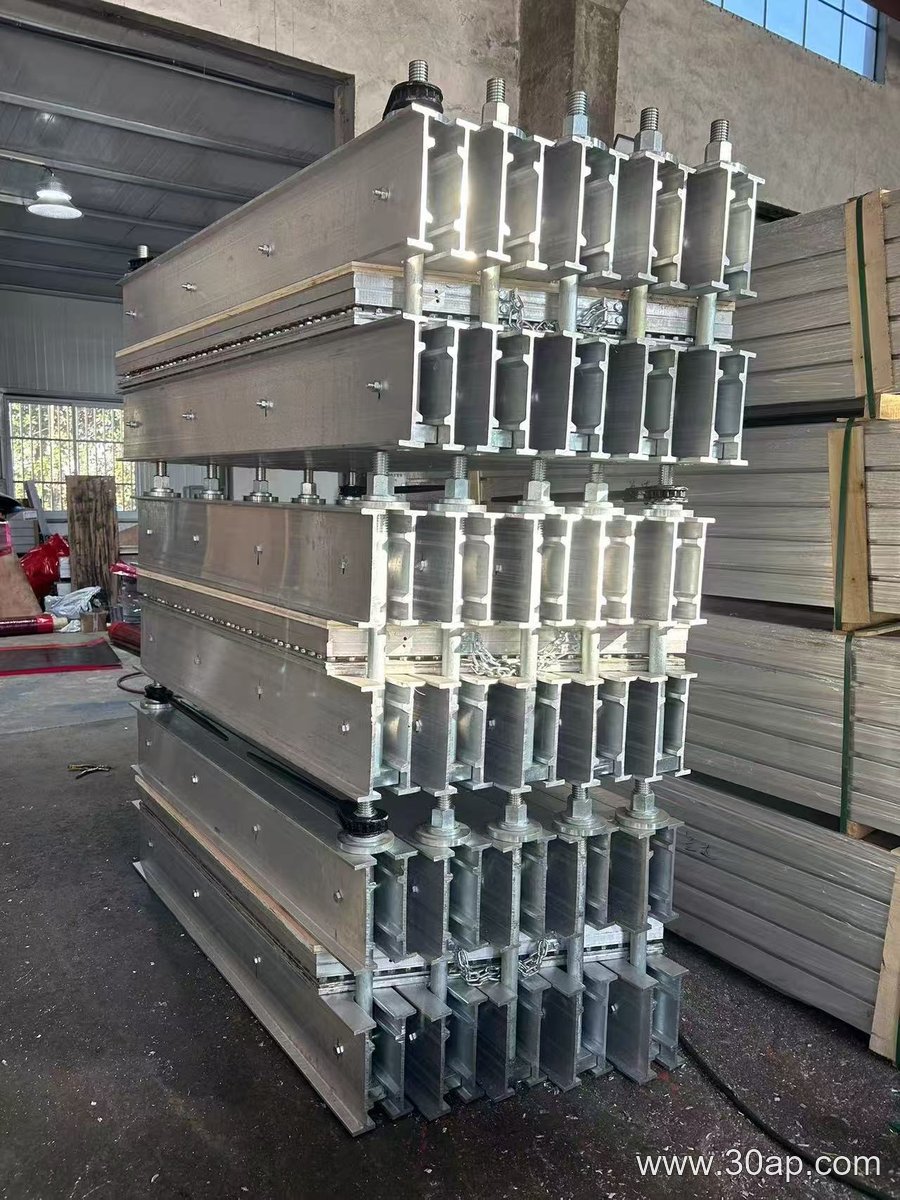
Material thickness and weld quality matter more than appearance. A bracket that flexes under load will let the idler roller move, and that movement shows up as belt mistracking, edge wear, and noise. Buyers should look for consistent hole spacing, square frames, and a finish that suits the environment, whether that is a painted finish for a dry plant or a galvanized or coated option for wet or corrosive conditions.
Where It Fits in a Conveyor System
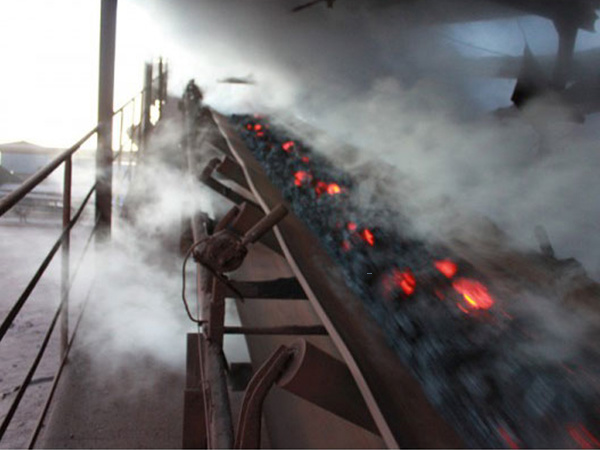
These assemblies appear along the entire length of a belt conveyor. In a quarry or sand and gravel line, they carry crushed rock from the crusher to the screen. In a coal washing plant, they support the belt through wet and abrasive service, where a V-shaped return bracket helps shed fines. In a cement plant or a power station coal yard, the same basic hardware keeps the belt stable over long distances.
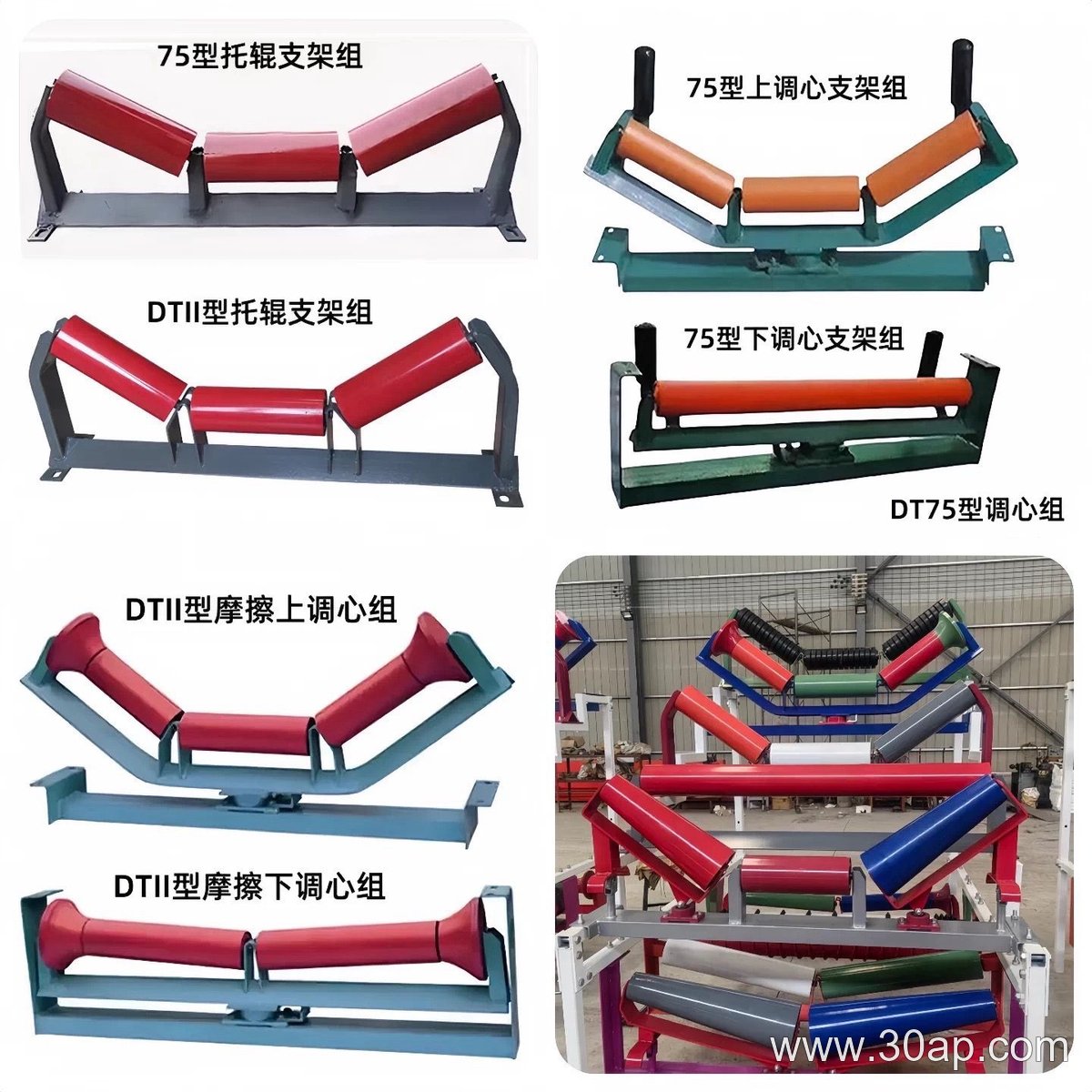
The bracket works together with the conveyor belt, the idler roller, and the conveyor pulley. The drive pulley pulls the belt, the tail pulley returns it, and the bend pulley changes its direction, but none of those components can compensate for a bracket that is installed at the wrong height or angle. A small error at one station can repeat itself dozens of times along the line.
Matching Brackets to Belt and Roller Size
Belt width and roller diameter are related, but they are not locked into a single combination. A B800 belt might use a 30-degree trough with Ø108 rollers in one plant, while a similar B800 conveyor elsewhere may run a 35-degree trough with Ø133 rollers. A B1200 belt can be paired with a 45-degree trough and Ø133 rollers, or with a different roller diameter if the load and speed allow it. The bracket must be selected for the actual belt width, trough angle, and roller diameter specified by the conveyor designer.
Installation hole spacing and crossbeam length change with belt width and trough angle, so they should never be treated as fixed numbers. The same applies to shaft diameter, which depends on the roller and bearing selection, not on belt width alone. A bracket drawing that ignores these variables will not fit the idler roller it is meant to hold.
What Buyers Should Check
- Confirm the belt width, trough angle, and roller diameter before ordering, and ask for a dimensional drawing.
- Decide between fixed and adjustable brackets based on whether the trough angle is expected to change.
- Check the mounting hole pattern against the existing conveyor frame, especially when replacing older hardware.
- Match the material and finish to the site conditions, including dust, moisture, and abrasive material.
- Consider buffer brackets at loading points and V-shaped return brackets on the return run where fines accumulate.
A conveyor bracket assembly is a small part of the total conveyor cost, but it influences belt life, energy use, and maintenance frequency. Choosing it with the same care as the conveyor pulley and idler roller pays off over the life of the line.