What a 1500mm Wide Conveyor Belt Is
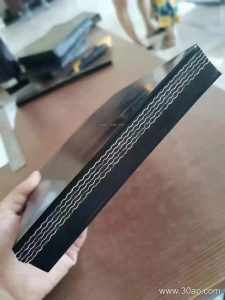
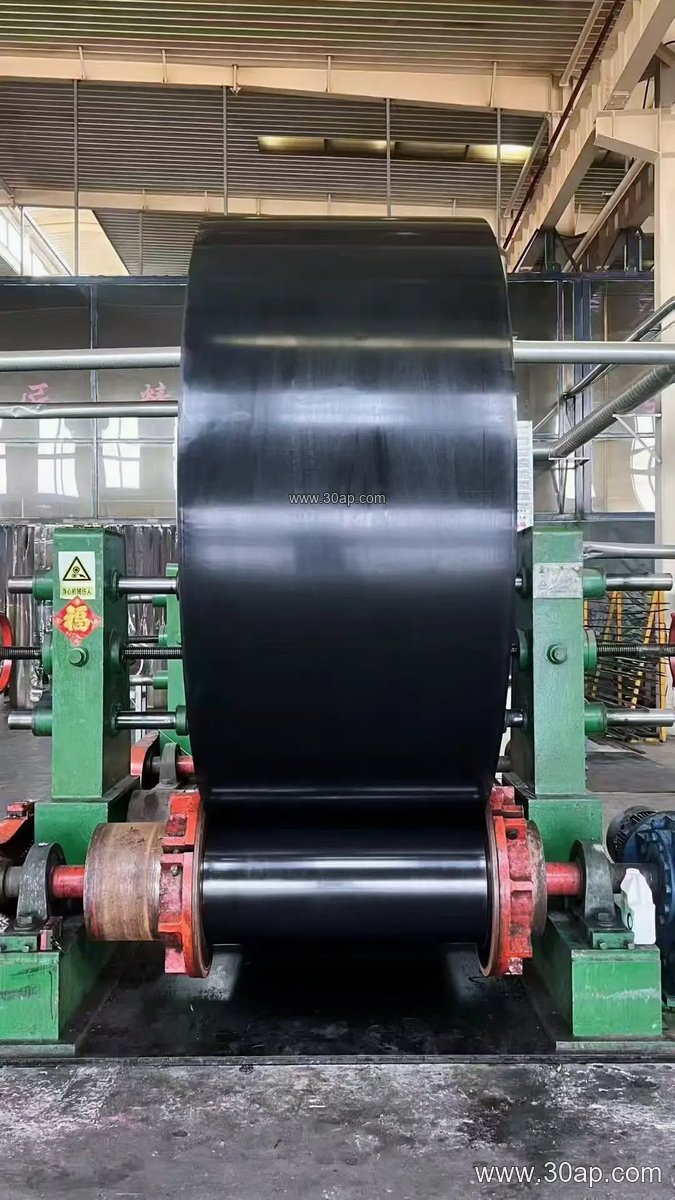
A 1500mm wide conveyor belt is a heavy-duty belting product built for main haulage lines where high tonnage and wide material spread are expected. In the Chinese belt size series it is usually written as B1500, and it sits between the common B1400 and B1600 sizes. Mines, coal preparation plants, cement works, power stations and large sand and gravel yards often choose this width when a narrower belt would need to run too fast or carry too little load. The belt is a complete composite: a tension-bearing carcass, top and bottom rubber covers, and often a patterned or profiled surface for special duties.
Construction and Common Specifications
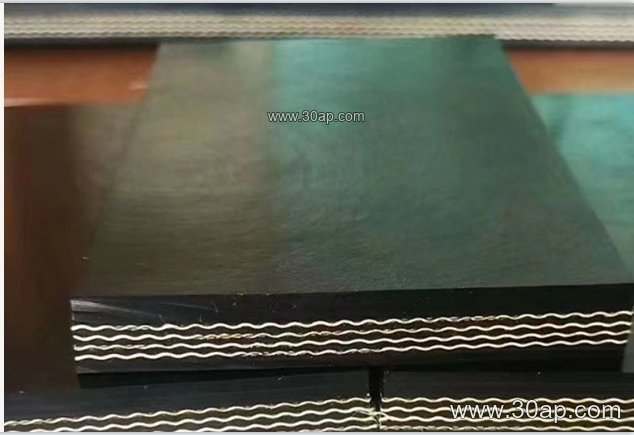
The carcass carries the pull, while the covers protect it from abrasion, heat, oil or impact. Buyers usually choose the carcass type and strength grade first, then the cover thickness. The table below shows typical reference values; actual supply is confirmed by the manufacturer against the duty.
| Item | Common reference values |
|---|---|
| Carcass type | EP conveyor belt, NN nylon conveyor belt, steel cord conveyor belt |
| Strength grade | EP200, EP315, EP400, EP500, EP630, EP800, EP1000 |
| Belt width | B1500 (1500mm) |
| Cover thickness | 4+2 mm, 5+2 mm, 6+2 mm, 8+3 mm |
| Ply count | Usually 2 to 6 layers |
| Special grades | Wear resistant, heat resistant, oil resistant, flame retardant, antistatic, cold resistant, acid and alkali resistant |
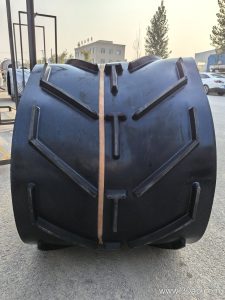
| Surface forms | Smooth, patterned, chevron, corrugated sidewall |
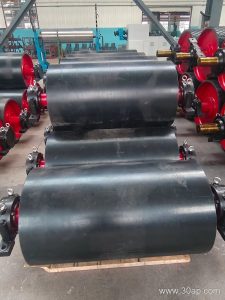
A wide belt also needs a matching pulley face. The drive pulley, tail pulley and bend pulley each do their own job and are not interchangeable: the drive pulley transmits torque, the tail pulley returns the belt, and the bend pulley changes its path. A 1500mm belt does not dictate one fixed pulley diameter or shaft size; both are calculated from belt tension, wrap angle and service factor.
Where It Fits in the Plant
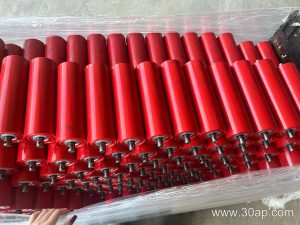
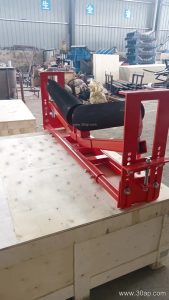
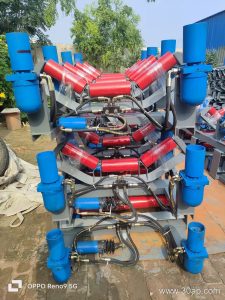
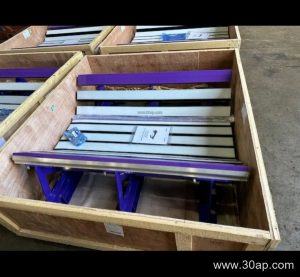
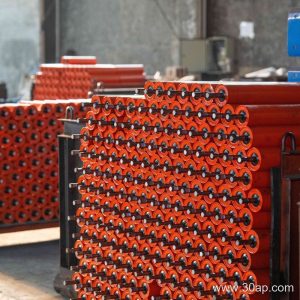
This width suits long primary conveyors in mining and coal handling, clinker and raw meal transport in cement lines, and coal yard or stockyard systems at power plants. In sand and gravel plants it is often the backbone belt under a primary crusher. Supporting hardware matters as much as the belt itself: troughing idler rollers set the belt profile, return rollers support the lower run, and conveyor brackets hold the whole frame in line. Misaligned idlers on a 1500mm belt can cause edge wear quickly because the belt has more mass and stiffness than a narrow one.
Selection Points for Buyers
- Confirm the actual load, lump size and belt speed before fixing the strength grade.
- Match the cover grade to the material: abrasive ore, hot clinker, oily scrap or dusty coal each needs a different compound.
- Check troughability; a wide, stiff carcass may need a larger trough angle or wider idler spacing.
- For inclined sections, consider chevron or corrugated sidewall forms only if the angle truly requires them.
- Ask for the splice method and edge condition, since a 1500mm belt is usually joined on site.
Installation and Maintenance Notes
Alignment is the first priority. Check that the drive pulley, tail pulley and every bend pulley are square to the frame, then adjust idler rollers so the belt trains centrally. Keep the skirt rubber and belt edges clear of build-up, and inspect covers for cuts before they reach the carcass. Store spare belting flat and away from sunlight. When ordering a replacement B1500 belt, give the carcass type, strength grade, cover thickness and surface form so the supplier can match the existing line rather than guess.