What a Large Pulley Is and Where It Fits
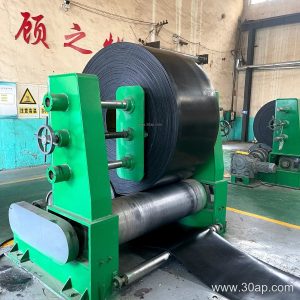
A large pulley is a high-capacity conveyor pulley built with a drum diameter and face width sized for demanding belt conveyors. In practice, it is often the head pulley that drives the belt or the tail pulley that returns it, but the term also covers large bend and tension pulleys in long overland or high-tonnage circuits. You will see these units in primary crushing stations, coal handling plants, cement clinker lines, and port bulk terminals where the conveyor belt carries abrasive or heavy loads.
Unlike a small snub or take-up pulley, a large pulley must handle higher torque, greater belt tension, and thicker lagging. Its shaft, hubs, and shell are designed together, not chosen from belt width alone. That is why two conveyors with the same belt width can use very different pulley diameters depending on speed, load, and wrap angle.
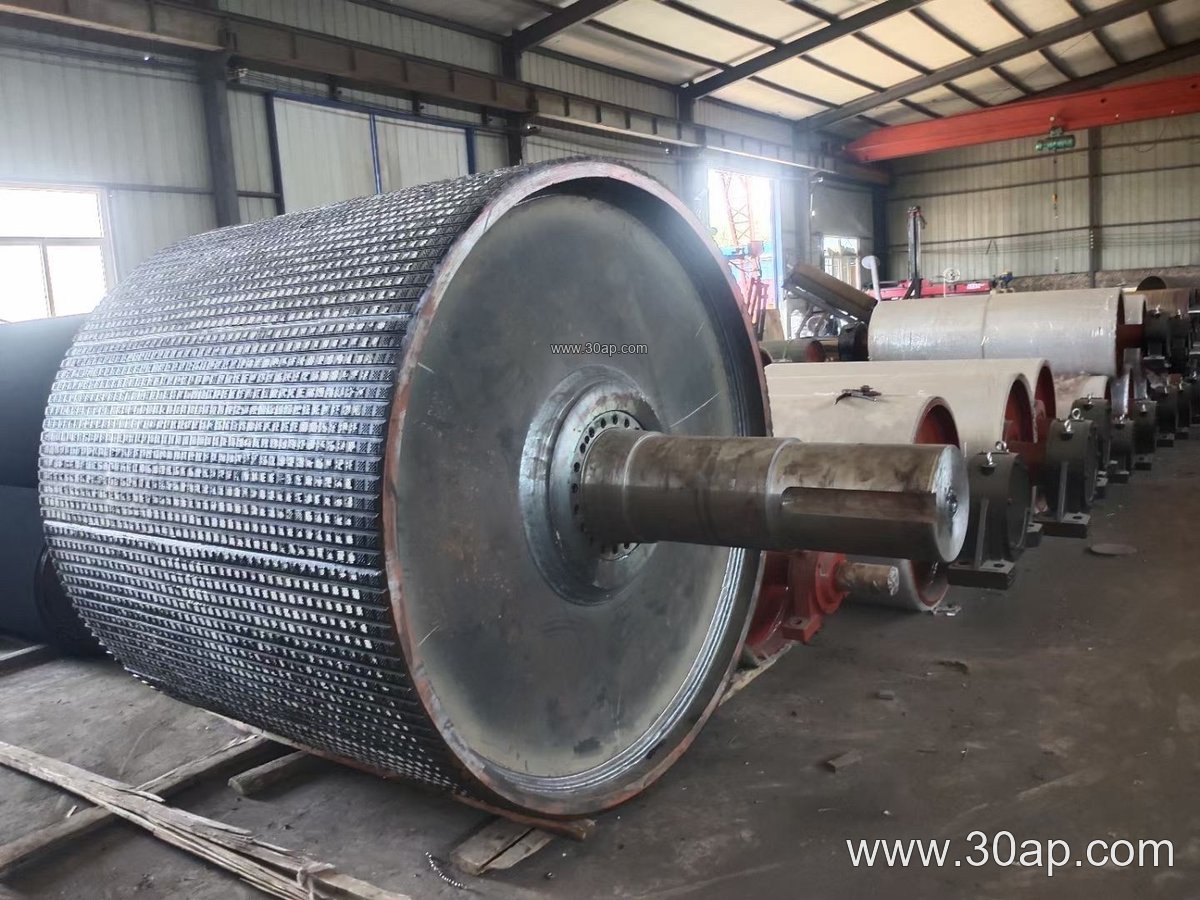
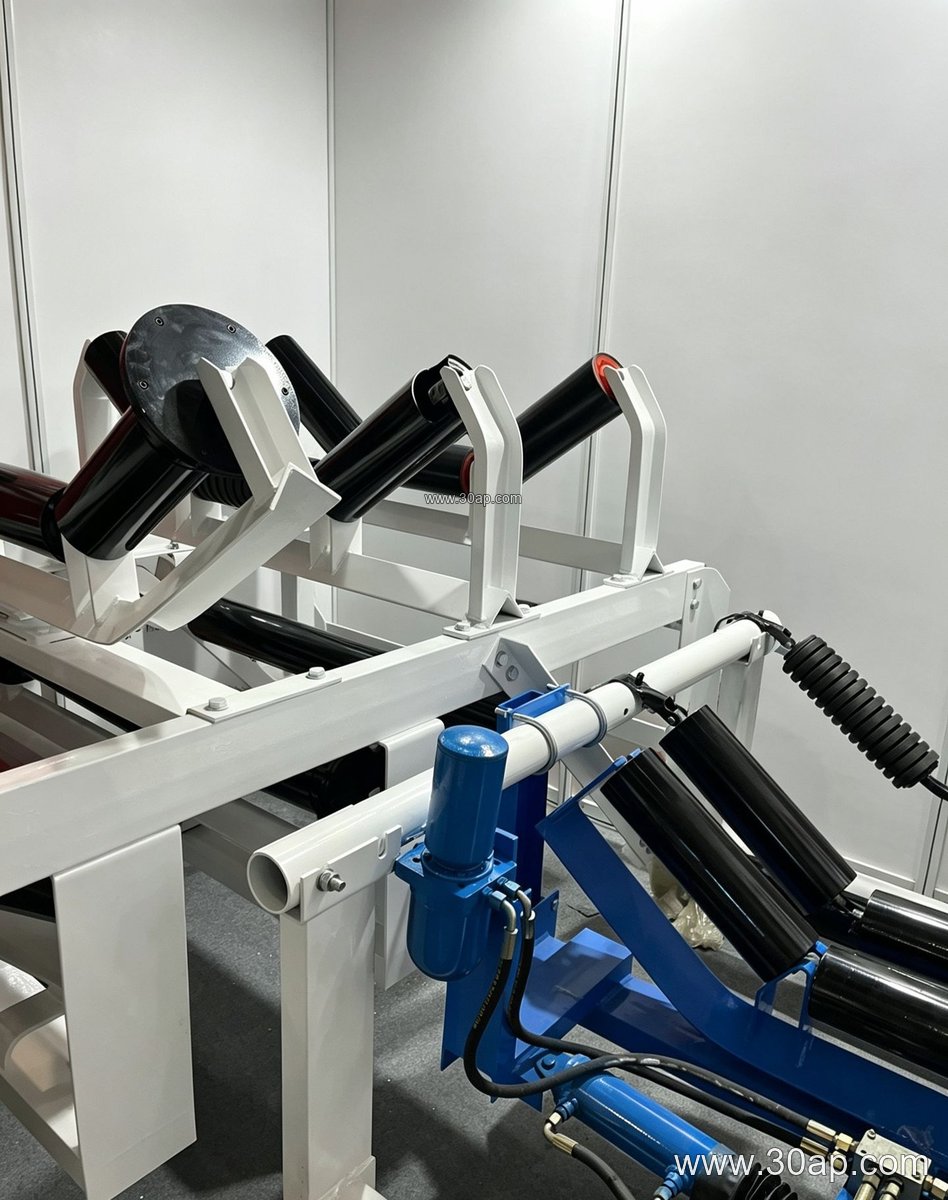
Construction and Surface Options
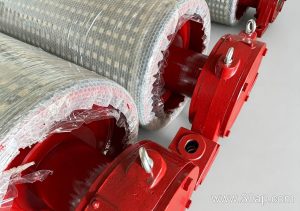
The typical large pulley uses a welded steel shell with reinforced end discs and a shrink-fitted or keyed shaft. Common surface forms include plain steel, cast rubber, cold-bonded rubber, hot-vulcanized rubber, diamond lagging, herringbone lagging, and ceramic lagging. Lagging thickness is often 8, 10, 12, 15, or 20 mm. The choice depends on grip requirements and material carryback, not on a single rule for every belt.
Face width usually exceeds belt width so the belt is supported across its full span. Reference examples include B800 with roughly 950 mm face, B1000 with about 1150 mm, and B1400 with about 1600 mm. Diameters for large pulleys commonly range from Ø630 up to Ø1800 or more, and shaft diameters are determined by torque and bearing load. A B1200 conveyor might use a Ø1000 drive pulley, while a shorter B800 line could run a Ø500 tail pulley.
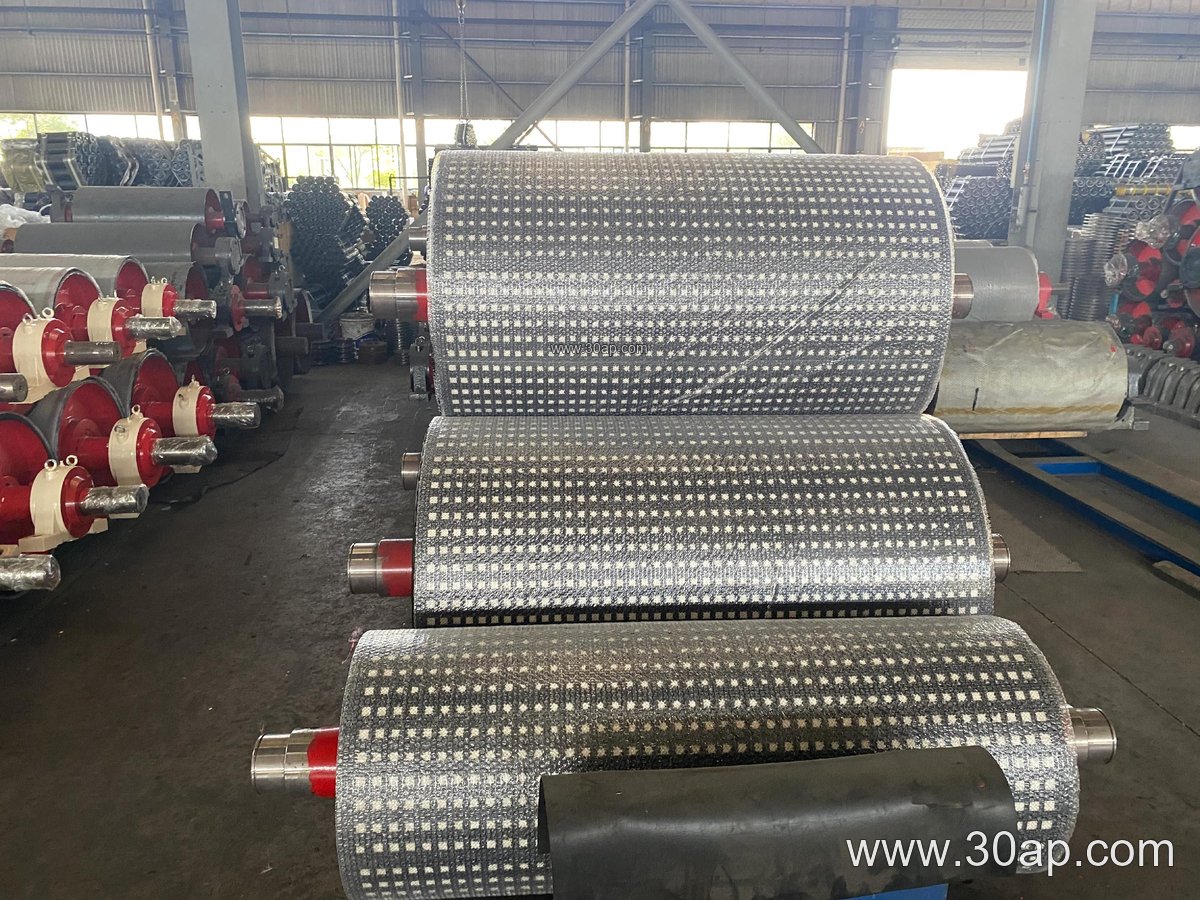
Common Reference Combinations
| Belt width | Approx. face width | Example diameter |
|---|---|---|
| B800 | 950 mm | Ø500 |
| B1000 | 1150 mm | Ø800 |
| B1200 | 1400 mm | Ø1000 |
| B1400 | 1600 mm | Ø800 or Ø1250 |
These are reference values, not fixed pairings. Final dimensions follow conveyor design, belt tension, and pulley location.
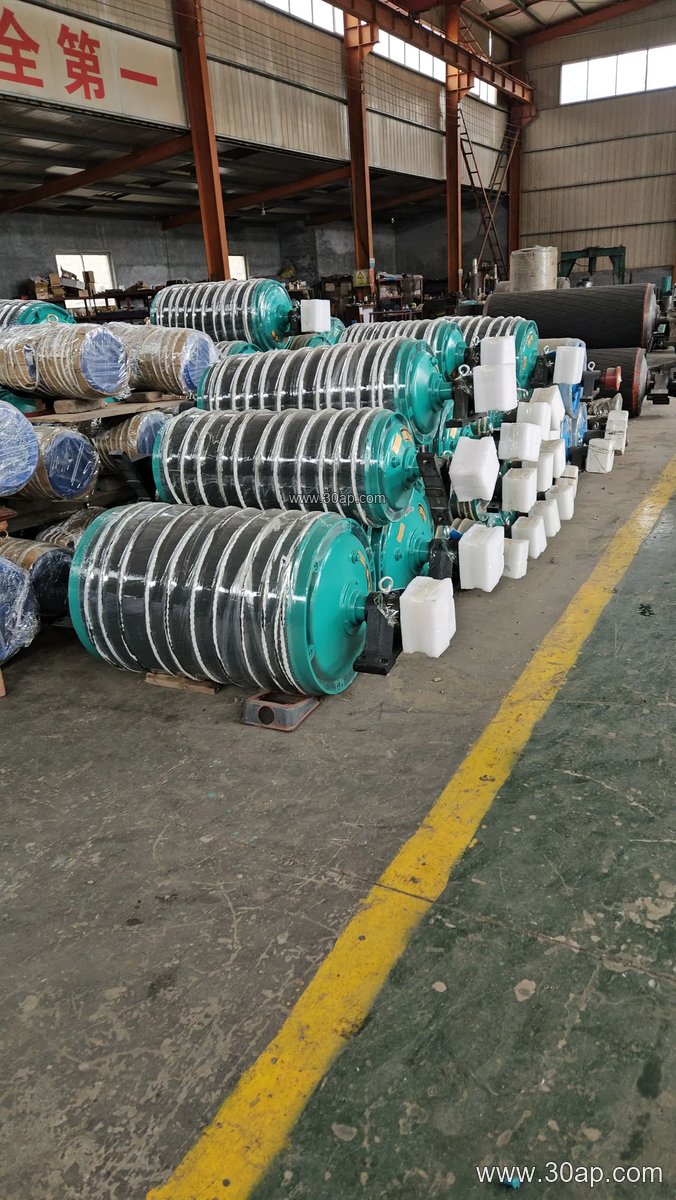
Role in the Conveyor
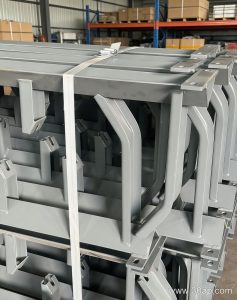
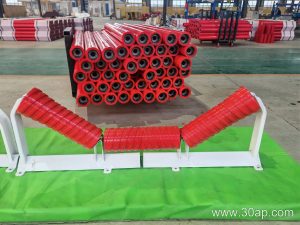
A large pulley at the head end transfers drive force to the conveyor belt and sets discharge trajectory. At the tail end, it redirects the returning belt and can affect material containment. In tension stations, a large bend or take-up pulley provides the wrap needed to keep the belt tracking without slip. Nearby components such as the idler roller, conveyor bracket, and conveyor pulley frame must be matched to the pulley load and mounting pattern.
Do not confuse a large drive pulley with a bend pulley or a tail pulley. They share a drum shape but serve different mechanical roles, and replacing one type with another changes belt wrap and tension distribution.
Buyer Checklist
- Confirm the pulley position: drive, tail, bend, or tension. Each has different load and lagging needs.
- Provide belt width, belt speed, and expected tension so the supplier can size shell, shaft, and bearings.
- Specify lagging type and thickness if grip or wear resistance matters. Plain, diamond, and ceramic surfaces suit different conditions.
- Check shaft diameter against torque and bearing life; never assume a shaft size from belt width alone.
- Review mounting dimensions with the conveyor bracket and frame to avoid field rework.
For quarry, coal, or cement duty, a large pulley with proper lagging and balanced construction helps keep the belt centered and the drive efficient. The right unit is the one sized to the conveyor, not the one copied from a neighboring line.