What a Driving Pulley Does on a Conveyor
The driving pulley, often called the head pulley or drive drum, is the component that turns the conveyor belt. It is the powered pulley in the system, connected to the gearbox or motor, and it transmits the torque needed to move the belt and its load. In a quarry, a coal washing plant, or a cement clinker line, the driving pulley is usually the largest and most heavily loaded pulley on the conveyor, which is why its construction and surface treatment matter so much.
A conveyor pulley that only guides or redirects the belt is not a driving pulley. A tail pulley or a bend pulley serves a different purpose and is not interchangeable with the drive unit. That distinction matters when ordering spares, because the duty, the shaft, and the lagging are chosen for their specific role.
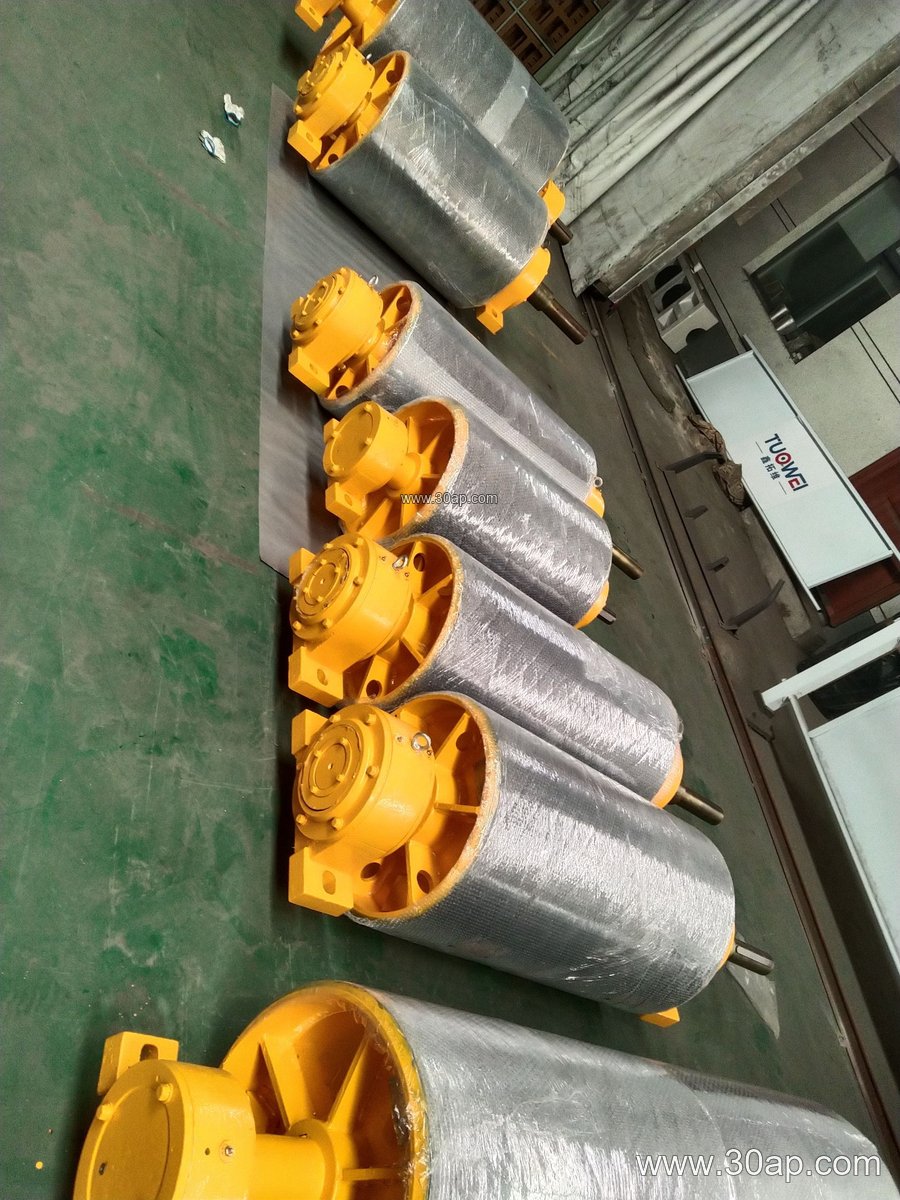
How the Drive Pulley Is Built
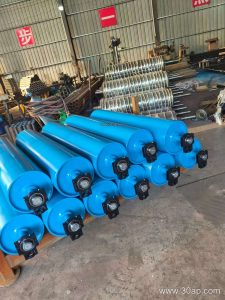
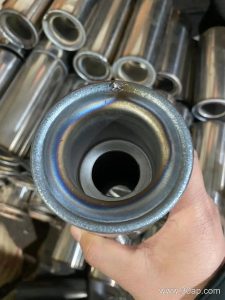
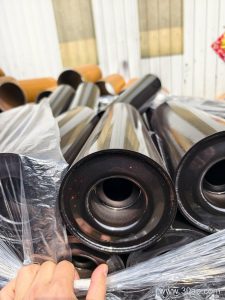
The structure typically consists of a cylindrical shell, two end discs or hubs, a shaft, and a bearing assembly. The shell is usually rolled from steel plate and welded to the end discs. The shaft is keyed or shrink-fitted to the hubs and supported by pillow block bearings mounted on the conveyor bracket. The shell surface may be plain steel or covered with rubber lagging to improve grip.
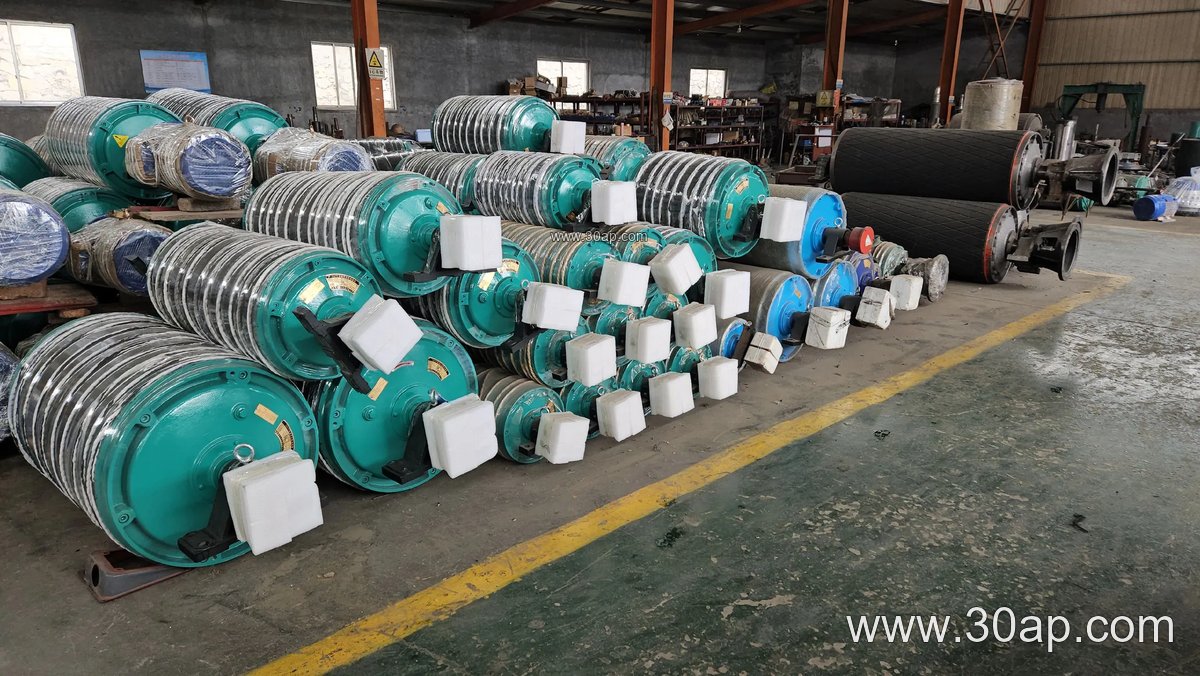
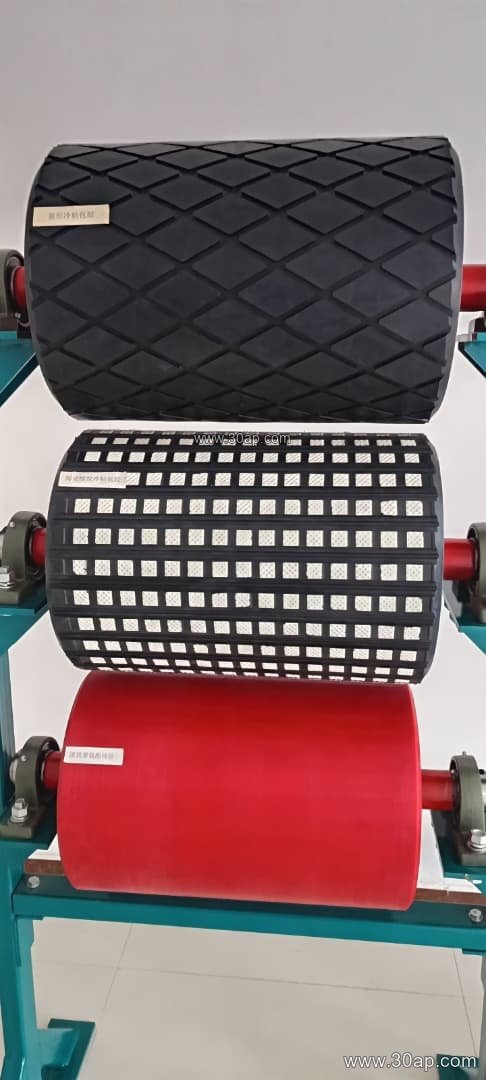
Lagging is one of the most important choices for a driving pulley. Plain, cast rubber, cold-bonded rubber, hot vulcanized rubber, diamond grooved, herringbone grooved, and ceramic lagging are all common surface forms. Lagging thickness commonly ranges from 8 mm to 20 mm, with 10 mm and 12 mm often used on medium-duty drives. Grooved and ceramic patterns help shed water and fines, which is useful in wash plants and wet tunnels.
Matching Diameter to Belt Width and Duty
Belt width and pulley diameter are related but not locked together. A wider belt generally needs a wider shell and a larger diameter to keep belt stress reasonable, but the final diameter depends on torque, belt tension, and the number of plies in the conveyor belt. Typical combinations include B800 × Ø500, B1200 × Ø1000, and B1400 × Ø800. These are reference points, not fixed rules.
Common belt widths in bulk handling include B400, B500, B650, B800, B1000, B1200, B1400, B1600, and B1800. The shell face is usually wider than the belt, for example about 500 mm for B400 and about 1400 mm for B1200. Common diameters range from Ø200 up to Ø1800. Shaft diameter is set by torque and load rather than belt width alone, with common values from Ø50 to Ø200.
| Belt width | Typical shell face | Example diameter |
|---|---|---|
| B400 | about 500 mm | Ø200 to Ø315 |
| B800 | about 950 mm | Ø400 to Ø630 |
| B1200 | about 1400 mm | Ø630 to Ø1000 |
| B1600 | about 1800 mm | Ø800 to Ø1250 |
Where It Is Used
Driving pulleys appear at the discharge end of conveyors in limestone mines, iron ore plants, sand and gravel lines, and power station coal handling. In a crushing and screening circuit, the drive pulley on the main belt often runs continuously under heavy load, so bearing selection and lagging wear are critical. In a fertilizer or grain silo facility, a lighter drive drum with plain or lightly lagged surface is often enough.
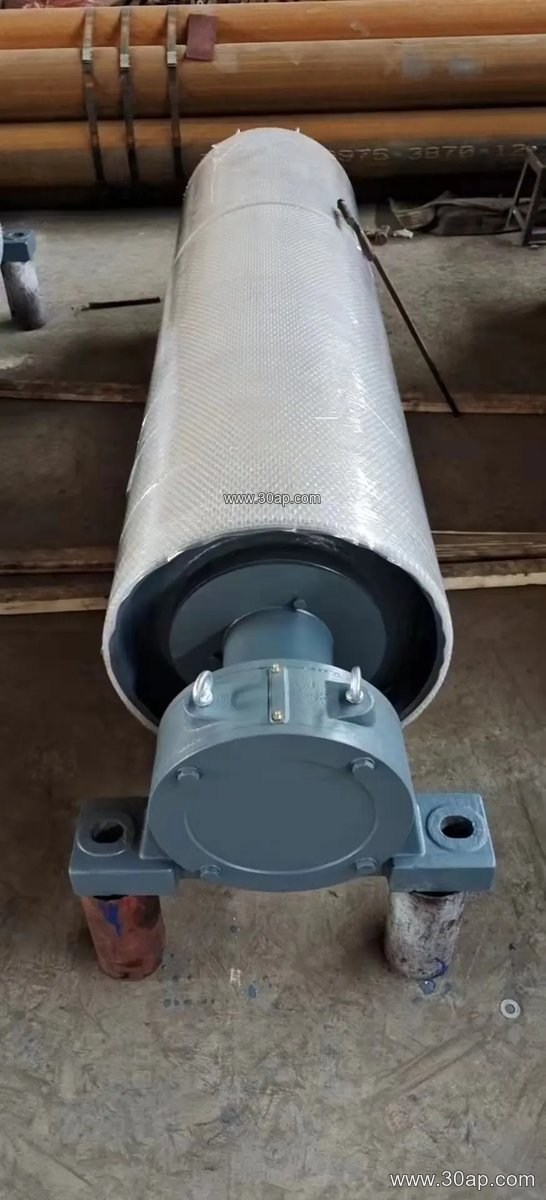
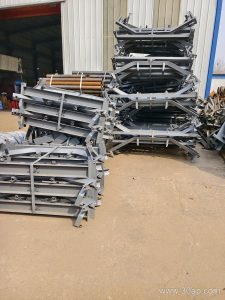
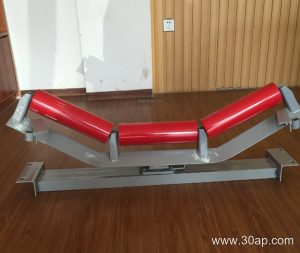
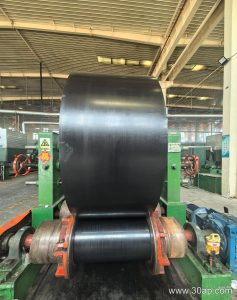
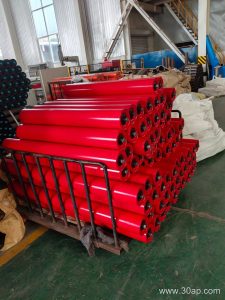
The drive unit works together with the conveyor belt, idler rollers, and conveyor bracket. Misalignment between the driving pulley and the idlers can cause belt tracking problems, so installation accuracy matters as much as the pulley itself.
What Buyers Should Check
- Confirm the required torque and belt tension before choosing diameter and shaft size.
- Match lagging type to the material and moisture level; ceramic or grooved lagging suits wet, slippery conditions.
- Check that the shell face is wider than the belt and that the bearing span fits the conveyor bracket.
- Ask for the shaft material and keyway details, since these are not determined by belt width alone.
- Plan periodic inspection of lagging wear and bearing condition to avoid unplanned downtime.
A well-matched driving pulley keeps the whole conveyor stable, from the tail pulley to the discharge point. Treat the specifications as design references and confirm final dimensions with the conveyor designer.