Idler Roller Maintenance in a Dusty Quarry: Inspection, Prevention, and Replacement Signs
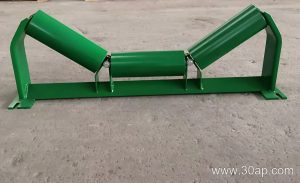
Many quarry operators assume that if an idler roller still turns by hand, it is fine. In a dusty quarry, that assumption is misleading: abrasive dust can enter a sealed bearing long before the roller seizes, and the damage is often invisible until the belt starts to drift or the roller locks up. The idler roller is the rotating cylinder that supports the conveyor belt and its load. Its bearings and seals are its most vulnerable parts. When dust penetrates, lubricant degrades, friction rises, and the roller may stop turning. Once an idler roller stops rotating, the belt slides over it, wearing the shell flat and increasing the drive power needed. Regular inspection and preventive maintenance keep these critical components running.
Routine Inspection for Dusty Conditions
In a quarry, schedule idler roller inspections weekly or after every significant dust-generating operation. Use a systematic approach:
- Check for free rotation by hand where safe, or use a contactless thermometer to detect abnormal heat.
- Listen for grinding, squealing, or rumbling noises that indicate bearing wear.
- Look for dust accumulation around seals and end caps; buildup can force particles inward.
- Check belt tracking: a misaligned idler roller can steer the belt sideways.
- Inspect the shell for flat spots, corrosion, or material buildup that causes vibration.
Preventive Maintenance That Extends Service Life
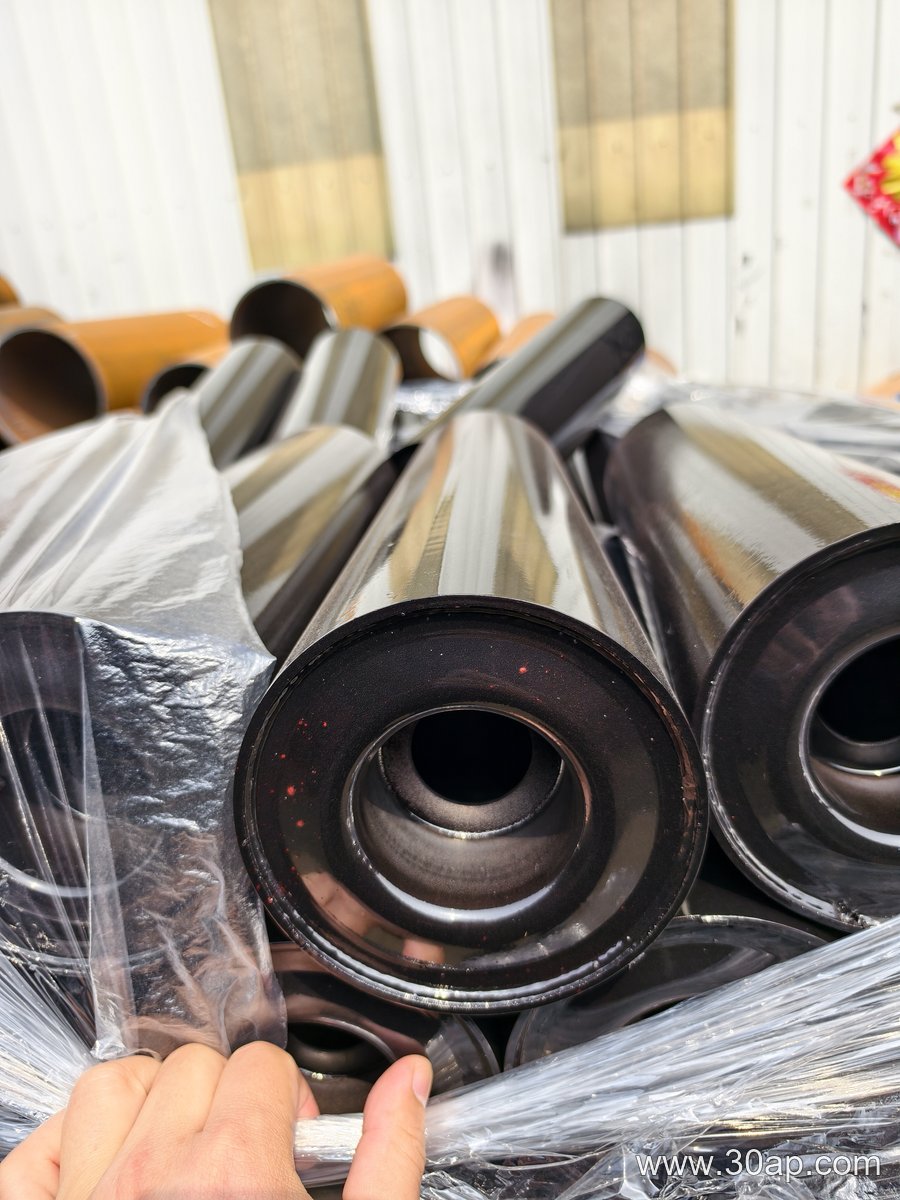
Preventive maintenance focuses on keeping dust out and bearings lubricated. Where possible, specify idler rollers with labyrinth or contact seals rated for abrasive environments. In extremely dusty zones, consider HDPE idler rollers, which resist buildup and corrosion better than steel in some applications. Clean dust from the conveyor frame and idler rollers regularly; compressed air can push dust into seals, so use a vacuum or brush instead. Verify that the idler roller is mounted square to the belt and that all fasteners are tight. Lubricate only if the idler roller is designed for relubrication; sealed-for-life units should not be greased. Keep a log of inspection dates and observations to spot trends.
Signs That an Idler Roller Needs Replacement
Not every worn idler roller can be saved. Replace it when you observe any of the following:
- The roller no longer turns freely or has seized completely.
- The shell is worn through, cracked, or has deep flat spots.
- Bearing play allows the roller to wobble noticeably.
- Persistent noise or heat that does not improve after cleaning.
- Belt tracking problems that continue after alignment and other idler rollers are checked.
Replacing a failing idler roller early prevents belt damage, reduces energy consumption, and avoids unplanned downtime. In a dusty quarry, a disciplined maintenance routine is the most reliable way to get full value from every idler roller.
When a bulk-material port terminal specifies a conveyor pulley for a new import conveyor, the purchasing team often starts with a diameter and a shaft size from an old drawing. That is not a specification. A conveyor pulley is a structural assembly that must match belt tension, environmental conditions, and maintenance access. Sourcing from China without a clear specification leaves the supplier to guess, and the terminal pays for that guess in downtime. Use this practical guide to prepare documents and assess suppliers.
Start with a Conveyor Pulley Datasheet, Not a Catalog Number
A useful datasheet forces decisions before inquiry. Include the following items, and mark any unknown value as “to be confirmed” rather than leaving it blank.
- Duty and environment: continuous or intermittent; indoor or outdoor; ambient temperature range; dust, salt, or moisture exposure.
- Belt data: belt width, belt type, and maximum belt tension. The pulley diameter must be compatible with the belt’s minimum recommended bending radius, which comes from the belt manufacturer, not from the pulley supplier.
- Loads: radial load and any axial load on the shaft; drive or non-drive position; expected misalignment.
- Geometry: shaft diameter, shaft length, keyway or locking assembly, bearing centers, and pulley face width.
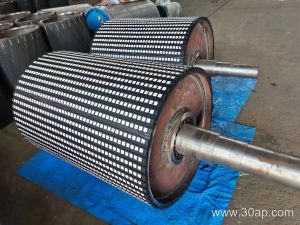
- Lagging: plain, grooved, or ceramic-lagged; thickness and hardness if specified.
- Balance and speed: surface speed and required balance quality.
- Finishing: paint system, machining tolerances, and marking.
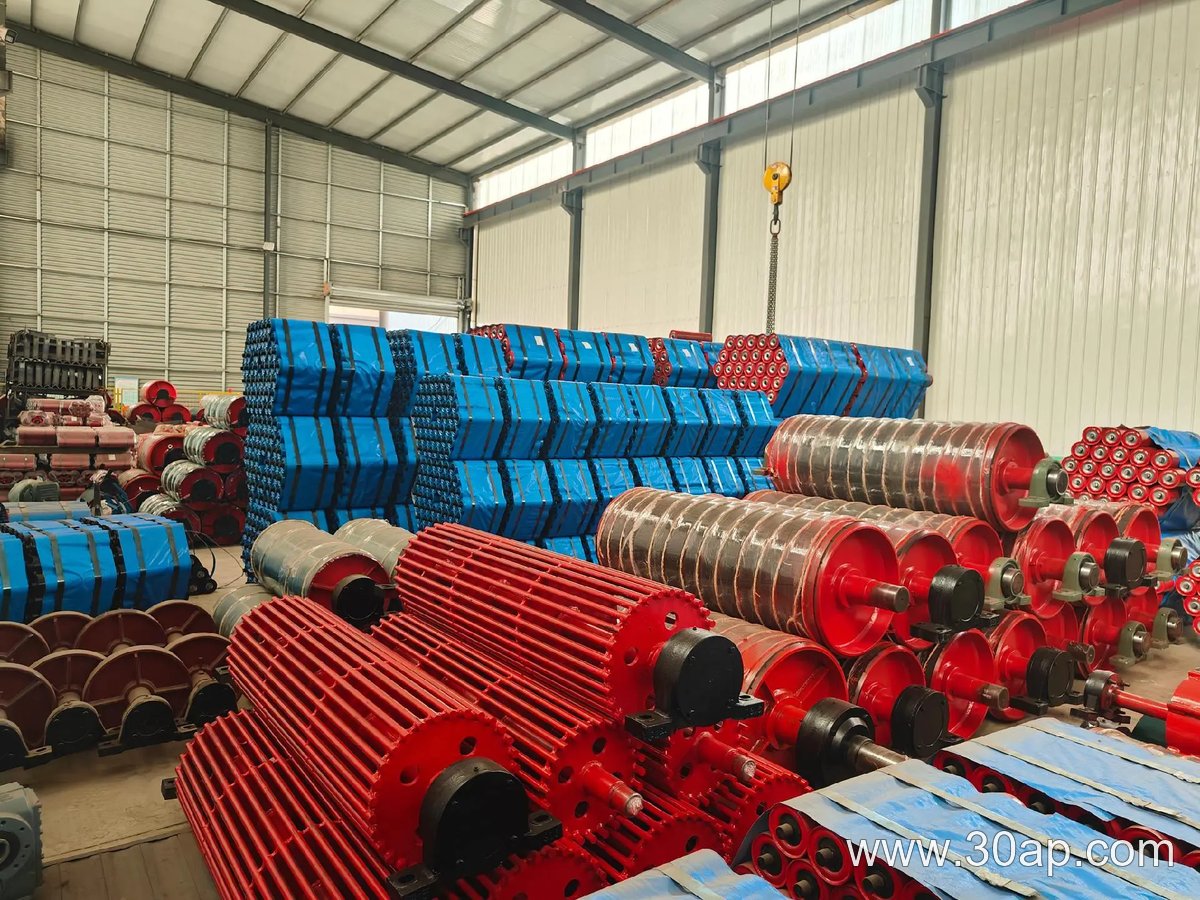
For a port terminal handling damp iron ore or coal, a welded pulley with a robust shell and sealed bearings is often appropriate. A 1400mm diameter conveyor pulley may be needed where belt tension is high, but that size should follow from the belt’s allowable bending stress and the available space—not from a wish to reduce tension alone.
Evaluate a Chinese Conveyor Pulley Supplier on Evidence, Not Price Alone
After sending the datasheet, ask each candidate to return a marked-up drawing and a manufacturing plan. Compare responses on these points:
- Engineering review: Does the supplier question the belt tension or shaft load, or simply quote? A supplier that checks the load path is more likely to catch a mismatch.
- Welding and machining: Ask for the weld procedure specification and the sequence for boring the hub after welding. Distortion control matters for a conveyor pulley that must run true.
- Inspection plan: Request dimensional report, runout check, dynamic balance report, and non-destructive testing for critical welds.
- Traceability: Material certificates for shell, shaft, and lagging, linked to the heat number.
- Packing and shipping: Shaft protection, bearing preservation, and lift points for a heavy pulley.
Do not ask for a certificate that the supplier does not hold. Instead, ask what standard the inspection follows and who performs it. A third-party inspection can be arranged if the terminal requires it.
Hypothetical Example: A 1400mm Diameter Conveyor Pulley for a Port Terminal
Assume a terminal needs a drive pulley for a 1400mm wide belt carrying iron ore at 3.0 m/s. The belt manufacturer states a minimum pulley diameter of 1250mm. The calculated steady-state tension is 220 kN. A 1400mm diameter conveyor pulley would satisfy the bending limit, but the shaft and bearing selection must be checked against the 220 kN load and the drive torque. The datasheet should state the tension, the belt width, and the required lagging. The supplier should then confirm the shell thickness, hub design, and bearing type. These values are illustrative only; every project requires its own calculation.
FAQ: Conveyor Pulley Sourcing from China
What is the most common specification mistake?
Leaving out the maximum belt tension. Without it, the supplier cannot size the shaft or bearings correctly.
Should I accept a supplier’s standard pulley if it meets the diameter?
No. A standard conveyor pulley may not match the shaft load, bearing life, or lagging required for your terminal. Always compare the datasheet to the quotation.
How do I verify a supplier’s quality before shipment?
Review the inspection plan, witness the final runout and balance checks if possible, and require photos or reports of the completed conveyor pulley before packing.
Conveyor Bracket Construction Types and Their Service Conditions
In a mineral-processing plant, a conveyor bracket must survive abrasive ore, heavy impact, and continuous vibration. The first selection decision is not material or finish—it is construction. Three broad construction families dominate: fixed welded brackets, adjustable brackets, and modular bolted brackets. Each answers a different mechanical question, and choosing the wrong one can shift alignment problems onto the belt or create maintenance bottlenecks.
Fixed Welded Conveyor Brackets
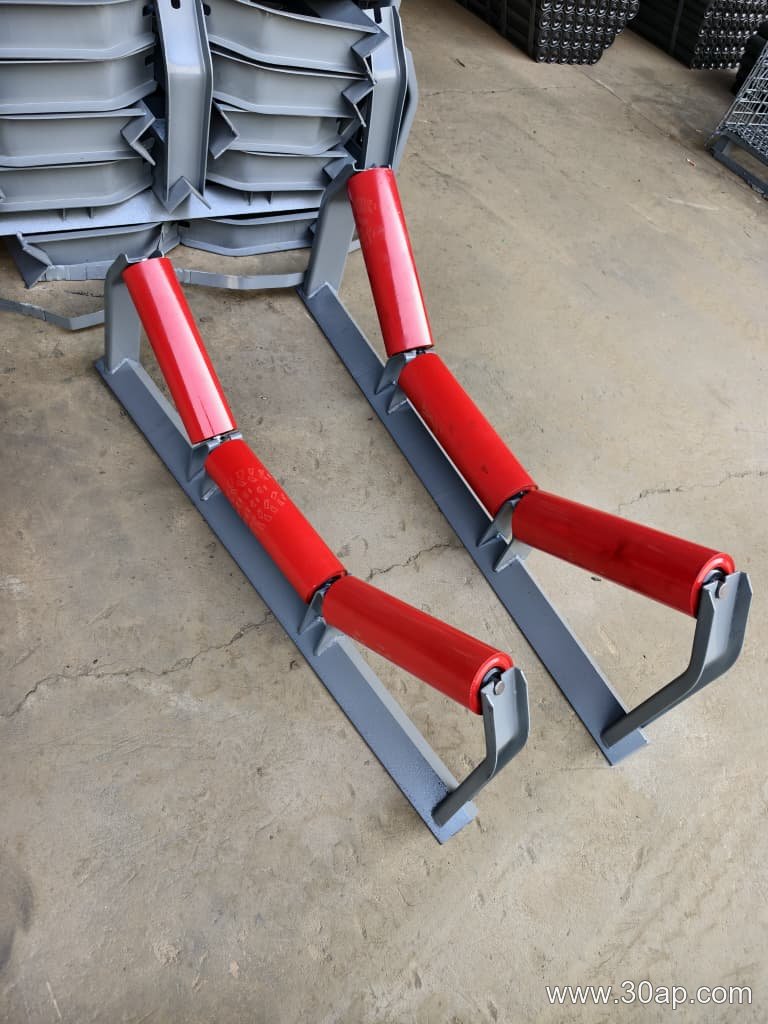
These brackets are fabricated as a single rigid unit, often from structural steel. They are the default choice where the conveyor centerline is permanent and the idler rolls require no field adjustment. In a primary crushing circuit, a fixed conveyor bracket keeps the trough angle constant under heavy lump feed. The trade-off is that any misalignment during installation must be corrected at the support structure, not at the bracket.
Adjustable Conveyor Brackets
An adjustable conveyor bracket uses slotted holes, shims, or threaded rods to change idler height or angle after installation. This type is common on transfer conveyors where belt training must be fine-tuned to prevent material spillage. In a mineral-processing plant, adjustable brackets reduce downtime when a structural support settles unevenly. However, the adjustment mechanism can loosen under vibration, so periodic inspection is essential.
Modular Bolted Conveyor Brackets
Modular designs break the bracket into a base plate, a vertical support, and an idler cradle. They are used where impact loads are severe or where a single component is likely to wear faster than the rest. A modular conveyor bracket allows a worn cradle to be replaced without cutting or re-welding the main support. This construction suits mobile or semi-mobile crushing plants, where space and access are limited.
Matching Bracket Duty to Plant Conditions
Construction alone does not determine performance. Duty class—light, medium, or heavy—depends on belt width, material lump size, and loading method. For example, a hypothetical 1,200 mm belt carrying 300 mm ore lumps may require a heavy-duty bracket with a reinforced gusset, regardless of whether it is fixed or adjustable. A light-duty bracket on the same conveyor would likely crack at the weld toe.
Performance features such as corrosion resistance, abrasion-resistant contact pads, and vibration-damping mounts are secondary choices. They should be added only after the construction type and duty class are fixed. In a mineral-processing plant, a standard fixed bracket with a replaceable wear liner often outperforms a more complex adjustable bracket that cannot tolerate constant impact.
Ultimately, the right conveyor bracket is the one whose construction matches the alignment strategy, whose duty rating exceeds the calculated load, and whose performance features address the specific failure mode—not the one with the most options.
Conveyor Belt FAQ: Dust, Spillage, and Impact in Mineral Processing
At a mineral-processing plant, a conveyor belt moves crushed ore, gravel, and fines 24/7. The questions below address common practical concerns, with hypothetical examples to show how to think through each issue. Use them as a starting point for your own site conditions.
1. How can I reduce dust escaping from a conveyor belt transfer point?
Dust is often a symptom of air movement and material free-fall, not just belt speed. First, check that the belt is fully troughed and that the load is centered. Second, install skirt rubber along the loading zone; worn or missing skirt rubber lets fines escape. Third, use a dust suppression system such as water sprays or a dry fog system at the transfer chute. In a hypothetical copper concentrator, adding a second stage of skirt rubber and slowing the feed rate by 10% cut visible dust enough to meet internal housekeeping targets.
2. What causes material spillage along the conveyor belt path, and how do I fix it?
Spillage usually comes from misalignment, overload, or poor belt support. If the belt drifts to one side, material spills over the edge. Check idler alignment and belt training idlers. If the belt is overloaded, the material piles up and rolls off. Reduce feed rate or increase belt speed slightly if the belt width allows. A hypothetical aggregate plant solved spillage at a curve by replacing worn impact idlers with new ones and adjusting the transition distance from the crusher. Always correct the root cause rather than adding more cleanup labor.
3. How do I choose a conveyor belt for high-impact loading points?
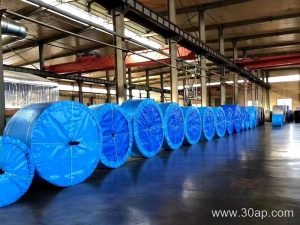
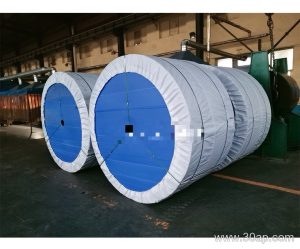
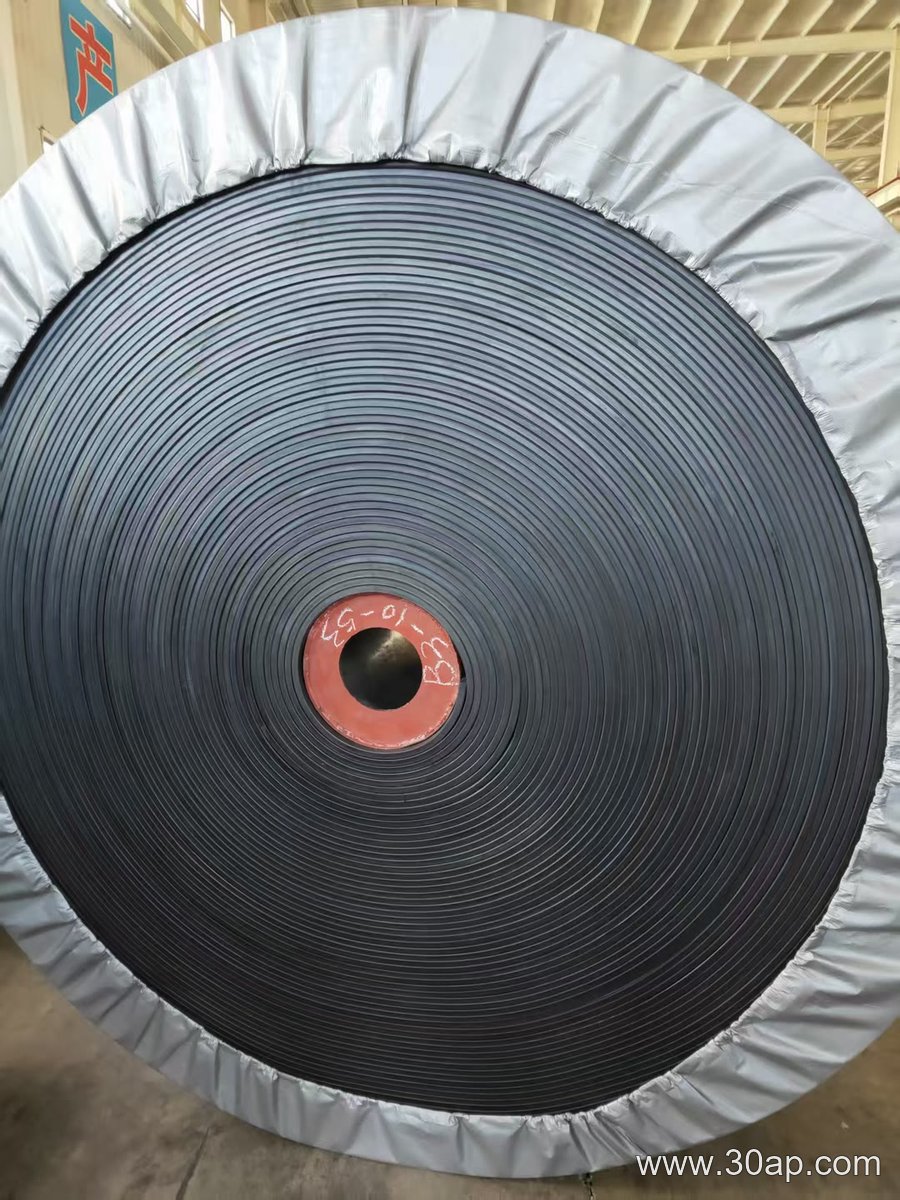
Impact energy depends on material lump size, drop height, and throughput. For high-impact zones, use a belt with a thick top cover and a strong carcass, such as a multi-ply fabric belt with impact-resistant rubber. In a hypothetical mineral-processing plant, a 1200 mm wide belt receiving 300 mm lumps from a 2 m drop required a 10 mm top cover and extra breaker plies. Also, install impact idlers or a impact bed directly under the loading point to absorb energy. Never rely on belt thickness alone; support structure matters.
4. Can a chemical-resistant conveyor belt help in a mineral-processing plant?
Yes, if the plant handles acidic or caustic slurries, or if the belt is exposed to leaching chemicals. A chemical-resistant conveyor belt uses a cover compound that resists swelling, cracking, or softening. For example, a hypothetical gold heap leach operation with dilute cyanide solution would specify a belt with a nitrile or EPDM cover. However, chemical resistance is not universal; confirm the specific chemical and concentration with the belt supplier. Also, clean the belt regularly to avoid concentrated pools of reagent.
5. When should I consider an NN300 conveyor belt for abrasive ore?
NN300 refers to a nylon-nylon fabric carcass with a tensile strength of 300 N/mm per ply. It offers good fatigue resistance and impact strength, making it suitable for medium to high-abrasion duties. In a hypothetical iron ore plant, an NN300 belt with a 6 mm top cover handled sinter feed better than a lower-grade belt, because the nylon plies absorbed shock and the cover resisted cutting. But NN300 is not a cover grade; match the cover to the material. For very sharp, high-temperature clinker, a different carcass and cover may be needed.
6. How often should I inspect a conveyor belt in a dusty plant?
Dust accelerates wear on idlers, pulleys, and belt edges. Inspect at least weekly for edge damage, cover wear, and material buildup. In a hypothetical cement plant, a monthly inspection found a small rip that grew into a full belt failure within two weeks. Use a checklist: belt tracking, splice condition, cleaner performance, and pulley lagging. Keep records to spot trends. Early action on a small flaw is cheaper than an unplanned shutdown.