What a Trough Idler Bracket Does
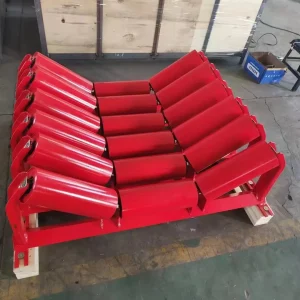
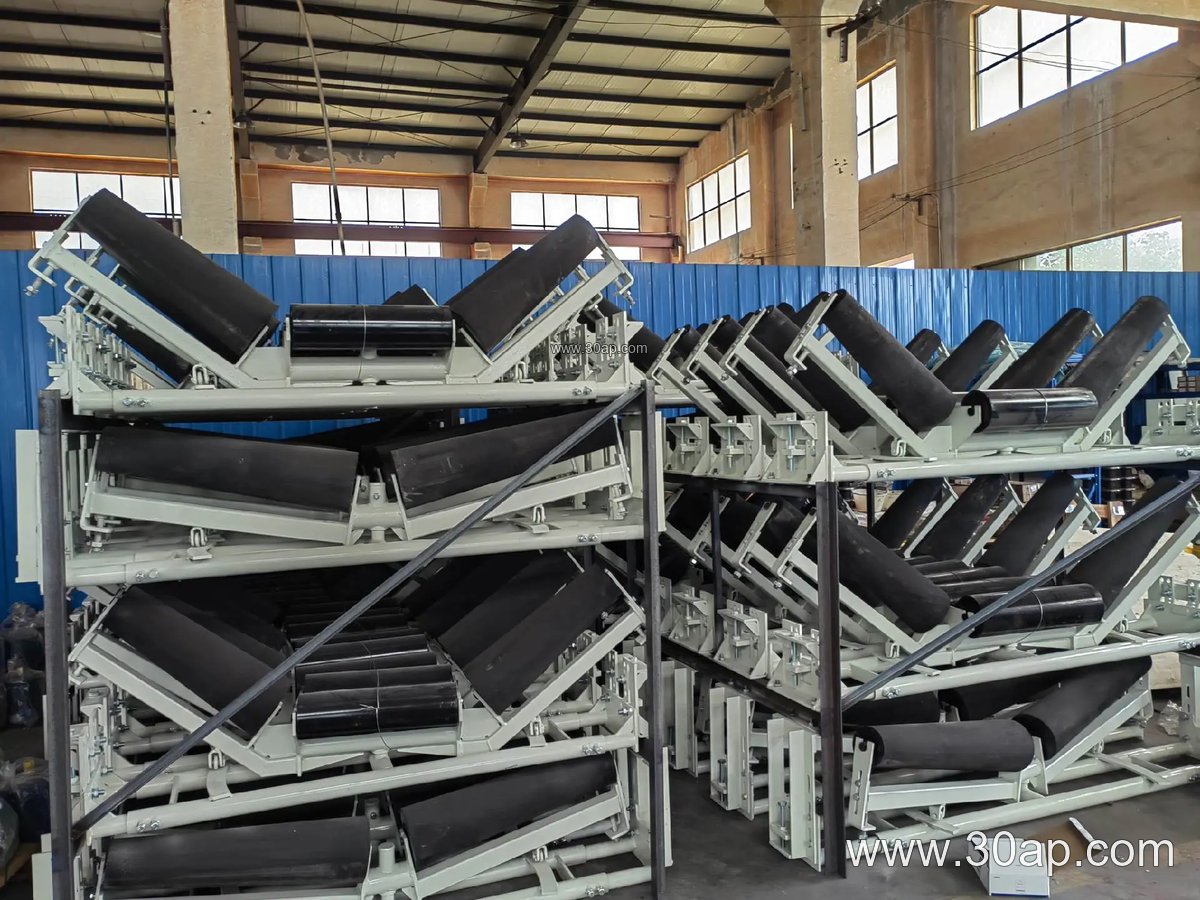
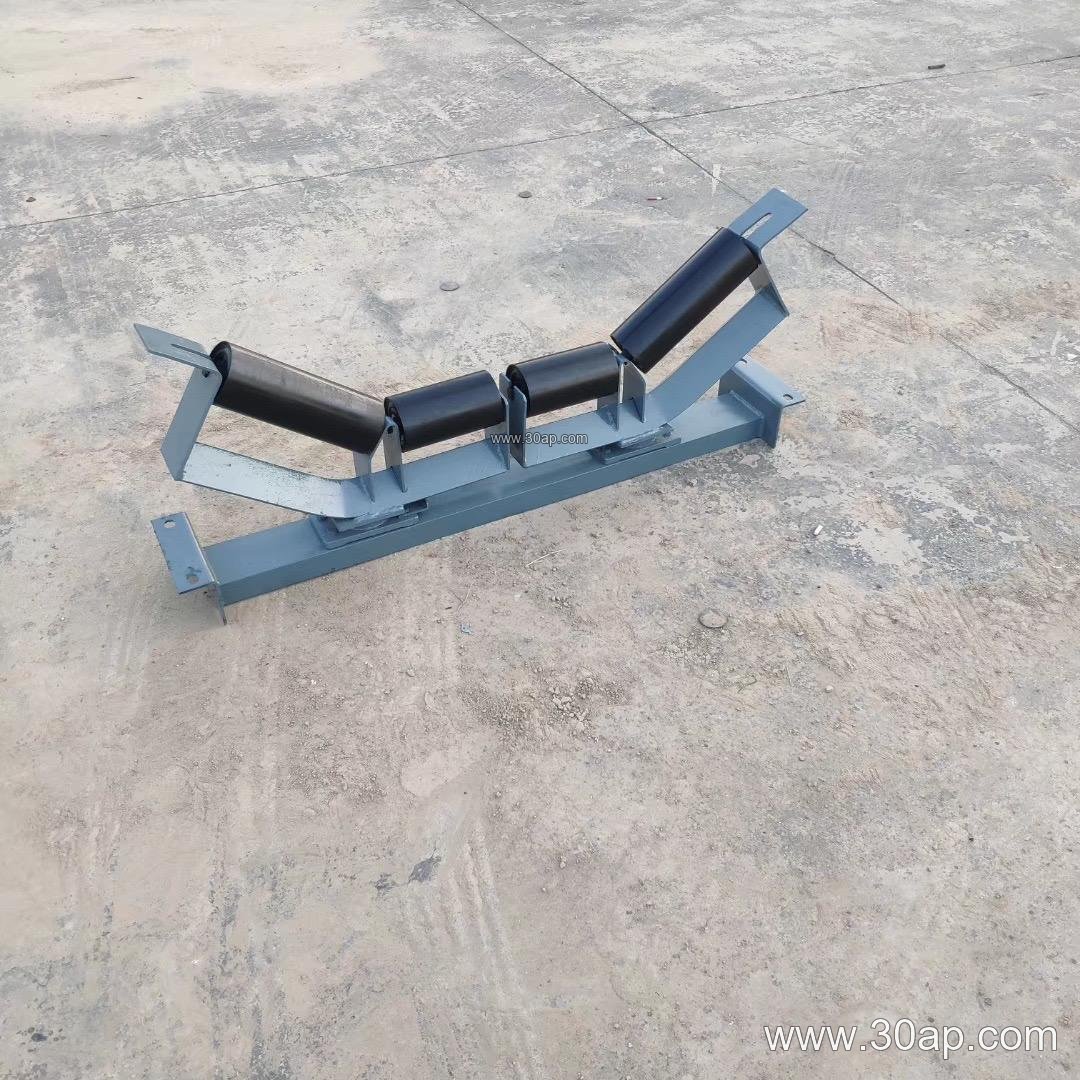
A trough idler bracket is the steel support that holds the three-roller trough set in place on the carrying side of a belt conveyor. It fixes the side rollers at a set angle so the conveyor belt forms a stable trough, keeping bulk material centered as it moves from the loading point to the discharge end. In a quarry, a coal washing plant or a cement kiln feed line, this bracket is one of the quiet parts that decides how well the whole conveyor behaves.
The same item is also called a troughing idler bracket or troughing bracket. It should not be confused with the return bracket under the belt, and it is not a conveyor pulley in any form. Drive pulleys, tail pulleys and bend pulleys have their own mounting arrangements and are never swapped for a trough bracket.
How the Bracket Is Built
Most trough brackets are fabricated from angle steel, channel steel or folded steel plate, then drilled and slotted for the idler shaft ends. The center roller sits lower than the two side rollers, and the angle between the side roller and the horizontal line is the trough angle. A fixed bracket holds one angle; an adjustable bracket lets maintenance staff change the angle within a range, which is useful when belt loading conditions vary.
Typical build details include:
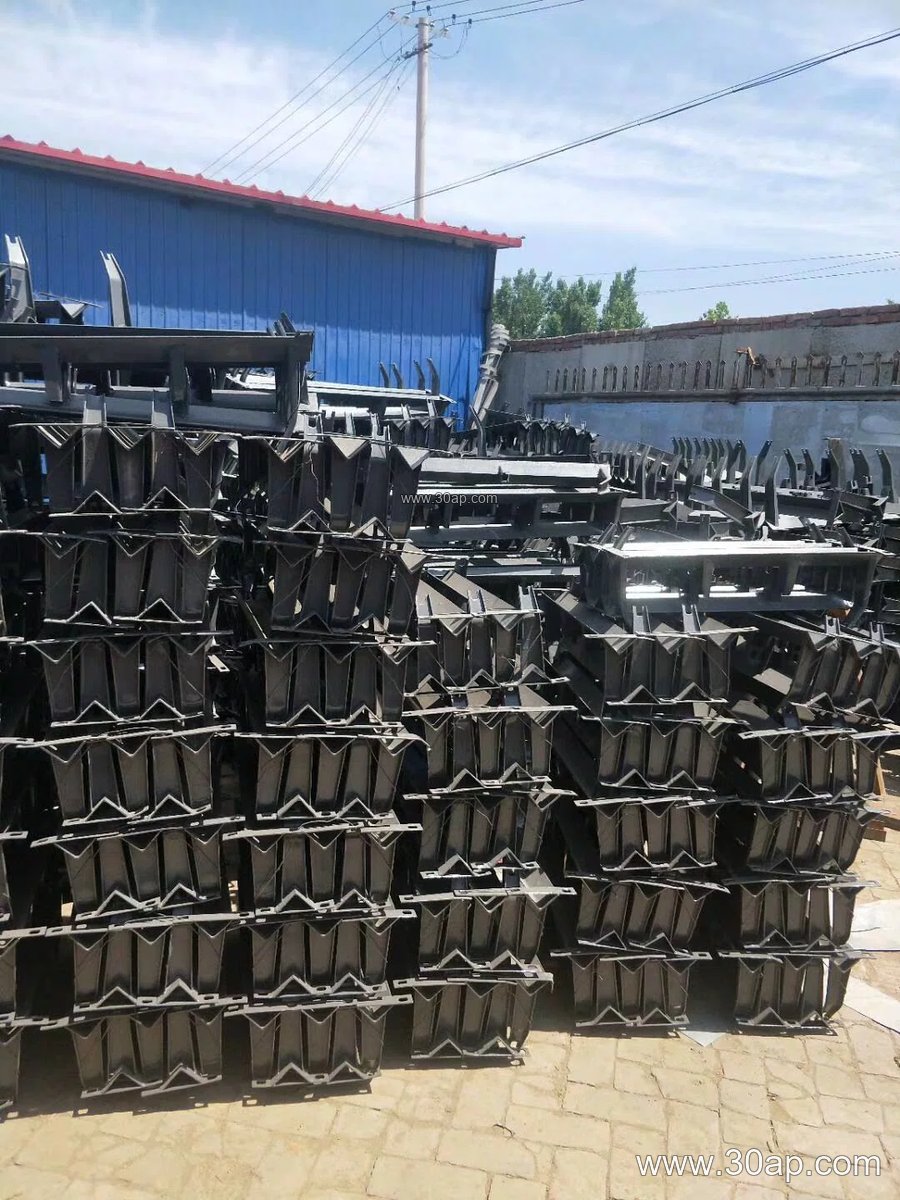
- Welded frame with reinforced gussets at the side roller seats
- Slotted mounting holes to allow small alignment corrections
- Bolted or pinned connections to the conveyor stringer
- Powder coating or galvanizing for dusty and damp sites
Common Sizes and Angles
The table below shows reference combinations often seen in catalogues. These are examples, not fixed rules, and actual hole spacing and beam length are determined by the conveyor design.
| Belt width | Trough angle | Idler diameter |
|---|---|---|
| B500 | 20 degrees | Ø89 |
| B650 | 30 degrees | Ø89 |
| B800 | 35 degrees | Ø108 |
| B1000 | 35 degrees | Ø108 |
| B1200 | 45 degrees | Ø133 |
| B1400 | 45 degrees | Ø159 |
| B1600 | 35 degrees | Ø159 |
| B1800 | 45 degrees | Ø194 |
| B2000 | 35 degrees | Ø194 |
A wider belt does not automatically mean a steeper angle, and one belt width does not lock the buyer into a single roller diameter. Selection should follow the material, the belt speed and the load profile.
Where It Fits on the Line
On a crushing and screening circuit, trough brackets carry the conveyor belt through the loading zone and along the incline. In a power plant coal yard or a fertilizer warehouse, they keep the belt profile steady so spillage stays low. Transition brackets are used near the head and tail to ease the belt from a flat to a troughed shape, and impact brackets with rubber rings are placed under the loading chute.
Related hardware includes the idler roller itself, the conveyor bracket that ties the frame to the stringer, and the conveyor pulley at each end of the run. Each plays a different role, and the trough bracket is judged mainly by how firmly it holds the rollers and how easily it can be replaced.
Buyer Checklist
Before ordering, confirm the belt width, the required trough angle and the roller diameter, then check the mounting hole pattern against the existing stringer. Ask whether the frame is fixed or adjustable, and whether the finish suits a wet or dusty environment. For a mine or a port terminal, spare brackets and bolts are worth keeping on site, because a bent bracket can misalign the whole trough set and wear the belt edge. A short walk along the line with a level and a tape measure can prevent most fitting problems.