What a 1200mm Wide Conveyor Belt Is
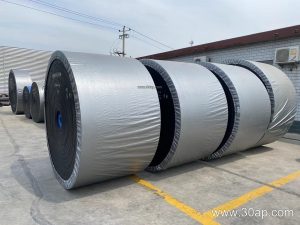
A 1200mm wide conveyor belt, often written as a B1200 belt, is a heavy-duty rubber or PVC-based belt with a nominal width of 1200 millimeters. It sits in the middle-to-large range of common belt widths, making it a practical choice for main haulage lines in mines, coal preparation plants, cement works, power stations and aggregate quarries. At this width, the belt can carry substantial tonnage while still fitting standard conveyor structures with 1200mm-wide idler rollers and matching conveyor pulleys.
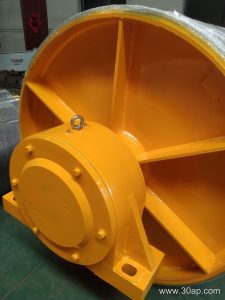
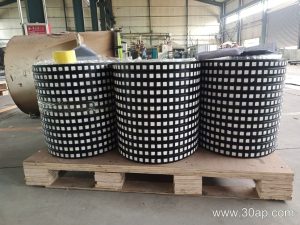
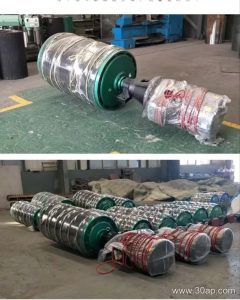
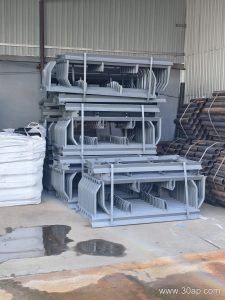
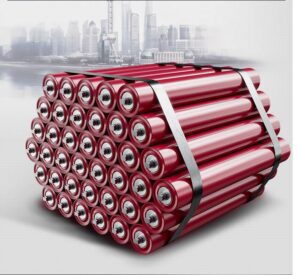
The belt is not a standalone product. Its performance depends on the frame, the idler roller spacing, the drive pulley, the tail pulley, the bend pulleys and the conveyor brackets that hold everything in alignment. A 1200mm belt is typically used on a complete conveyor system rather than as a simple replacement item.
Construction and Common Specifications
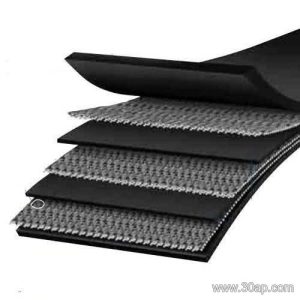
Most 1200mm wide belts use a fabric carcass or a steel cord carcass. Fabric types include EP (polyester-cotton) and NN (nylon-nylon) constructions, while steel cord belts are chosen for long distances and high tension. The cover rubber grade depends on the duty: abrasion-resistant for sand and gravel, heat-resistant for cement and clinker, oil-resistant for certain industrial feeds, and flame-retardant or antistatic grades for coal mine service.
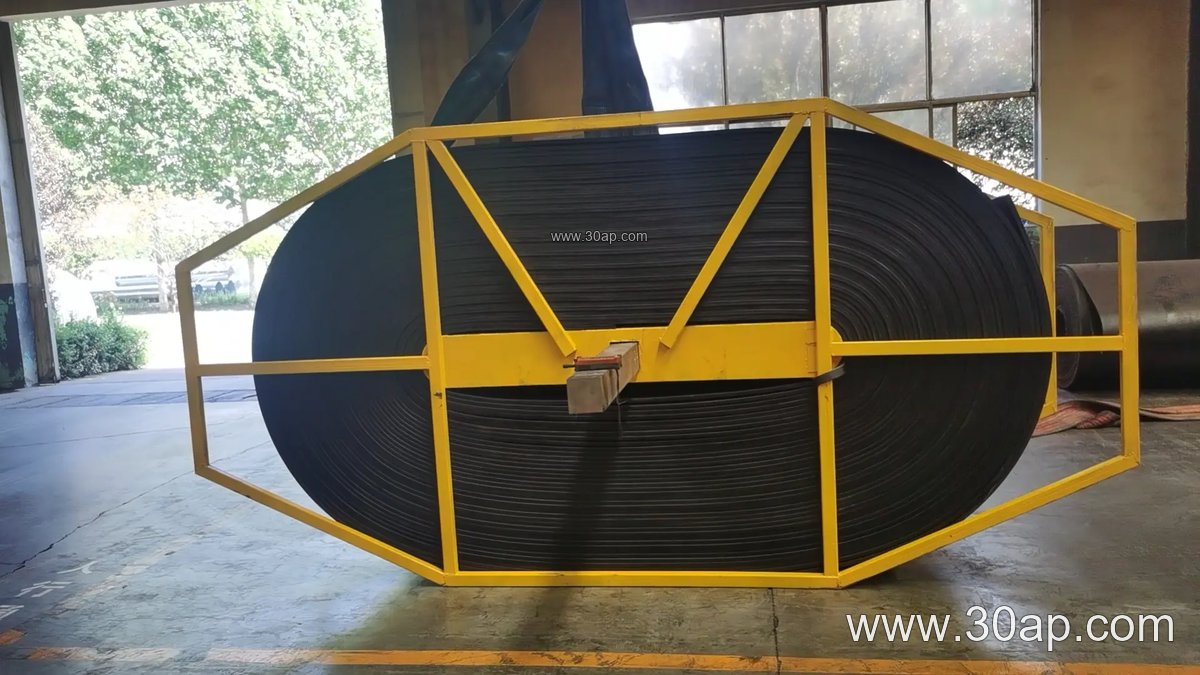
Typical reference values for a B1200 belt are shown below. These are common ranges, not fixed supply commitments, and actual values are confirmed by design.
| Parameter | Common reference values |
|---|---|
| Belt width | B1200 (1200 mm) |
| Fabric types | EP, NN |
| Steel cord type | Available for high-tension duties |
| Strength grades (EP) | EP200, EP315, EP400, EP500, EP630, EP800, EP1000, EP1250, EP1600, EP2000 |
| Cover thickness | 3+1.5, 4+2, 5+2, 6+2, 8+3 mm |
| Carcass plies | Usually 2 to 6 layers for fabric belts |
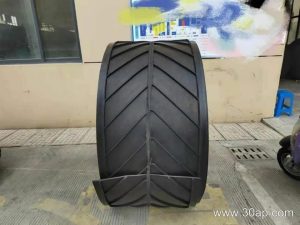
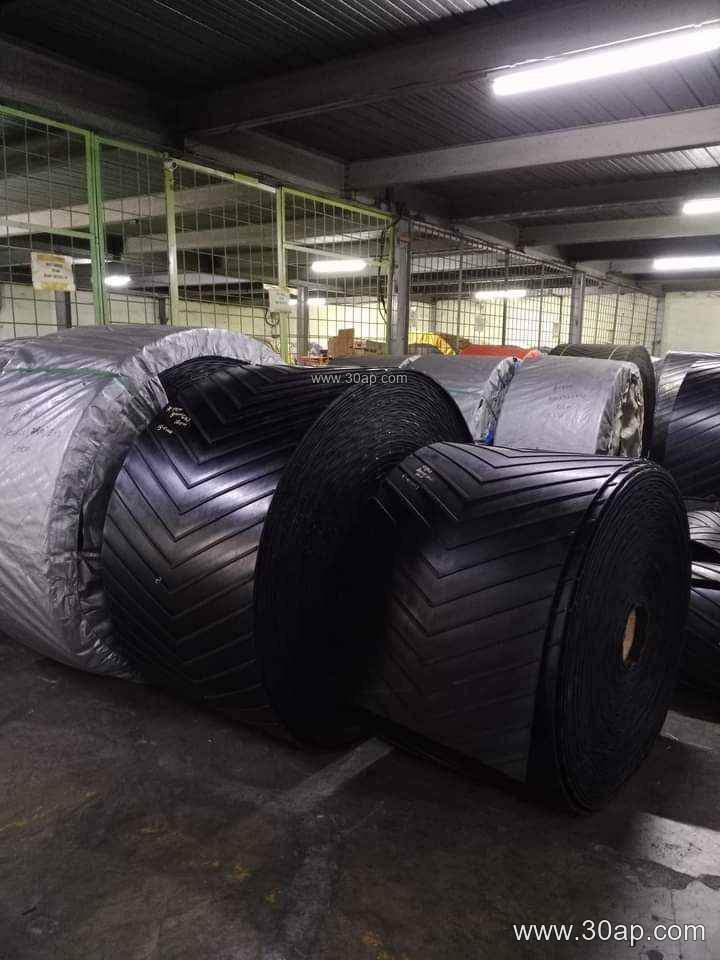
| Surface forms | Plain, patterned, chevron, corrugated sidewall |
Patterned and chevron surfaces help on inclines where material tends to slide back. Corrugated sidewall belts are a different subtype used for steep inclines and should be compared carefully rather than treated as a direct substitute for a standard flat belt.
Where It Fits in the Plant
In a coal mine or coal preparation plant, a 1200mm belt often runs on the main trunk conveyor, supported by three-roll idler sets and a heavy drive pulley. In a cement plant, the same width may feed raw material or clinker across long distances, where heat-resistant covers matter. In a power station, it may handle coal from stockyard to bunker. In a sand and gravel yard, a B1200 belt moves screened aggregate at high tonnage with abrasion-resistant covers.
The belt interacts with several components. The drive pulley transmits power, the tail pulley sets the return point, and bend pulleys guide the belt around curves and tensioning arrangements. Idler rollers support the loaded strand, while conveyor brackets keep the frame and idlers in position. None of these parts can be chosen from belt width alone.
Buyer Checklist
- Confirm the actual duty: material type, lump size, moisture, temperature and whether the belt runs in a coal or dusty environment.
- Check the conveyor layout: incline angle, transition distance, pulley diameters and idler spacing are design inputs, not fixed by belt width.
- Select the carcass and cover grade from the tension and wear conditions, then verify the cover thickness against the material.
- For inclined sections, consider patterned or chevron surfaces, and confirm the belt is compatible with the existing pulley and idler arrangement.
- Plan maintenance: check belt tracking, cover wear, splice condition and idler rotation regularly, since a 1200mm belt carries high loads and small misalignments grow quickly.
A 1200mm wide conveyor belt is a capable mid-to-large belt for demanding bulk handling, but it should be specified as part of a full conveyor design, with pulleys, idlers, brackets and belt grade all matched to the duty.