What Conveyor Bracket Fabrication Covers
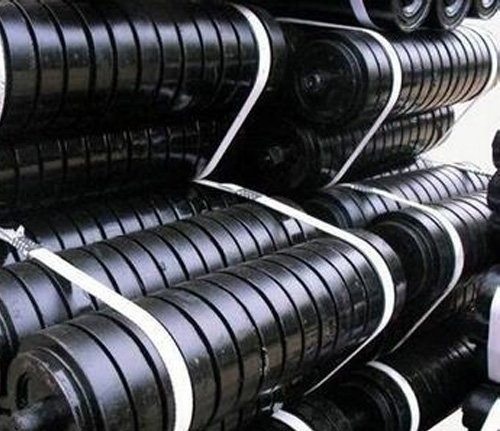
Conveyor bracket fabrication is the cutting, bending, drilling, and welding work that turns steel stock into the frames holding idler rollers and belt runs in place. On a bulk handling line, these frames sit between the main structure and the moving belt, so their geometry decides how well the conveyor belt tracks, how evenly load is spread, and how quickly a roller can be swapped during maintenance. A fabricator working on a quarry line or a cement plant usually builds to a drawing that fixes the belt width, trough angle, and roller diameter before any steel is cut.
Materials and Build Steps
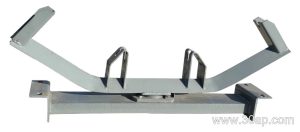
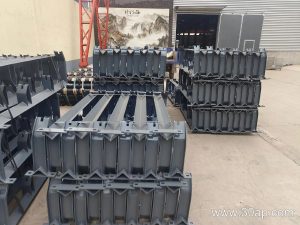
Most frames come from angle steel, channel steel, or folded plate. Angle and channel are common for trough and return supports because they resist bending along the run, while folded plate suits lighter frames and gives a cleaner edge. A typical fabrication sequence looks like this:
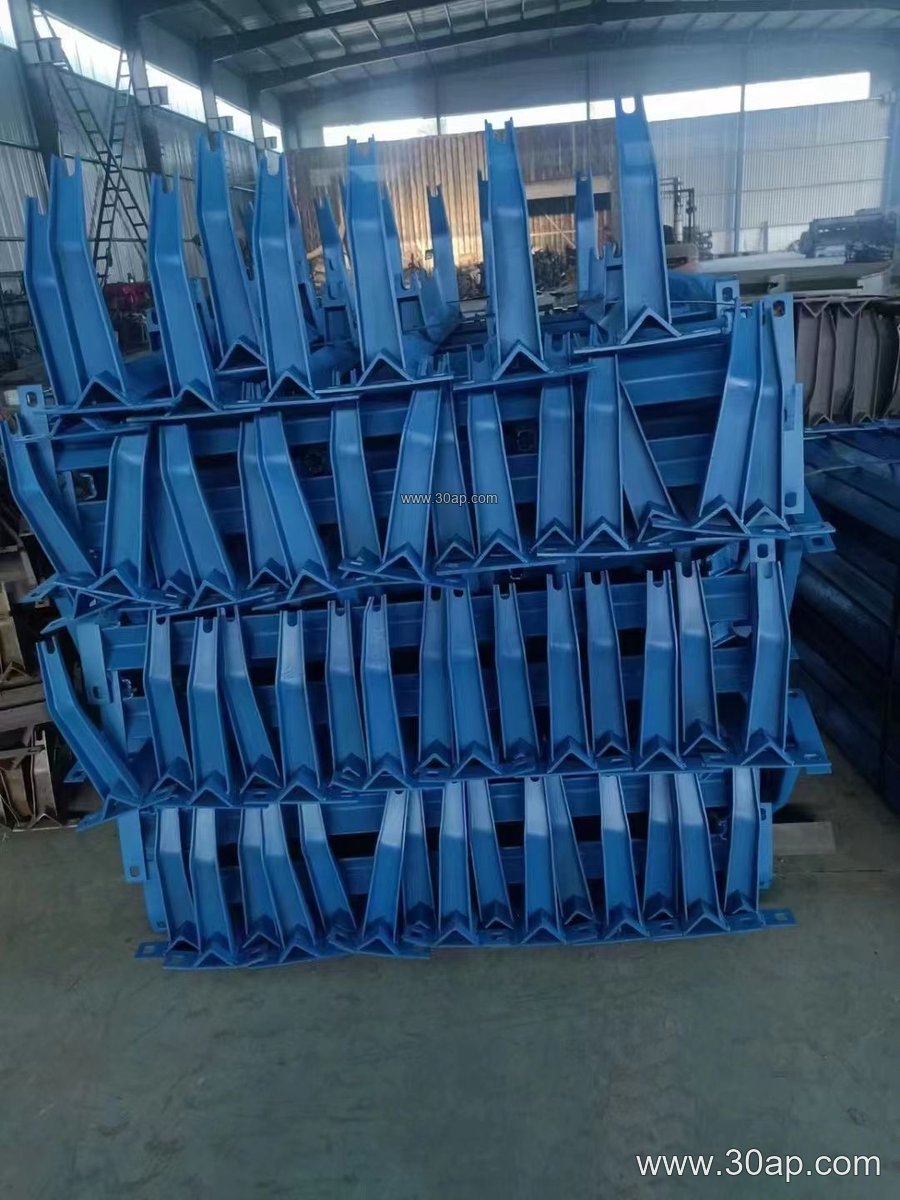
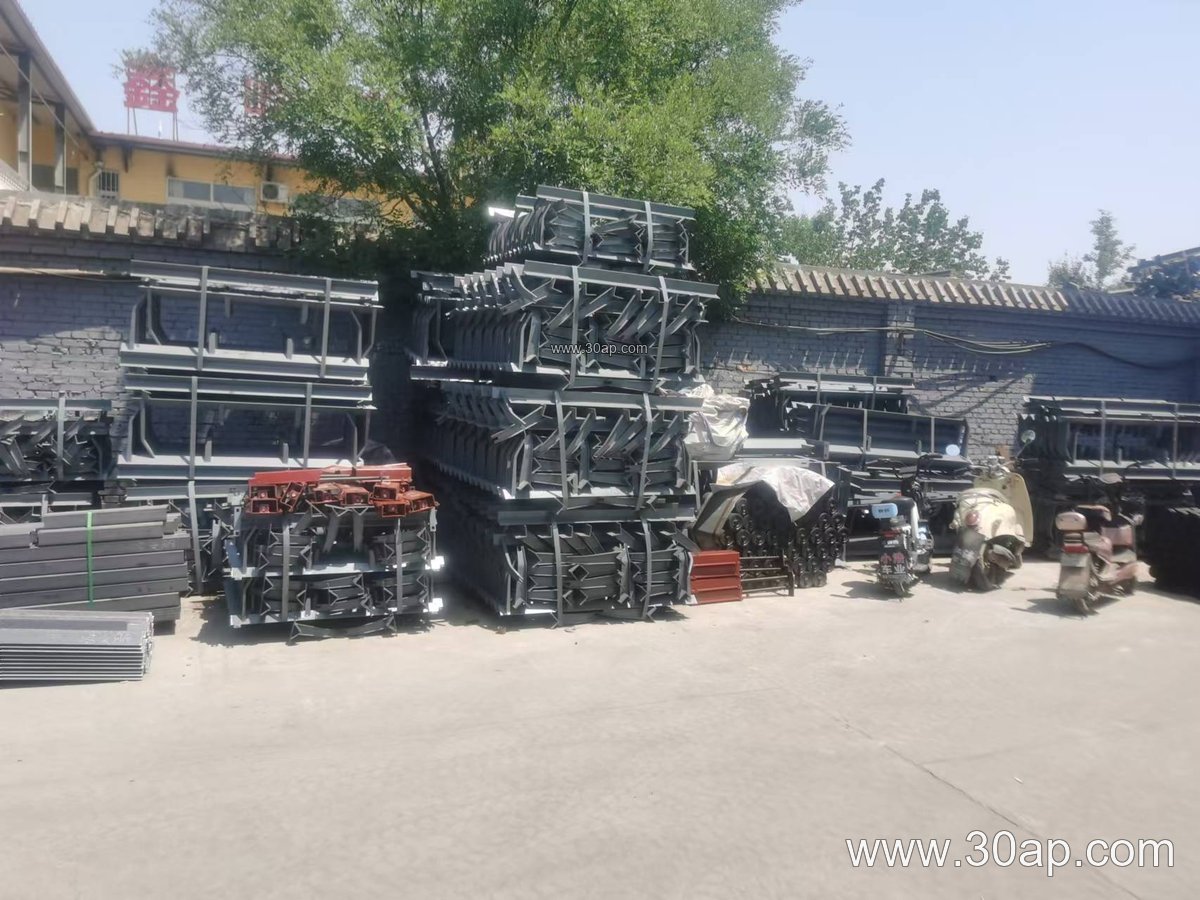
- Mark and cut stock to the length set by the belt width and trough angle.
- Drill mounting holes for the idler roller shaft; hole spacing follows the design, not a single fixed figure.
- Bend or press the trough wings where a fixed angle is specified.
- Weld brackets, gussets, and mounting pads, then check square and alignment.
- Clean and coat with primer and finish paint for the site environment.
Welding distortion is the main risk. A frame that pulls out of square will tilt the rollers, and a tilted roller pushes the belt toward one side. Checking diagonal dimensions and roller seat height after welding is part of good conveyor bracket fabrication, not an optional extra.
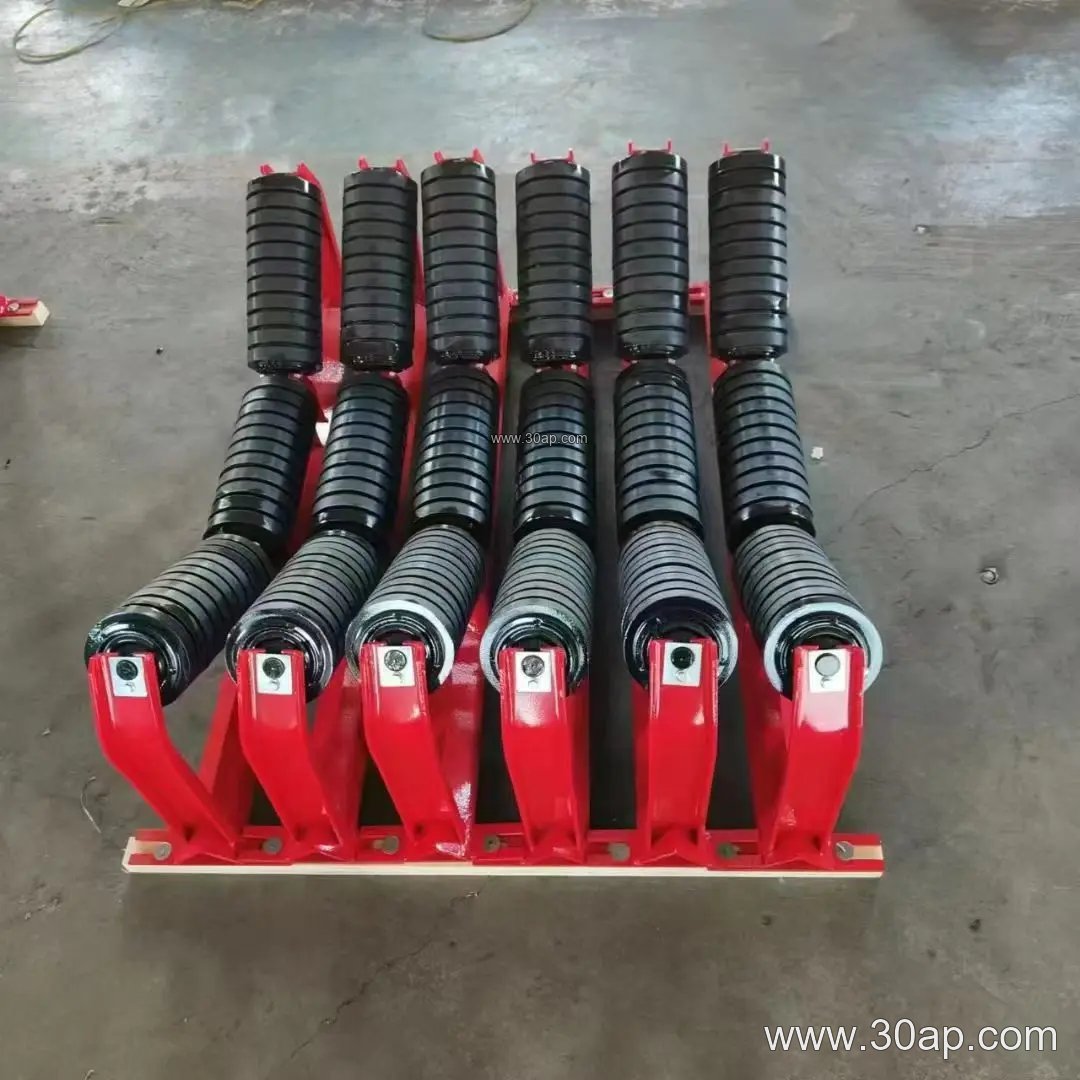
Common Frame Types and Reference Dimensions
The table below shows typical combinations used when specifying fabricated supports. Values are for reference and should be confirmed against the actual conveyor design.
| Frame type | Belt width | Trough angle | Roller diameter | Typical use |
|---|---|---|---|---|
| Trough support (fixed) | B800 | 35 degrees | Ø108 | General bulk conveying |
| Trough support (fixed) | B1200 | 45 degrees | Ø133 | High tonnage, deep trough |
| Transition support | B650 | 30 degrees | Ø89 | Approach to pulleys |
| Return flat support | B1000 | — | Ø108 | Carrying side of return belt |
| V-return support | B1400 | — | Ø133 | Belt training on return run |
| Impact support | B1600 | 35 degrees | Ø159 | Below loading point |
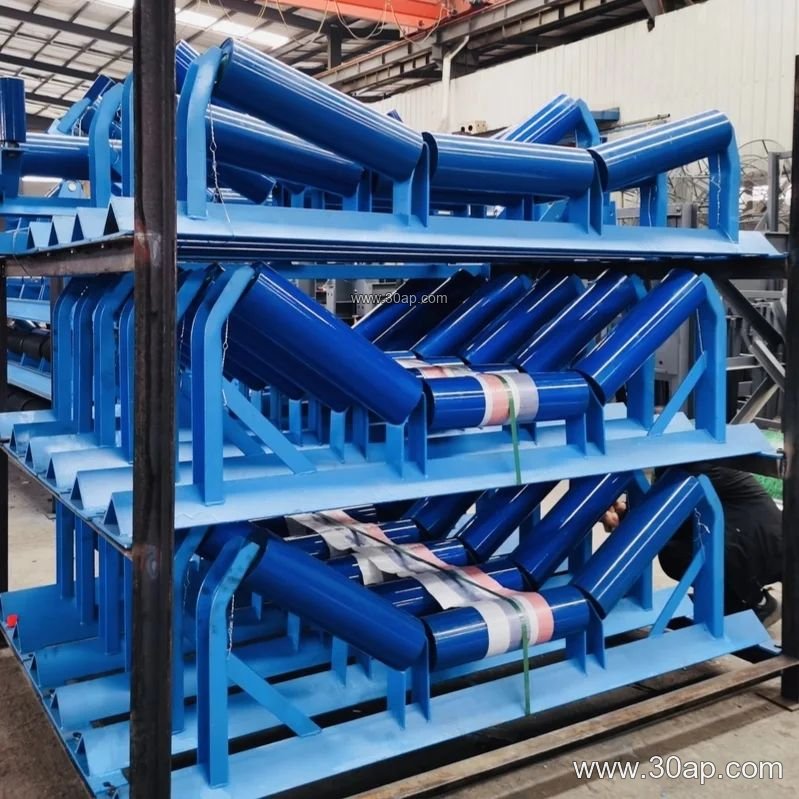
Adjustable frames allow the trough angle to be set between positions such as 20, 30, 35, and 45 degrees, which helps when a line handles materials with different flow behavior. Forward-leaning supports, often set around 1.5 to 2 degrees, are a separate design choice and should not be confused with the trough angle itself.
Where These Frames Are Used
In a coal preparation plant, trough supports carry the conveyor belt through long horizontal runs, while impact frames sit under the transfer chute where lumps land. In a limestone quarry or crushing and screening circuit, return supports and V-return frames keep the empty side of the belt centered. The same fabrication approach appears in power plant coal handling, fertilizer plants, and grain silos, with coating and steel thickness adjusted for dust, moisture, or corrosive conditions.
Buyer Checklist
Before ordering, confirm the belt width, the required trough angle, the roller diameter, and the mounting hole pattern. Ask for the frame drawing so hole spacing and crossbeam length can be checked against the existing conveyor pulley centers and structure. State the environment, since a washdown area may need heavier coating than a dry transfer point. Finally, confirm that spare roller seats match the idler roller used on site, because a fabricated frame is only useful if a replacement roller drops in without rework.