What a 630mm Diameter Conveyor Pulley Is
A 630mm diameter conveyor pulley is a drum-style rotating component used to support and drive the conveyor belt on a bulk handling line. With a nominal outside diameter of Ø630 mm, this size sits in the mid-to-large range: heavier than the small snub and take-up drums often found on short feeders, yet more compact than the Ø800 mm and above drums used on high-capacity mainlines. In practice, the same drum diameter appears across several positions on a conveyor, and each position has its own duty.
The term describes a dimensional family, not a single fixed part. A Ø630 mm drum may be supplied as a drive pulley at the head, a tail pulley at the loading end, or a bend pulley that redirects the belt through a tensioning arrangement. Buyers should always confirm which position the drum is meant for, because the shaft, bearing, lagging, and hub design change accordingly.
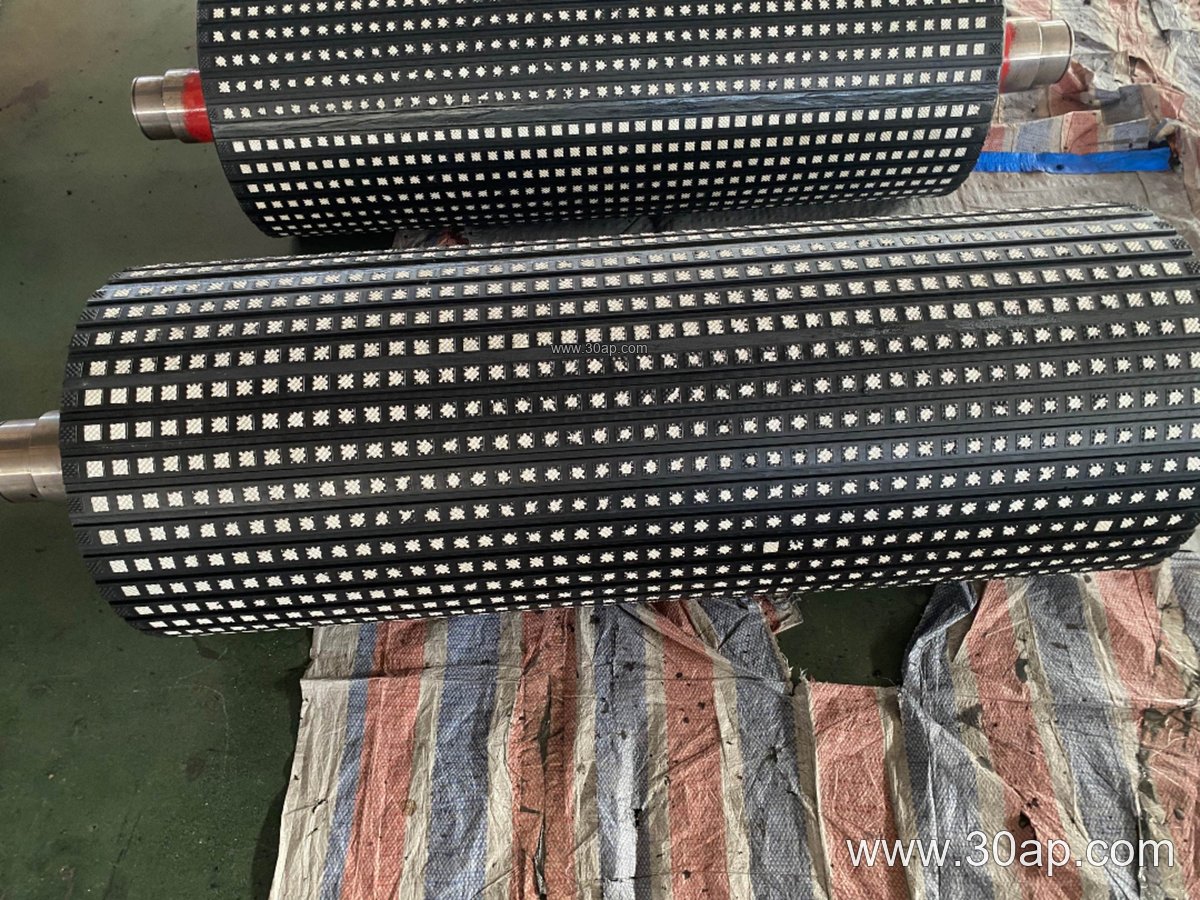
How the Drum Is Built
Most Ø630 mm conveyor pulleys use a welded steel shell with dished or flat end plates, a through-shaft or stub-shaft assembly, and bearing housings that bolt to the conveyor bracket. The shell thickness and shaft diameter are determined by the torque and radial load of the application, not by belt width alone.
Key construction choices include:
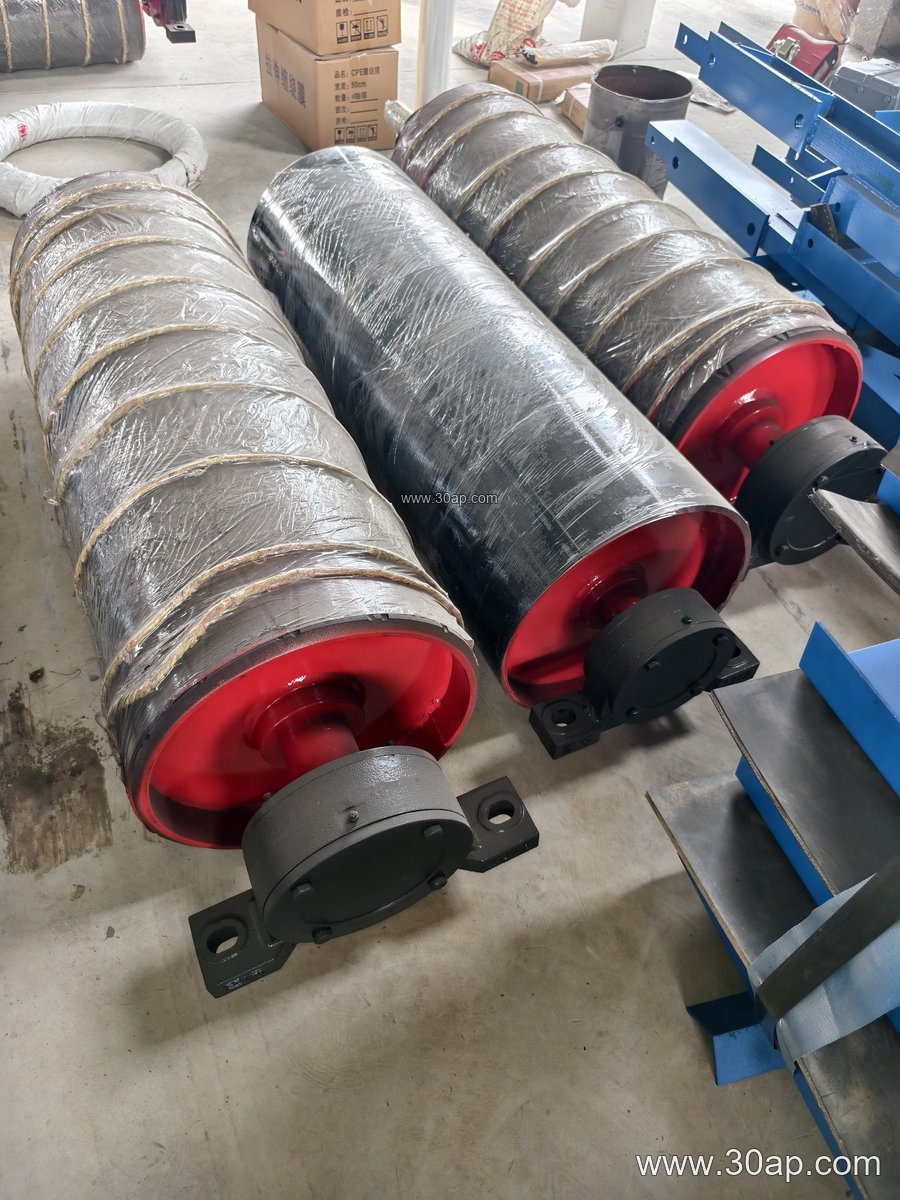
- Shell and end plates – rolled steel shell with welded dished ends for stiffness under belt tension.
- Shaft – common shaft sizes in this class include Ø120, Ø140, Ø160, Ø180, and Ø200 mm, selected by torque calculation.
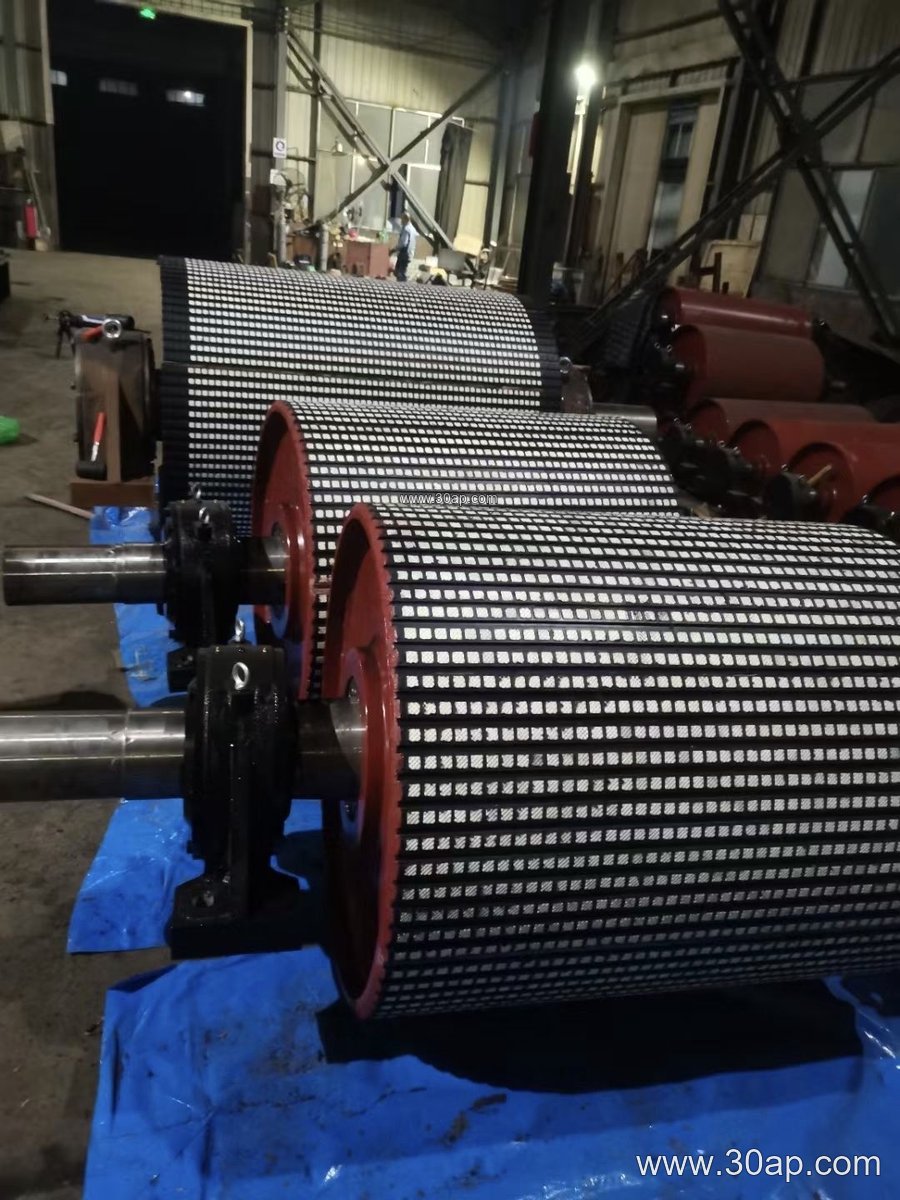
- Lagging – plain, cold-bonded rubber, hot-vulcanized rubber, diamond grooving, herringbone grooving, or ceramic tiles, usually 8–20 mm thick.
- Bearing arrangement – spherical roller bearings in sealed housings, greased for life or relubricated through fittings.
Face Width and Belt Matching
The drum face is normally wider than the belt it carries, so a Ø630 mm pulley can serve several belt widths depending on the conveyor design. The table below shows typical face widths against common belt sizes; these are reference values, not fixed pairings.
| Belt width | Typical pulley face width | Possible drum use |
|---|---|---|
| B800 | about 950 mm | tail or bend position in a short line |
| B1000 | about 1150 mm | drive or tail drum on medium-duty conveyors |
| B1200 | about 1400 mm | head drive or tension drum |
| B1400 | about 1600 mm | mainline drive in aggregate or cement plants |
A B1200 × Ø630 mm combination is common, but it is not the only valid match. The same drum diameter can appear on B1000 or B1400 belts when the belt speed, tonnage, and wrap angle suit the design.
Where the Size Fits on Site
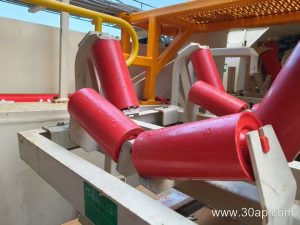
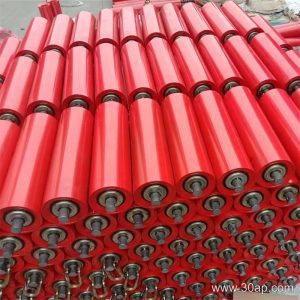
In a limestone quarry, a Ø630 mm bend pulley may redirect the conveyor belt around a transfer tower where space is limited. In a coal preparation plant, the same diameter often appears as a tail pulley behind the loading chute, where impact and fines demand a robust shell and sealed bearings. Cement plants use this size on clinker and raw meal conveyors, and power station coal yards apply it on stockyard and tripper lines. The drum rarely works alone: idler rollers carry the belt along the run, and the pulley transfers the load into the conveyor bracket and frame.
Drive, Tail, and Bend Duties Are Not Interchangeable
A drive pulley transmits torque through lagging friction and therefore needs a traction surface, a keyed or shrink-fit shaft connection, and a bearing set sized for the resulting belt pull. A tail pulley mainly guides and supports the return belt and may run with plain or lightly lagged face. A bend pulley changes belt direction and carries tension without driving. Substituting one for another usually leads to slip, premature lagging wear, or bearing overload. When comparing, note that a wing pulley is sometimes chosen for self-cleaning at the tail, but it is a different subtype and does not replace a standard drum in a drive position.
What Buyers Should Confirm Before Ordering
- Position and duty – drive, tail, bend, take-up, or snub; state the wrap angle and belt speed.
- Belt width and drum face – confirm the face width matches the belt and the frame opening.
- Shaft and bearing – provide torque and radial load so the shaft diameter is calculated, not guessed.
- Lagging type and thickness – plain, diamond, herringbone, or ceramic, with thickness in the 8–20 mm range.
- Balance and runout – request dynamic balancing for high-speed drives.
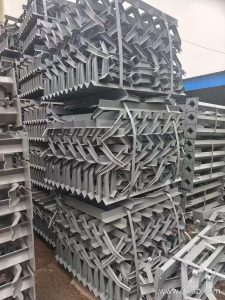
- Bracket interface – bearing housing bolt pattern and centre height must match the conveyor bracket.
Finally, plan maintenance: check lagging wear, bearing temperature, and shaft seal condition at each scheduled shutdown. A correctly specified Ø630 mm conveyor pulley, matched to its position and load, keeps the belt tracking true and the material flowing from pit to stockpile.