What the Main Drive Pulley Does
The main drive pulley is the powered drum that moves a conveyor belt forward. It transmits torque from the gearbox or motor to the belt through friction between the drum surface and the belt cover. In a typical conveyor, this pulley sits at the head or discharge end, though some layouts place it elsewhere. It is also called the head pulley or drive drum, but it is not the same as a tail pulley, bend pulley, or take-up pulley. Those perform different duties, such as redirecting the belt or maintaining tension, and they are not interchangeable with the drive pulley.
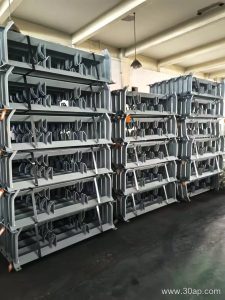
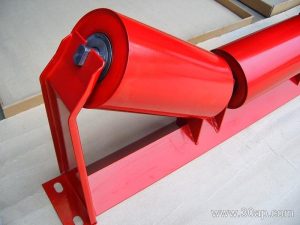
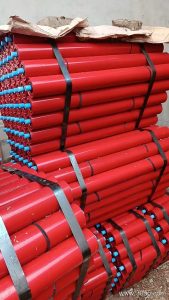
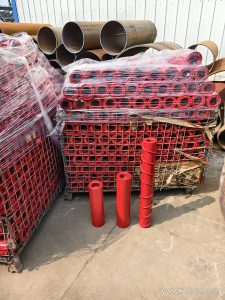
In hard-rock mines, coal preparation plants, cement kilns, and power station coal yards, the main drive pulley is often the largest and most heavily loaded drum on the conveyor. A quarry or sand and gravel line may use a smaller unit, while a port bulk terminal or iron ore facility may need a very robust design. The pulley works together with the conveyor belt, idler rollers, and conveyor brackets to keep material moving.
Construction and Key Components
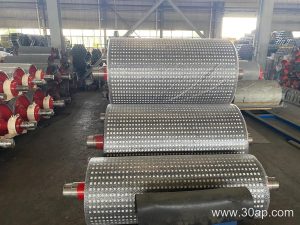
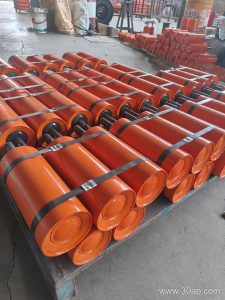
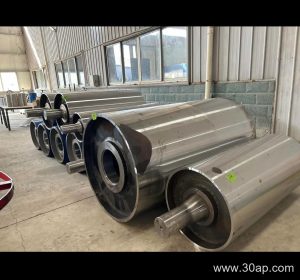
A drive pulley is built around a cylindrical shell, usually made from steel pipe or rolled plate. The shell is welded to end discs, which are in turn connected to a shaft. The shaft transmits torque and is supported by bearings in pillow blocks or a split housing. Surface finish matters: a plain steel shell may be used in light duty, but most industrial conveyors use rubber lagging to increase friction and reduce belt slip. Common lagging types include plain rubber, diamond grooved, herringbone, and ceramic lagging. Lagging thickness often ranges from 8 mm to 20 mm depending on the application.
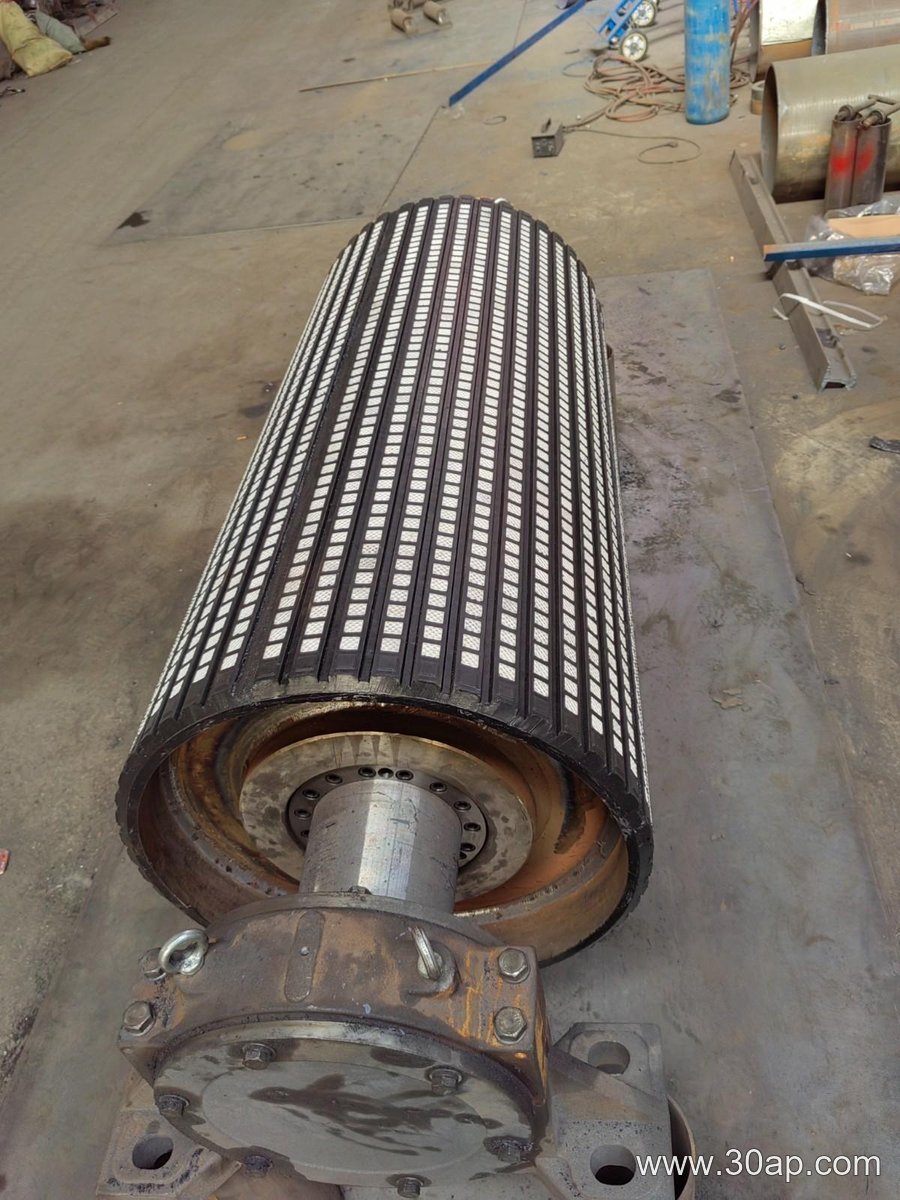
The pulley face width is normally wider than the belt. For example, a B800 belt may run on a pulley face of about 950 mm, and a B1200 belt on about 1400 mm. This extra width helps accommodate belt misalignment without exposing the belt edges. The diameter is selected based on belt tension, speed, and the required torque, not simply on belt width. A B1000 conveyor might use a Ø800 or Ø1000 main drive pulley, but a smaller or larger diameter can also be correct if the engineering calculations support it. Shaft diameter is determined by torque and bending loads, with common sizes such as Ø80, Ø100, Ø120, or Ø160. You cannot pick a shaft size from belt width alone.
Where It Is Used and How It Fits
Main drive pulleys appear in many bulk material handling systems. In a coal mine, the drive pulley at the head end discharges coal onto a transfer chute. In a cement plant, it drives clinker or limestone conveyors. In a power plant, it moves coal from stockpile to boiler. In a sand and gravel operation, it powers a belt that feeds a screen or crusher. The pulley is often paired with a tail pulley for belt return and bend pulleys for redirecting the belt path. A take-up pulley may be used to maintain tension, but again, these are separate components. The main drive pulley is the only one that receives power from the drive unit.
Some conveyors use an electric motorized pulley, often called a drum motor, where the motor and gearbox are inside the shell. This is a different subtype and should not be confused with a standard main drive pulley. For heavy-duty mining or port applications, a conventional drive pulley with an external gearbox remains common.
What Buyers Should Consider
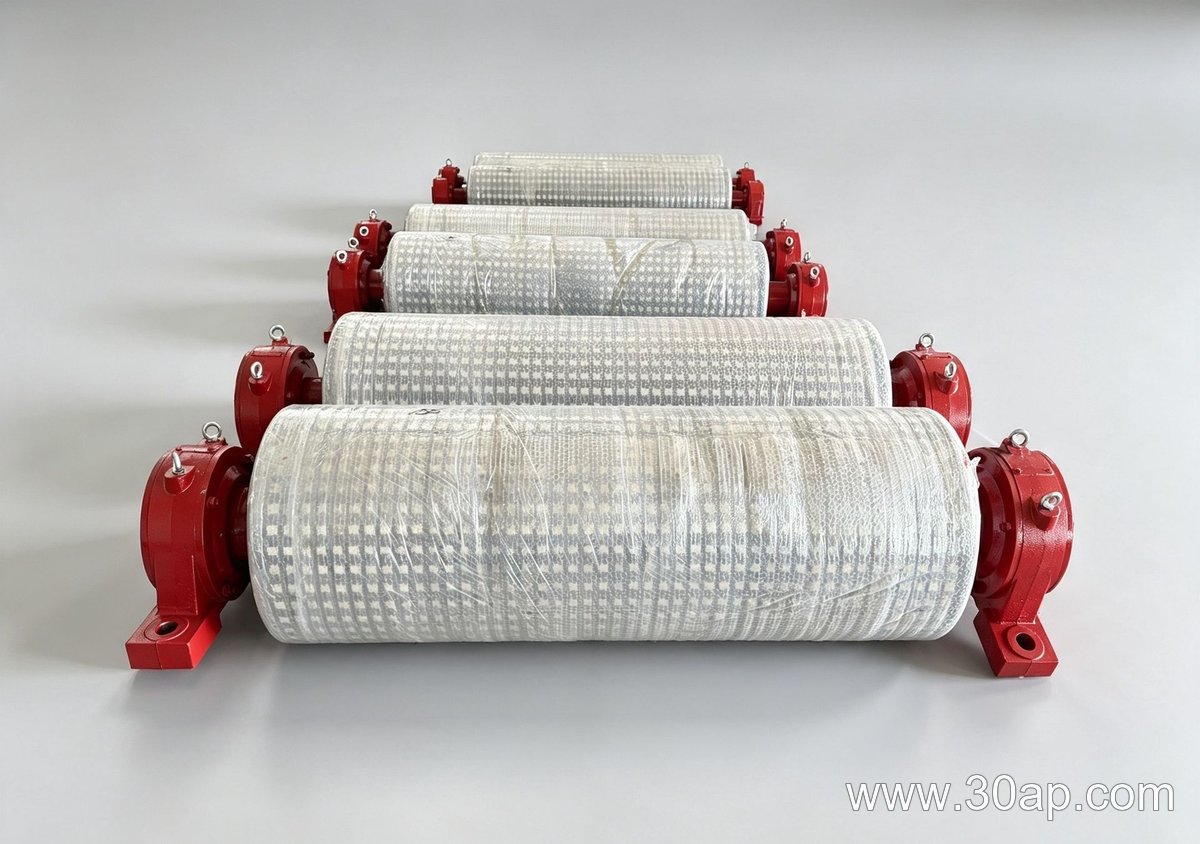
When specifying a main drive pulley, start with the conveyor belt width and the required power. Belt width determines the minimum pulley face width, but diameter and shaft size come from torque and tension calculations. Consider the lagging type and thickness: diamond or herringbone grooving helps with wet or dusty conditions, while ceramic lagging can extend wear life in abrasive service. Check the bearing type and housing to match the conveyor frame and conveyor brackets. Also confirm the shaft material and keyway dimensions.
Common reference dimensions for drive pulleys include:
- Belt width B400 to B2400
- Pulley diameter Ø200 to Ø1800
- Face width usually 100 to 200 mm wider than belt width
- Lagging thickness 8, 10, 12, 15, or 20 mm
- Shaft diameter Ø50 to Ø200, selected by torque
These are general ranges, not fixed rules. A B650 conveyor may use a Ø500 pulley with a Ø80 shaft, but a different design could use a larger shaft if the load demands it. Always rely on the conveyor designer’s calculations. Finally, think about maintenance: replaceable lagging, accessible bearings, and proper alignment reduce downtime. A well-chosen main drive pulley keeps the conveyor belt running smoothly, whether in a limestone quarry, a fertilizer plant, or a grain silo.