What a Custom Conveyor Bracket Really Does
A custom conveyor bracket is the fabricated support that holds idler rollers at the correct position under or over a conveyor belt. Instead of forcing a standard frame onto an existing structure, the bracket is made to match the belt width, trough angle, roller diameter and mounting points of a specific line. In a quarry, a cement plant or a coal handling system, the difference between a bracket that fits and one that almost fits shows up quickly as belt misalignment, uneven roller loading and extra maintenance.
The same item is often called a made-to-order idler support bracket or a bespoke roller mounting bracket. These names describe the same product. Drive pulleys, tail pulleys and bend pulleys are separate components and are not interchangeable with this bracket.
How the Bracket Is Built
Most units are fabricated from angle steel, channel steel or folded steel plate. The choice depends on load, span and the environment. A dusty coal preparation plant may call for heavier section steel and extra stiffness, while a smaller sand and gravel line can use a lighter folded design. Welding quality, hole placement and squareness matter more than the raw steel grade alone, because a twisted bracket tilts every roller mounted on it.
Typical construction details include:
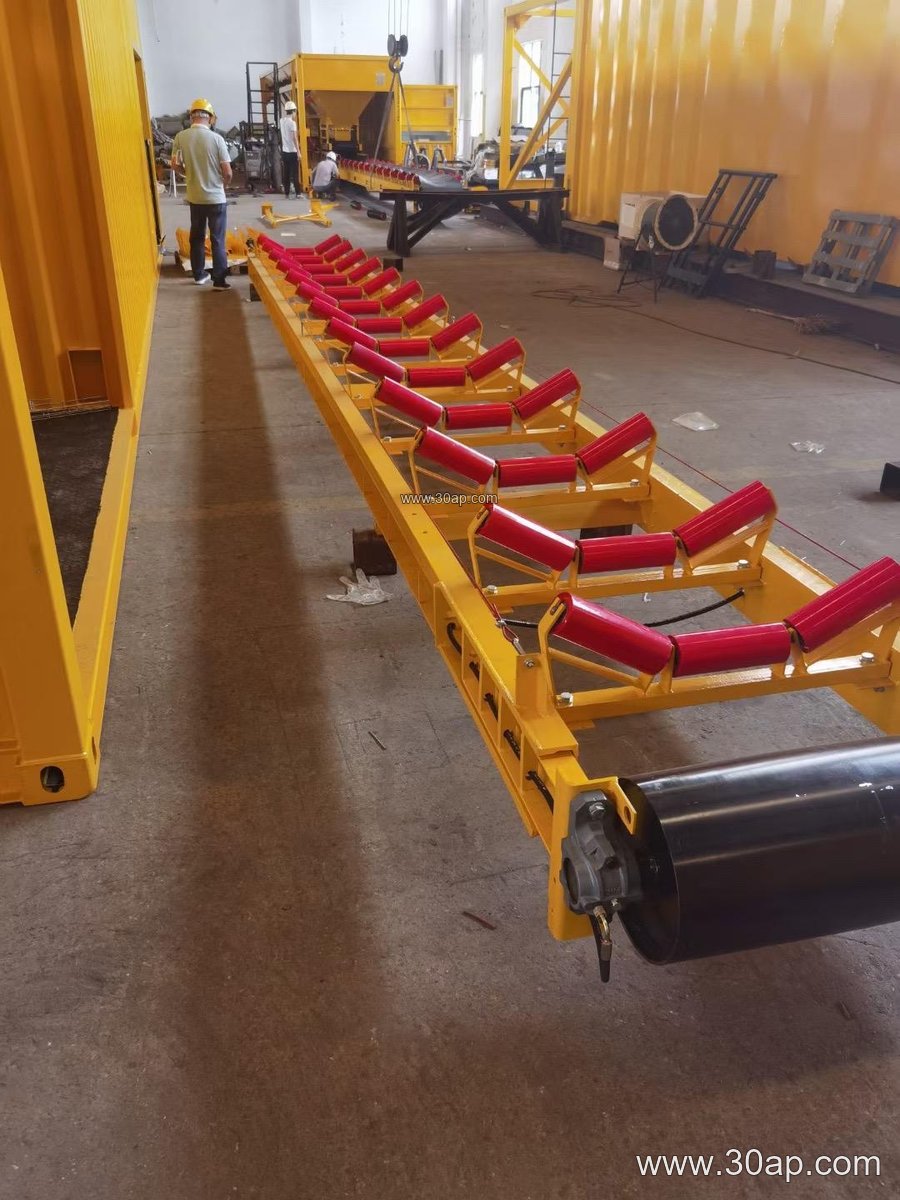
- Mounting holes positioned to suit the existing stringer or frame
- Trough angle fixed at 20, 30, 35 or 45 degrees, or adjustable within that range
- Roller seat spacing matched to the selected idler roller diameter
- Reinforcing gussets at load points on wider belts
- Surface treatment chosen for the site, such as painting or galvanizing
Common Forms and Where They Sit
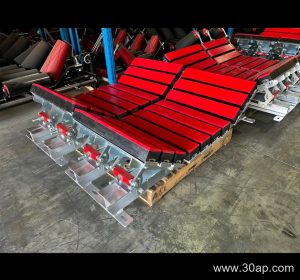
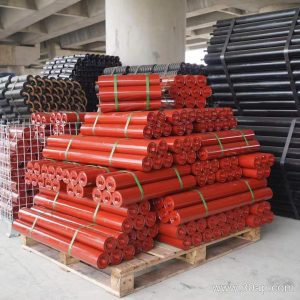
The bracket family covers several positions along a conveyor. A troughing bracket carries the loaded side of the conveyor belt and sets the trough angle. A transition bracket sits where the belt changes from flat to troughed, easing the belt into the idler roller set. A return bracket supports the empty side, and a V-shaped return bracket helps center the belt on the way back. Impact brackets are placed under loading points to absorb material drop, while self-aligning brackets correct minor wander.
Adjustable versions allow the trough angle to be changed on site. Fixed versions keep a set angle and are simpler to install. A slight forward tilt of about 1.5 to 2 degrees is sometimes used in training brackets to encourage belt tracking. Each form has its own job, and none replaces a drive, tail or bend pulley.
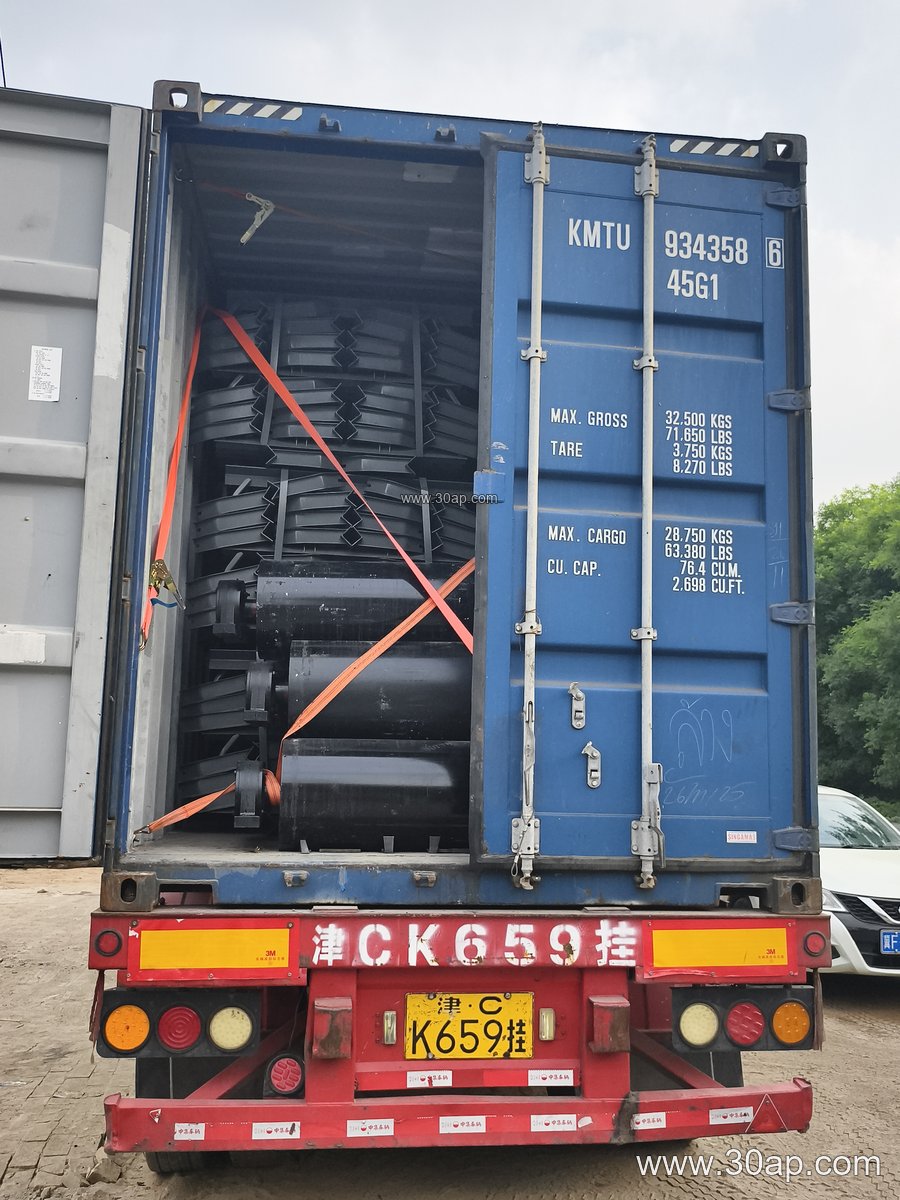
Matching Belt Width, Angle and Roller Size
Belt width, trough angle and roller diameter are selected together, not as a fixed package. A B800 belt at 35 degrees with Ø108 rollers is a common combination, and a B1200 line at 45 degrees with Ø133 rollers also appears in heavy duty work. Neither belt width locks the design to one angle or one roller size. Hole spacing and crossbeam length change with belt width and trough angle, so they are confirmed per project rather than taken from a catalog.
| Parameter | Common Range | Notes |
|---|---|---|
| Belt width | B500 to B2200 | Bracket length follows the belt width |
| Trough angle | 20, 30, 35, 45 degrees | Adjustable types cover a range |
| Roller diameter | Ø89, Ø108, Ø133, Ø159, Ø194 | Seat spacing must match the roller |
| Material | Angle steel, channel steel, folded plate | Selected by load and site conditions |
Values above are reference data. Actual dimensions are set by design and confirmed against the conveyor drawing.
Where These Brackets Are Used
You will find them on belt lines in limestone mines, iron ore plants, coal washing facilities and power station coal yards. Crushing and screening circuits rely on them to keep the belt stable through changing loads. Port terminals, steel sintering lines and tunnel spoil removal systems use similar supports. The working environment decides the details: dust, moisture, abrasion and available installation space all affect the final design.
What a Buyer Should Confirm
Before ordering, provide the belt width, required trough angle, roller diameter and the existing mounting hole pattern. State whether the bracket is for the carrying side, return side, transition zone or loading point. Mention the conveyor pulley layout only as context, since the bracket must align with the pulley centerline but does not replace any pulley. Ask how the surface will be treated and whether the design allows later angle adjustment. Clear drawings and confirmed hole positions prevent field rework and keep the conveyor belt running true.