What a Non-Standard Conveyor Pulley Is
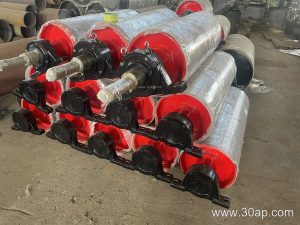
A non-standard conveyor pulley is a pulley built to project-specific dimensions rather than to a catalog standard. In aggregate plants, coal handling systems, and cement lines, the conveyor pulley often has to fit a frame that was modified on site, match a belt width that falls outside common ranges, or carry a shaft size determined by torque rather than by nominal belt width. A non-standard conveyor pulley — also called a custom-built pulley — addresses those cases. It is not a different category from a drive, tail, or bend pulley; those are functional roles, while “non-standard” describes how the pulley is engineered and manufactured.
When a standard pulley will not fit the available space or the load profile, the design work moves to the pulley itself. That may mean a special hub arrangement, a non-standard face width, or a shaft diameter chosen from torque calculations. The conveyor bracket and conveyor belt interface also influence the final geometry.
Construction and Key Dimensions
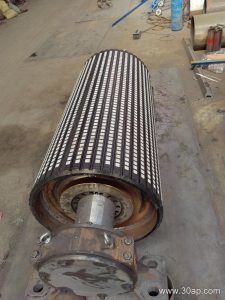
A non-standard conveyor pulley is typically assembled from a rolled or machined shell, end discs, a shaft, and hub locking elements. The shell may be plain or covered with rubber, ceramic, or other lagging. Shaft diameter is usually selected from torque and bending load, not from belt width alone; common shaft sizes include Ø50, Ø60, Ø70, Ø80, Ø90, Ø100, Ø120, Ø140, Ø160, Ø180, and Ø200 mm.
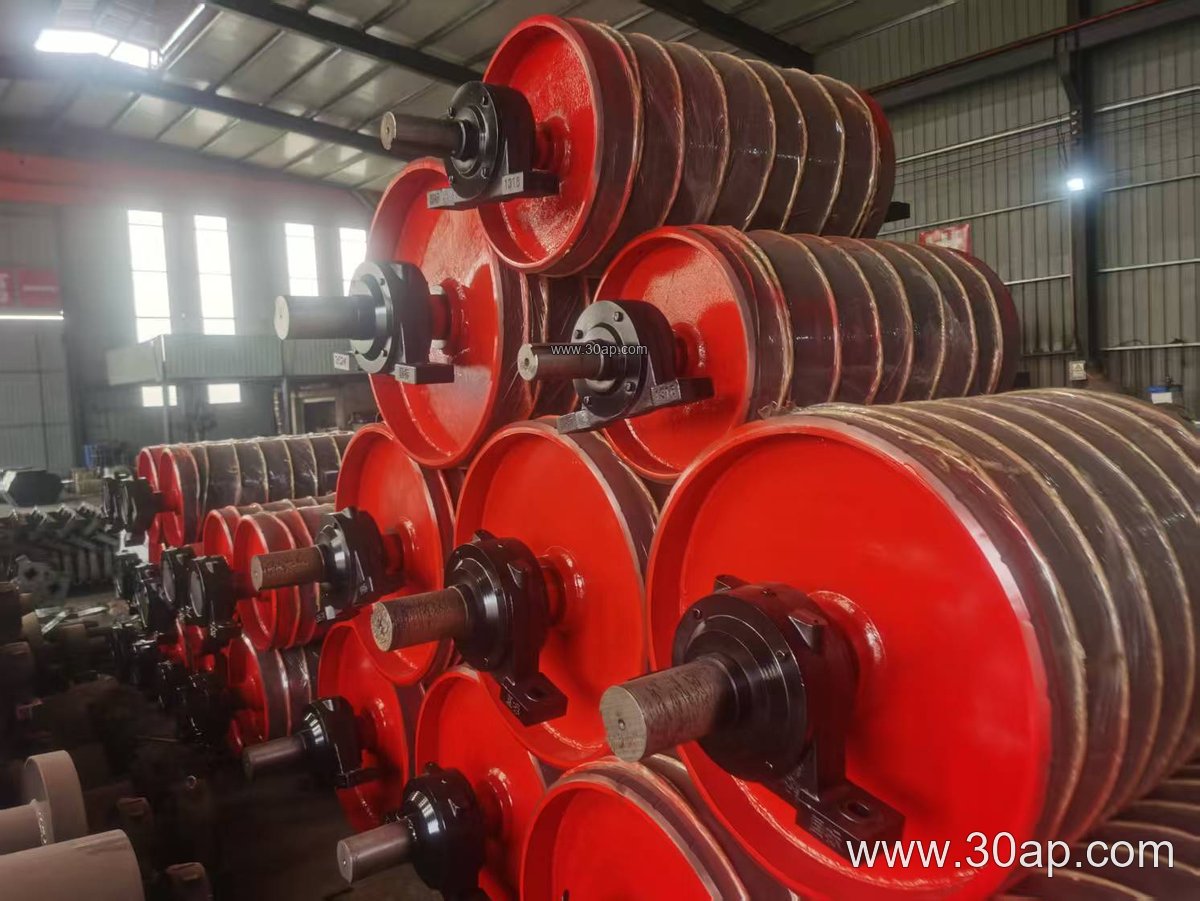
Face width is usually wider than the belt. For reference, B400 may correspond to about 500 mm face, B800 to about 950 mm, and B1200 to about 1400 mm, but these are design references, not fixed pairings. Diameter choices often range from Ø200 to Ø1800 depending on duty. A non-standard pulley might be specified as B1200 × Ø1000, B800 × Ø500, or B1400 × Ø800, with the final combination confirmed by the conveyor designer.
Common reference data for custom pulley sizing
| Parameter | Typical reference values |
|---|---|
| Belt width | B400, B500, B650, B800, B1000, B1200, B1400, B1600, B1800, B2000, B2200, B2400 |
| Pulley diameter | Ø200, Ø250, Ø315, Ø320, Ø400, Ø500, Ø630, Ø800, Ø1000, Ø1250, Ø1400, Ø1600, Ø1800 |
| Shaft diameter | Ø50, Ø60, Ø70, Ø80, Ø90, Ø100, Ø120, Ø140, Ø160, Ø180, Ø200 |
| Lagging thickness | 8, 10, 12, 15, 20 mm |
| Surface form | Plain, cast rubber, cold-bonded rubber, hot vulcanized rubber, diamond lagging, herringbone lagging, ceramic lagging, flat rubber |
These values are common references only. A non-standard conveyor pulley is defined by the project drawing, not by a single size table.
Where Non-Standard Pulleys Are Used
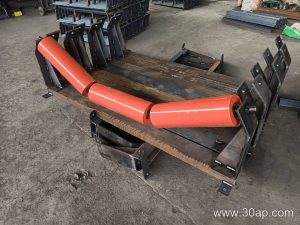
Custom pulleys appear in quarry and limestone operations where conveyor frames are fabricated locally, and in coal preparation plants where space around the drive is tight. They are also common in cement clinker lines and power plant coal handling, where an existing conveyor may be upgraded with a larger shaft or a different lagging surface without replacing the whole frame. In these settings, the conveyor belt, idler roller, and conveyor bracket all interact with the pulley, so the non-standard design must account for the full assembly rather than the pulley alone.
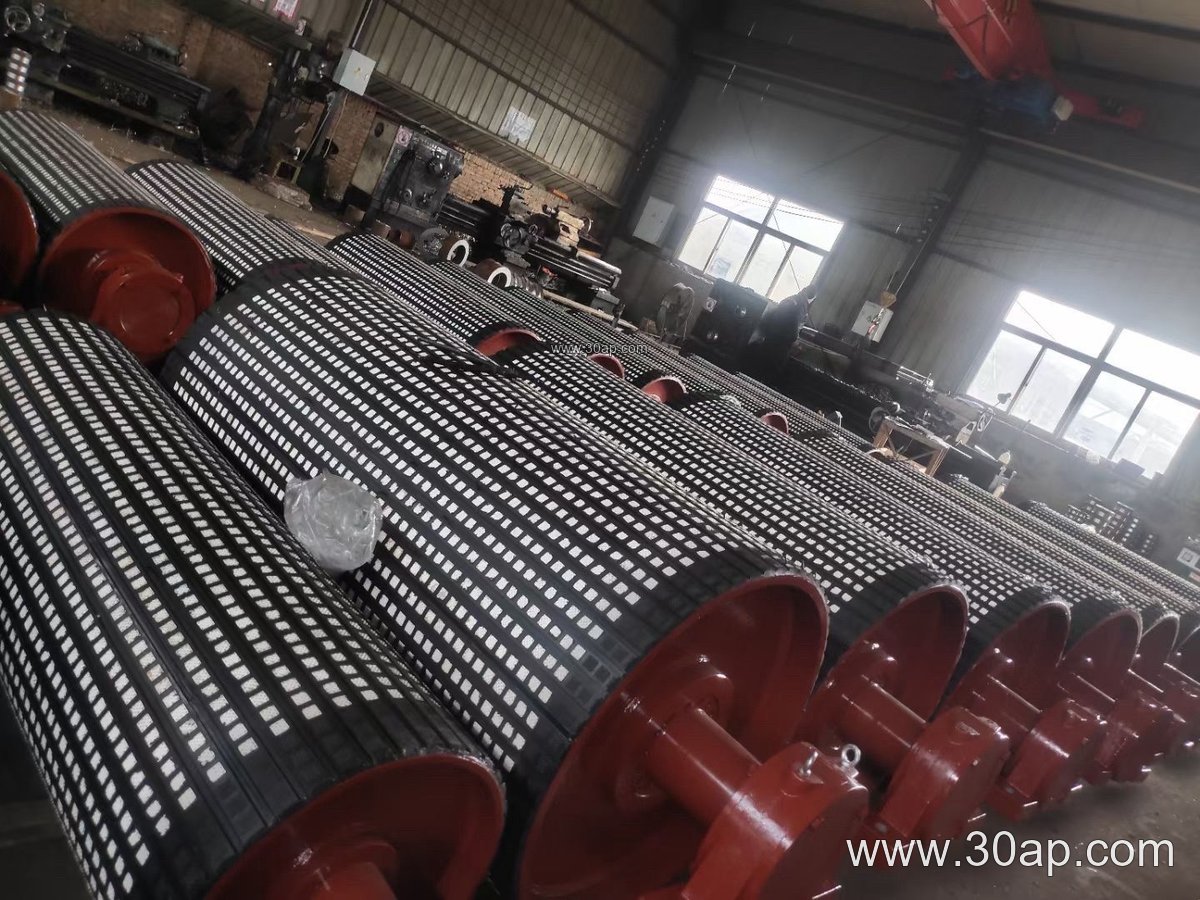
A non-standard pulley may serve as a drive, tail, or bend role, but the role should be stated clearly on the drawing. Drive and tail pulleys carry different load paths, and a bend pulley sees different belt wrap. The “non-standard” label does not replace the functional description.
What Buyers Should Confirm
- Belt width and pulley face width, with the actual belt tracking condition noted.
- Required shaft diameter from torque and load calculations, not from a belt-width rule.
- Lagging type and thickness if the pulley needs grip or wear protection.
- Mounting interface with the conveyor bracket and bearing centers.
- Balance and runout requirements for the intended belt speed.
- Whether the pulley is a drive, tail, or bend pulley, so the drawing matches the duty.
A buyer should ask for a dimensioned drawing before manufacturing. Because a non-standard conveyor pulley is built to order, the approval drawing is the main control point. The supplier should also confirm how the pulley will be balanced and how the lagging will be bonded. For high-wear service, ceramic or diamond lagging may be considered, while plain or flat rubber surfaces may suit lighter duty. None of these choices is universal, and the final specification should follow the conveyor design.
Design Notes for Long Service
Custom pulleys should be reviewed for shaft fatigue, shell stiffness, and lagging adhesion. On a coal handling conveyor or a limestone quarry line, water and fines can enter the hub area, so sealing details matter. The pulley should also be checked against the conveyor belt path and the idler roller height to avoid excessive belt stress. A non-standard conveyor pulley is a practical answer when standard sizes do not fit, but it depends on accurate input data and a clear drawing.