What a Q355 Conveyor Bracket Does on a Belt System
A Q355 conveyor bracket is a structural support component that holds idler rollers in the correct position along a conveyor belt. It is typically bolted or welded to the conveyor frame and provides the mounting interface between the frame and the rollers. In quarry, cement, and power plant coal handling lines, this bracket keeps the belt profile stable under load. The term Q355 refers to a Chinese low-alloy high-strength structural steel grade, which gives the bracket good weldability and strength for static and dynamic conveyor loads.
Because the bracket is not a wear part like a conveyor belt or an idler roller, its main job is alignment and load transfer. A well-built Q355 conveyor bracket ensures that troughing angles stay consistent, which reduces belt mistracking and material spillage.
How a Q355 Conveyor Bracket Is Built
Most brackets are fabricated from angle steel, channel steel, or folded steel plate. The material grade Q355 means a minimum yield strength of around 355 MPa, which is sufficient for medium and heavy conveyor frames without making the bracket excessively thick. Common manufacturing steps include cutting, punching or drilling mounting holes, bending, and welding. After welding, the bracket may be shot-blasted and painted for corrosion protection.
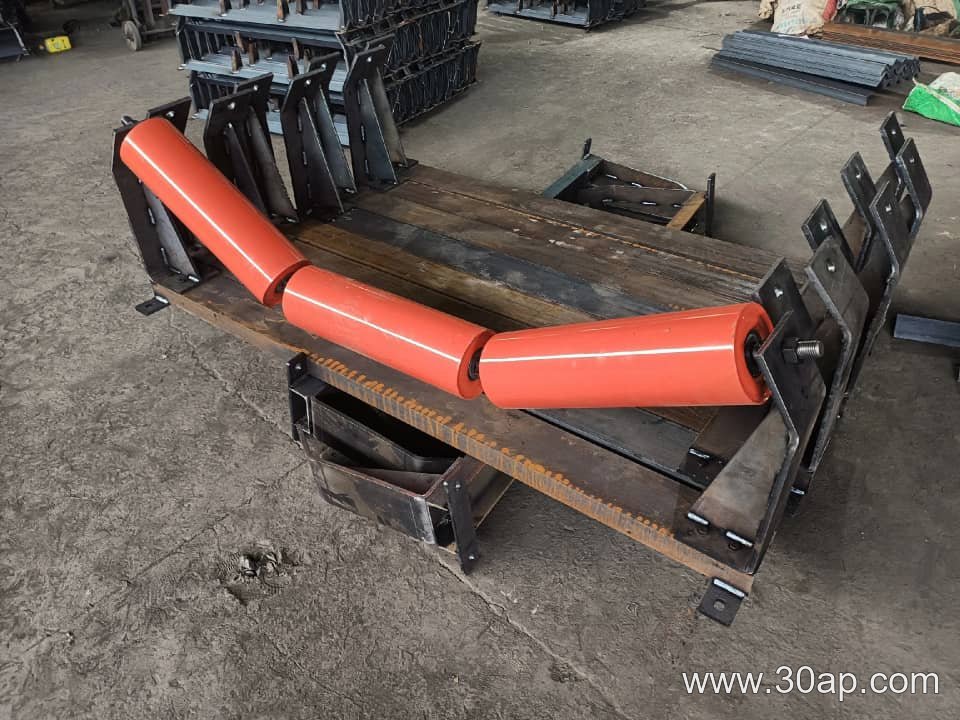
The shape depends on the support type. A troughing bracket has angled arms to set the side rollers at the required trough angle. A return bracket is flatter and carries the belt on the return strand. A transition bracket is placed near the head or tail pulley to gradually change belt shape. A buffer bracket includes a cushioning layer or rubber pad to absorb impact at the loading point. An adjustable bracket has slotted holes or movable arms so the trough angle can be changed on site.
Typical trough angles for Q355 conveyor brackets include 20, 30, 35, and 45 degrees. For forward-leaning idlers, a tilt of about 1.5 to 2 degrees is common. Roller diameters such as Ø89, Ø108, Ø133, Ø159, and Ø194 mm are frequently matched with these brackets, but the correct combination depends on belt width, speed, and material characteristics.
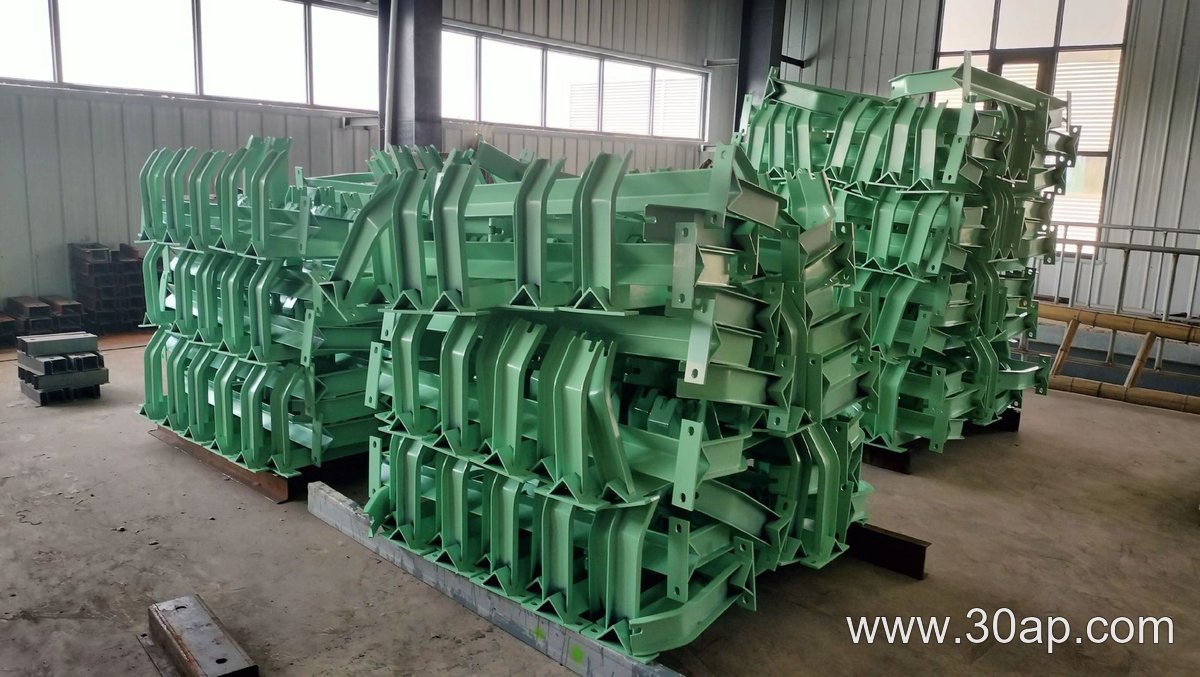
Common Types and Their Place in the Conveyor
Different bracket types serve different zones of the conveyor. The table below lists common forms and their usual roles.
- Troughing bracket (upper) – supports three rollers to form the carrying trough. Used along the main carrying run.
- Transition bracket – placed near the head pulley or tail pulley to ease the belt from flat to troughed shape.
- Return bracket (flat or V-type) – supports the belt on the return strand. A V-return bracket helps center the belt.
- Impact bracket – fitted with rubber or spring cushions under the loading chute.
- Self-aligning bracket – allows the idler set to pivot slightly and correct belt tracking.
- Adjustable bracket – slot or pivot design for changing trough angle or roller position.
For example, a 35-degree troughing bracket with Ø108 mm rollers is a common choice on a B800 belt in a sand and gravel line, while a B1200 belt in a coal yard might use a 45-degree bracket with Ø133 mm rollers. These are reference combinations, not fixed rules. Belt width does not determine a single pulley diameter or shaft size.
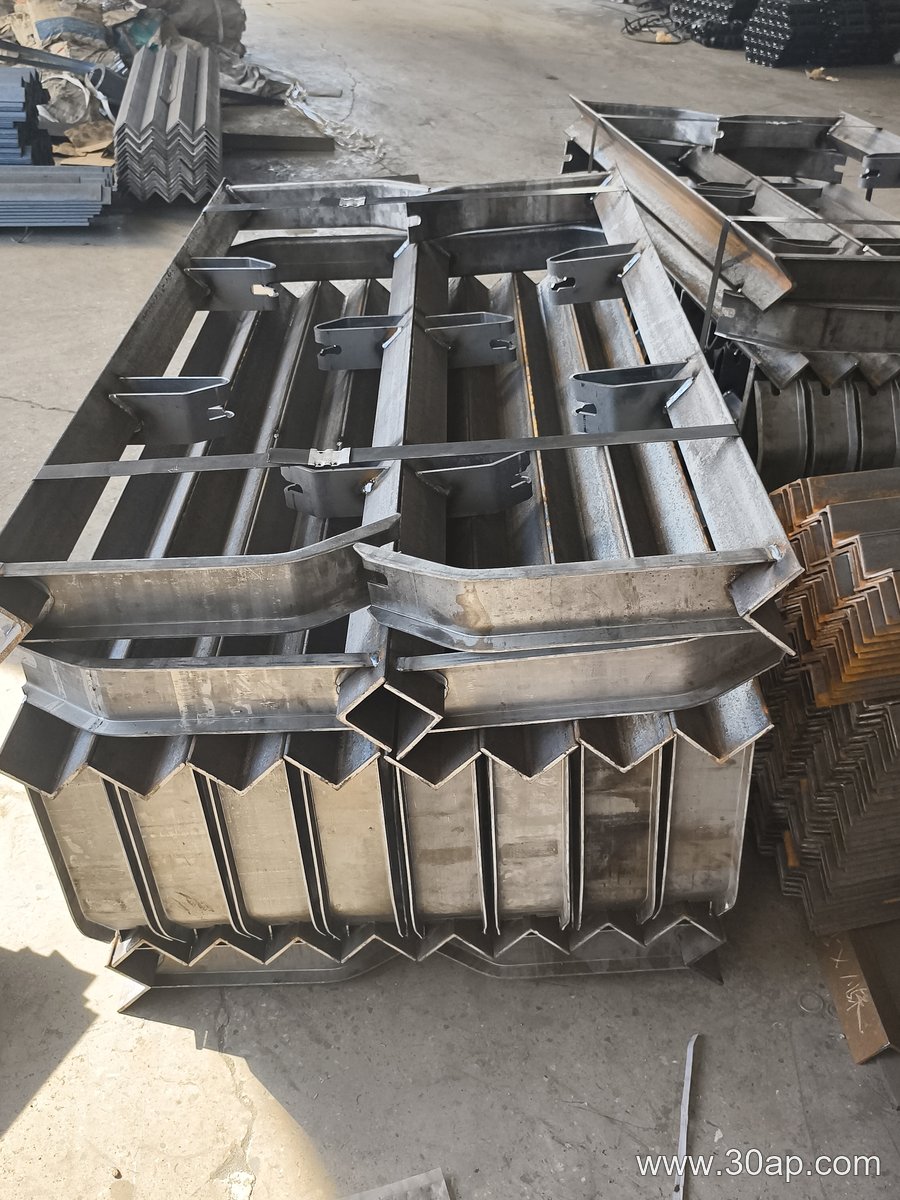
Where Q355 Conveyor Brackets Are Used
These brackets appear wherever a conveyor belt needs reliable roller support. Typical sites include limestone quarries, iron ore mines, coal washing plants, cement plants, power station coal handling, port bulk terminals, and crushing and screening circuits. In a tunnel muck removal line, a heavy-duty Q355 bracket can handle shock loads from irregular material. In a fertilizer or grain silo facility, a painted or galvanized bracket may be preferred for corrosion resistance.
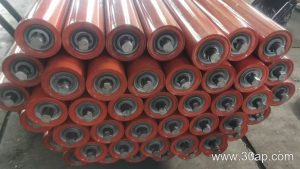
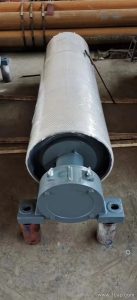
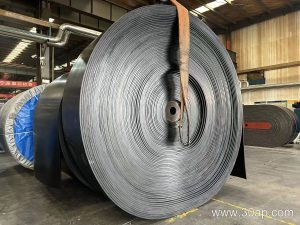
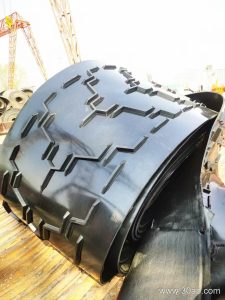
The bracket works together with the conveyor belt, idler roller, and conveyor pulley. If the bracket is misaligned, the belt may rub against the frame, the idler may wear unevenly, and the pulley may receive extra side load. Regular inspection of bracket bolts and welds is therefore part of good conveyor maintenance.
Buyer Checklist for Q355 Conveyor Brackets
When specifying a Q355 conveyor bracket, confirm the following points with the supplier or fabricator:
- Belt width and trough angle – for example, B650 with 30 degrees or B1000 with 35 degrees.
- Roller diameter and mounting hole spacing – these must match the idler roller frame.
- Bracket type – troughing, return, transition, impact, self-aligning, or adjustable.
- Material and finish – Q355 steel grade, plus paint, galvanizing, or other coating as needed.
- Installation method – bolt-on or weld-on, and whether slots are required for adjustment.
- Load and environment – impact, abrasion, moisture, or dust may call for a reinforced or coated version.
Because mounting dimensions vary with belt width and trough angle, avoid assuming that one bracket fits all conveyors. A practical approach is to provide the conveyor frame drawing, idler roller datasheet, and belt width to the bracket manufacturer. This helps ensure the Q355 conveyor bracket fits the first time and keeps the belt running true.