What a Carbon Steel Conveyor Bracket Does
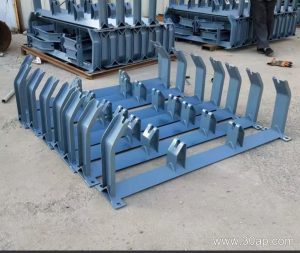
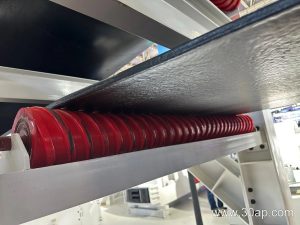
A carbon steel conveyor bracket is the structural support that holds the idler roller in the right position under or beside the conveyor belt. In a quarry or a coal-fired power plant, the bracket carries the load of the belt and the material, keeps the idler at the correct trough angle, and allows maintenance crews to replace rollers without cutting the frame. It is a simple part, but its geometry and material quality directly affect belt tracking, idler life, and the amount of spillage on the walkway.
How the Bracket Is Built
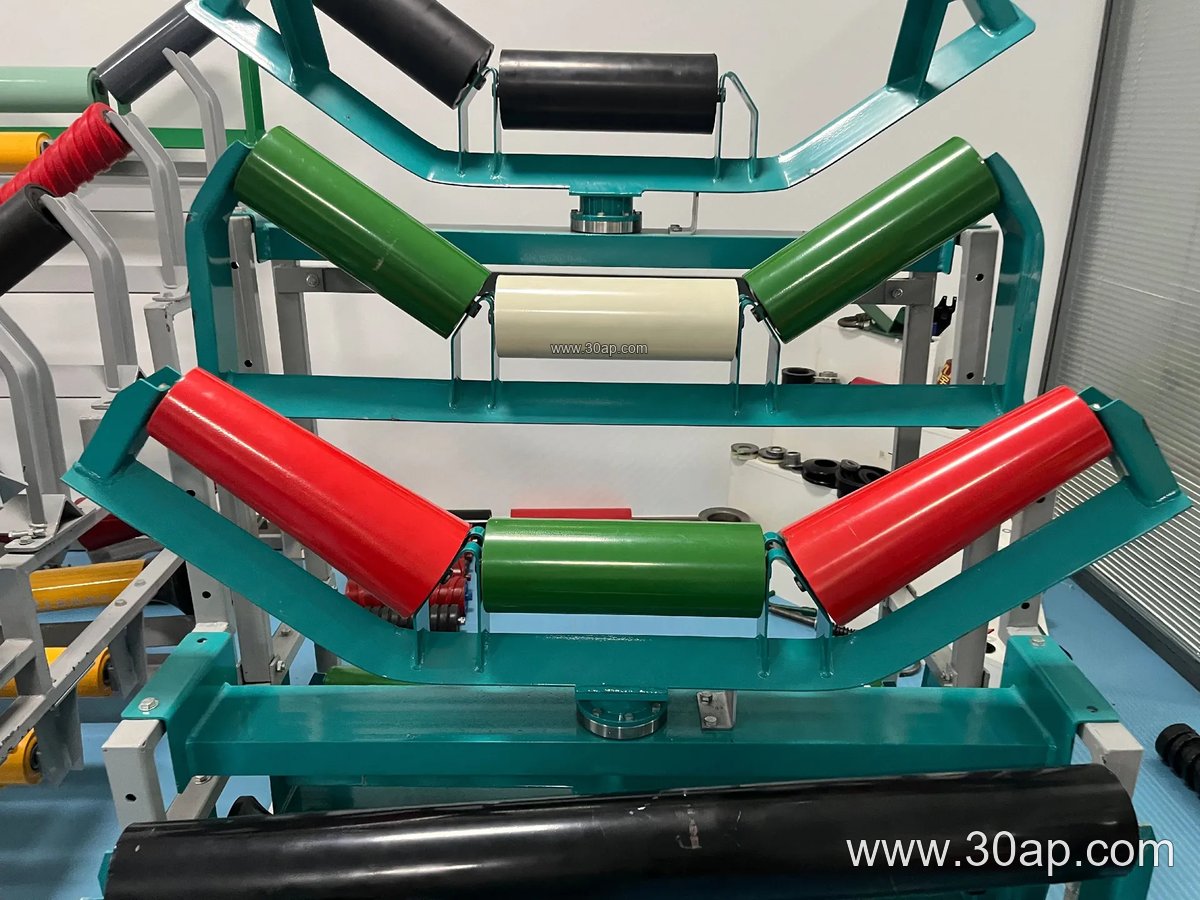
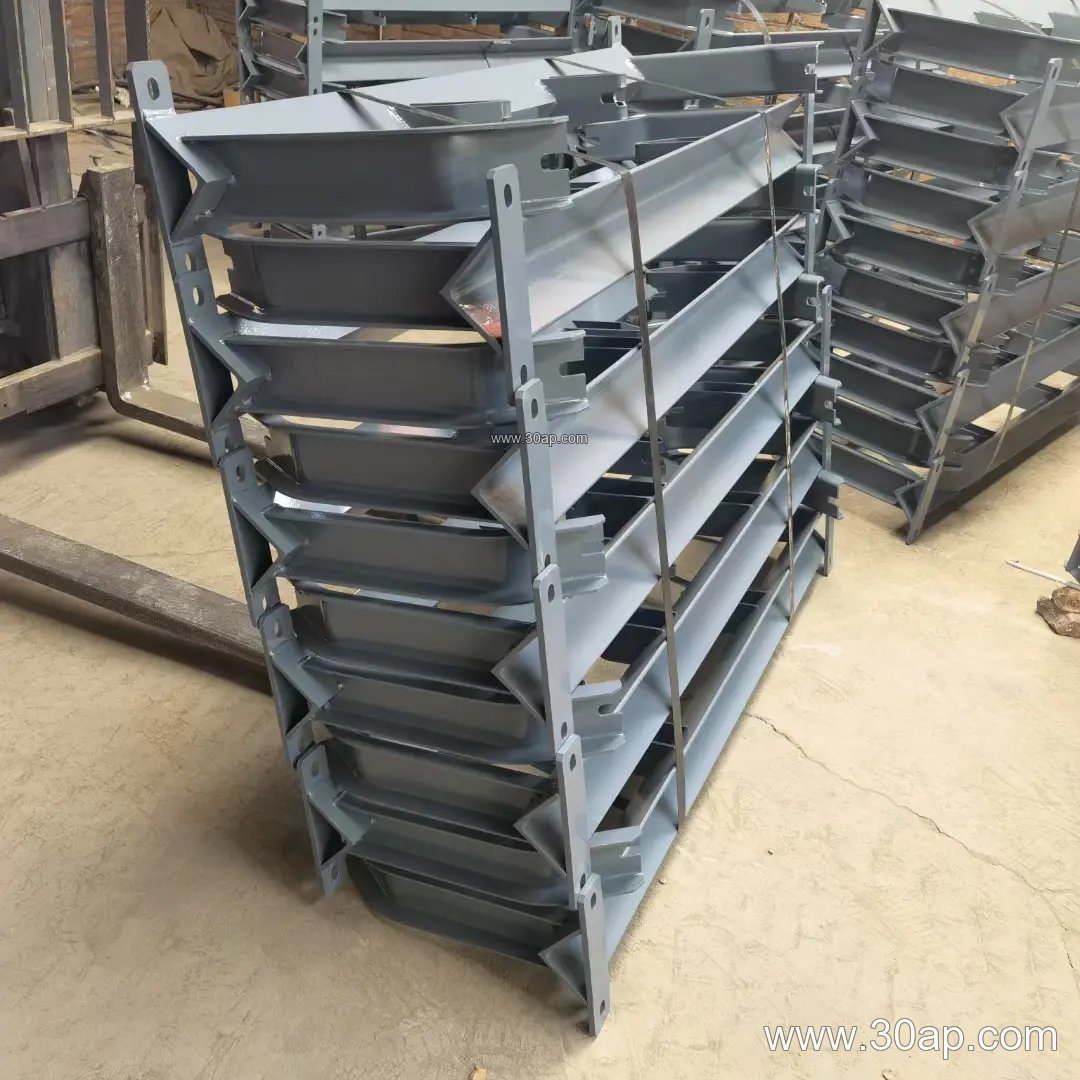
Most carbon steel conveyor brackets are fabricated from angle iron, channel steel, or folded steel plate. The choice depends on the load and the mounting style. A troughing bracket typically has two or three idler seats set at a fixed angle, while a return bracket holds a single flat or V-shaped roller. The bracket may be welded or bolted to the conveyor stringer; bolted designs simplify replacement when a bracket is bent or corroded.
Surface treatment matters in wet or dusty service. Common options include painted finish, hot-dip galvanizing, or powder coating. In a cement plant or a limestone mine, where dust and moisture combine, the coating and the drainage path around the bracket often decide how long the part lasts.
Where It Fits on the Conveyor
The bracket is not a pulley. Drive pulleys, tail pulleys, and bend pulleys transmit power and change belt direction; the bracket only supports the conveyor belt through the idler roller. This distinction matters when ordering spare parts. A tail pulley and a return bracket are not interchangeable, and a bend pulley cannot be replaced by a troughing bracket.
Typical mounting locations include:
- Carrying side, forming the trough that keeps bulk material centered
- Return side, supporting the empty belt between the head and tail
- Transition zones near the loading point, where impact and belt alignment change quickly
- Curved or inclined sections, where bracket height and angle are adjusted to suit the profile
Common Types and Reference Dimensions
Carbon steel conveyor brackets come in several forms. Troughing brackets, transition brackets, return brackets, and self-aligning brackets each serve a different position. Adjustable brackets allow the trough angle to be set during installation, which is useful when a conveyor handles more than one material. The table below gives reference ranges, not fixed combinations.
| Bracket Type | Common Belt Width | Trough Angle | Typical Idler Diameter |
|---|---|---|---|
| Troughing bracket | B500 to B1200 | 20°, 30°, 35° | Ø89, Ø108, Ø133 |
| Transition bracket | B800 to B1600 | 30°, 35°, 45° | Ø108, Ø133, Ø159 |
| Return bracket | B650 to B1400 | Flat or V-return | Ø89, Ø108, Ø133 |
| Adjustable bracket | B800 to B1800 | 20° to 45° | Ø108, Ø133, Ø159 |
Belt width and idler diameter are selected together with the conveyor design. A B800 belt does not automatically require a 35° trough or a Ø108 roller; the material, capacity, and transition length decide the final combination. Installation hole spacing and crossbeam length usually change with belt width and trough angle, so the bracket drawing should be checked against the stringer before fabrication.
Selection and Maintenance Notes
When specifying a carbon steel conveyor bracket, confirm the belt width, the idler diameter, the trough angle, and the mounting hole pattern. For a self-aligning bracket, check that the pivot and the roller clearance suit the belt speed and the material size. In a crusher discharge or a tunnel muck line, impact brackets with reinforced seats are often used near the loading point, while standard troughing brackets are sufficient further along the run.
Inspection is straightforward. Look for bent seats, loose bolts, worn pivot pins, and corrosion at the welds. A bracket that has lost its angle will cause the conveyor belt to run off-center and will shorten idler roller life. Replacing a damaged bracket early is usually cheaper than replacing the belt edge or the pulley lagging later.