What an Anti-Material-Buildup Idler Is
An anti-material-buildup idler is a carrying or return idler roller designed to stop wet, sticky or fine material from clinging to the roller shell and packing around the rotating parts. On a conveyor belt handling clay-rich ore, washed sand, limestone dust or coal with high moisture, ordinary idlers can quickly collect a crust of material. That crust changes the roller profile, causes belt tracking problems and loads the bearing. The anti-material-buildup idler addresses this by combining a self-cleaning surface form with a sealed bearing housing that keeps fines out.
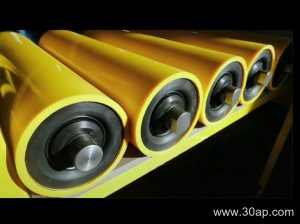
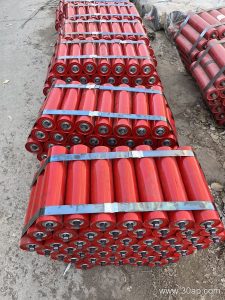
In practice the product is often supplied as a spiral idler or a rubber-disc idler, and both belong to the same anti-buildup family. The spiral version uses a helical steel flight wrapped around the shell so that material is pushed aside as the roller turns. The rubber-disc version uses a series of flexible rubber rings that flex and shed sticky fines. Buyers may also meet the same product under the equivalent name self-cleaning idler or material-shedding idler roller.
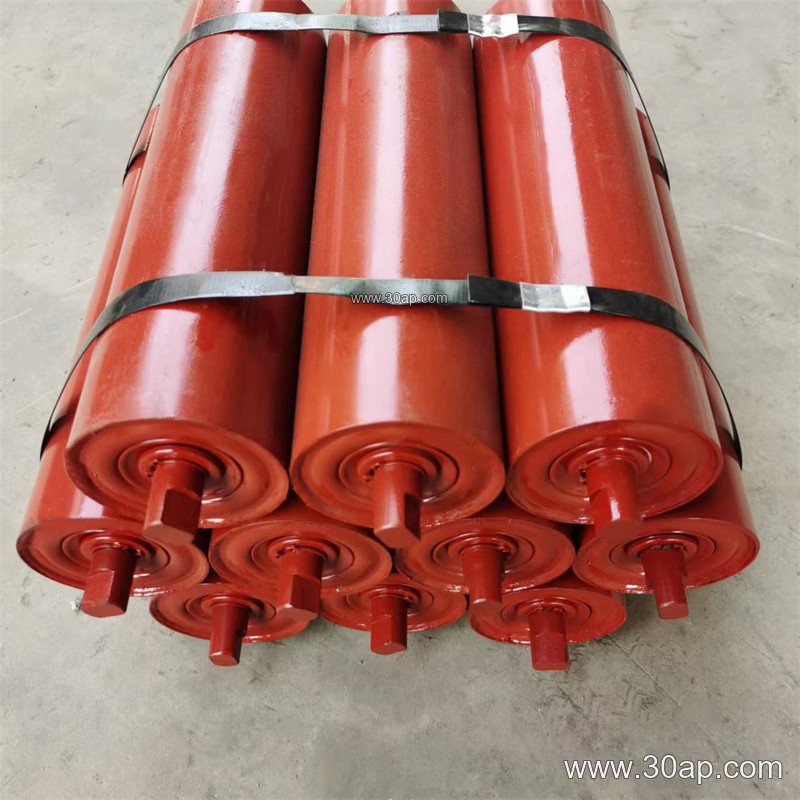
How the Roller Is Built
The construction follows the same logic as a standard conveyor idler roller, with changes aimed at shedding material:
- Shell: steel tube, sometimes with a rubber or ceramic surface where abrasion is severe.
- Surface form: continuous spiral flight, segmented rubber discs, or a smooth shell with profiled end caps.
- Bearing: deep-groove ball bearings such as 6204, 6205, 6305, 6306, 6308 or 6310, matched to the shaft and load rather than to belt width alone.
- Seal: labyrinth or contact seal with a dust lip, since the whole point is to keep fines away from the bearing cavity.
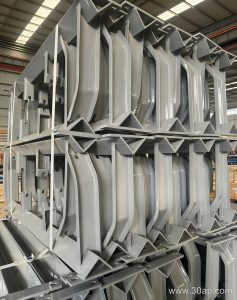
- Shaft and brackets: shaft ends fit the conveyor bracket, and the bracket spacing must match the idler set used on that section of the conveyor.
The spiral flight is usually a narrow strip welded to the shell. Weld quality matters, because a rough weld line gives sticky material a place to start building up. Rubber-disc types rely on the flexibility of the rings, so the rubber compound should stay resilient in the site temperature range.
Where It Fits on a Conveyor
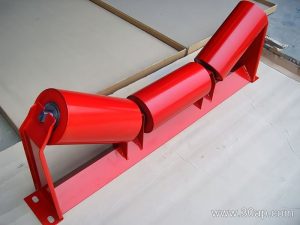
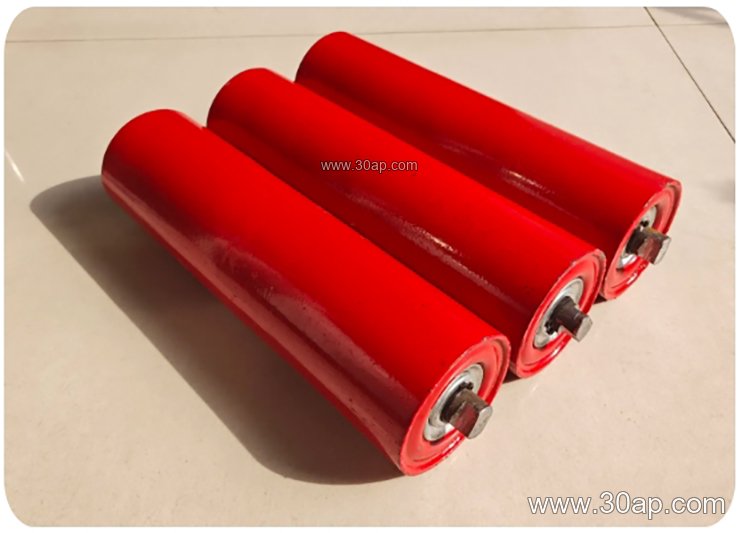
The anti-material-buildup idler is most often used on the carrying side, in place of a conventional three-roll troughing set, where the belt carries damp material. It can also appear on the return strand as a spiral return roller to reduce fines carried back on the belt. Typical sites include:
- Wash plants and sand and gravel lines handling wet aggregate.
- Coal preparation plants where fine coal and water mix.
- Limestone and cement plants with dusty, slightly damp feed.
- Fertilizer and mineral handling where material is hygroscopic.
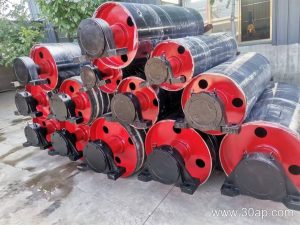
It is not a substitute for a drive pulley, tail pulley or bend pulley. Those are conveyor pulleys with their own design rules. The idler only supports the belt and sheds material; it does not transmit drive torque or set belt tension.
Common Reference Sizes
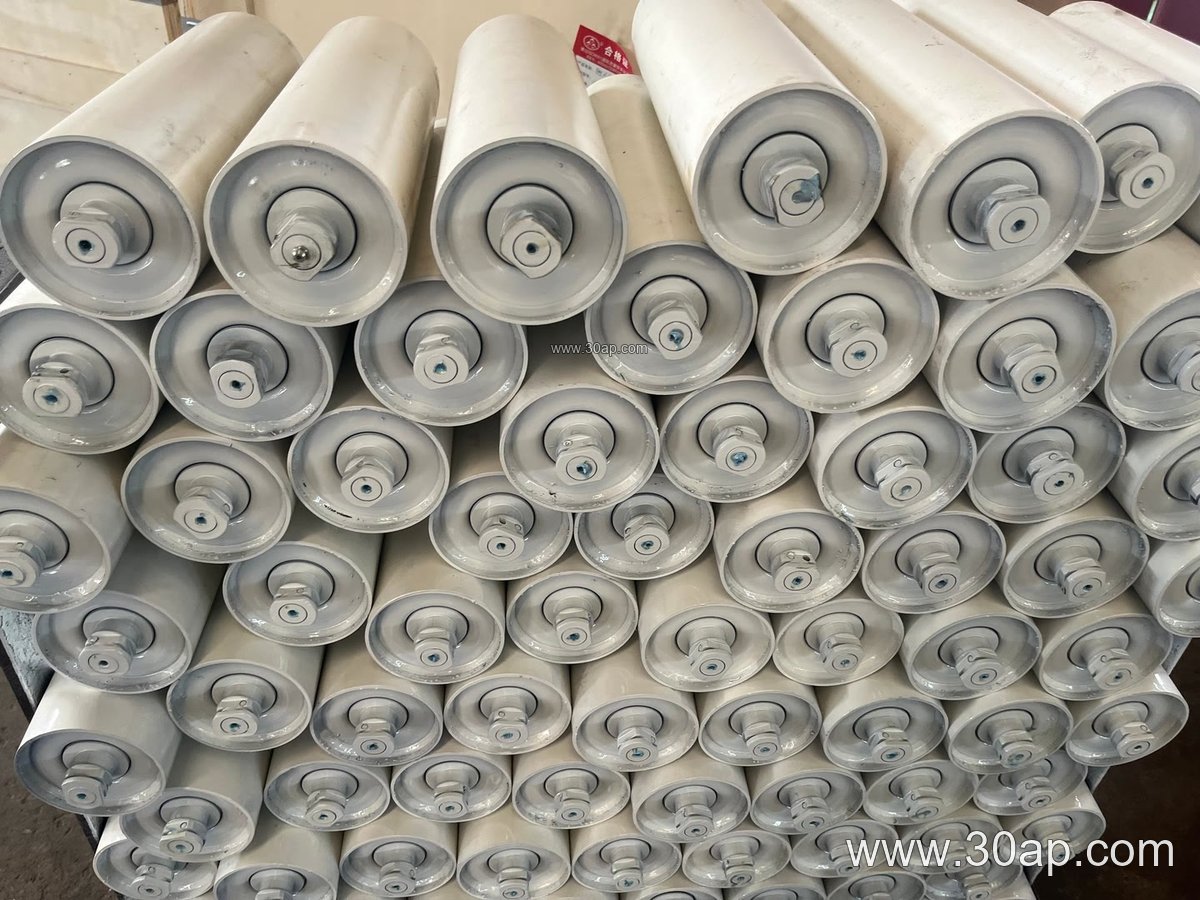
The table below gives typical reference values. They are examples, not fixed combinations, and the final selection should follow the conveyor design.
| Parameter | Common reference values |
|---|---|
| Roller diameter | Ø63, Ø76, Ø89, Ø102, Ø108, Ø127, Ø133, Ø159, Ø178, Ø194, Ø219 mm |
| Belt width | B400, B500, B650, B800, B1000, B1200, B1400, B1600, B1800, B2000, B2200, B2400 |
| Trough angle (where a troughing set is used) | 20°, 30°, 35°, 45° |
| Roller length, three-roll troughing example | About 200 mm for B500, 250 mm for B650, 315 mm for B800, 380 mm for B1000, 465 mm for B1200, 530 mm for B1400, 600 mm for B1600, 670 mm for B1800, 750 mm for B2000 |
| Bearing reference | 6204, 6205, 6305, 6306, 6308, 6310 |
| Surface form | Steel spiral, rubber disc, nylon or ceramic sleeve |
Side rollers and centre rollers in a troughing set can differ in length. A single belt width does not fix one pulley diameter, and one roller diameter does not fix one shaft size; those are set by load, speed and bracket design.
What a Buyer Should Check
Before ordering, confirm the material condition: is it wet, sticky, abrasive or all three? A rubber-disc idler suits highly sticky fines, while a steel spiral idler suits damp granular material with moderate abrasion. Check the roller diameter against the existing conveyor bracket height, and confirm the shaft ends match the conveyor bracket slot. Ask about the seal type, because the bearing life on a wash plant or coal prep plant depends more on sealing than on bearing brand. Finally, confirm the roller length and trough angle against the belt width and the existing idler set, and keep spare rollers of the same reference on site so that a worn unit can be replaced without changing the belt line.