What a Corrosion-Resistant Idler Is
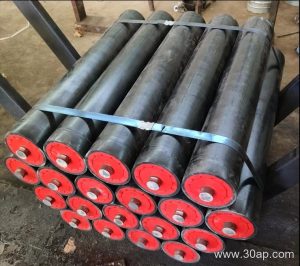
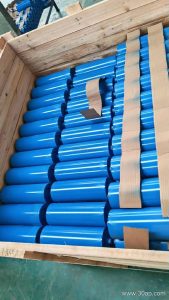
A corrosion-resistant idler is a conveyor idler roller built to resist rust, chemical attack, and moisture-driven degradation in environments where standard steel rollers would fail prematurely. In a limestone quarry, a coal washing plant, or a fertilizer handling line, the idler roller is often the first component to seize because moisture, fine dust, and corrosive runoff attack the bearing housing and roller shell. This idler roller uses protective surface treatments and sealed bearing arrangements to extend service life where wet or chemically aggressive conditions are routine. The corrosion-resistant idler remains a standard carrying or return idler in function, but its materials and finishes are selected for durability rather than lowest initial cost.
Construction and Surface Options
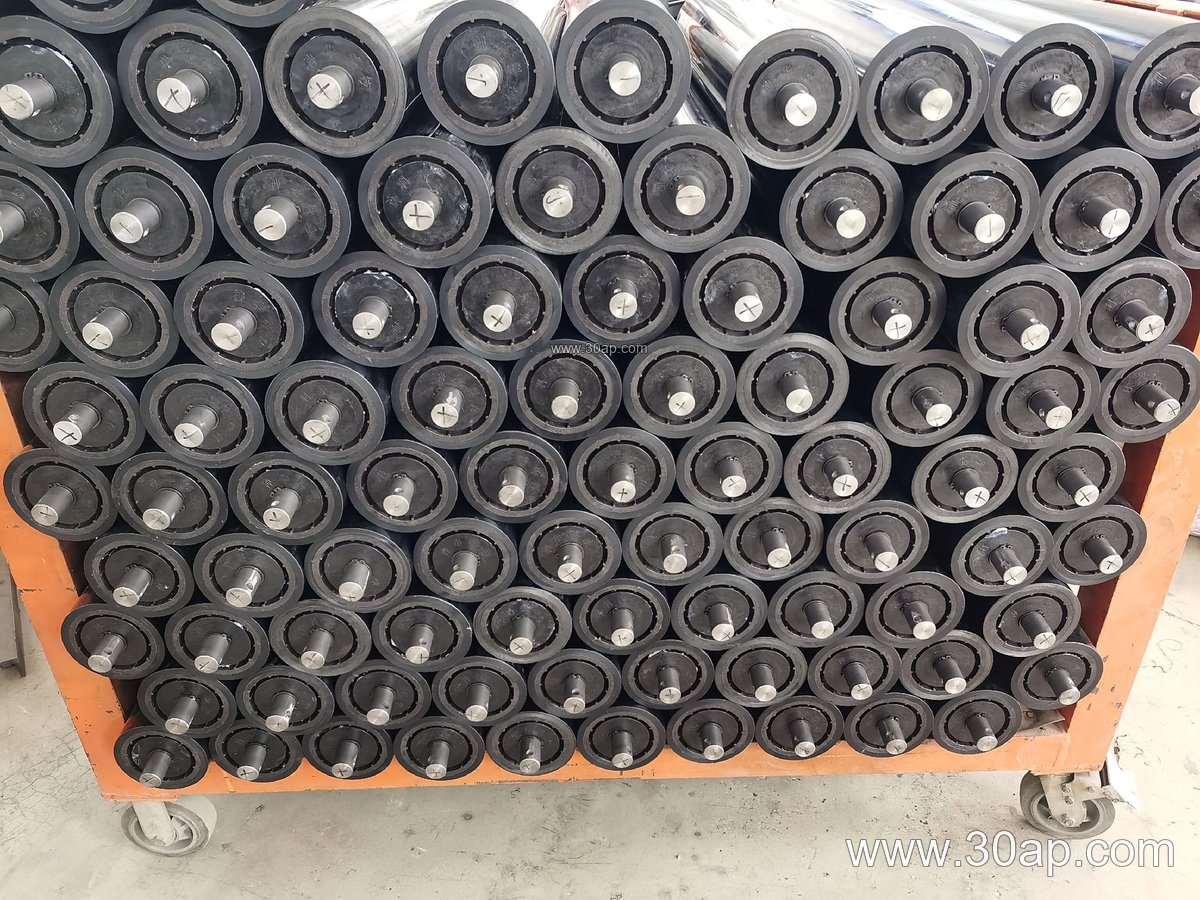
The corrosion-resistant idler typically combines a steel tube shell with a protective coating or a non-steel surface. Common roller surface forms include galvanized steel, nylon, ceramic, and rubber rings. Galvanized tube offers a practical balance for general wet service; nylon shells resist adhesion and are sometimes chosen in sticky material handling; ceramic tile lagging is used where abrasive slurry contact is a concern. Bearing protection is critical: sealed deep-groove ball bearings in sizes such as 6204, 6205, 6305, 6306, 6308, and 6310 are common, but bearing selection should match the load and speed, not simply the roller diameter. The bearing housing usually includes a labyrinth seal or multi-lip seal to keep out water and fines. Shaft ends may be stainless steel or coated carbon steel depending on the duty.
Where It Fits in the Conveyor
A corrosion-resistant idler can be supplied as a troughing idler in a three-roll set, a return idler, or a transition idler near the loading zone. Trough angles of 20, 30, 35, and 45 degrees are common, and the roller length varies with belt width and trough configuration. For example, a three-roll troughing set for B800 belt often uses a roll length around 315 mm, while B1200 may use about 465 mm. These are typical references, not fixed rules; side rolls and center rolls can differ. The same corrosion-resistant idler may appear as a V-return or flat return in wet tunnels or wash-down areas. Drive pulleys, tail pulleys, and bend pulleys are separate components with different design requirements and are not interchangeable with idlers.
Typical Industries and Conditions
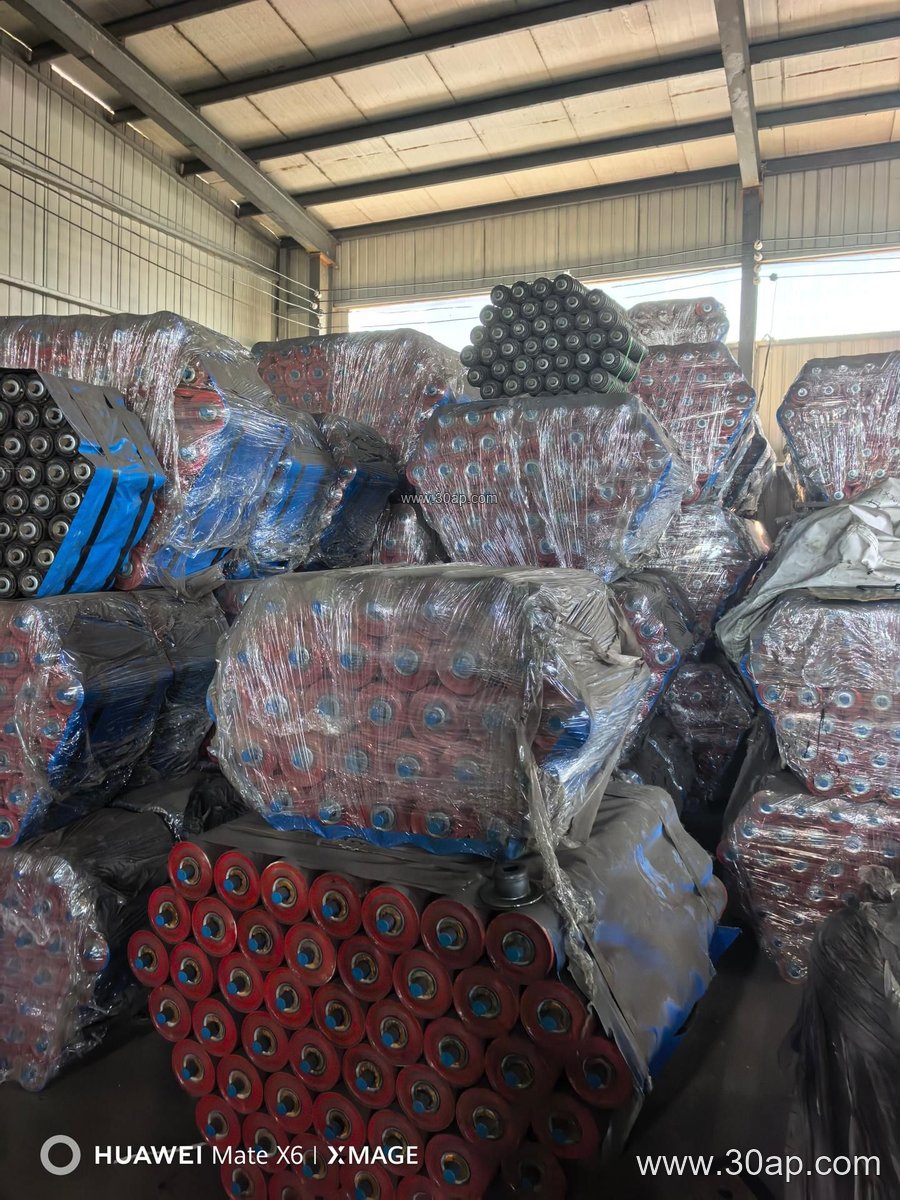
Corrosion-resistant idlers are found in coal preparation plants where wash water and fine coal slurry are present, in limestone and aggregate operations with wet dust suppression, in fertilizer plants where chemical dust is corrosive, and in port bulk terminals exposed to salt air. They are also used in cement plants and power station coal handling where condensation and dust combine. In these settings, the idler roller must tolerate frequent wetting and drying cycles without seizing. A conveyor belt carrying damp sand or washed stone places continuous moisture against the roller surface, making surface finish and seal quality more important than in a dry sand pit.
Selection and Buyer Checklist
Buyers should match the corrosion-resistant idler to the belt width, trough angle, and load rather than choosing by roller diameter alone. The following table gives typical reference ranges; final dimensions should be confirmed with the conveyor design.
| Parameter | Common reference values |
|---|---|
| Roller diameter | Ø63, Ø76, Ø89, Ø102, Ø108, Ø127, Ø133, Ø159 |
| Belt width | B500, B650, B800, B1000, B1200, B1400 |
| Trough angle | 20°, 30°, 35°, 45° |
| Roller surface | Galvanized steel, nylon, ceramic, rubber rings |
| Bearing size (examples) | 6204, 6205, 6305, 6306, 6308, 6310 |
Also check the shaft material and seal type, since these determine whether the corrosion-resistant idler truly survives wash-down or salt exposure. Ask for the roller length needed for the specific troughing set, because a B1000 three-roll troughing idler commonly uses about 380 mm roll length but may vary with frame design. Confirm that the conveyor bracket and frame are compatible with the chosen idler. For very wet or chemical service, consider a nylon or ceramic surface only where the material does not cause impact damage. Keep spare idlers on hand, because even a well-sealed corrosion-resistant idler can fail if the conveyor belt misaligns and loads the roller unevenly.
Maintenance Notes
Inspect the corrosion-resistant idler for smooth rotation and seal integrity during routine walk-throughs. A roller that no longer turns freely can wear the conveyor belt and increase power draw. Clean accumulated material from the idler surface and frame, especially in fertilizer or coal handling, where caked fines hold moisture against the coating. Replace rollers in sets when several show seal damage, and verify that the replacement matches the original diameter and bearing size. Properly selected and maintained, a corrosion-resistant idler reduces downtime in wet, salty, or chemically active conveyor circuits.