What an EP1500 Conveyor Belt Is
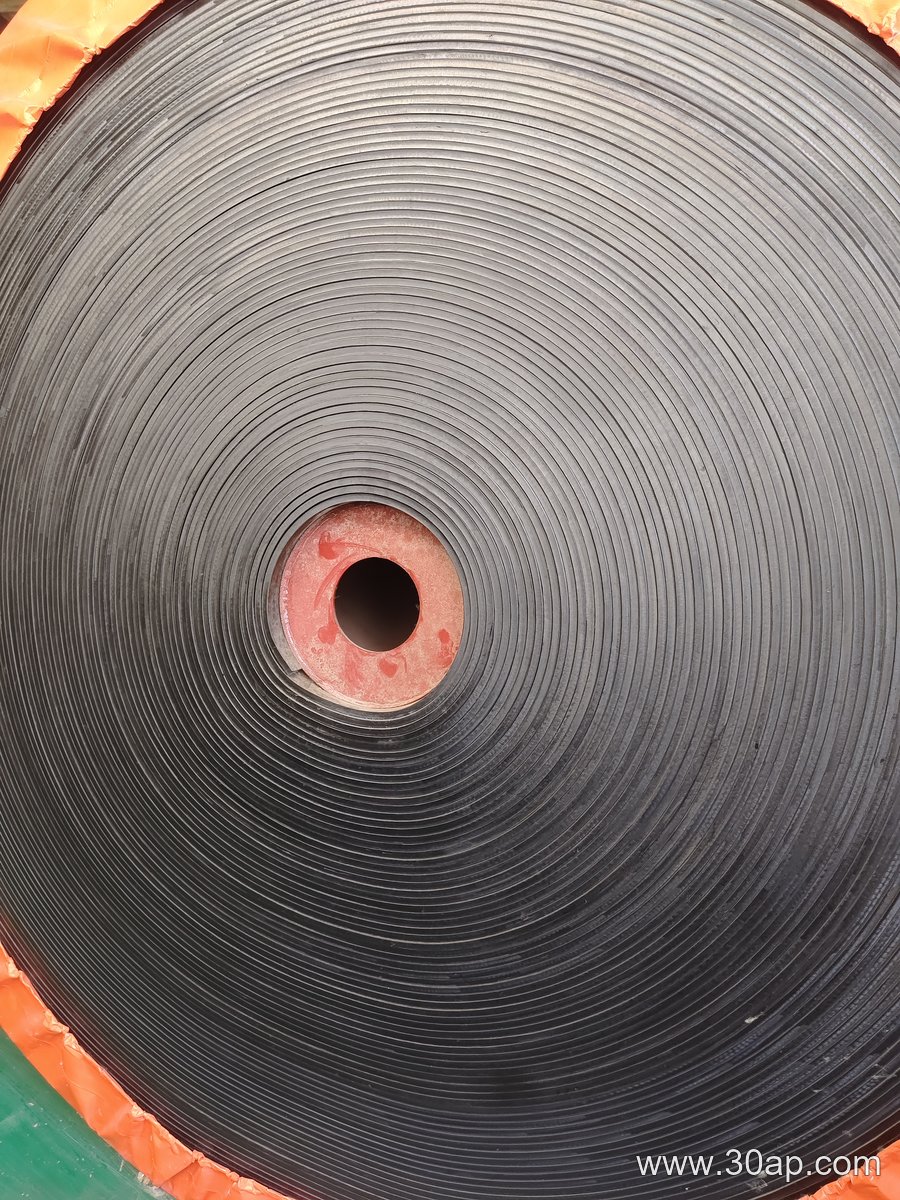
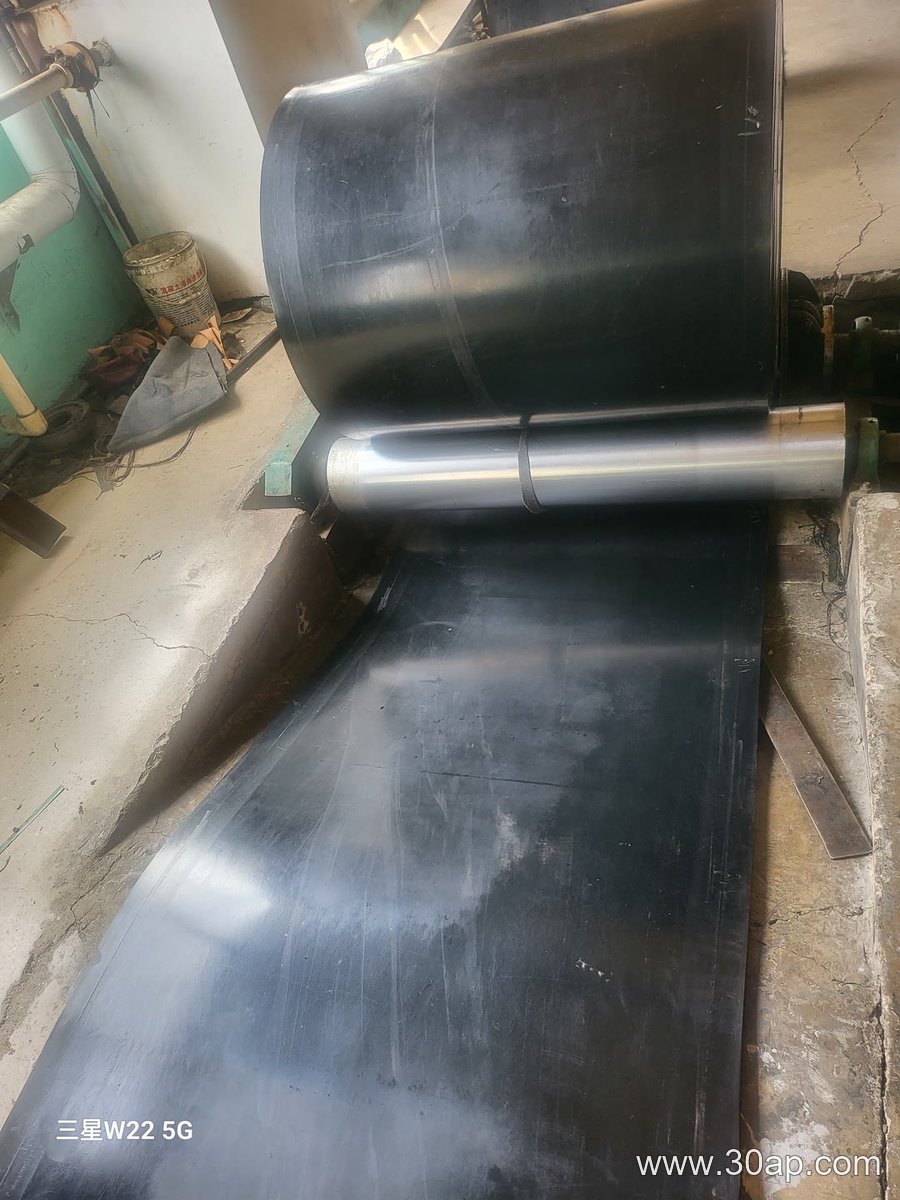
An EP1500 conveyor belt is a heavy-duty rubber belt built on a polyester-polyamide (EP) fabric carcass. The “1500” denotes a nominal tensile strength of 1500 N/mm, placing it in the upper range of EP belt classes. This is not a drive pulley, tail pulley, or bend pulley; it is the load-carrying belt itself, running over those components. Also called a polyester-polyamide 1500 conveyor belt, it is chosen where a single belt must handle high tension while resisting impact and troughing loads.
Construction and Common Builds
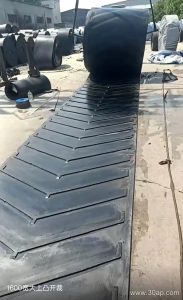
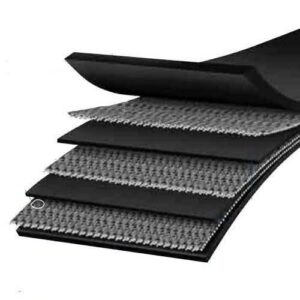
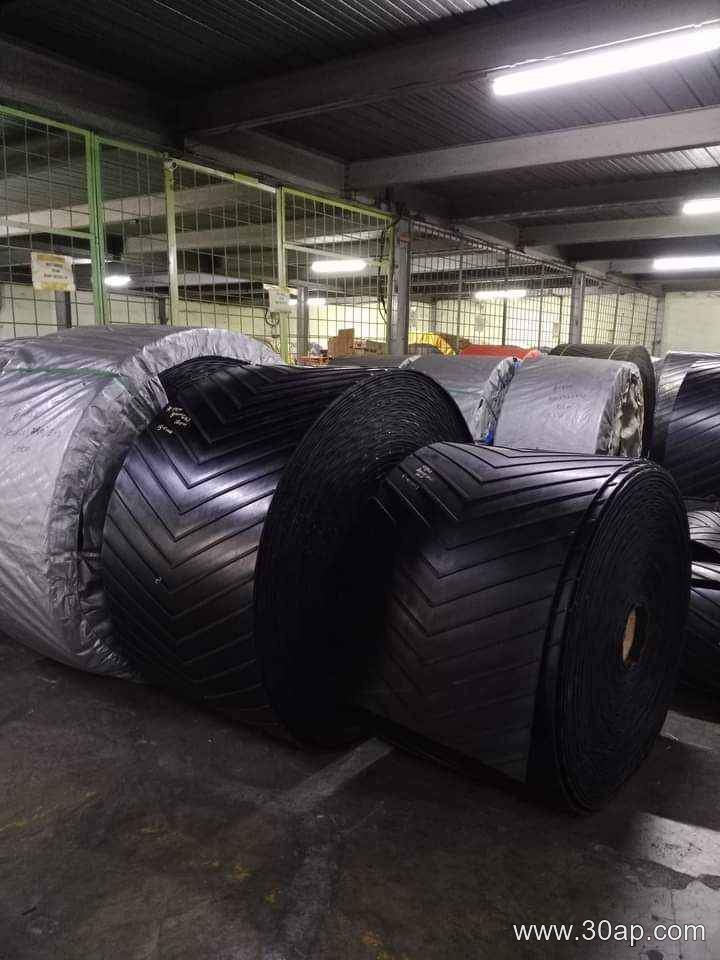
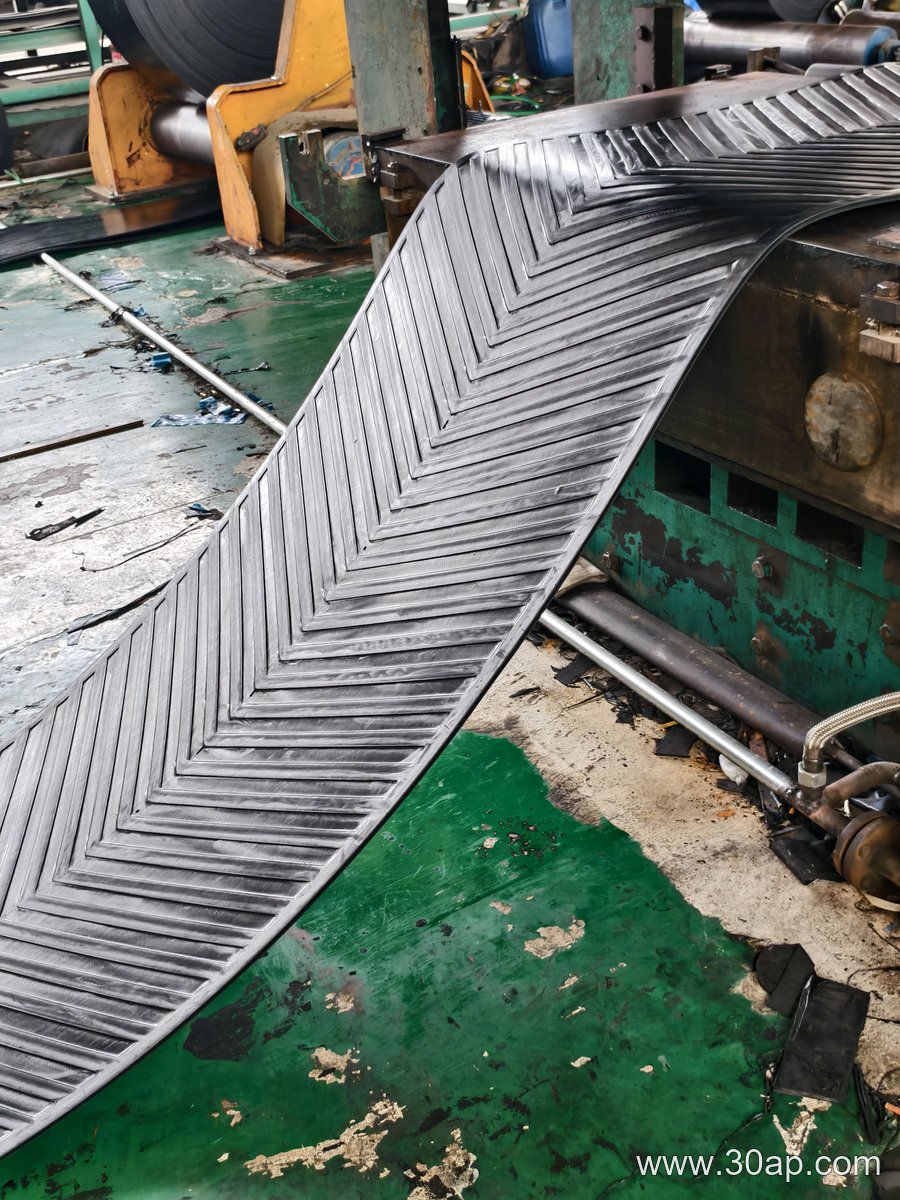
The carcass usually consists of multiple EP fabric plies, typically 2 to 6 layers depending on the required strength and safety factor. The rubber covers protect the carcass from abrasion, moisture, and material impact. Common cover combinations include 4+2 mm, 5+2 mm, 6+2 mm, and 8+3 mm, though exact thicknesses are always specified per application. A buyer may also request anti-static, flame-retardant, oil-resistant, heat-resistant, or cold-resistant cover compounds. Surface forms such as plain, patterned, chevron, or corrugated sidewall can be produced on an EP carcass, but these are separate design choices, not part of the EP1500 designation itself.
Where It Fits in a Conveyor System
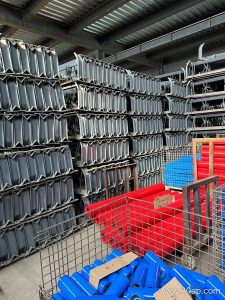
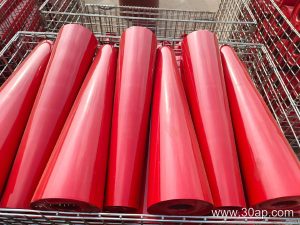
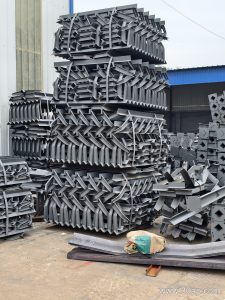
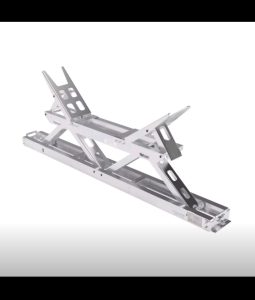
An EP1500 belt is often used on long overland conveyors, primary crushing circuits, and bulk terminals handling coal, iron ore, crushed stone, or similar dense materials. The belt travels over idler rollers that support the load, wraps around a head or drive pulley that transmits motion, and returns via a tail or bend pulley. Conveyor brackets hold those idlers and pulleys in alignment. In these systems, the belt is the wearing component that ties everything together.
Specification Data Buyers Should Confirm
The table below lists typical reference values for EP conveyor belts. These are not universal or guaranteed supply commitments; actual belt design depends on the manufacturer and the duty.
| Parameter | Common reference range |
|---|---|
| Belt type | EP1500 conveyor belt (polyester-polyamide carcass) |
| Nominal tensile strength | 1500 N/mm |
| Number of plies | Usually 3 to 6, by design |
| Belt width | B650, B800, B1000, B1200, B1400, B1600, B1800, B2000 |
| Cover thickness | 4+2 mm, 5+2 mm, 6+2 mm, 8+3 mm |
| Surface form | Plain, patterned, chevron, corrugated sidewall |
Note that belt width does not dictate one single pulley diameter; the pulley size is calculated from the belt’s rated tension, ply construction, and the conveyor’s geometry. Likewise, shaft diameter is not derived from belt width alone.
How It Compares with Other Belt Types
An NN nylon conveyor belt uses nylon fabric in both warp and weft and can offer high elongation under load. A steel cord conveyor belt uses steel cables for very high tension and low stretch. The EP1500 sits between them in many bulk handling duties: it provides good troughability and impact resistance while handling tensions that would be difficult for lighter EP classes such as EP200 or EP400. For a given conveyor, the choice among EP, NN, and steel cord depends on the required strength, take-up travel, and splice preference, not on a single universal rule.
Installation and Maintenance Notes
Correct alignment is critical. An EP1500 belt that runs off-center will wear its edges and may damage the idler rollers or conveyor pulley lagging. Check that all idlers and pulleys are square to the belt centerline and that the conveyor brackets are secure. During storage, keep the belt away from direct sunlight and ozone sources. When splicing, follow the belt manufacturer’s ply and cover recommendations; a spliced joint is often the weakest point of the entire belt.
Inspect the belt regularly for cuts, cover wear, and exposed carcass. A small repair can prevent a major failure. If the belt is used in a hot, oily, or chemically active environment, confirm that the cover compound matches the condition before installation.
Selection Pointers
- Confirm the required tensile strength: EP1500 may be more than needed for a short, light conveyor, where EP630 or EP800 could be sufficient.
- Match the cover thickness to the material abrasiveness and lump size.
- Verify the minimum pulley diameters recommended for the selected ply construction.
- Decide whether a plain, chevron, or corrugated sidewall surface is needed for the incline angle.
- Check that the chosen belt width fits the existing idler roller and pulley face without overhang or under-support.
An EP1500 conveyor belt is a robust, versatile choice for heavy bulk handling, but it is not a universal fit. Work from the actual conveyor duty, the material, and the manufacturer’s data to confirm that the carcass, covers, and dimensions match the job.