What an Idler Bracket Does on a Conveyor
An idler bracket is the mounting component that holds a conveyor idler roller in position on the conveyor frame. It connects the roller shaft to the longitudinal beam or cross member, setting the height, angle, and spacing of the roller relative to the conveyor belt. In a quarry, limestone mine, or cement plant, the bracket may look like a small part, but it determines how evenly the belt is supported along the carrying and return runs.
The bracket is not the same as a conveyor pulley. A drive pulley, tail pulley, and bend pulley each serve a distinct function at the ends or bends of the belt path, and they are not interchangeable with one another or with an idler bracket. The bracket belongs to the idler support group, together with the roller it carries.
Construction and Common Materials
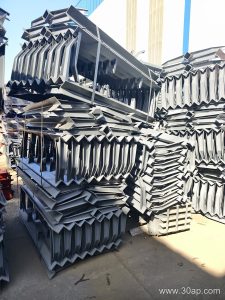
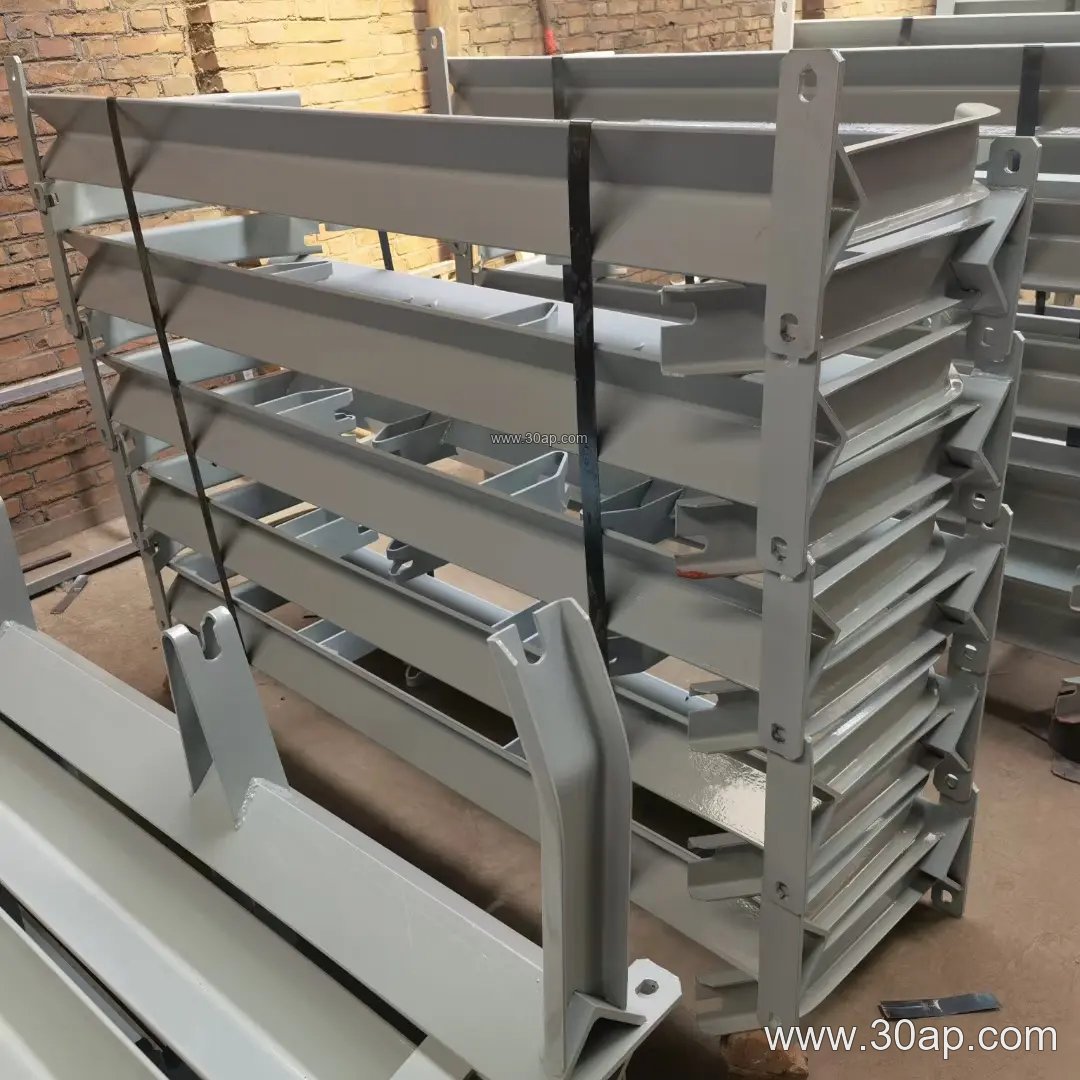
Most brackets are fabricated from angle steel, channel steel, or bent steel plate. The shape depends on the idler type and the frame design. A troughing bracket usually has inclined arms that position three rollers in a trough profile. A return bracket is flatter and supports the belt on its lower run. Bolted or welded connections attach the bracket to the conveyor bracket frame, and slotted holes may allow minor adjustment during alignment.
- Angle steel brackets for lighter frames and simple flat supports
- Channel steel brackets for heavier loads in crushing and screening lines
- Bent plate brackets for compact or custom mounting arrangements
Types and Where They Fit
Bracket types follow the roller arrangement. Common forms include troughing brackets, transition brackets near the pulleys, return brackets, V-return brackets, impact brackets under loading points, self-aligning brackets, and hanging brackets for suspended frames. Adjustable brackets let maintenance staff change the trough angle without replacing the whole assembly.
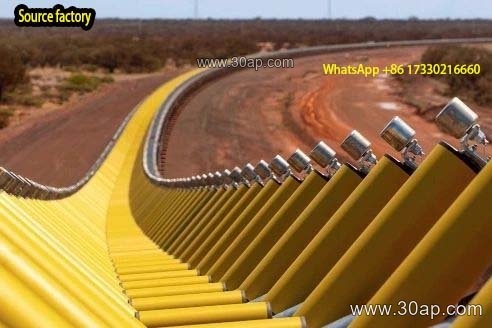
For example, a coal washing plant may use a troughing bracket at B1000 with a 35-degree trough angle and Ø108 rollers on the carrying side, while the return side uses a flatter bracket. A sand and gravel line might run B800 with 30-degree troughing and Ø89 rollers. These combinations are design examples, not fixed rules; belt width, trough angle, and roller diameter are matched according to load, belt stiffness, and frame layout.
Reference Dimensions and Configurations
The table below lists typical bracket-related reference values. Actual mounting hole spacing and crossbeam length are determined by belt width, trough angle, and frame design, and should be confirmed against the conveyor drawing.
| Parameter | Common Reference Values |
|---|---|
| Belt width | B500, B650, B800, B1000, B1200, B1400, B1600, B1800, B2000, B2200 |
| Trough angle | 20°, 30°, 35°, 45°; adjustable brackets can be set within this range |
| Forward tilt (for forward-tilt brackets) | About 1.5° to 2° |
| Roller diameter | Ø89, Ø108, Ø133, Ø159, Ø194 |
| Material | Angle steel, channel steel, bent steel plate |
A bracket may be described as B1200, 45°, Ø133 for a wide, deep-trough application, or B650, 30°, Ø89 for a narrower line. One belt width can be paired with different trough angles and roller diameters, so the bracket should be selected from the conveyor specification rather than from belt width alone.
Selection Points for Buyers
Start with the idler roller type and shaft end shape, because the bracket must accept the shaft securely. Confirm the belt width, the required trough angle, and the roller diameter, then check the mounting hole pattern and crossbeam length against the frame. In a power plant coal handling system or a fertilizer plant, dusty and corrosive conditions may call for suitable surface treatment, while impact brackets at transfer points should match the cushioning roller used there.
Adjustable brackets are useful where the trough angle may need fine-tuning after belt loading changes. Fixed brackets are simpler and usually preferred where the frame geometry is already settled. During maintenance, check for bent arms, worn bolt holes, and loose fasteners, since a misaligned bracket can cause belt tracking problems and uneven roller wear.
Working With Rollers and Belts
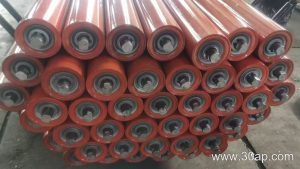
An idler bracket only performs well when it matches the conveyor idler roller and the conveyor belt it supports. The bracket sets the roller position; the roller carries the belt; the belt carries the material. In a tunnel spoil line or a grain silo conveyor, keeping these three aligned reduces vibration and extends service life. The bracket is a small investment compared with a conveyor pulley or a full conveyor frame, but it is central to smooth, stable belt operation.