What a Heavy-Duty Ceramic Lagged Pulley Does
A heavy-duty ceramic lagged pulley is a conveyor pulley whose shell carries a bonded layer of small ceramic tiles instead of plain rubber. The ceramic surface is set in a tough rubber or polymer matrix, and the exposed tile faces bite into the conveyor belt as it wraps the drum. That grip matters most on drive pulleys, where torque has to pass from the shell to the belt without slipping, especially when the belt is wet, dusty, or carrying abrasive material.
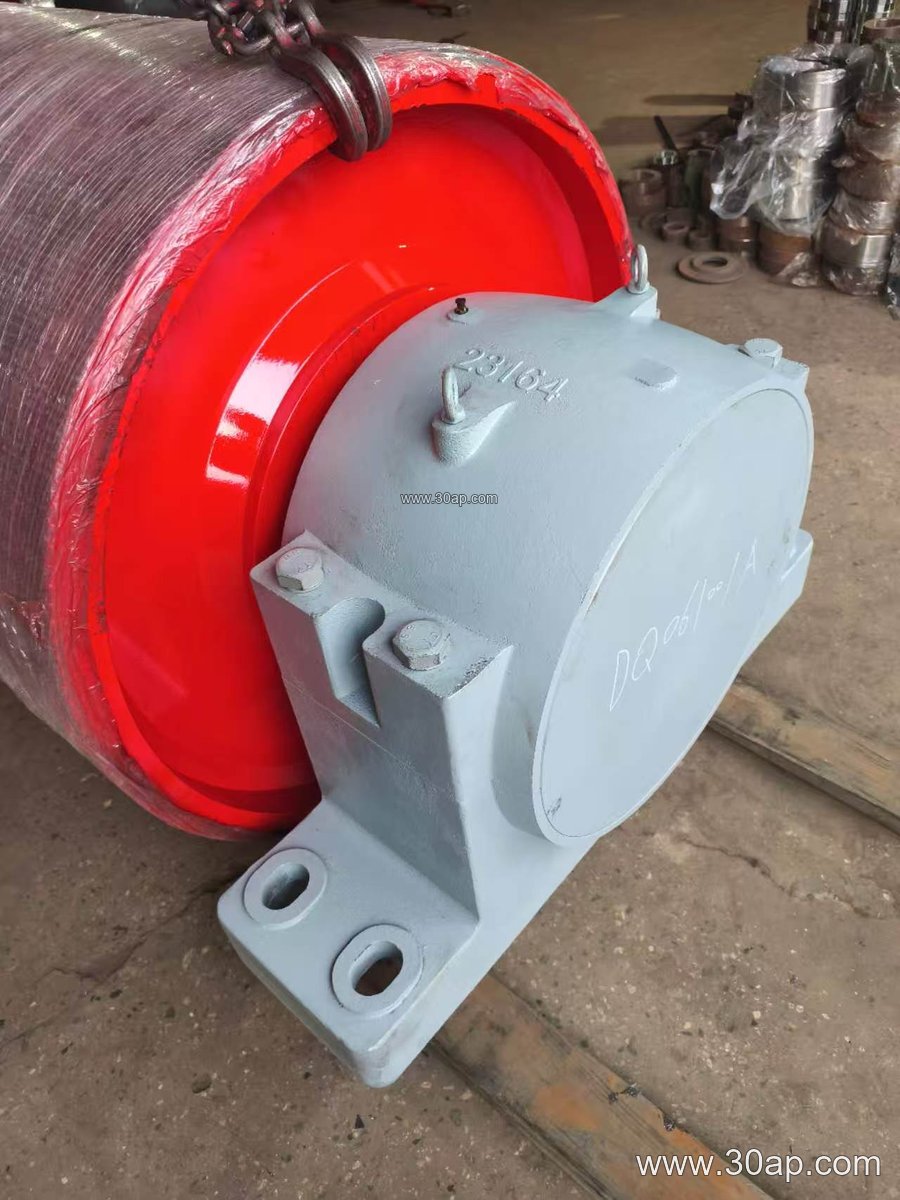
It is still a conveyor pulley at heart: a cylindrical shell, end discs, a shaft, bearing housings, and a lagging layer. What separates it from a standard rubber lagged drum is the wear surface. In a quarry or a cement plant, fine grit works its way between belt and pulley and grinds away soft rubber. Ceramic tiles resist that abrasion far longer, so the lagging keeps its profile and the drive keeps its traction.
How the Ceramic Lagging Is Built
The shell is usually machined steel, with the lagging applied in one of two ways. In the hot-bonded version, unvulcanized rubber with ceramic tiles laid in a pattern is pressed onto the shell and cured in an autoclave, so the rubber and the tile layer become one bonded skin. In a cold-bonded version, a prepared rubber sheet with embedded tiles is adhered with a two-part adhesive. Both give a replaceable wear layer, but the hot-bonded route generally offers the stronger bond for continuous heavy service.
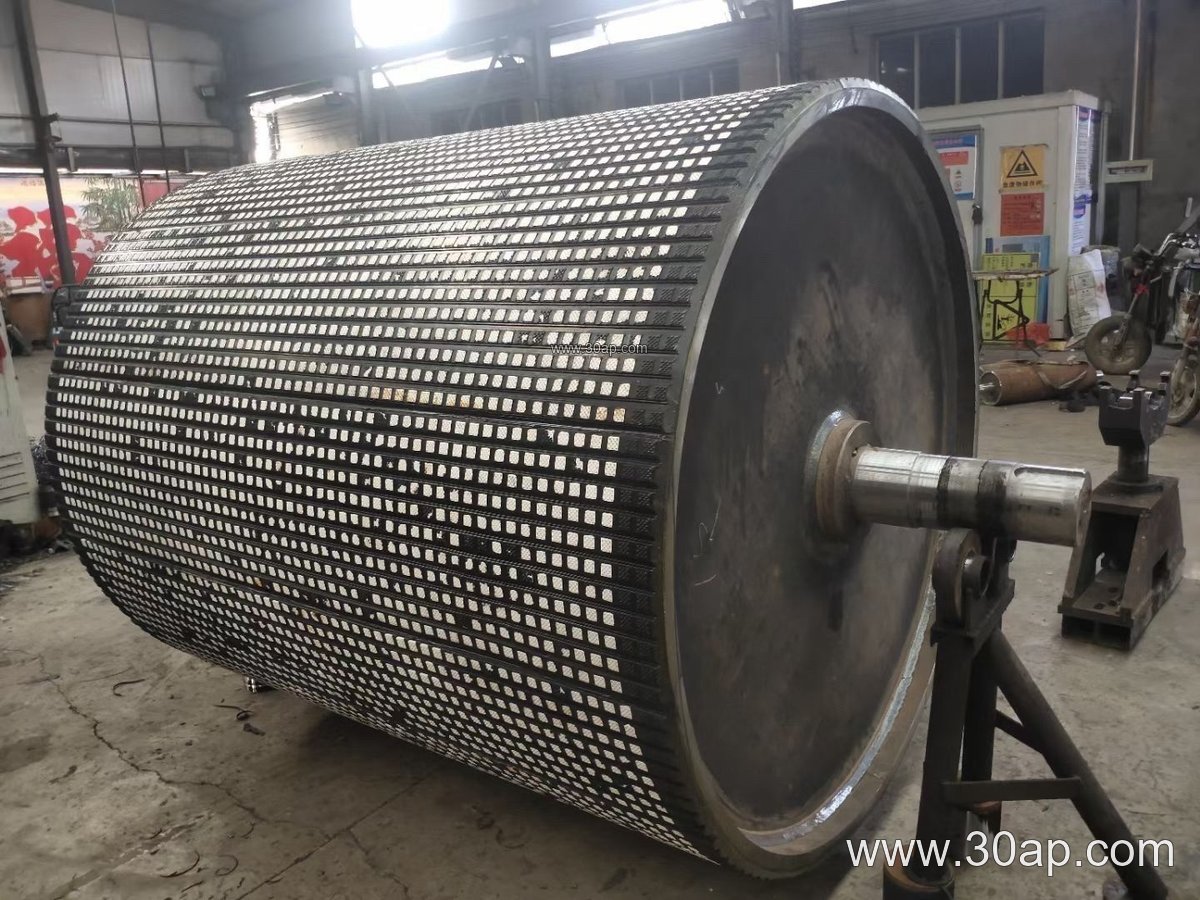
Tile shape and pattern vary. Square or rectangular tiles set in a chevron or diamond arrangement help shed water and fines sideways, while a plain grid pattern is simpler to clean. The tiles sit slightly proud of the rubber so the belt contacts the ceramic, not only the elastic backing. Common lagging thicknesses are 8, 10, 12, 15, and 20 mm; thicker layers suit larger drums and more punishing duty.
- Shell: rolled and welded steel, machined for concentricity
- Lagging: ceramic tiles in a rubber or polymer matrix
- Bonding: hot vulcanized or cold adhered
- Tile pattern: square, diamond, or chevron
- Typical thickness: 8 to 20 mm
Where It Fits on the Conveyor
The natural home for this drum is the drive position, often the head pulley on a long incline where the belt leaves loaded and wet. A ceramic lagged drive pulley in a coal handling system or a limestone crushing line keeps friction high even when the belt surface is damp. It is also used on tension or bend positions where a belt wraps at a sharp angle and slip would be costly.
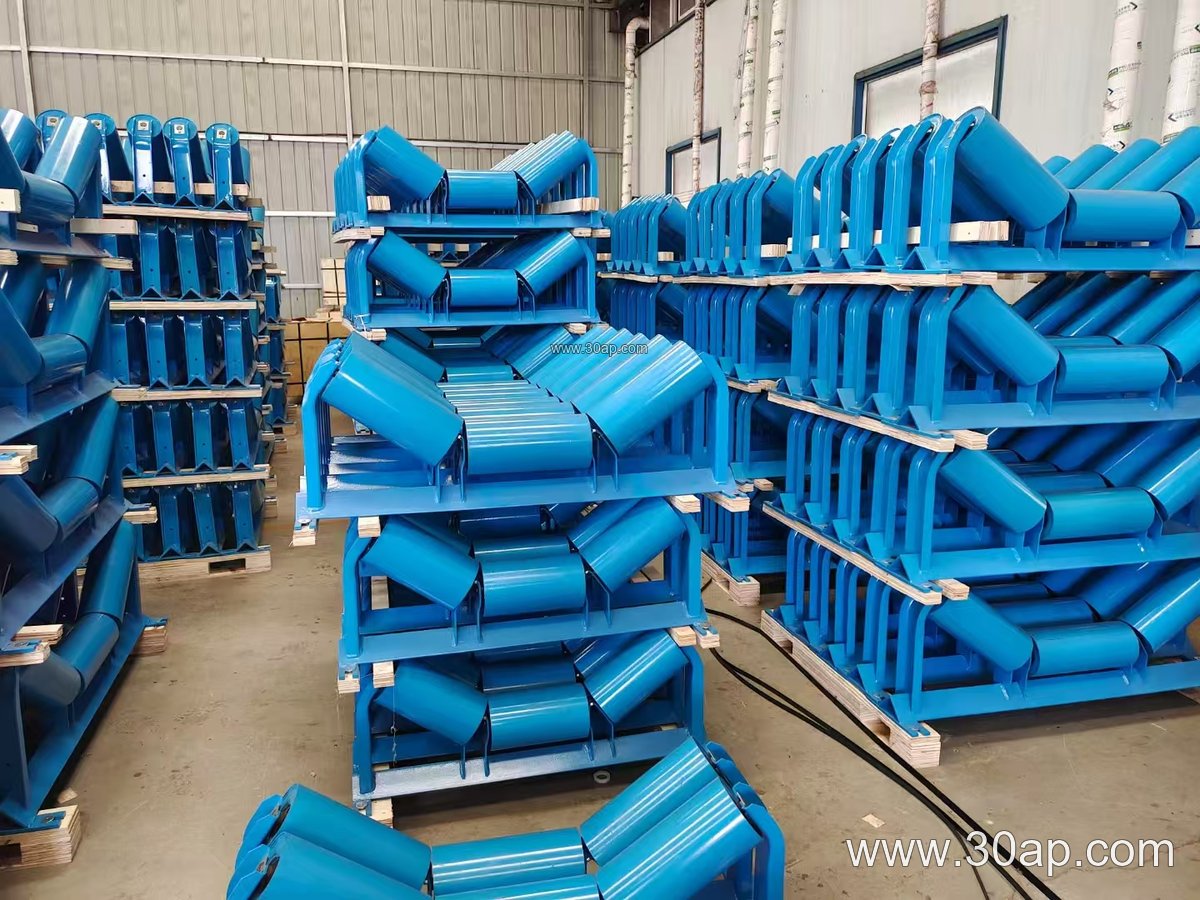
Tail pulleys and bend pulleys are not interchangeable with the drive drum, and each position places different demands on the lagging. A tail pulley mostly guides the belt and may only need a plain or lightly rubbered surface; a bend pulley changes belt direction without transmitting torque. Ceramic lagging is chosen where grip and abrasion resistance both matter, which is usually the drive and sometimes a heavily loaded tension pulley. A conveyor bracket and idler roller elsewhere on the frame do different jobs, so the lagging decision belongs to the drum, not to those components.
Sizes and Matching to the Belt
Ceramic lagged drums are built to the belt width and the torque demand, not to a single fixed formula. Shell face width is normally a little wider than the belt so the belt stays supported. Diameter follows the belt speed, the wrap angle, and the shaft load, and shaft diameter is set by torque and bearing life rather than by belt width alone.
| Belt width | Typical shell face width | Diameter examples |
|---|---|---|
| B500 | about 600 mm | Ø250, Ø315, Ø400 |
| B650 | about 750 mm | Ø315, Ø400, Ø500 |
| B800 | about 950 mm | Ø400, Ø500, Ø630 |
| B1000 | about 1150 mm | Ø500, Ø630, Ø800 |
| B1200 | about 1400 mm | Ø630, Ø800, Ø1000 |
| B1400 | about 1600 mm | Ø800, Ø1000, Ø1250 |
These are common reference combinations, not fixed pairings. A B1200 belt might run on a Ø1000 drum on one conveyor and a Ø800 drum on another, depending on speed and wrap. Shaft sizes commonly range from Ø80 to Ø200 on heavy drives, again determined by the actual load calculation.
Buyer Checklist
- Confirm the pulley position: drive, tension, or bend, since each loads the lagging differently.
- Give the belt width, belt speed, and expected wrap angle so the drum diameter can be sized properly.
- State the material handled, such as wet coal, clinker, or abrasive aggregate, to guide tile pattern and thickness.
- Ask how the lagging is bonded and whether it can be replaced in the field.
- Check that the shaft and bearing housings match the torque and radial load, not just the belt width.
- Plan inspection: worn or missing tiles reduce grip and should be replaced before the rubber backing is exposed.
A ceramic lagged drum costs more than a plain rubber one, but in a dusty, wet, high-torque drive it can outlast several rubber laggings and keep the conveyor belt running without slip. Choose it for the positions where traction and wear resistance genuinely decide uptime, and keep the specification tied to the real duty rather than to a catalogue shortcut.