What a Return Idler Does on a Conveyor
A return idler is the roller that supports the empty, returning strand of a conveyor belt on its way back to the tail end. While the carrying side gets most of the attention, the return run quietly determines how much drag the drive has to overcome, how well the belt tracks, and how long the belt edge lasts. In a quarry, a coal washing plant, a cement kiln line, or a power station coal yard, a few poorly chosen return rollers can raise power draw and cause mistracking that shows up as frayed edges and spilled material.
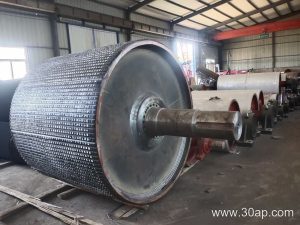
The product is also called a return roller or lower idler, and those names refer to the same component. It should not be confused with a bend pulley or a tail pulley, which are rotating drums that change belt direction rather than support the belt.
Construction and Common Forms
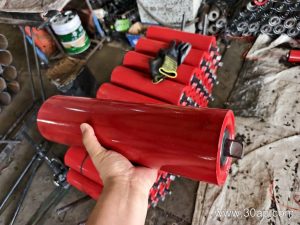
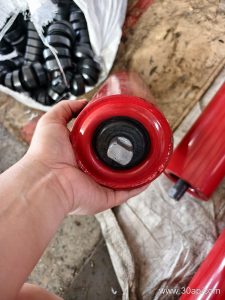
A typical return idler is a steel tube fitted with sealed bearing housings at each end, mounted on a fixed shaft. The shell may be plain steel, nylon-coated, ceramic-covered, or fitted with rubber rings. Bearing sizes commonly range from 6204 through 6310, matched to load and speed rather than to belt width alone.
The most common arrangements are:
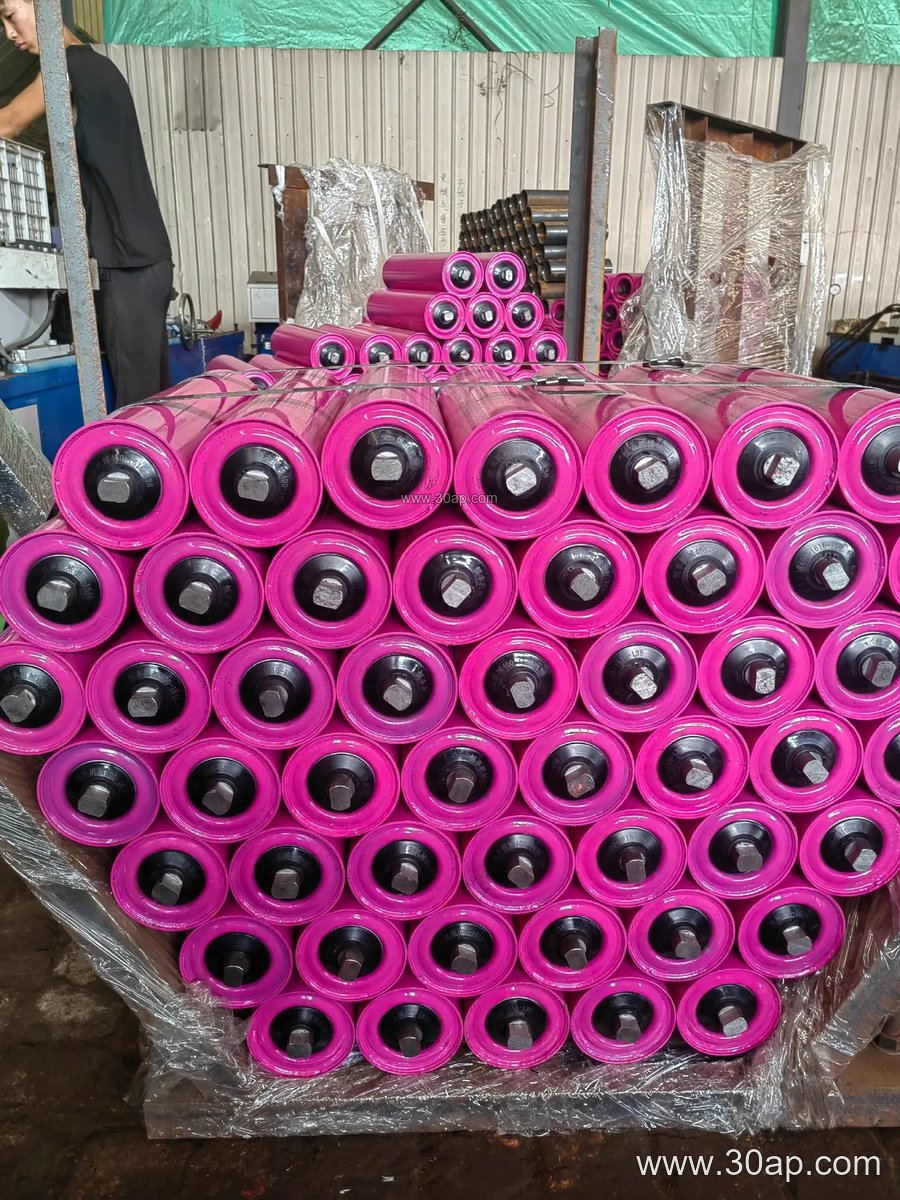
- Flat return idler — a single straight roller under the belt, used on most standard conveyors.
- V-type return idler — two rollers set at an angle to center the belt and reduce edge wander.
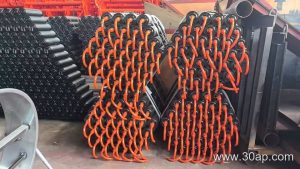
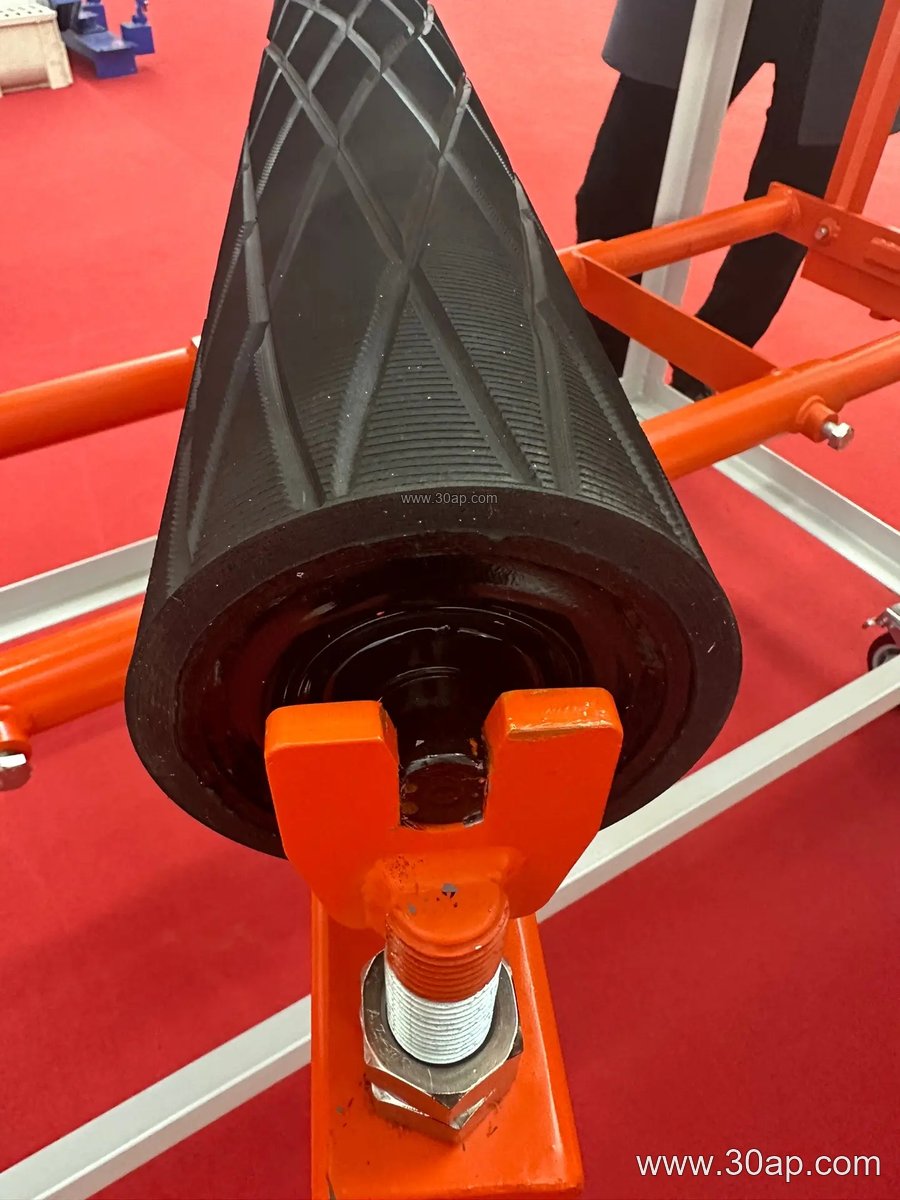
- Spiral return idler — a helical wrap that sheds sticky material and reduces buildup.
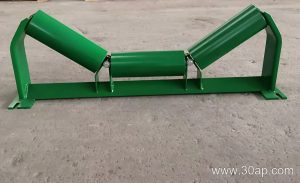
On wider belts, return idler sets may use two or three rollers. Roll diameter is usually chosen from a series such as Ø89, Ø108, Ø133, Ø159, or Ø178 mm, depending on belt width, load, and the space available under the structure.
Where Return Idlers Fit in the Line
Return rollers are spaced along the return strand, typically at wider intervals than carrying idlers because the belt is empty. On a limestone quarry conveyor feeding a primary crusher, or a belt carrying clinker in a cement plant, spacing is often set by preventing sag between supports. Too much sag causes the belt to rub on structure and increases starting torque.
Return idlers also appear near the tail pulley, where they guide the belt into the loading zone, and on inclined belts where the return strand may need extra support. They work alongside the conveyor bracket and frame, and their alignment with the conveyor pulley centerline matters for tracking.
Matching Roller Size to Belt Width
Belt width and idler dimensions are related but not fixed in a one-to-one way. A B800 belt might use a Ø108 mm roller with a shell length around 315 mm in a three-roll carrying set, but the return roller length and diameter are set by the conveyor design. The following values are common reference examples, not universal rules:
| Belt width | Typical return roller diameter | Approximate roller length |
|---|---|---|
| B500 | Ø89 mm | 200 mm |
| B650 | Ø89–Ø108 mm | 250 mm |
| B800 | Ø108 mm | 315 mm |
| B1000 | Ø108–Ø133 mm | 380 mm |
| B1200 | Ø133 mm | 465 mm |
| B1400 | Ø133–Ø159 mm | 530 mm |
| B1600 | Ø159 mm | 600 mm |
These figures are starting points for discussion with a supplier. Final selection depends on belt speed, material load, ambient conditions, and the shaft and bearing arrangement specified for the conveyor.
What Buyers Should Check Before Ordering
First, confirm the belt width and the actual return strand geometry, including whether a flat, V-type, or spiral roller is needed. Second, check the shaft diameter and mounting method so the new roller fits existing brackets without modification. Third, consider the environment: dusty coal handling, wet aggregate washing, and hot clinker service call for different seals and surface finishes.
Ask about bearing protection and lubrication. Sealed-for-life bearings reduce maintenance in remote locations such as a tunnel or a port stockyard, while relubricable designs may suit slow-speed belts. Also confirm roller concentricity and balance, since a wobbling return idler wears the belt and the bearing housing quickly.
Maintenance Notes
Inspect return idlers for seized bearings, flattened shells, and material buildup. A squealing or hot roller should be replaced before it damages the belt. On belts carrying wet or sticky material, spiral return rollers can reduce carryback and keep the return strand cleaner. Keeping the return strand aligned with the conveyor pulley and frame helps prevent edge damage and extends belt life.