What a Custom Conveyor Bracket Really Is
A custom conveyor bracket is a fabricated support component made to match the geometry of a specific belt conveyor. Instead of forcing a standard frame onto an existing structure, engineers design the bracket around the actual belt width, trough angle, roller diameter, and mounting hole spacing. In a quarry, a coal washing plant, or a cement clinker line, this kind of bracket often becomes the difference between a belt that tracks well and one that keeps wandering.
The same item is often called a custom conveyor support bracket, and that equivalent name describes its job just as accurately. It carries the idler roller or the return roller in the correct position relative to the conveyor belt, keeping the trough profile stable along the whole run.
How the Bracket Is Built
Most fabricators start from angle steel, channel steel, or folded steel plate. The choice depends on the load, the span between stringers, and the environment. A bracket in a tunnel mucking line may need heavy channel because of impact; a bracket on a fine sand line can use lighter folded plate.
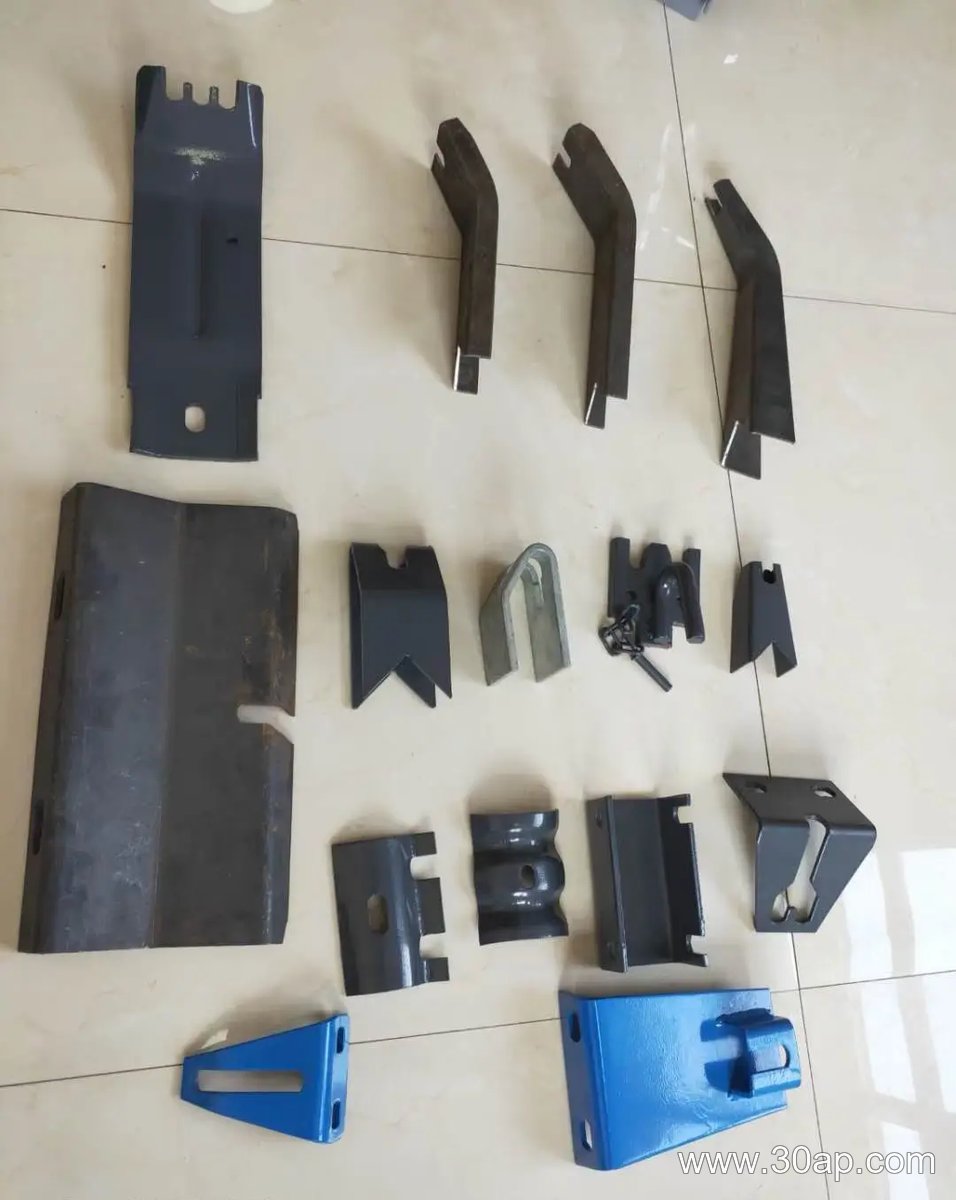
Typical construction details include:
- Slotted or drilled mounting holes that allow field adjustment
- Reinforcing ribs welded between the base plate and the roller seat
- Powder coating, hot-dip galvanizing, or painting for corrosion protection
- Bolted or welded connection to the conveyor stringer
Because every conveyor frame is slightly different, the drawing usually comes from a site measurement rather than a catalog page. That is what makes the part custom rather than off-the-shelf.
Where Custom Brackets Are Used
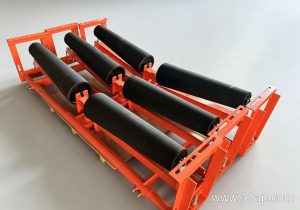
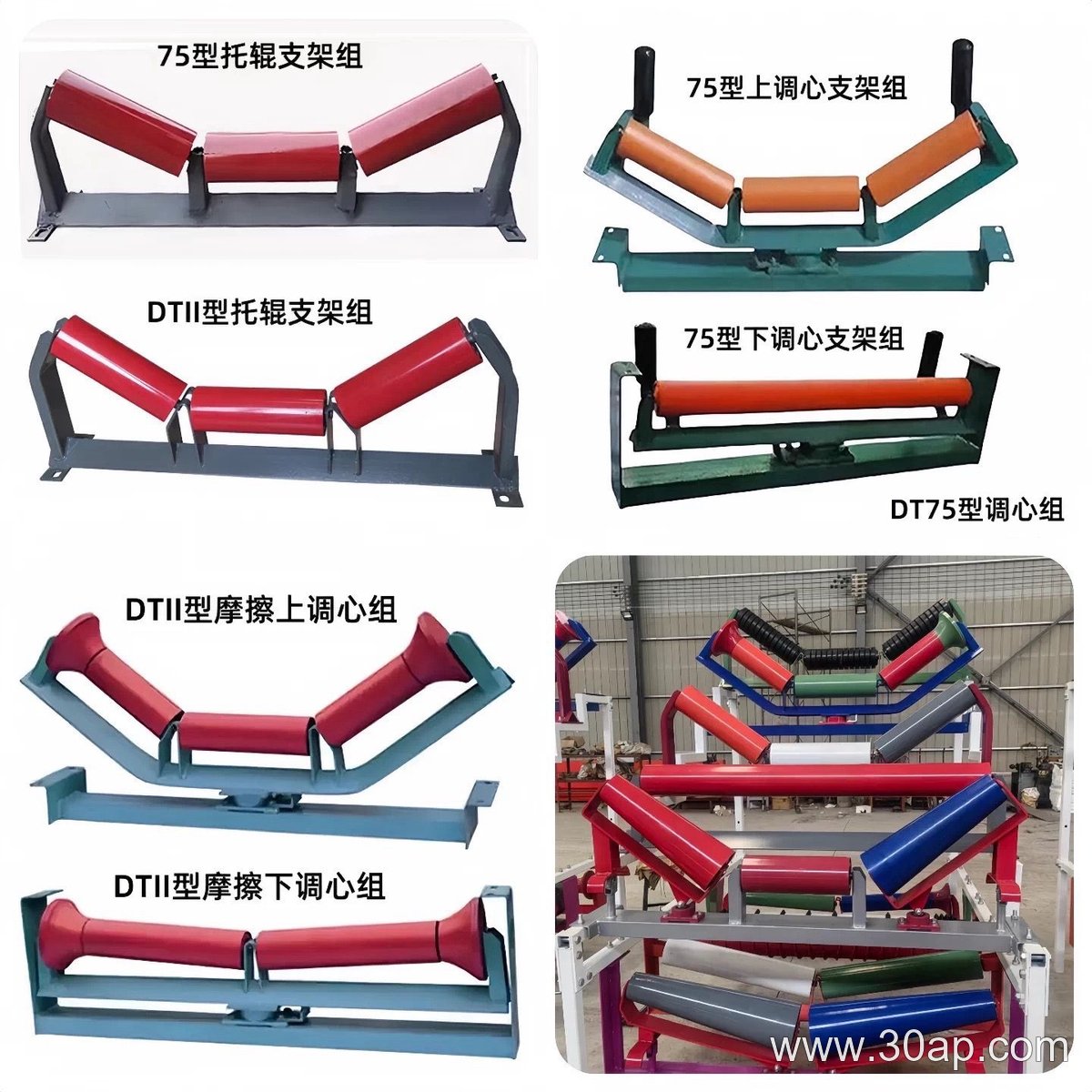
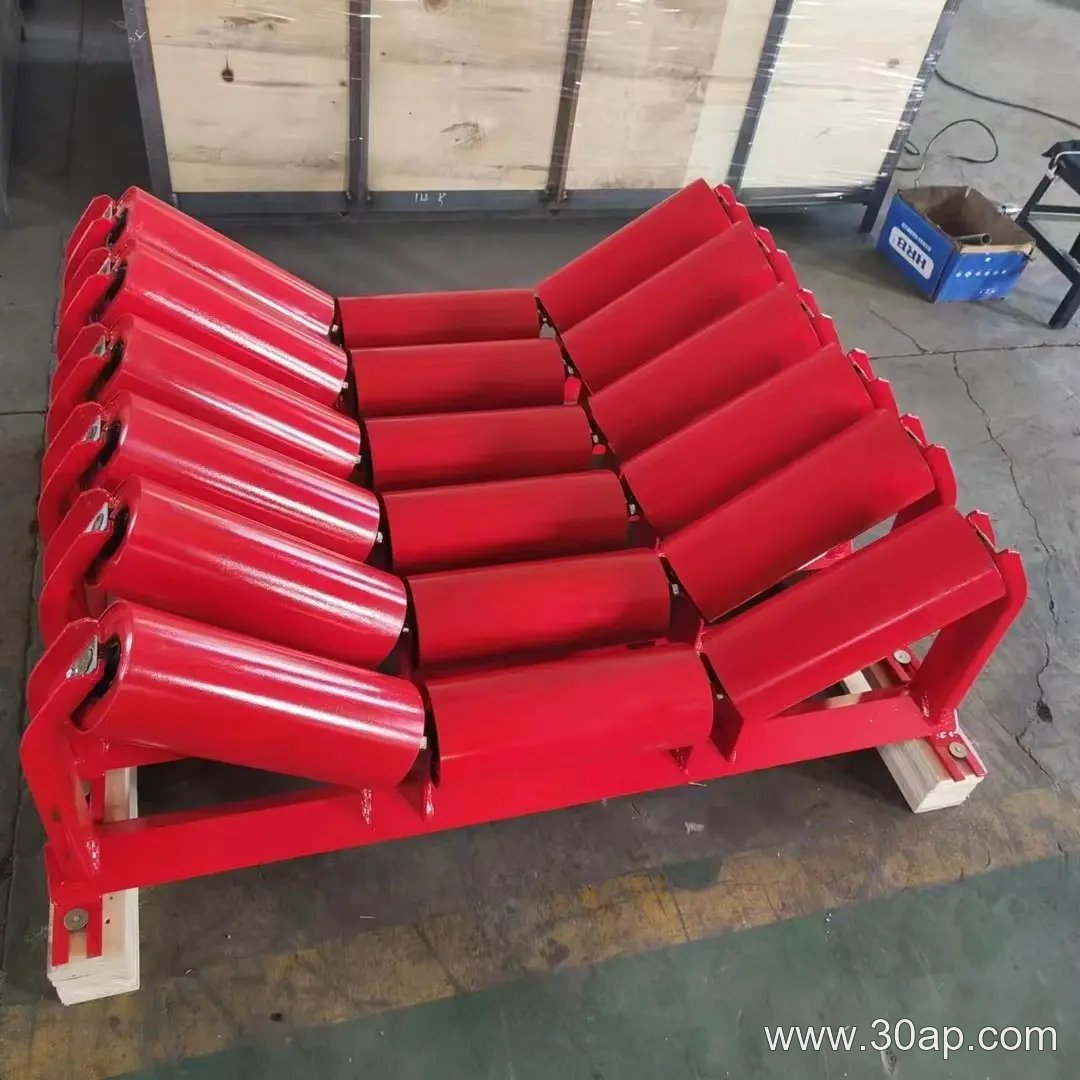
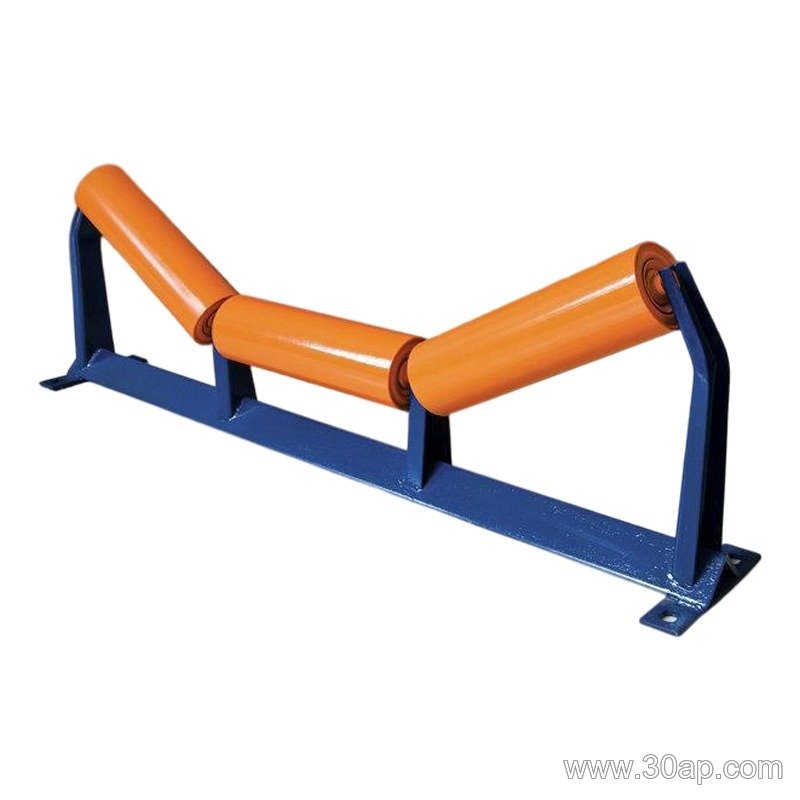
The most common home for these brackets is the carrying side and the return side of a belt conveyor. On the carrying side, a troughing bracket holds three rollers at a chosen trough angle, usually 20 degrees, 30 degrees, 35 degrees, or 45 degrees. On the return side, a flat bracket or a V-return bracket supports the empty belt.
Applications appear across many industries:
- Iron ore and limestone mines with heavy lump feed
- Coal preparation plants and power station coal handling
- Cement plants moving clinker and raw meal
- Crushing and screening circuits in aggregate yards
- Port terminals and steel sinter plants
- Fertilizer, grain silo, and mixing station conveyors
When the belt is wide and the material is abrasive, the bracket may also carry impact rollers or a self-aligning set. Those are related but different components; the bracket is still the structural seat that positions them.
Matching the Bracket to Belt Width and Roller Diameter
There is no single rule that ties one belt width to one roller diameter. A B800 conveyor can run with Ø89, Ø108, or Ø133 rollers depending on load and speed, and a B1200 line may use Ø133 or Ø159. The bracket must be dimensioned so the roller center height and the mounting hole spacing fit the actual frame.
Common reference combinations are shown below. These are examples, not fixed supply promises.
| Belt Width | Trough Angle | Roller Diameter |
|---|---|---|
| B500 | 20 degrees | Ø89 |
| B650 | 30 degrees | Ø89 |
| B800 | 35 degrees | Ø108 |
| B1000 | 35 degrees | Ø108 |
| B1200 | 45 degrees | Ø133 |
| B1400 | 45 degrees | Ø133 |
| B1600 | 35 degrees | Ø159 |
| B1800 | 45 degrees | Ø159 |
| B2000 | 45 degrees | Ø194 |
Adjustable brackets allow the trough angle to be changed within the same frame, which helps when material characteristics change over time.
What Buyers Should Check Before Ordering
A buyer should confirm the belt width, the roller diameter, the trough angle, the mounting hole spacing, and the stringer channel size. It also helps to state whether the bracket is for the carrying side, the return side, or a transition zone, because those positions use different shapes.
Other points worth clarifying:
- Material thickness and surface treatment
- Whether the bracket must fit an existing hole pattern
- Whether a fixed or adjustable version is preferred
- Whether impact or self-aligning rollers will be mounted on it
When the conveyor belt, idler roller, and conveyor pulley are already selected, the custom conveyor bracket should be the last piece that ties them together. Getting that fit right reduces belt mistracking and extends roller life in mines, quarries, and processing plants alike.