What a High-Strength Pulley Is
A high-strength pulley is a heavy-duty conveyor pulley built to transmit torque and carry belt tension without premature fatigue. In practice, it is often called a heavy-duty drum pulley or reinforced conveyor pulley. The term describes a family of pulleys intended for continuous operation under high loads, not a single fixed design. Drive, tail, and bend pulleys all serve different roles, so a high-strength drive pulley is not interchangeable with a high-strength tail pulley or a bend pulley.
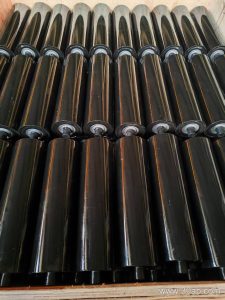
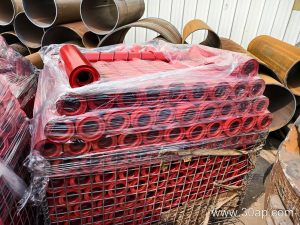
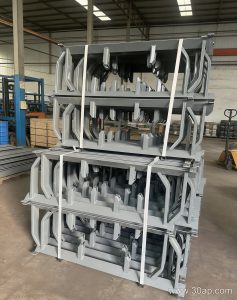
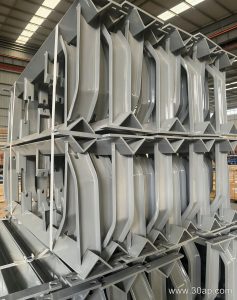
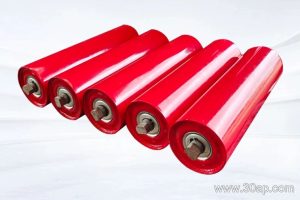
The pulley works with the conveyor belt to move bulk material. It may also interact with an idler roller, a conveyor bracket, or other components that guide and support the belt. The key difference from a standard pulley is the amount of engineering that goes into the shell, shaft, hubs, and locking elements.
How It Is Built
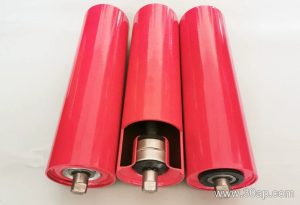
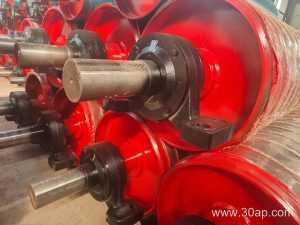
A typical high-strength pulley uses a thick-walled steel shell, often machined or rolled to keep runout low. The shaft is sized by torque and bending load, not by belt width alone. Common shaft diameters include Ø50, Ø60, Ø70, Ø80, Ø90, Ø100, Ø120, Ø140, Ø160, Ø180, and Ø200. Larger shafts may be required for high-tension drives.
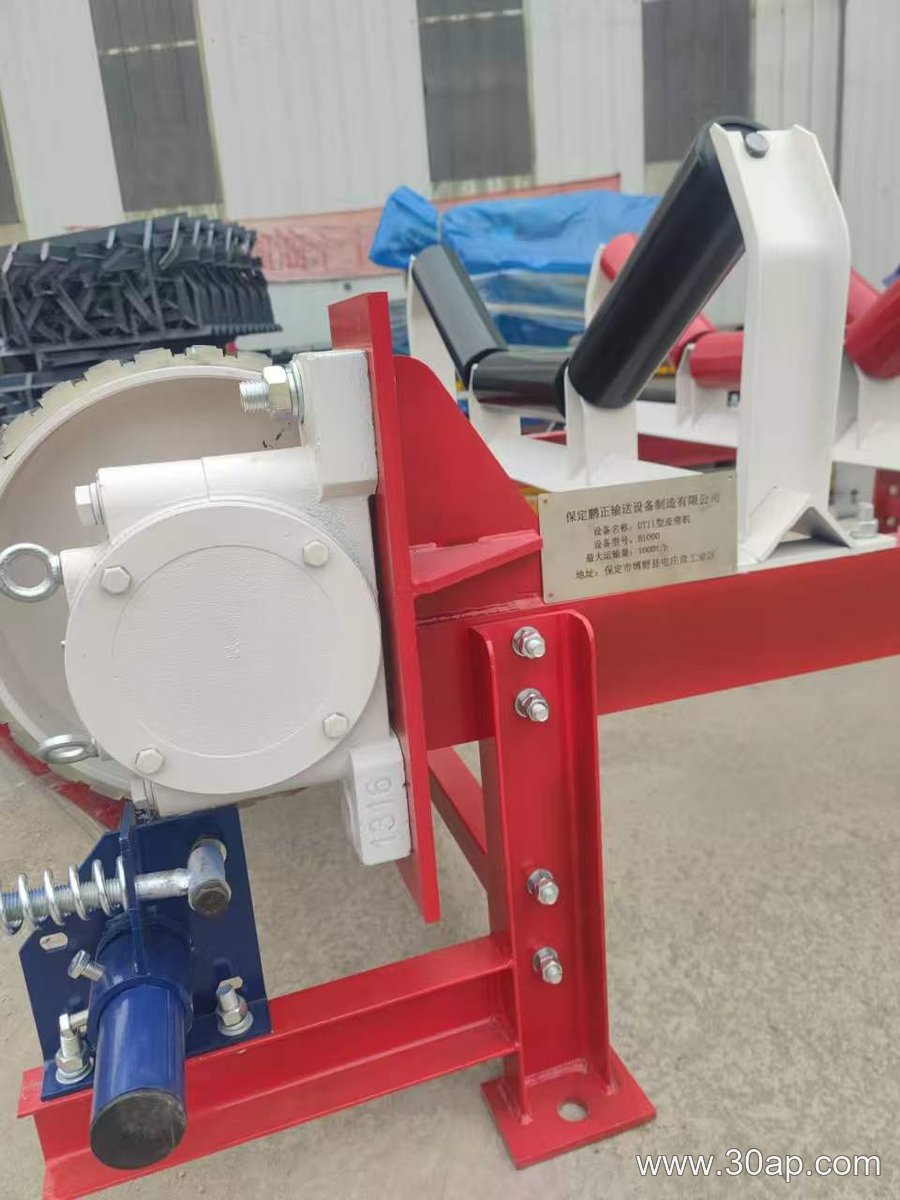
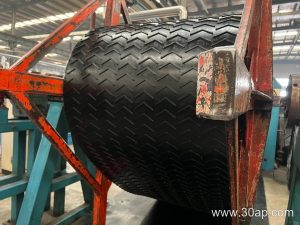
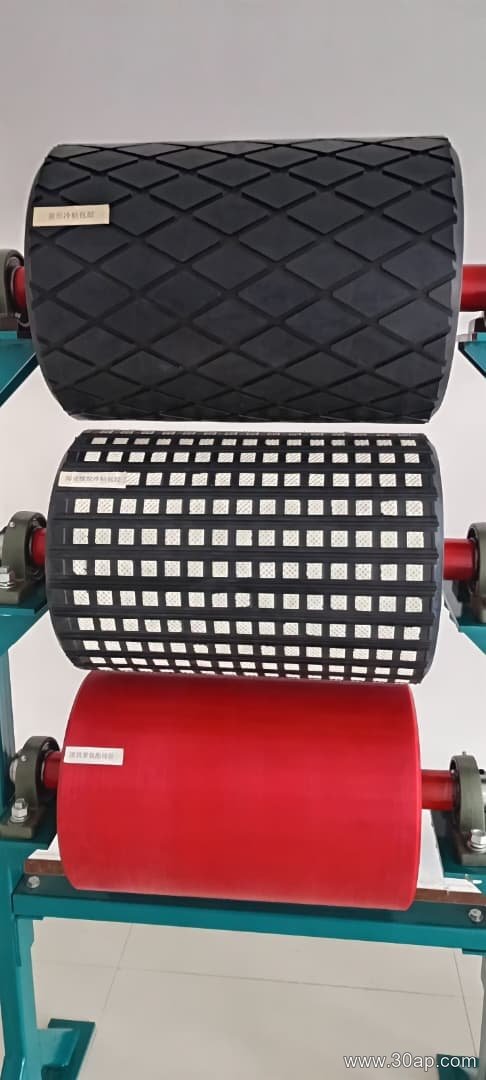
The end discs or hubs connect the shell to the shaft. They are usually welded and stress-relieved, then machined for concentricity. Locking assemblies or keyed connections transfer torque. The surface may be plain, rubber-lined, or ceramic-lined. Rubber lagging is common in thicknesses of 8, 10, 12, 15, or 20 mm, applied by hot vulcanizing, cold bonding, or casting. Diamond and herringbone patterns improve grip in wet or oily conditions.
Where It Is Used
High-strength pulleys appear in aggregates plants, coal preparation plants, and port bulk terminals. They also serve in cement clinker handling and tunnel muck removal. In these settings, the pulley must resist abrasive dust, occasional impact, and continuous belt tension. A quarry conveyor moving crushed stone may use a high-strength drive pulley at the head and a high-strength tail pulley at the return end. A bend pulley may be used to change belt direction, but it is not a substitute for a drive or tail pulley.
Matching the Pulley to the Belt
Belt width and pulley diameter are related but not locked together. A common combination might be B800 × Ø500 or B1200 × Ø1000, yet the same belt width can work with different diameters depending on belt type, speed, and tension. The pulley face width is usually wider than the belt. For example, a B400 belt often runs on a pulley face around 500 mm, while a B1200 belt may use a face near 1400 mm. These are reference values, not universal rules.
Do not assume one belt width can only match one pulley diameter. Do not derive a fixed shaft diameter from belt width alone. The shaft must be checked for torque, radial load, and fatigue. A high-strength pulley may use a larger shaft than a standard pulley of the same diameter.
What Buyers Should Know
- Confirm the pulley role: drive, tail, bend, take-up, or snub. Each has different load and grip requirements.
- Check the belt width and the required face width. A wider face may be needed for tracking.
- Specify the lagging type and thickness if slip is a concern. Plain steel is suitable only when grip is not critical.
- Ask for the shaft material and locking method. Torque transfer must match the drive system.
- Consider the environment. Abrasive dust, water, and temperature affect bearing selection and lagging life.
- Review the balancing grade and runout tolerance, especially for high-speed conveyors.
A high-strength pulley is not a single catalog item. It is a engineered assembly that should be selected with the conveyor belt, idler roller, and conveyor bracket in mind. The right choice balances strength, weight, grip, and service life for the specific material and duty cycle.