What a Heavy-Duty Steel Conveyor Bracket Does
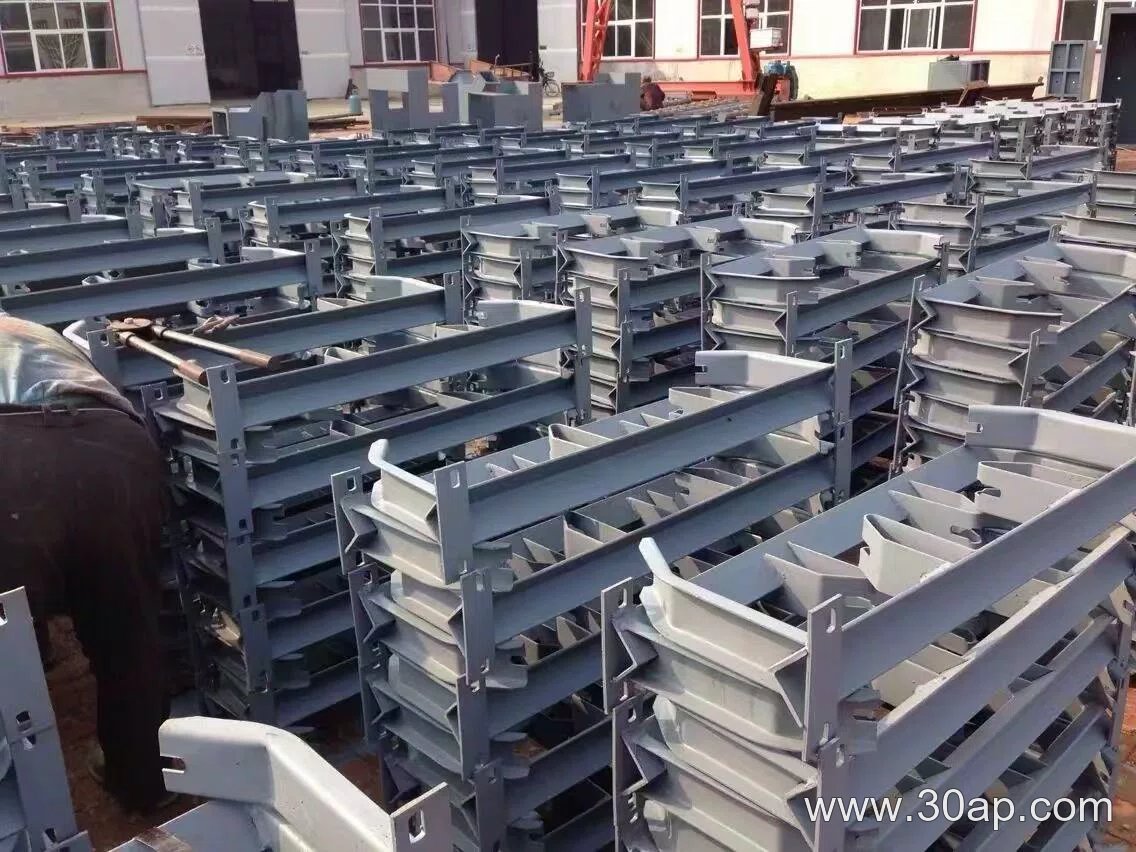
A heavy-duty steel conveyor bracket is the structural support that holds idler rollers in the correct position along a conveyor frame. In a coal mine, a cement plant, or a quarry, the belt carries tons of material every hour, so the bracket must absorb constant vibration and impact without losing alignment. This component is often called a heavy-duty conveyor bracket or a steel idler bracket, but it always refers to the same load-bearing part. It does not drive the belt and it does not change direction; the drive pulley, tail pulley, and bend pulley serve different functions and cannot replace it.
How the Bracket Is Built
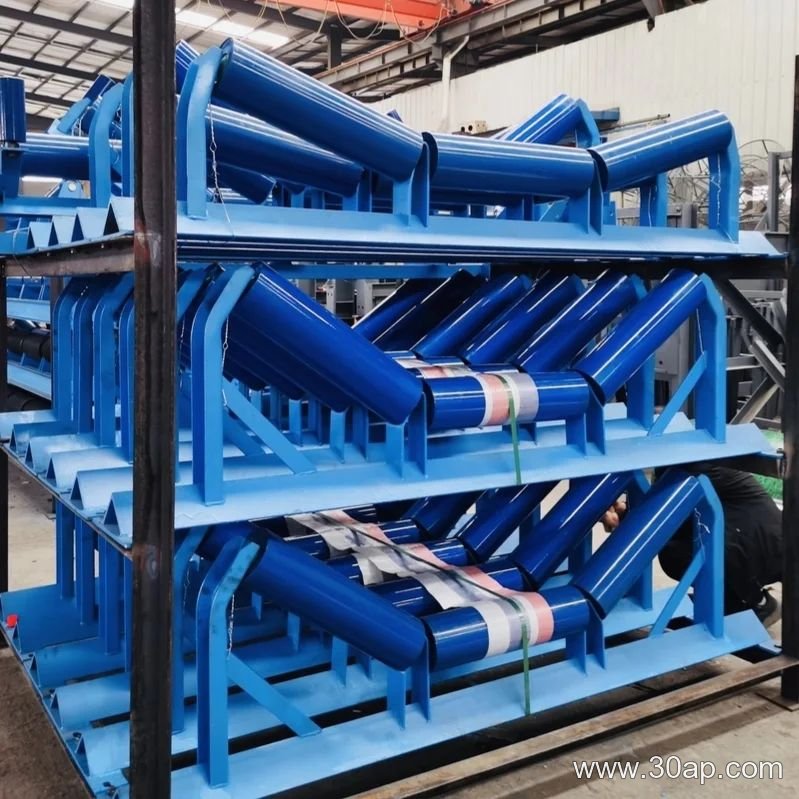
Fabrication usually starts with angle steel, channel steel, or bent steel plate. After cutting and drilling, the pieces are welded into a rigid frame. A heavy-duty steel conveyor bracket may include mounting slots that allow the idler roller to sit at a specific trough angle. Common trough angles are 20 degrees, 30 degrees, 35 degrees, and 45 degrees. Adjustable brackets can be set between several of these angles, while fixed brackets are welded for one position. A slight forward tilt of about 1.5 to 2 degrees is sometimes built in to help belt tracking, but this depends on the conveyor design. The bracket must also match the belt width and roller diameter used on that line.
Where This Bracket Is Used
These brackets appear in a wide range of bulk handling operations. In a limestone mine or a sand and gravel line, they support troughed idlers that carry crushed rock. In a power plant coal yard, they hold rollers under the belt that feeds the boiler. In a fertilizer plant or a grain silo, a lighter version may be used, but a heavy-duty steel conveyor bracket is chosen when the belt is wide, the material is heavy, or the loading point creates extra stress. The same bracket family includes transition brackets, return brackets, and V-return brackets, each placed at a different point along the conveyor. Impact brackets near the loading zone are a separate subtype used only where falling material hits the belt.
Matching Bracket, Belt, and Roller
Selection is not about one fixed formula. A belt width such as B800 does not force a single roller diameter or trough angle. The table below shows common reference combinations, but the final choice depends on the conveyor design, the material, and the load.
| Belt Width | Common Trough Angle | Typical Roller Diameter |
|---|---|---|
| B500 | 20 degrees | Ø89 |
| B650 | 30 degrees | Ø89 or Ø108 |
| B800 | 35 degrees | Ø108 |
| B1000 | 35 degrees | Ø108 or Ø133 |
| B1200 | 45 degrees | Ø133 |
| B1400 | 45 degrees | Ø133 or Ø159 |
| B1600 | 45 degrees | Ø159 |
| B1800 | 45 degrees | Ø159 or Ø194 |
Mounting hole spacing and crossbeam length change with belt width and trough angle. They should never be treated as fixed numbers. A heavy-duty steel conveyor bracket that fits a B1000 line will not automatically fit a B1400 line.
What a Buyer Should Check
- Confirm the belt width, trough angle, and roller diameter required for the conveyor.
- Decide between a fixed bracket and an adjustable bracket. Adjustable types allow angle changes during maintenance or when the material changes.
- Check the steel thickness and weld quality. A heavier bracket resists bending better in high-impact zones.
- Verify hole spacing and crossbeam length against the existing conveyor frame.
- Ask whether the bracket is for a troughing position, a return position, or a transition area, because these are not interchangeable.
A heavy-duty steel conveyor bracket is a small part compared with the conveyor pulley or the belt itself, but it controls how well the idler roller supports the load. When it is built from proper steel and matched correctly to the belt and roller, it keeps the conveyor belt running straight and reduces downtime in mines, quarries, cement works, and power stations.