What the Head Pulley Does on a Belt Conveyor
A belt conveyor head pulley is the driven drum at the discharge end of the conveyor. It transfers torque from the drive system to the conveyor belt, pulling the loaded belt forward and throwing material off at the head. Because it is the main driven pulley, it is also called the drive pulley or head drum. This is not the same as a tail pulley, which normally rotates freely at the loading end, or a bend pulley, which only changes belt direction. Those are separate positions with separate duties, and they are not interchangeable with the head pulley.
The head pulley sits at the highest point of many inclined conveyors and at the transfer point of horizontal ones. Its shell, shaft, bearings, and lagging all work together to transmit power without slipping. A poorly specified head pulley can cause belt mistracking, excessive wear, or unexpected downtime.
How a Head Pulley Is Built
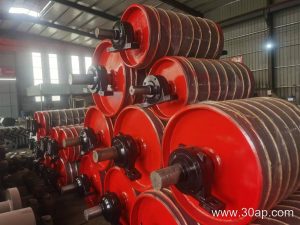
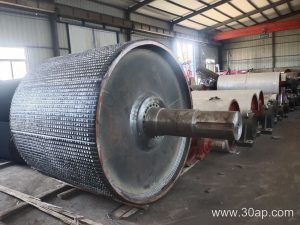
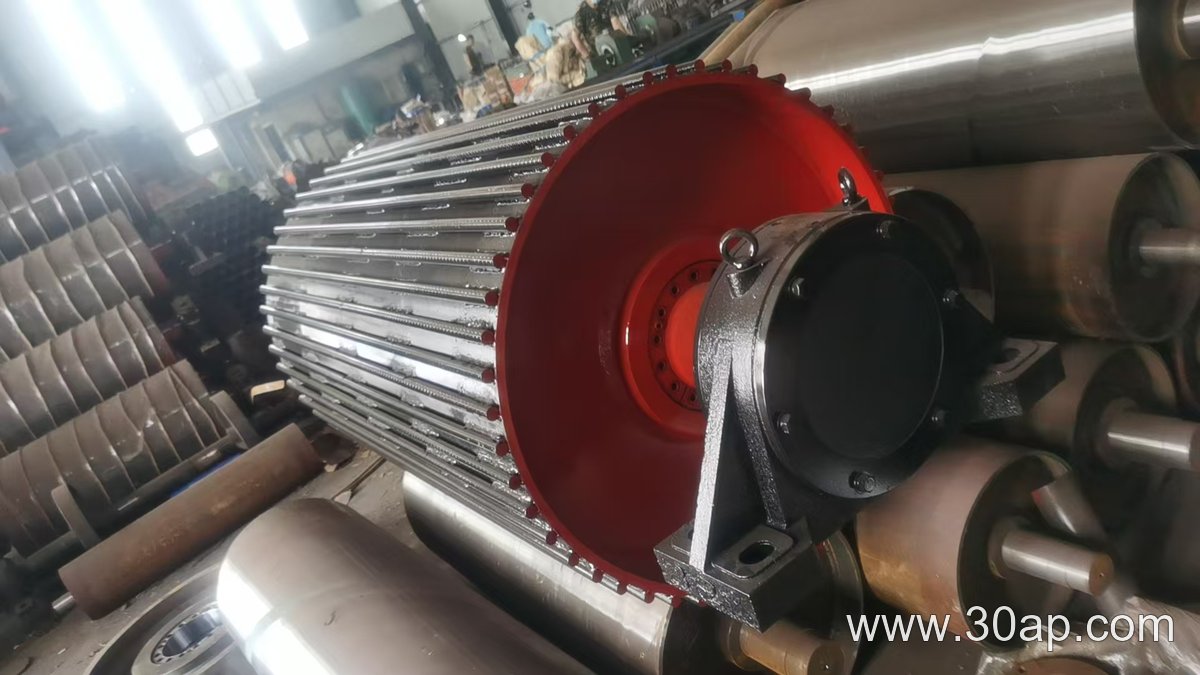
A typical head pulley has a cylindrical shell, two end discs, a shaft, and a lagging surface. The shell is usually steel, machined or rolled to size. The shaft is keyed or shrink-fitted to the end discs and supported by bearing housings mounted on the conveyor frame. Common shaft diameters include Ø50, Ø60, Ø70, Ø80, Ø90, Ø100, Ø120, Ø140, Ø160, Ø180, and Ø200 mm. These are reference values; the actual shaft size is determined by torque, belt tension, and load, not by belt width alone.
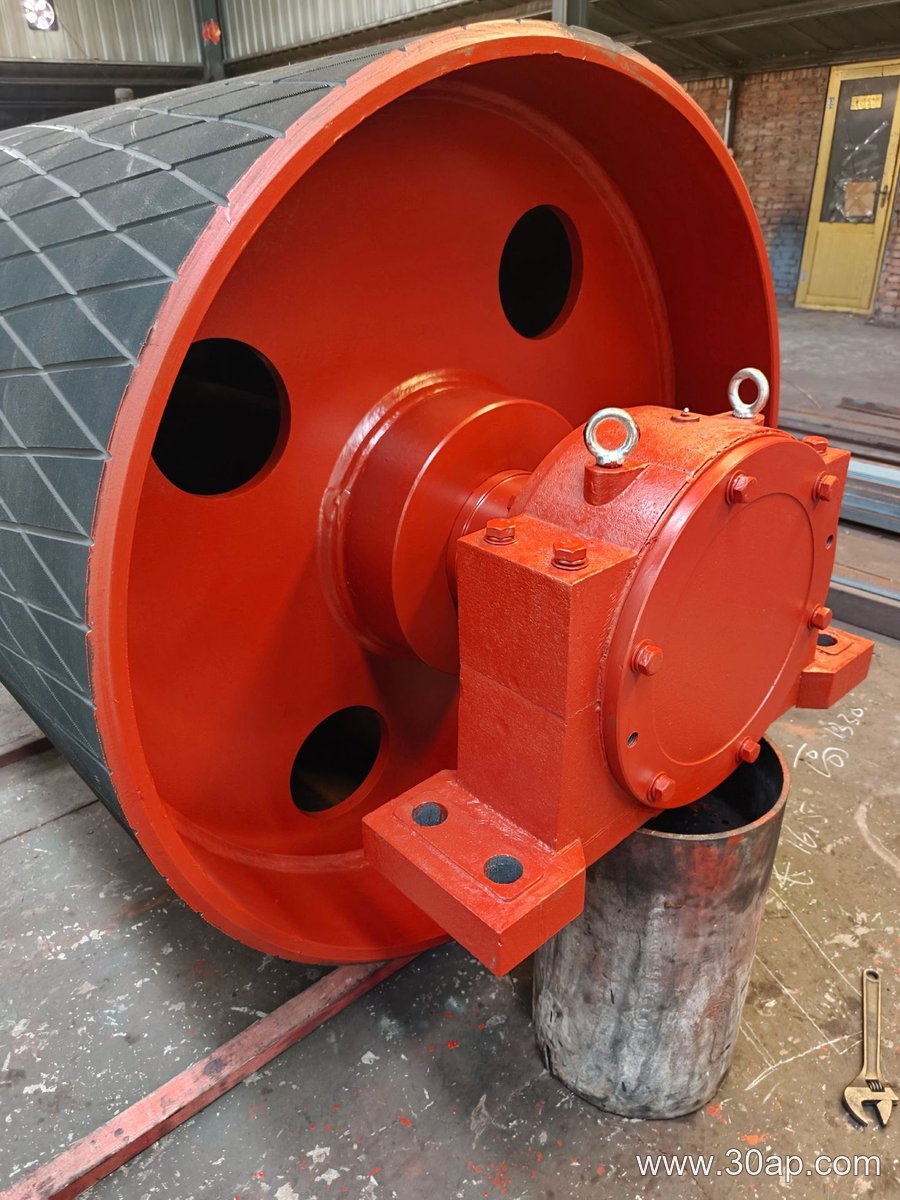
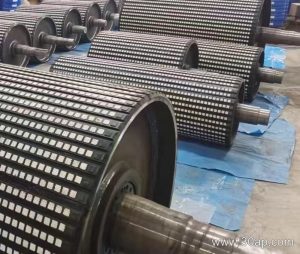
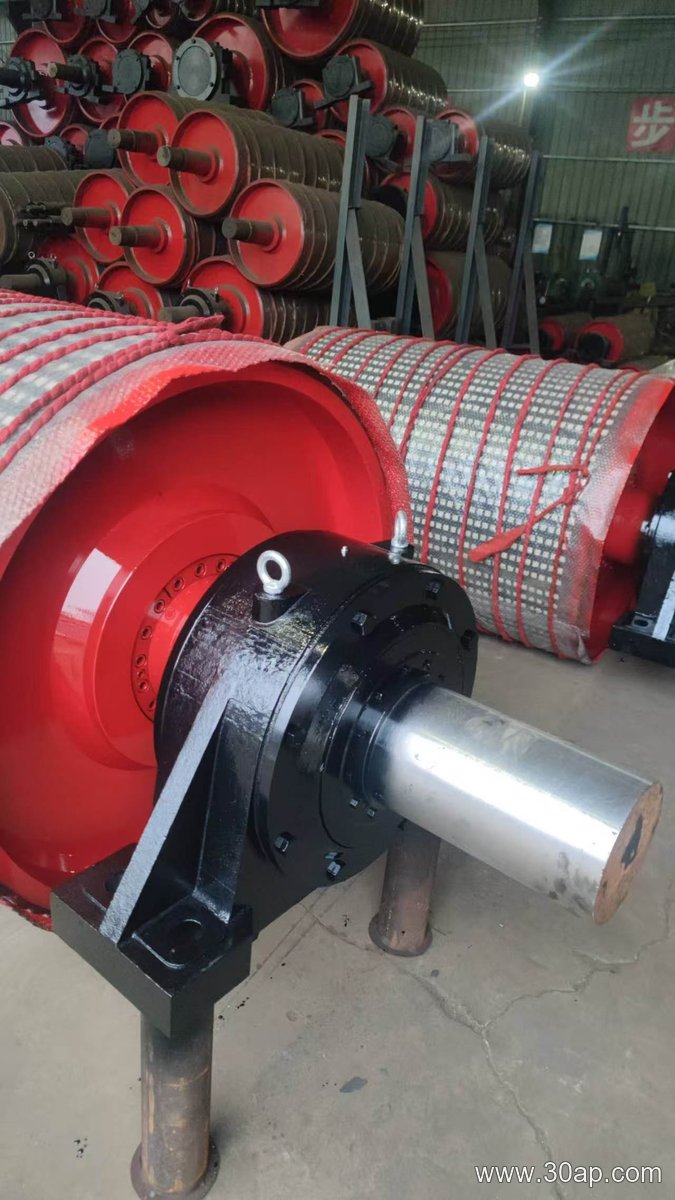
Lagging is the rubber or ceramic layer on the pulley face. It increases friction between the pulley and the conveyor belt, reducing slip. Surface options include plain, cast rubber, cold-bonded rubber, hot-vulcanized rubber, diamond grooving, herringbone grooving, ceramic lagging, and flat rubber. Lagging thickness commonly ranges from 8 mm to 20 mm. For example, 10 mm or 12 mm is often used in general bulk handling, while 15 mm or 20 mm may be chosen for high-torque or wet conditions.
Sizes and Common Combinations
Head pulleys are matched to belt width and conveyor design. The pulley face width is usually wider than the belt itself. Common belt widths include B400, B500, B650, B800, B1000, B1200, B1400, B1600, B1800, B2000, B2200, and B2400. Pulley diameters commonly range from Ø200 to Ø1800 mm. A few examples help show the relationship, but they are not fixed rules:
- B800 with Ø500 head pulley
- B1000 with Ø630 or Ø800 head pulley
- B1200 with Ø1000 head pulley
- B1400 with Ø800 or Ø1000 head pulley
Notice that the same belt width can work with more than one diameter. The right choice depends on belt speed, wrap angle, material characteristics, and the amount of torque the drive must deliver. Do not assume that one belt width can only match one pulley diameter.
Where It Is Used
You will find belt conveyor head pulleys in quarry and aggregate lines, coal handling plants, and cement clinker circuits. In a quarry, the head pulley discharges crushed stone onto a stockpile or transfer chute. In a coal yard, it drives the main transport belt that feeds a crusher or bunker. The same principle applies in sand and gravel plants, tunnel muck removal, and fertilizer or grain silos. The head pulley is always the driven end that pulls the belt forward and releases the material.
What Buyers Should Check
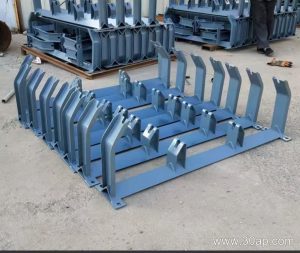
Before ordering, confirm the belt width, the required pulley diameter, and the shaft diameter. Check the lagging type and thickness for the application. Consider the conveyor bracket and bearing housing that will support the pulley. Also think about the conveyor pulley as a system: the head pulley must match the belt, the drive unit, and the take-up arrangement. A tail pulley or bend pulley may look similar, but they serve different roles and should be specified separately.
Ask for the pulley drawing, material grade, and balancing report when available. For high-speed or heavy-duty conveyors, dynamic balancing helps reduce vibration. Proper crown or flat face, correct lagging, and accurate shaft alignment all extend service life.
Maintenance Notes
Inspect lagging for wear, cracking, or glazing. Worn lagging reduces grip and can lead to belt slip. Check bearing temperature and lubrication regularly. Keep the pulley face clean; material buildup can cause belt mistracking. When replacing a head pulley, verify the new unit matches the existing shaft, keyway, and bearing centers. If the belt has been running on a worn pulley, the new lagging may change the belt path slightly, so re-tension and re-align as needed.
A belt conveyor head pulley is a small but critical part of the whole system. Selecting it by belt width alone is not enough. Look at torque, speed, lagging, shaft load, and the conveyor layout. That approach keeps the belt running straight and the material moving.