What a Custom Conveyor Pulley Does
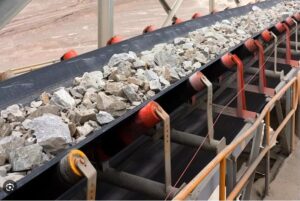
In a quarry or a sand and gravel plant, the belt is only as reliable as the drum that moves it. A custom conveyor pulley is a made-to-order drum assembly that matches the specific belt width, shaft load, and lagging needs of one conveyor. It is also called a custom conveyor drum in some workshops, but the function is the same: transmit torque, support the belt, and keep tracking stable. Unlike a stock item, it is built around the actual duty of the line, whether that line carries limestone, iron ore, clinker, or coal.
How It Is Built
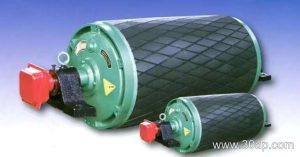
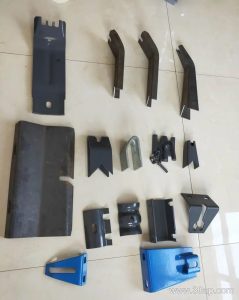
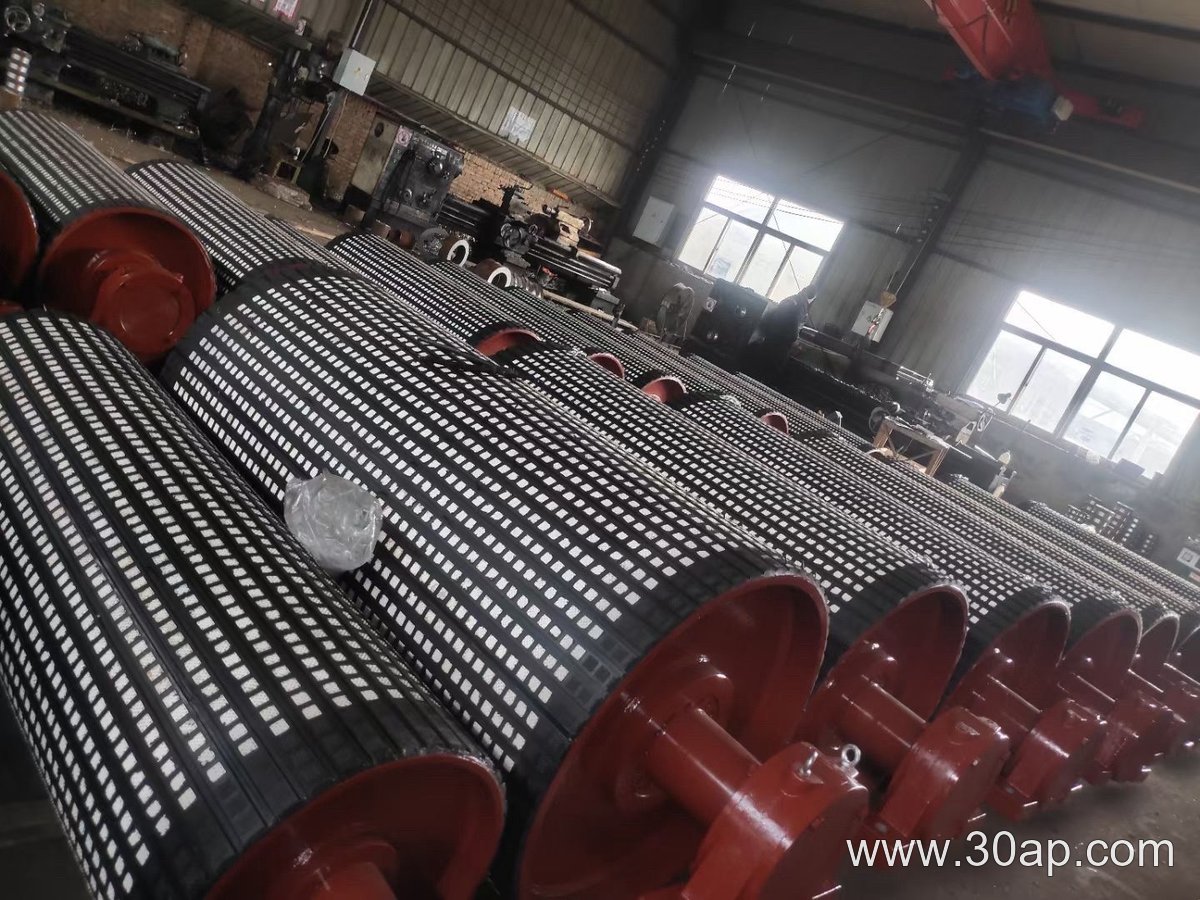
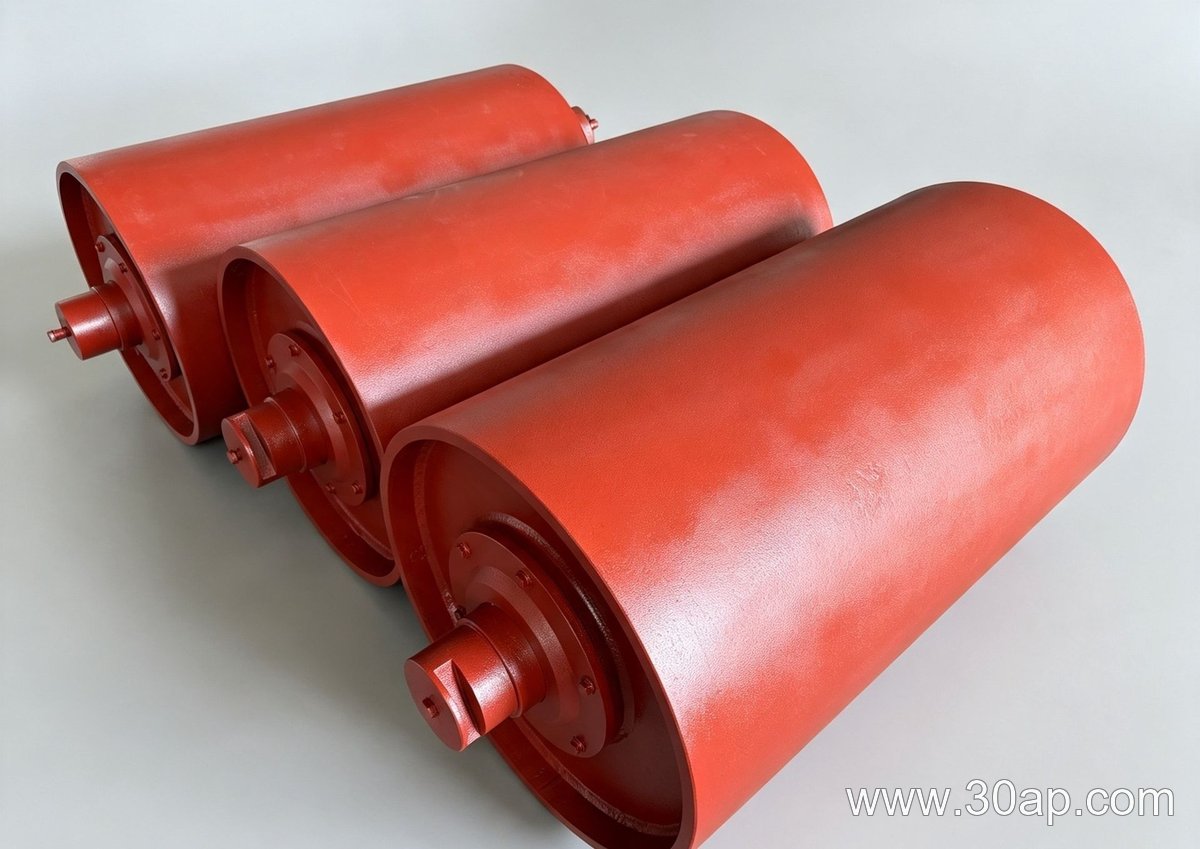
The shell is usually a seamless steel tube or a rolled and welded cylinder, machined at both ends. Inside, the shaft is fitted through hubs and end discs, then welded or keyed according to the torque. A custom conveyor pulley may use a flat face, or it may be crowned slightly to help the belt center itself. Bearing housings, locking elements, and a conveyor bracket are matched to the shaft diameter and the frame. Lagging is applied later, and the choice of surface affects grip and wear life.
Where It Fits on the Conveyor
Not every drum does the same job. A drive pulley, also called the head pulley, pulls the belt and often sits at the discharge end. A tail pulley turns at the loading end and may include a tension take-up. A bend pulley changes the belt direction without driving it. These positions are not interchangeable, so a buyer should never order a tail drum when the drawing calls for a drive drum. The same rule applies to a wing pulley used for self-cleaning in sticky material, or an electric drum used where a compact drive is needed.
Common Sizes and Surface Forms
Dimensions are always project-specific, but the table below shows typical reference values used in quarry, cement, and power plant conveyors. Belt width is not a fixed match for one diameter; the final choice depends on torque, belt tension, and shaft load.
| Belt width | Typical face width | Common diameter range | Shaft diameter range |
|---|---|---|---|
| B400 | about 500 mm | Ø200 to Ø320 | Ø50 to Ø70 |
| B650 | about 750 mm | Ø250 to Ø500 | Ø60 to Ø90 |
| B800 | about 950 mm | Ø315 to Ø630 | Ø70 to Ø100 |
| B1000 | about 1150 mm | Ø400 to Ø800 | Ø80 to Ø120 |
| B1200 | about 1400 mm | Ø500 to Ø1000 | Ø90 to Ø140 |
| B1400 | about 1600 mm | Ø630 to Ø1250 | Ø100 to Ø160 |
| B1600 | about 1800 mm | Ø800 to Ø1400 | Ø120 to Ø180 |
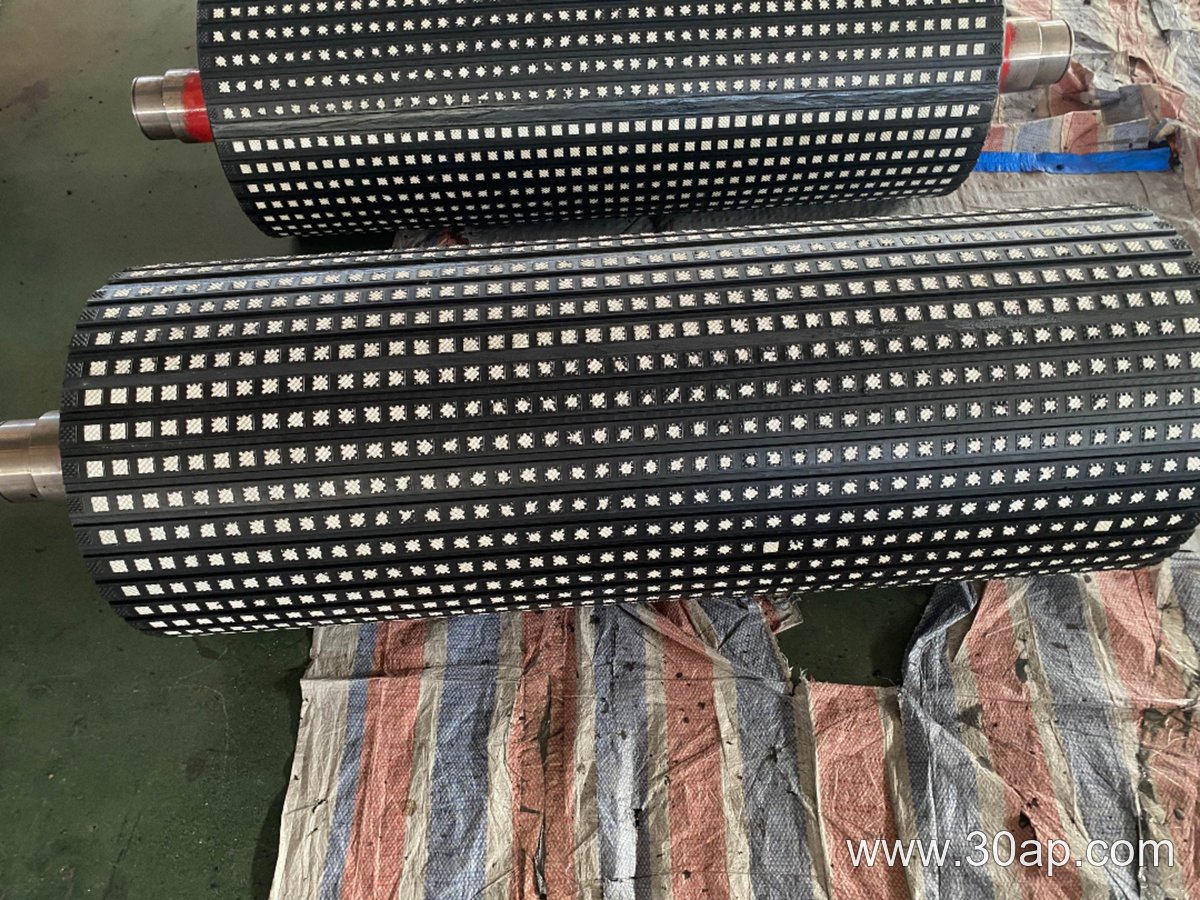
Surface options include plain, cold-bonded rubber, hot vulcanized rubber, diamond lagging, herringbone lagging, ceramic lagging, and flat rubber. Lagging thickness is often 8, 10, 12, 15, or 20 mm. In a coal washing plant, diamond or herringbone grooves help shed water and fines. In a cement plant handling hot clinker, a heat-resistant rubber grade may be preferred.
What a Buyer Should Know
- Confirm the duty: drive, tail, bend, tension, or snub. Each position changes the load case.
- Give the belt width, belt speed, and the calculated torque, not just the pulley size.
- State the shaft diameter only after the torque and bearing loads are known. A B800 belt does not automatically mean a Ø80 shaft.
- Match lagging to the material. Sticky iron ore may need a wing pulley or a grooved lagging to avoid build-up.
- Check the conveyor bracket and bearing housing dimensions against the existing frame before ordering.
- Ask for a balance report and runout check if the drum will run at high speed.
Maintenance and Long-Term Fit
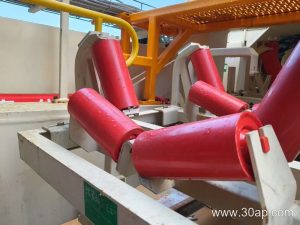
A custom conveyor pulley should be checked for lagging wear, shell cracks, and bearing play during scheduled stops. In a limestone mine or a fertilizer silo line, a worn lagging can cause belt slip and misalignment, which then affects the conveyor belt and the idler roller. Keeping the drum aligned with the conveyor bracket and the take-up frame reduces edge damage and extends belt life. When the drum is built to the actual load, the whole conveyor runs with fewer surprises.