What an NN Conveyor Belt Is
An NN conveyor belt is a rubber belt whose carcass is built from nylon fabric in both the warp and weft directions. The abbreviation NN stands for nylon-nylon, and the product is also called a nylon conveyor belt or nylon core conveyor belt. This differs from EP belts, where polyester forms the warp and nylon the weft. The double-nylon construction gives the belt high tensile strength, excellent elongation under impact, and strong resistance to fatigue. A nylon conveyor belt is often chosen for primary crusher discharge, long overland conveyors with high tension, and any duty where shock loading and flexing are constant.
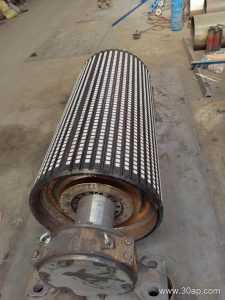
Because the fabric stretches more than polyester, an NN belt needs careful take-up travel and, in some cases, a slightly different pulley and idler roller layout than an EP belt of the same rating. The belt is not a pulley, a roller, or a bracket, and it should not be confused with a drive pulley, tail pulley, or bend pulley. Those are separate components that support and drive the belt.
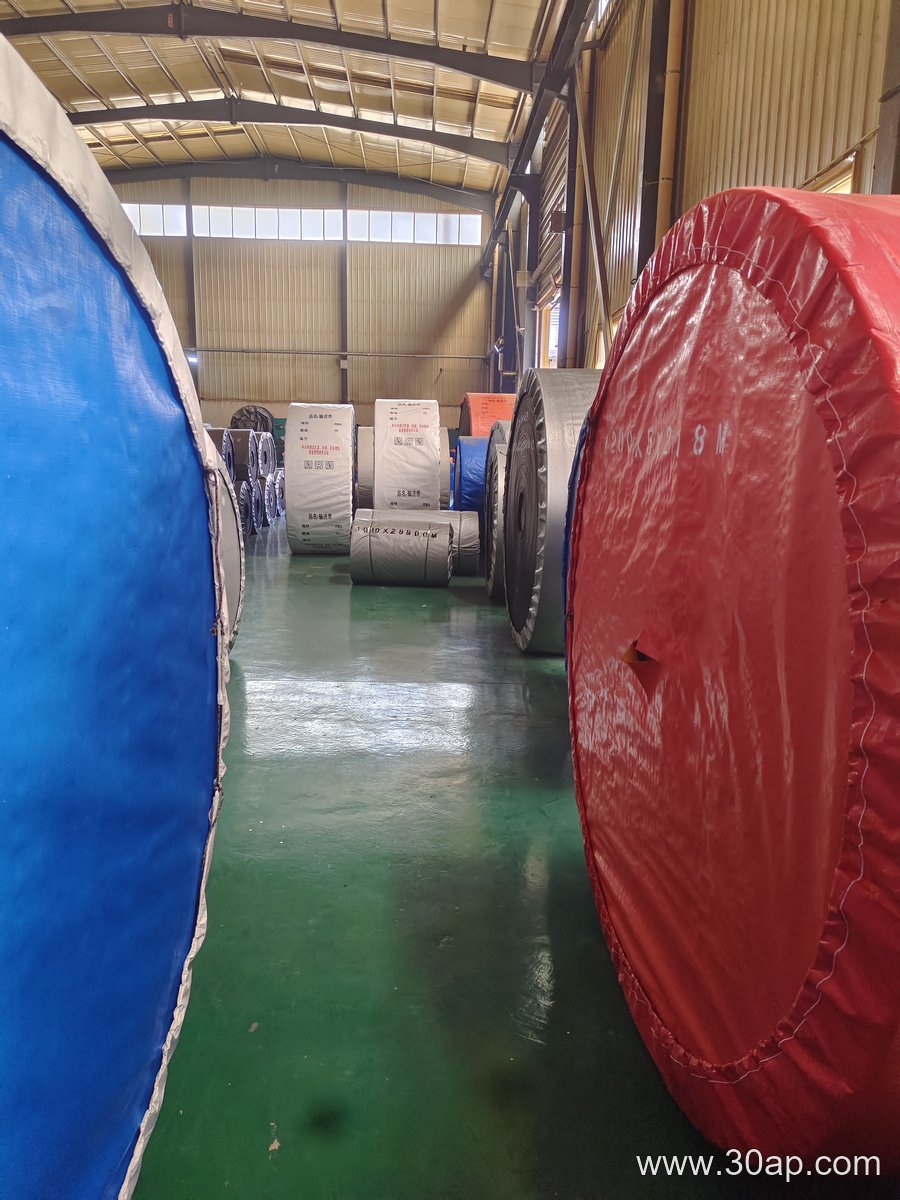
How the Carcass and Covers Are Built
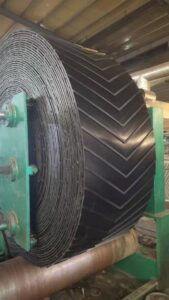
The strength of an NN conveyor belt comes from multiple plies of nylon fabric bonded with rubber skim compound. Common constructions use 2 to 6 plies. The cover rubber protects the carcass from abrasion, cutting, and the material being carried. Cover grades can be selected for wear resistance, heat resistance, oil resistance, flame retardancy, antistatic behavior, cold resistance, or acid and alkali exposure. Surface forms such as smooth, patterned, chevron, or corrugated sidewall are available for different slopes and material control.
Typical cover thickness combinations include 3+1.5 mm, 4+2 mm, 5+2 mm, 6+2 mm, and 8+3 mm. These are reference figures, not universal requirements. The right cover depends on lump size, drop height, material temperature, and whether the belt runs on a troughing idler roller set or a flat return. A conveyor pulley at the head and tail ends must be matched to the belt’s tension and thickness, but belt width alone does not fix a pulley diameter or shaft size.
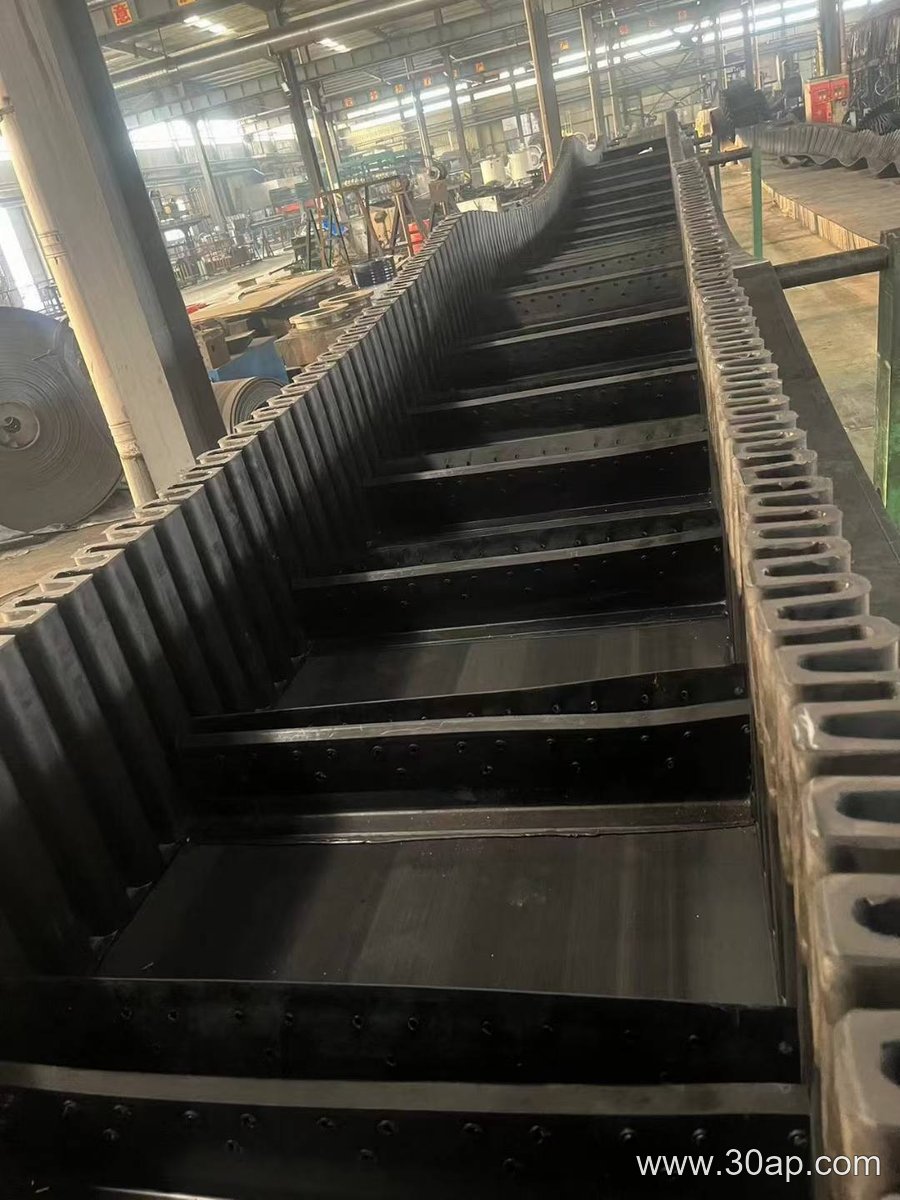
Typical Duty and Where It Fits
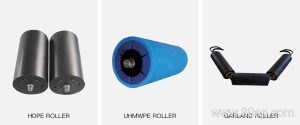
An NN belt is common in mining, quarrying, aggregate processing, cement plants, steel mills, and bulk ports. It handles crushed stone, ore, sand, gravel, coal, and similar heavy materials. The nylon carcass absorbs impact at transfer points better than a stiff carcass, which helps when large lumps fall onto the belt. It also tolerates the repeated bending around a conveyor pulley and the small-diameter idler roller typically found on the carrying side.
For comparison, an EP conveyor belt often offers lower stretch and better dimensional stability on very long, high-tension runs. A steel cord belt is used where extreme strength and minimal elongation are required. These are different carcass types, not replacements for the NN belt. Each has its own place in a conveyor system.
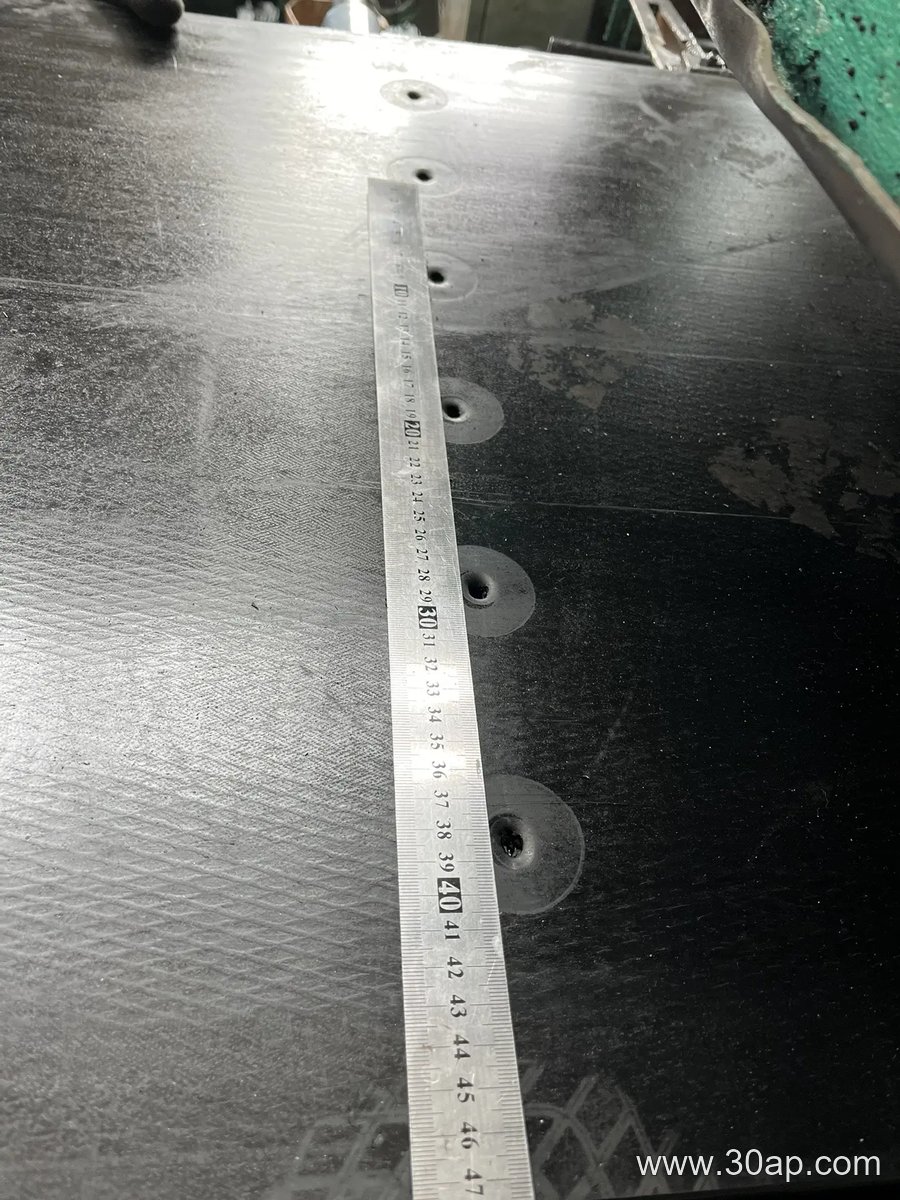
Specifications a Buyer Should Check
When specifying an NN conveyor belt, confirm the fabric strength grade, number of plies, cover thickness, cover grade, belt width, and roll length. Common nylon fabric grades include NN100, NN125, NN150, NN200, NN250, NN300, and NN400, though exact designations vary by supplier. Belt widths are usually ordered in millimeters, such as 500, 650, 800, 1000, 1200, 1400, 1600, 1800, and 2000 mm. The table below lists typical reference data; actual values must come from the manufacturer’s current data sheet.
| Parameter | Common reference values |
|---|---|
| Fabric type | NN nylon-nylon |
| Ply count | 2 to 6 plies |
| Cover thickness | 3+1.5, 4+2, 5+2, 6+2, 8+3 mm |
| Belt width | B500, B650, B800, B1000, B1200, B1400, B1600, B1800, B2000 |
| Cover grades | wear resistant, heat resistant, oil resistant, flame retardant, antistatic, cold resistant, acid and alkali resistant |
| Surface forms | smooth, patterned, chevron, corrugated sidewall |
Installation and Maintenance Notes
An NN belt stretches during the first weeks of service. Allow enough take-up stroke, and re-tension after the initial running-in period. Check that the conveyor pulley, idler roller, and conveyor bracket are aligned and free of buildup. A misaligned bend pulley or a seized idler roller can cause edge damage and mistracking. Store the belt in a dry, shaded place, and avoid sharp folds. When splicing, follow the belt maker’s step length and vulcanizing or mechanical fastener instructions. Do not assume that a belt width determines a single pulley diameter; the drive pulley, tail pulley, and bend pulley are sized from tension, wrap angle, and shaft load.
Choosing the Right NN Belt
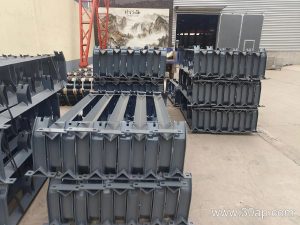
Start with the material, tonnage, incline, and the longest unsupported span. Then select a nylon conveyor belt grade and ply count that meet the calculated tension with a safe margin. Match the cover grade to the environment, and choose a surface form only if the slope or material control requires it. Ask the supplier for the actual tensile strength, elongation at break, and recommended minimum pulley diameter. Keep in mind that an NN belt is one part of a system that includes the conveyor pulley, idler roller, and conveyor bracket, and all of them must work together.