What an Aggregate Conveyor Pulley Does
In a sand and gravel operation, the aggregate conveyor pulley is the rotating drum that turns the belt and keeps material moving from the crusher to the screen deck. It is not a single part with one job. A drive pulley pulls the belt, a tail pulley returns it, and a bend pulley changes its direction without driving it. You may also hear it called a conveyor drum, head pulley, or return pulley. The name changes with the position, but the purpose stays the same: transfer motion and support the belt under load.
Because aggregate is heavy and abrasive, the pulley must handle constant tension, dust, and occasional impact. A light-duty drum that works fine on a small package line will not last long in a quarry. That is why most aggregate conveyors use a welded steel drum with a machined face, a reinforced hub, and a shaft sized by torque rather than by belt width alone.
How a Conveyor Pulley Is Built
A typical unit starts as a steel tube or rolled shell. The ends are fitted with hubs and a through shaft or stub shafts. The shell is welded, stress-relieved in some designs, and then machined so the face runs true. A pulley that is not round will cause belt tracking problems and shorten splice life.
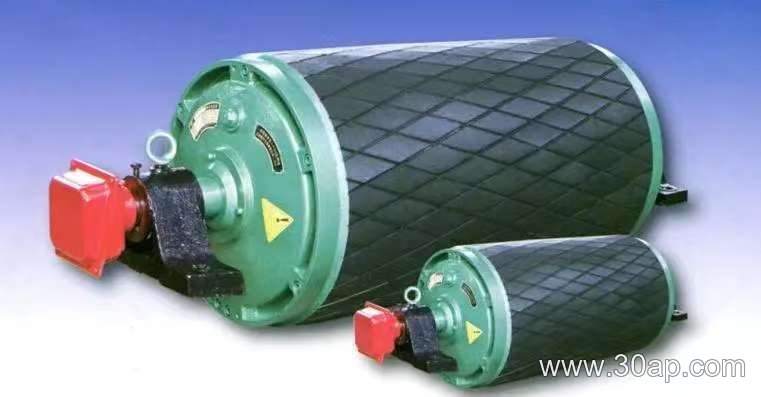
The surface can be plain, rubber lagged, or ceramic lagged. Plain steel is common on clean, dry return positions. Rubber lagging improves grip on the drive pulley, especially when the belt is wet. Diamond or herringbone grooving helps water escape. For very abrasive or slippery conditions, ceramic lagging tiles are bonded to the rubber to bite into the belt cover.
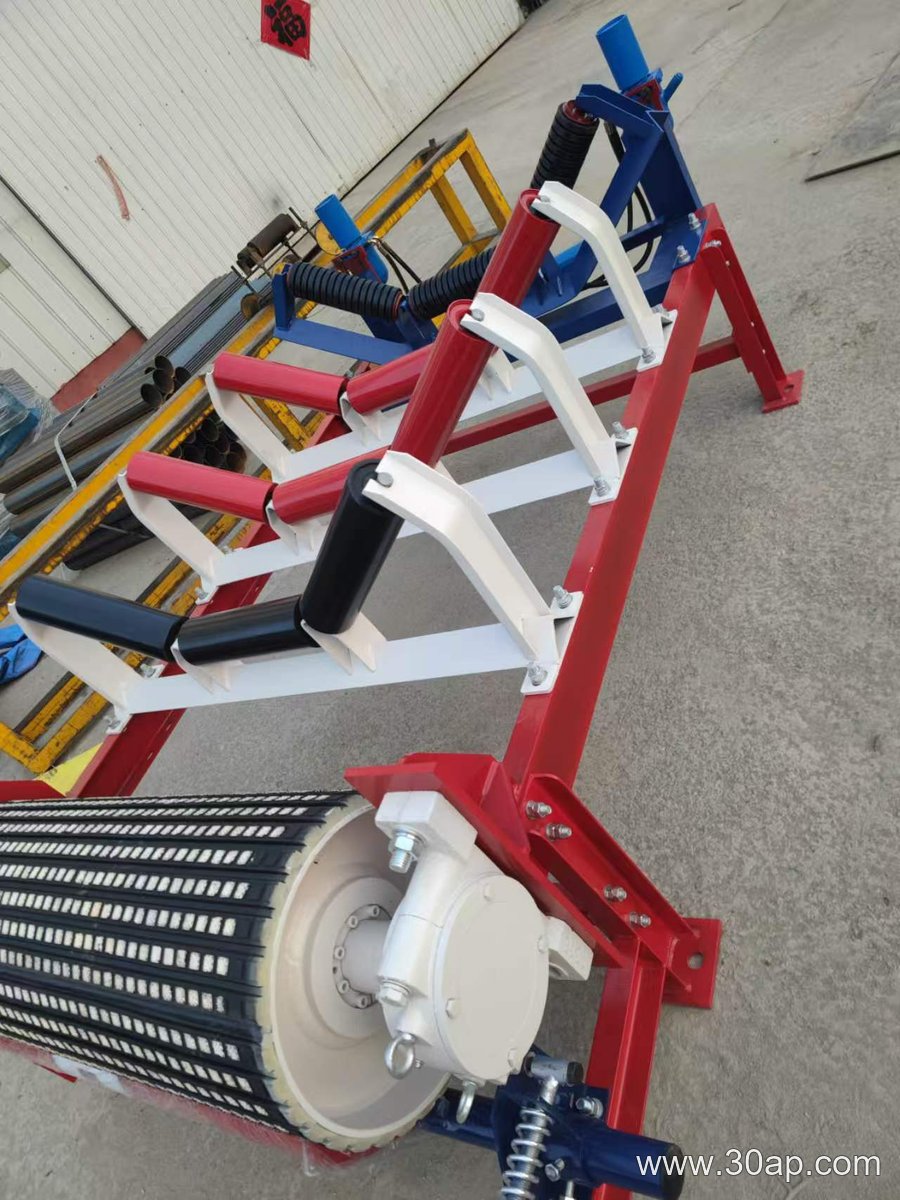
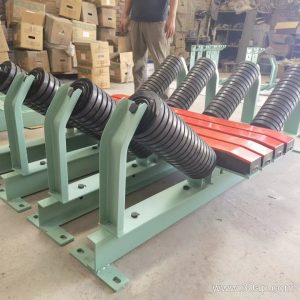
Bearing housings sit on the shaft ends and bolt to the conveyor frame. The frame connection matters as much as the drum itself. A weak conveyor bracket can flex under load and misalign the pulley, which leads to edge wear on the conveyor belt. When you replace a drum, check the brackets and the idler roller alignment at the same time.
Common Types and Where They Sit
Drive pulleys, also called head pulleys, are usually the largest and most heavily lagged. They transmit power from the gearbox to the belt. Tail pulleys guide the belt at the loading end and often use a smaller diameter. Bend pulleys and take-up pulleys manage belt path and tension. A snub pulley increases wrap angle on the drive. An electric pulley, or motorized drum, combines the motor and gearbox inside the shell and is used where space is tight.
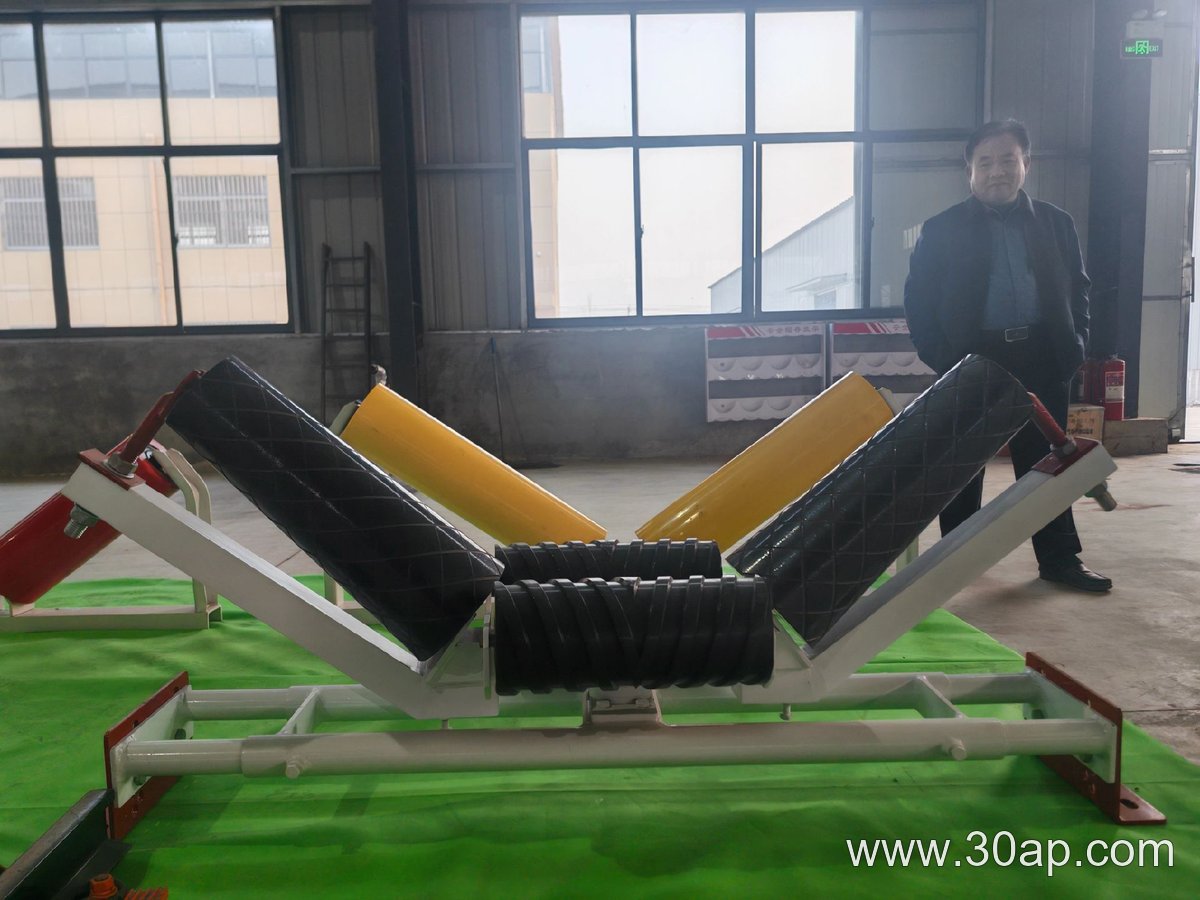
For a coal handling section, a Coal Mine Conveyor Pulley may be specified with a flame-resistant lagging and a sealed bearing housing to cope with fine dust. In a sand and gravel plant, a standard Conveyor Belt Pulley with rubber lagging is often enough for the head position. Where the belt is wet and slippery, a Ceramic Pulley can provide extra grip without over-tensioning the belt. And for primary crushing discharge with high impact, a Heavy-Duty Welded Pulley with a thick shell and reinforced hubs is a common choice.
Sizes and How to Read Them
Pulley sizes are written as belt width and diameter, such as B800 x Ø500 or B1200 x Ø1000. The belt width is the nominal width of the conveyor belt, and the drum face is usually wider. For example, B500 often has a face around 600 mm, B800 around 950 mm, and B1200 around 1400 mm. Diameter choices commonly include Ø250, Ø315, Ø400, Ø500, Ø630, Ø800, and Ø1000. Larger diameters are used where belt tension is high or where the belt has a thick cover.
The shaft diameter is not fixed by belt width. It depends on the torque the pulley carries, the belt tension, the bearing span, and the load. Common shaft sizes include Ø60, Ø80, Ø100, Ø120, and Ø160, but the final value comes from the drive calculation, not from a table that pairs one belt width with one shaft. Do not assume that a B1000 belt always needs a Ø100 shaft. It may need more or less depending on the conveyor profile and the starting torque.
Surface Options and Their Trade-Offs
Lagging is the main wear surface on a drive pulley. Rubber lagging, cold-bonded or hot-vulcanized, is the standard for most aggregate conveyors. Diamond grooving works well in wet conditions. Herringbone grooving is directional and helps with self-cleaning. Ceramic lagging lasts longer in high-slip applications but costs more and may wear the belt cover faster if the belt is not compatible.
Lagging thickness is often 8, 10, 12, 15, or 20 mm. A thicker lagging does not always mean better performance. Too much thickness can reduce the pulley diameter after wear and change the belt path. Match the lagging to the belt cover grade. A heavy-duty abrasive belt with a 6+2 mm cover may handle a thicker lagging, while a lighter EP belt may need a smoother surface.
What a Buyer Should Check Before Ordering
- Confirm the position: drive, tail, bend, take-up, or snub. Each has a different load and lagging requirement.
- Check the belt width and the required face width. The drum face should be wider than the belt, but the exact amount depends on the conveyor design.
- Provide the belt tension and starting torque so the shaft can be sized correctly. Do not guess the shaft diameter from belt width.
- State the material and environment. Coal dust, limestone, and wet sand each call for different sealing and lagging.
- Inspect the conveyor bracket and bearing housing. A new pulley on a worn bracket will not run true.
- Ask for the balancing grade and runout tolerance if the belt speed is high or the conveyor is long.
An aggregate conveyor pulley is a wear part, but it is also a structural part. Buying one by belt width alone is a common mistake. The better approach is to match the drum to the duty, the belt, and the frame. That way the pulley lasts longer, the belt tracks straighter, and the idler roller and bracket do not become the next failure point.