What the Conveyor Head Pulley Does
The conveyor head pulley sits at the discharge end of a belt conveyor and does two jobs at once. It drives the belt forward, and it changes the belt’s direction so material can be thrown clear of the system. Because it is usually the driven pulley, many engineers call it the drive pulley, but in layout drawings the head pulley is the one at the delivery point. That position matters: the belt leaves it under tension, so the pulley must handle high torque without slipping.
A tail pulley, by comparison, only redirects the returning belt and is often used for tensioning. The two are not interchangeable, and a head pulley cannot simply be swapped with a bend pulley, because each has a different load and surface requirement.
How It Is Built
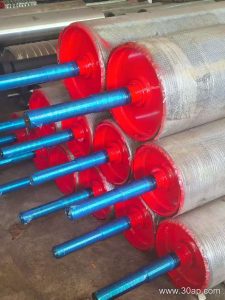
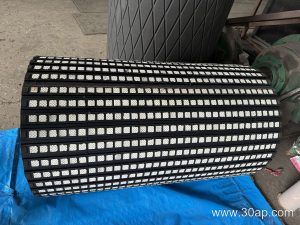
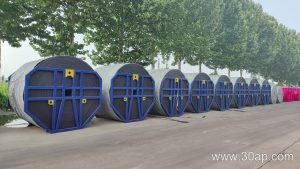
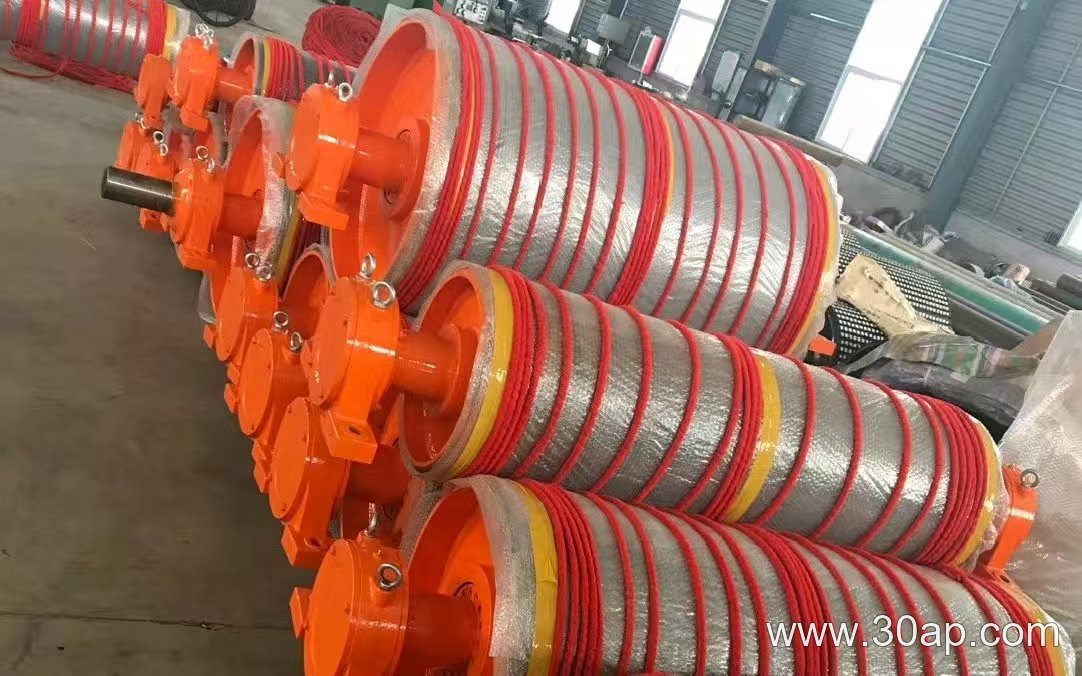
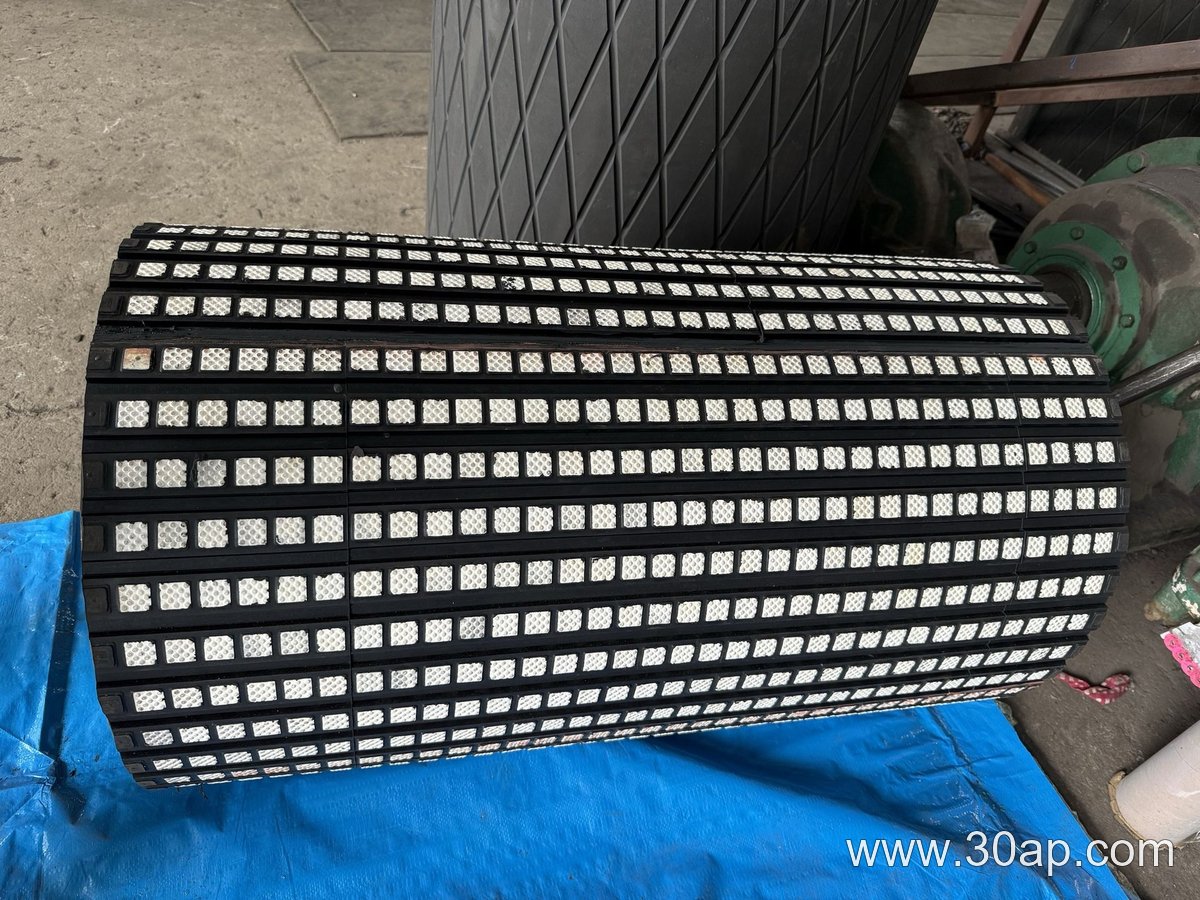
A typical conveyor pulley is a welded steel drum with end discs, a hub, and a shaft. The shell may be machined smooth or covered with rubber lagging. Lagging increases friction between the pulley and the conveyor belt, which reduces slip, especially when the belt is wet or dusty. Common surface forms include plain, hot vulcanized rubber, cold bonded rubber, diamond grooved, herringbone, and ceramic lagging. Lagging thickness is often 8, 10, 12, 15, or 20 mm, chosen according to belt speed, load, and ambient conditions.
Bearings are mounted in pillow blocks or flange housings on a conveyor bracket fixed to the main frame. Shaft diameter is determined by torque and bending load, not by belt width alone. Typical shaft sizes range from Ø50 mm up to Ø200 mm in heavy-duty units.
Sizes and Common Combinations
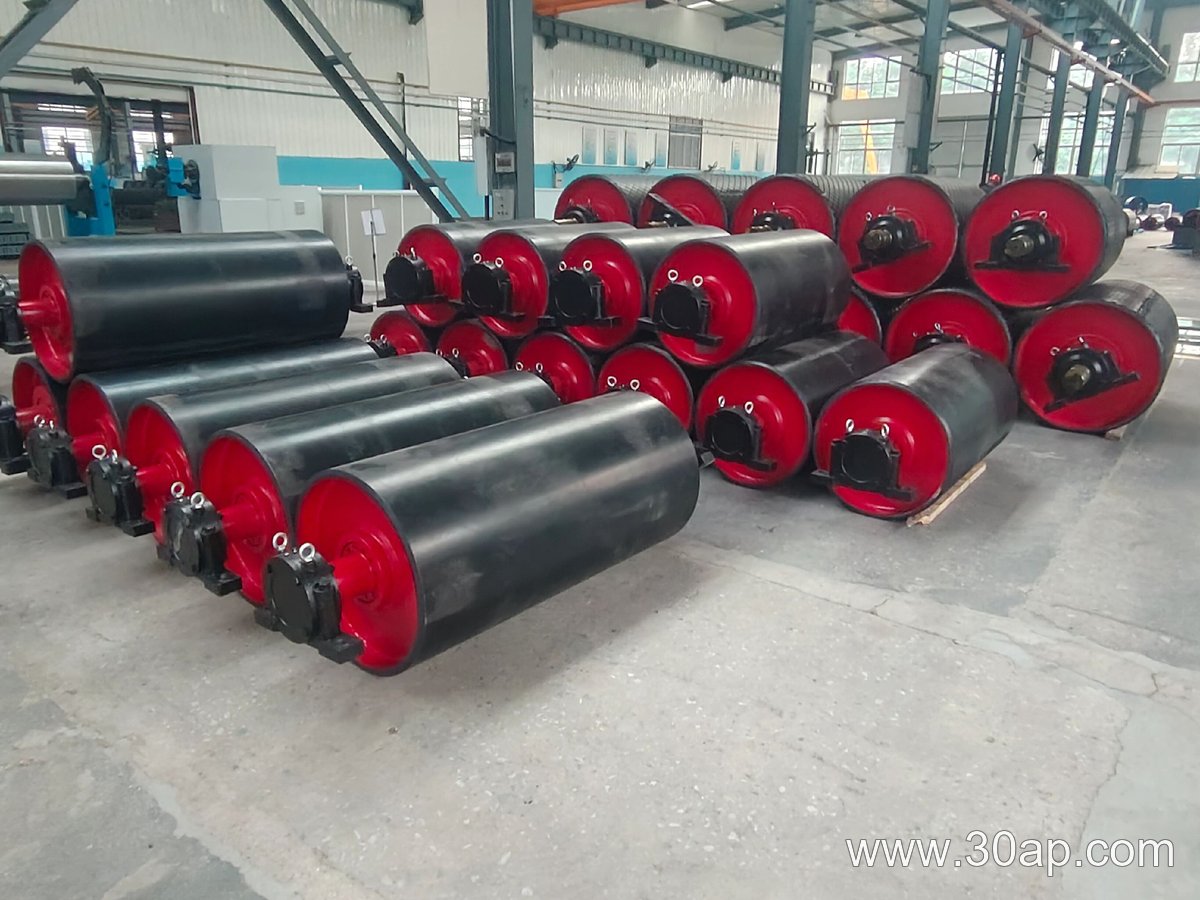
Head pulley diameter and face width are selected together with belt width. A wider belt usually needs a wider drum face, and the face is normally slightly wider than the belt. Reference combinations such as B800 × Ø500, B1200 × Ø1000, and B1400 × Ø800 appear in many layouts, but one belt width does not impose a single diameter. The table below lists reference data, not a fixed rule.
| Belt width | Typical pulley face width | Example diameter |
|---|---|---|
| B400 | about 500 mm | Ø200, Ø250 |
| B500 | about 600 mm | Ø250, Ø315 |
| B650 | about 750 mm | Ø320, Ø400 |
| B800 | about 950 mm | Ø400, Ø500 |
| B1000 | about 1150 mm | Ø500, Ø630 |
| B1200 | about 1400 mm | Ø630, Ø800, Ø1000 |
| B1400 | about 1600 mm | Ø800, Ø1000 |
| B1600 | about 1800 mm | Ø1000, Ø1250 |
| B1800 | about 2000 mm | Ø1250, Ø1400 |
| B2000 | about 2200 mm | Ø1400, Ø1600 |
Larger diameters are also made, including Ø1600 mm and Ø1800 mm, for high-capacity lines. These values are reference figures; the final choice follows the conveyor design.
Where It Is Used
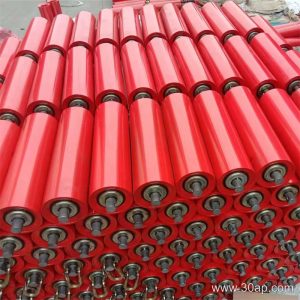
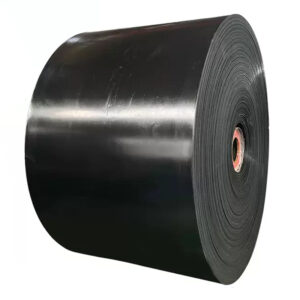
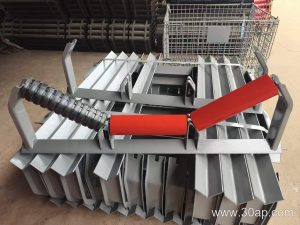
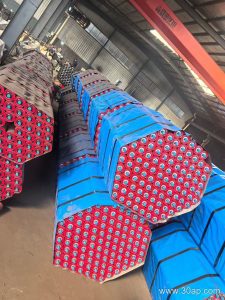
Head pulleys are found wherever a belt conveyor discharges material. In a quarry or sand and gravel plant, the head pulley at the end of a primary belt throws crushed rock onto a screen. In a coal handling system at a power plant, the same component feeds the next stage of the yard belt. Other common sites include limestone mines, cement clinker lines, and port bulk terminals. In each case, the pulley works with the conveyor belt, idler rollers, and the supporting frame.
An electric drum motor can replace an external drive on some compact conveyors, but it is a different product type and is not a substitute for a conventional head pulley where high torque and heavy lagging are needed.
What a Buyer Should Check
- Belt width and pulley face width, so the drum supports the full belt.
- Required diameter, which affects belt wrap angle and belt life.
- Lagging type and thickness for grip and wear resistance.
- Shaft diameter and bearing size, based on torque and load.
- Surface finish, balancing, and sealing for the working environment.
Ask the supplier for a drawing showing shell thickness, shaft material, bearing type, and lagging specification. A well-matched conveyor head pulley keeps the belt tracking straight, reduces slip, and protects the whole conveyor from premature wear.