What an Intermediate Bend Pulley Does
An intermediate bend pulley is a non-drive conveyor pulley that changes the direction of the conveyor belt between the head and tail of a conveyor. It is often placed where the belt must be routed around an obstacle, tensioned, or guided back into alignment. Unlike a drive pulley, which transmits power, or a tail pulley, which supports the belt at the loading end, an intermediate bend pulley only redirects the belt. It is sometimes called a deflection pulley or a bend roller, but the function remains the same: it alters the belt path without driving or tensioning the belt on its own.
This pulley is commonly used in long overland conveyors, in-plant systems, and mobile crushing or screening plants where space is limited. It may be installed on the return strand, on the carrying side, or as part of a take-up arrangement. The exact position depends on the conveyor profile and the required wrap angle.
Construction and Surface Options
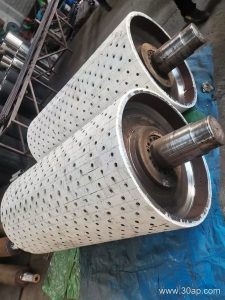
The body of an intermediate bend pulley is typically made from a steel tube with welded end discs and a shaft. The shaft may be keyed or plain, depending on how it is mounted. Bearings are usually housed in pillow blocks or flange units that attach to the conveyor bracket. The pulley face is often slightly wider than the conveyor belt to prevent edge damage. Common face widths follow the belt width: B400 may use about 500 mm, B800 about 950 mm, B1200 about 1400 mm, and B1600 about 1800 mm. These are reference values, not fixed rules.
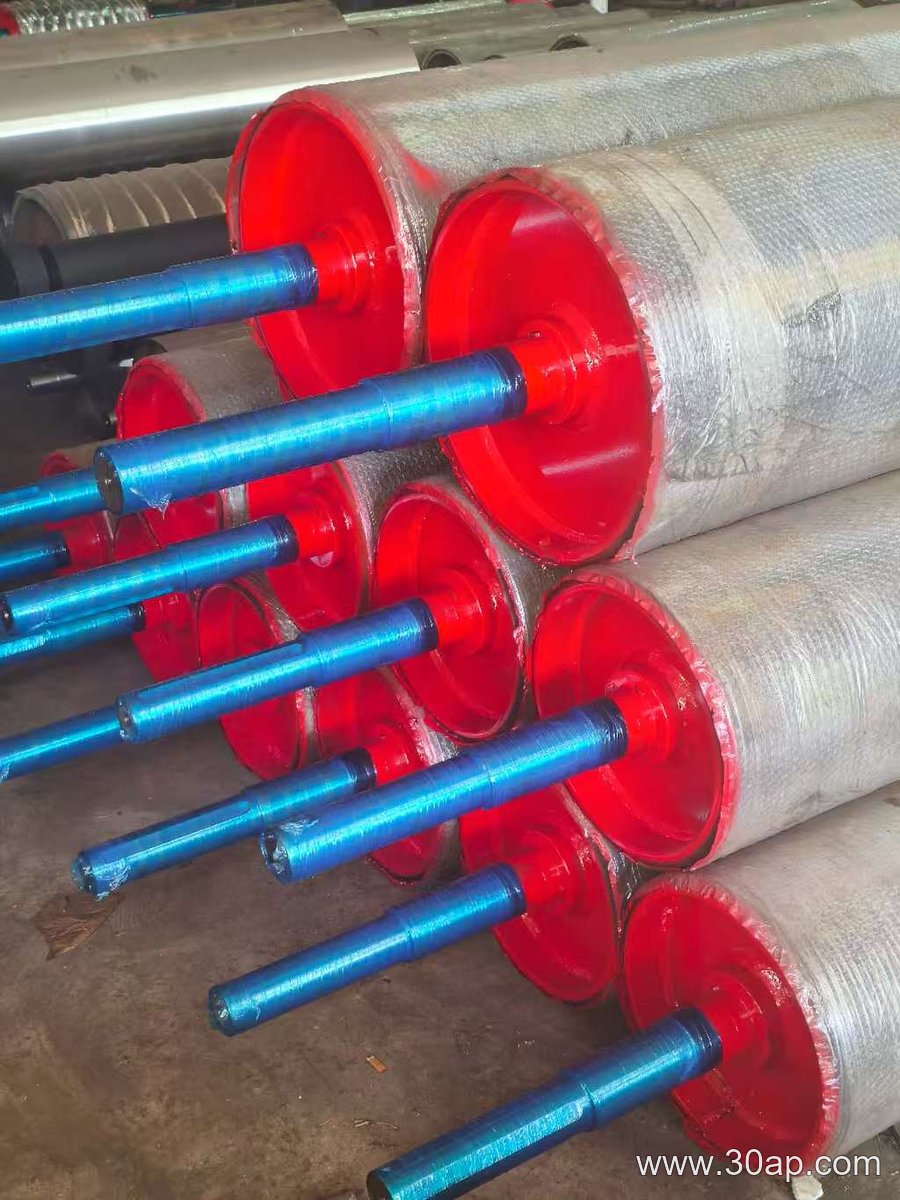
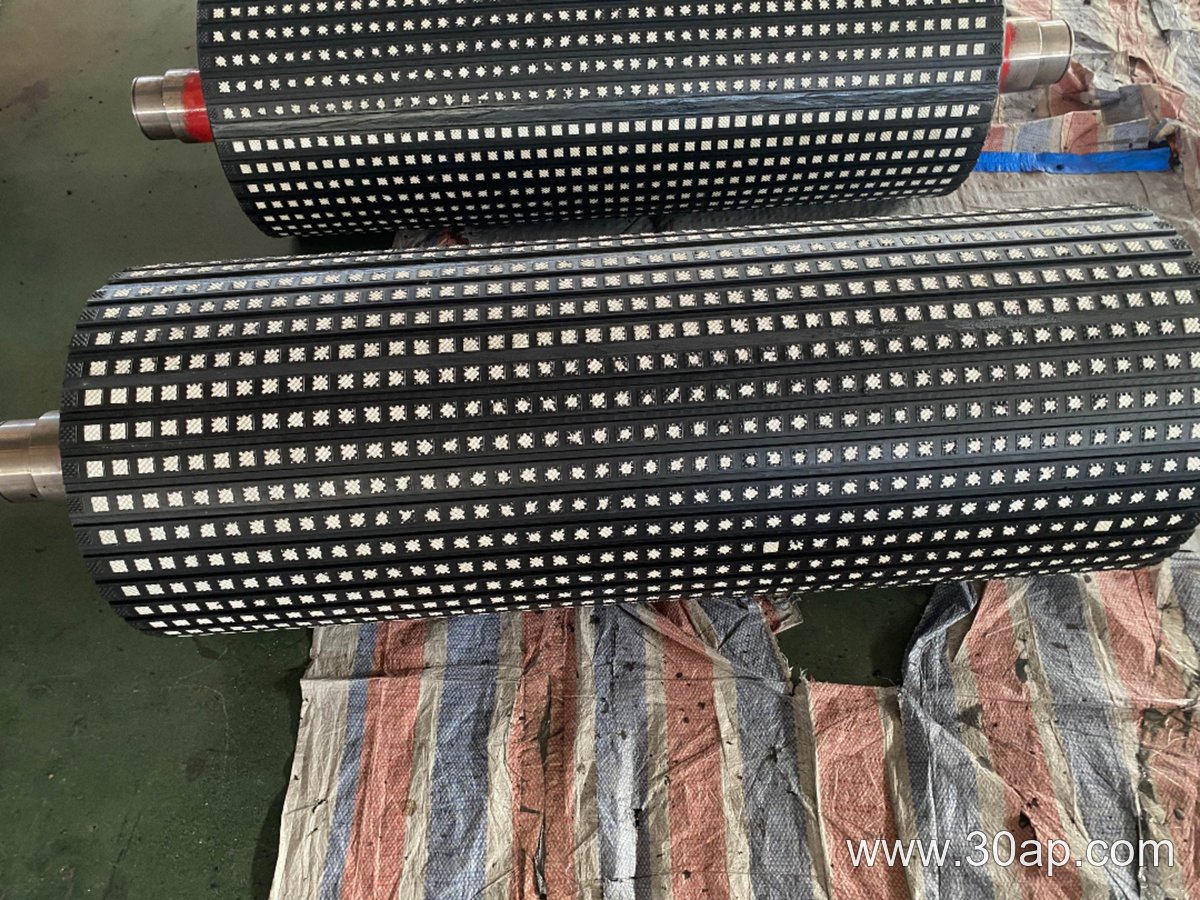
Surface treatment affects friction and belt tracking. A plain finish is suitable for light-duty or non-abrasive applications. Rubber lagging, such as cold-bonded or hot-vulcanized rubber, improves grip and protects the pulley from wear. Diamond or herringbone patterns can help with self-cleaning in dusty conditions. Ceramic lagging is chosen for high-wear areas. Lagging thickness commonly ranges from 8 mm to 20 mm, with 10 mm or 12 mm being typical for many intermediate bend pulleys.
Typical Sizes and Selection Factors
Diameter and shaft size are selected by torque, belt tension, and the required wrap angle. A larger diameter reduces bending stress on the belt, while a smaller diameter saves space. Common diameters include Ø200, Ø250, Ø315, Ø400, Ø500, Ø630, Ø800, and Ø1000. A combination such as B800 × Ø500 or B1200 × Ø630 is common, but the same belt width can work with different diameters depending on the conveyor design. Shaft diameters are often Ø50, Ø60, Ø70, Ø80, Ø90, Ø100, Ø120, Ø140, Ø160, Ø180, or Ø200, determined by load and torque rather than belt width alone.
| Parameter | Common range | Notes |
|---|---|---|
| Belt width (B) | B400 to B2400 | Face width usually exceeds belt width |
| Pulley diameter | Ø200 to Ø1000 | Larger for higher tension or thicker belts |
| Shaft diameter | Ø50 to Ø200 | Based on torque and bearing load |
| Lagging thickness | 8, 10, 12, 15, 20 mm | Plain or lagged surface |
| Surface type | Plain, rubber, diamond, ceramic | Choose by material and wear |
When selecting an intermediate bend pulley, consider the conveyor belt type, the material being conveyed, and the environment. For example, a quarry or sand and gravel line may need abrasion-resistant lagging, while a food or grain silo may require a clean, non-toxic surface. The pulley should be aligned with the conveyor frame and supported by a sturdy conveyor bracket. An idler roller is not a substitute for a bend pulley because it does not carry the same directional load.
Installation and Maintenance Notes
Proper alignment is critical. A misaligned bend pulley can cause belt mistracking, edge wear, and premature bearing failure. Check that the pulley shaft is parallel to the adjacent pulleys and that the belt wraps smoothly without rubbing the structure. Lubricate bearings according to the manufacturer’s schedule, and inspect lagging for wear or glazing. In dusty or wet conditions, choose a lagging pattern that sheds material rather than trapping it.
Keep spare bearings and lagging material on hand for critical conveyors. If the pulley is part of a take-up system, monitor tension regularly. A bend pulley does not tension the belt by itself, but it must handle the tension created elsewhere. For heavy-duty applications, a larger shaft and a thicker lagging may extend service life. Always confirm dimensions with the conveyor designer before ordering, as the same belt width can require different pulley sizes.