What a Three-Roll Idler Bracket Does
A three-roll idler bracket is the support frame that holds three idler rollers in a trough shape so the conveyor belt can carry bulk material without spilling. The two outer rolls are angled upward while the center roll sits flat, giving the belt a cross-section that cups the load. In many conveyor systems this support assembly is also called a troughing idler bracket or troughing roller bracket, and the terms describe the same component.
The bracket works together with the conveyor belt, idler roller, and conveyor pulley. It does not drive or redirect the belt; it only positions the rollers that carry it. That makes it a structural part rather than a moving part, although its alignment strongly affects belt tracking and roller life.
How the Bracket Is Built
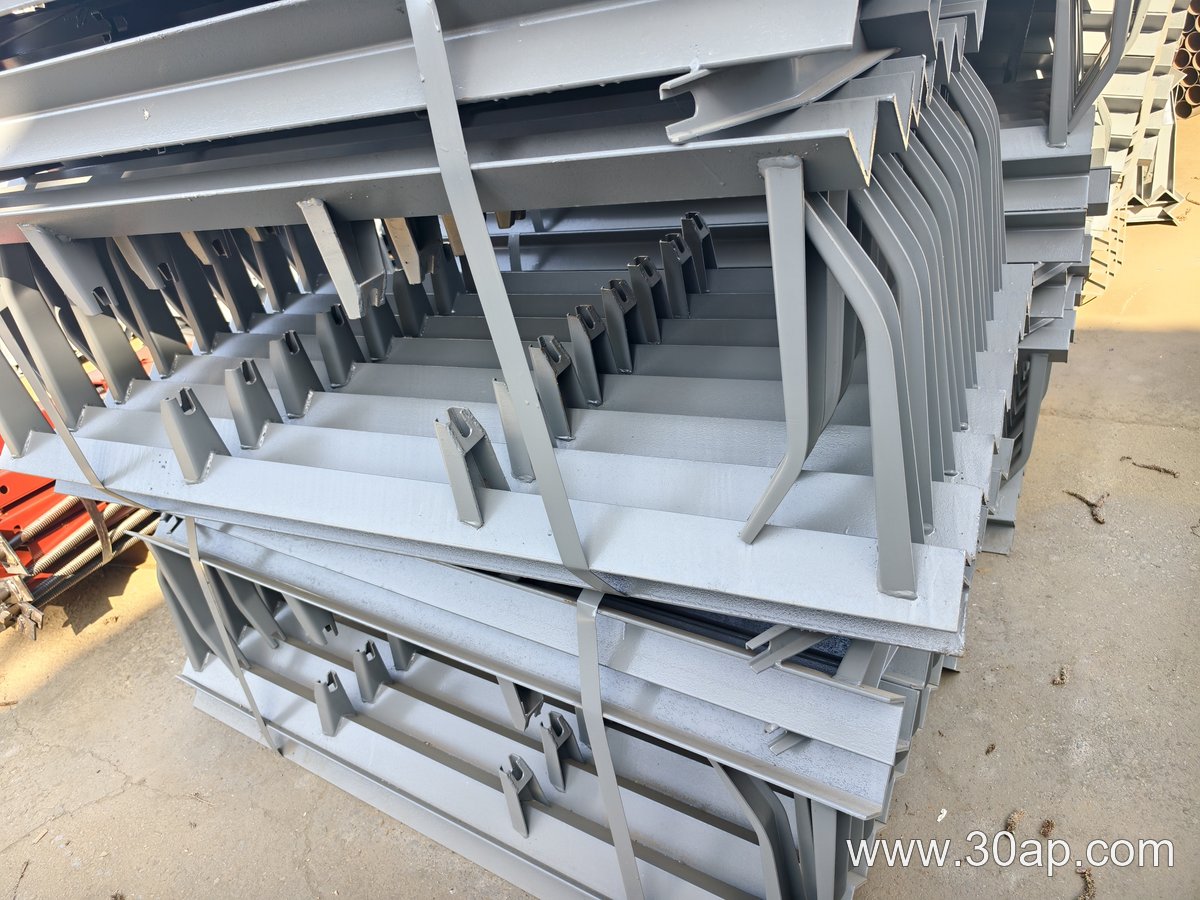
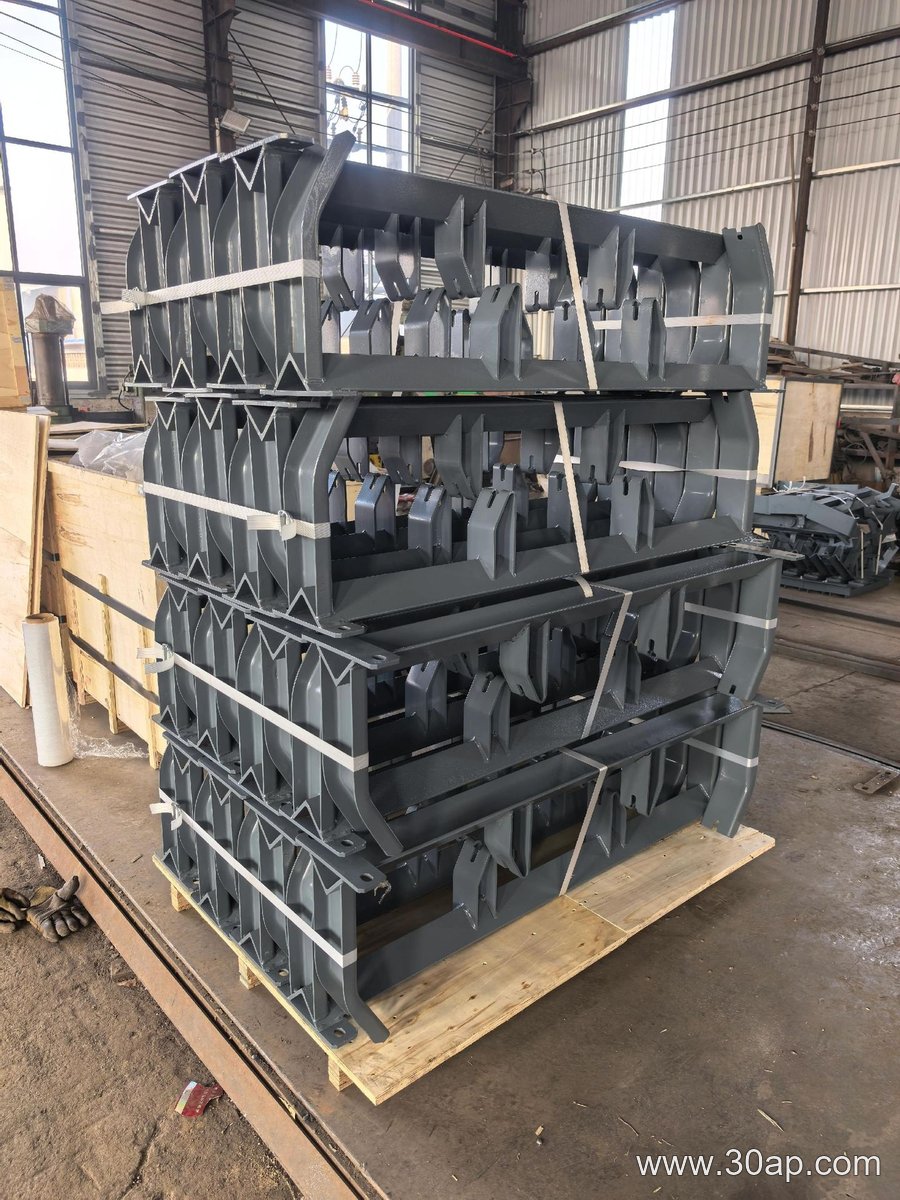
Most three-roll idler brackets are welded or bolted assemblies. Common materials include angle steel, channel steel, and bent steel plate. The frame usually has a base beam that mounts to the conveyor stringer, plus two or three roller seats set at the required trough angle.
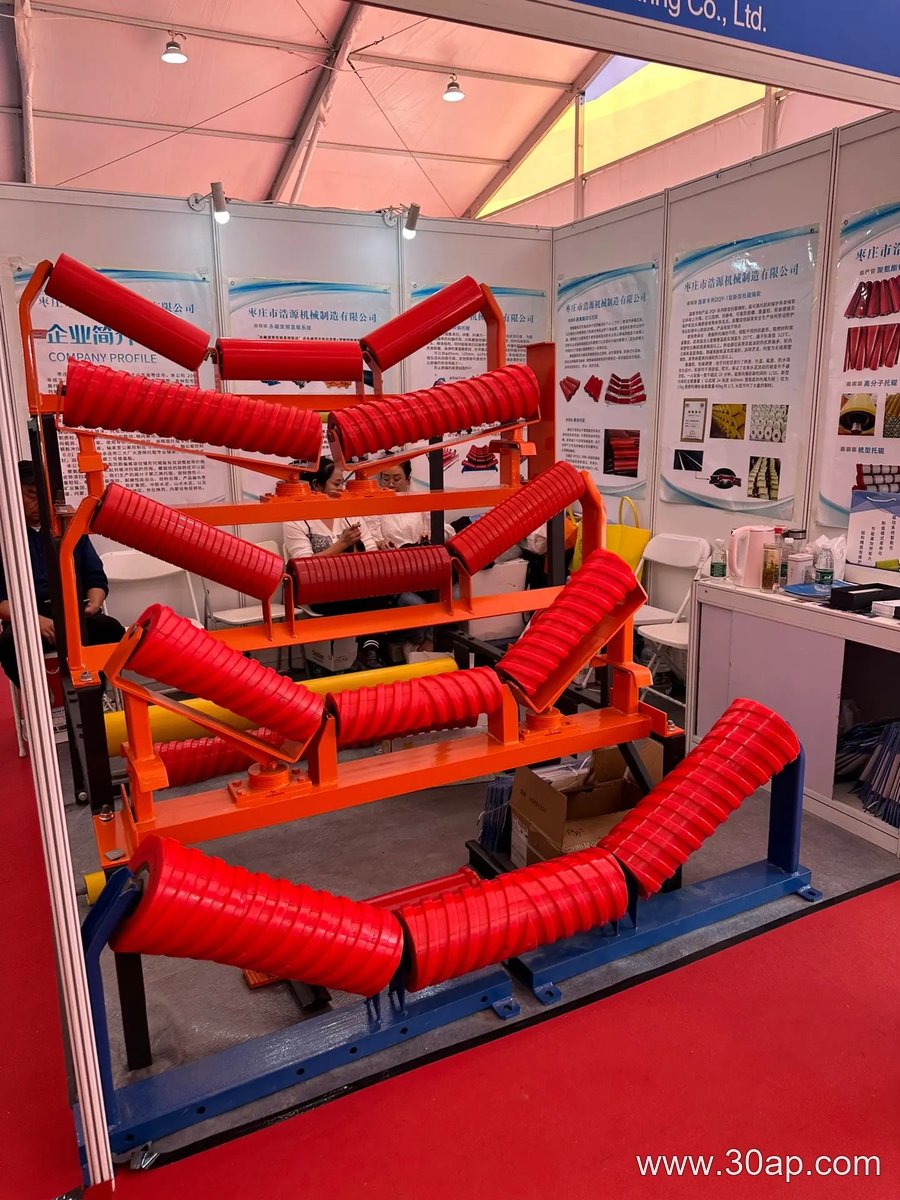
The roller seats can be fixed or adjustable. Fixed brackets are welded to a single trough angle, while adjustable brackets let maintenance crews change the trough angle or compensate for wear. A three-roll idler bracket may also be supplied with slotted mounting holes so it can be aligned after the conveyor frame is installed.
- Base beam with mounting holes for the conveyor structure
- Two inclined roller seats for the side rolls
- One central seat for the middle roll
- Reinforcing plates or gussets at load points
- Optional adjustment slots or pivoting seats
Where It Fits on the Conveyor
Three-roll idler brackets are used in the carrying run of a belt conveyor, where material is loaded and transported. They appear in quarry conveyors, coal handling systems, crushing and screening plants, cement lines, and bulk material transfer points. The bracket is not used on the return run; return brackets, V-return brackets, and flat return brackets handle that side of the belt.
At loading zones, a three-roll idler bracket may be combined with impact rollers or buffer brackets to absorb falling material. Along the middle of the conveyor, standard troughing brackets keep the belt in its cupped shape. Near the head or tail, transition brackets may be used to gradually change the belt profile before it reaches a drive pulley or tail pulley.
Choosing Trough Angle and Roller Diameter
The trough angle and roller diameter are selected together with belt width and material characteristics. Common trough angles are 20, 30, 35, and 45 degrees. A 20-degree bracket suits a flatter belt profile, while a 45-degree bracket gives deeper loading capacity for fine or free-flowing material. Adjustable brackets can move between these angles when the same conveyor handles different loads.
Roller diameters often follow the idler roller used in the frame. Typical sizes include Ø89, Ø108, Ø133, Ø159, and Ø194. Belt widths such as B500, B650, B800, B1000, B1200, B1400, B1600, B1800, B2000, and B2200 each require a matching bracket length and mounting hole spacing, but one belt width can accept more than one roller diameter. The bracket drawing should always confirm the center distance between roller seats and the overall crossbeam length.
Example Reference Combinations
These are common design pairings, not mandatory matches:
- B800, 35 degrees, Ø108
- B1200, 45 degrees, Ø133
- B650, 30 degrees, Ø89
- B1400, 35 degrees, Ø159
- B1000, 20 degrees, Ø108
These combinations show how belt width, trough angle, and roller diameter relate, but the final selection depends on the conveyor design, material, and loading conditions.
What Buyers Should Check
Before ordering a three-roll idler bracket, confirm the belt width, trough angle, roller diameter, and mounting hole pattern. Ask whether the bracket is fixed or adjustable, and check the material and finish. The bracket must match the conveyor stringer and the idler roller shaft size; otherwise the rollers will not seat correctly.
Also consider the environment. A dusty quarry or coal yard may need a bracket that resists corrosion and keeps its alignment. A food or fertilizer application may require a different surface treatment. Maintenance access matters too: an adjustable three-roll idler bracket can simplify belt tracking and roller replacement, while a fixed bracket is simpler and often more rigid.
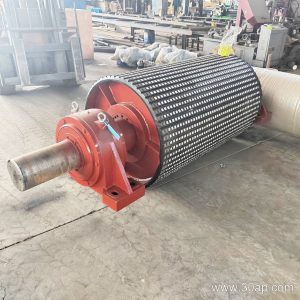
Finally, do not confuse the bracket with a conveyor pulley. Drive pulleys, tail pulleys, and bend pulleys transmit or redirect belt motion, while the three-roll idler bracket only supports the carrying belt. Keeping that distinction clear helps buyers specify the right part for the right location.