What a Port Belt Conveyor Pulley Does
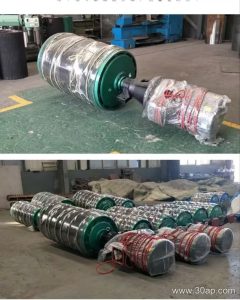
A port belt conveyor pulley is the rotating drum that turns, supports, and steers the belt in a bulk material handling line. At a port, the conveyor may run from a ship unloader or quay hopper to a stockyard stacker, or from a rail wagon to a shiploader. The pulley is not simply a wheel; it transfers torque and tension while keeping the conveyor belt centered and the material moving.
In many layouts the head pulley is the drive point, while the tail pulley returns the belt. That distinction matters because a drive pulley and a tail pulley are not interchangeable, even though both are called conveyor pulleys. A bend pulley changes belt direction without driving, and a tension pulley maintains take-up. Each position has its own load profile and its own design priorities.
Construction and Main Parts
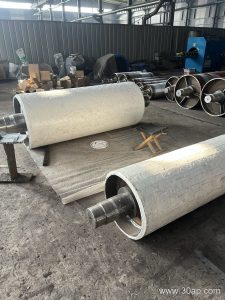
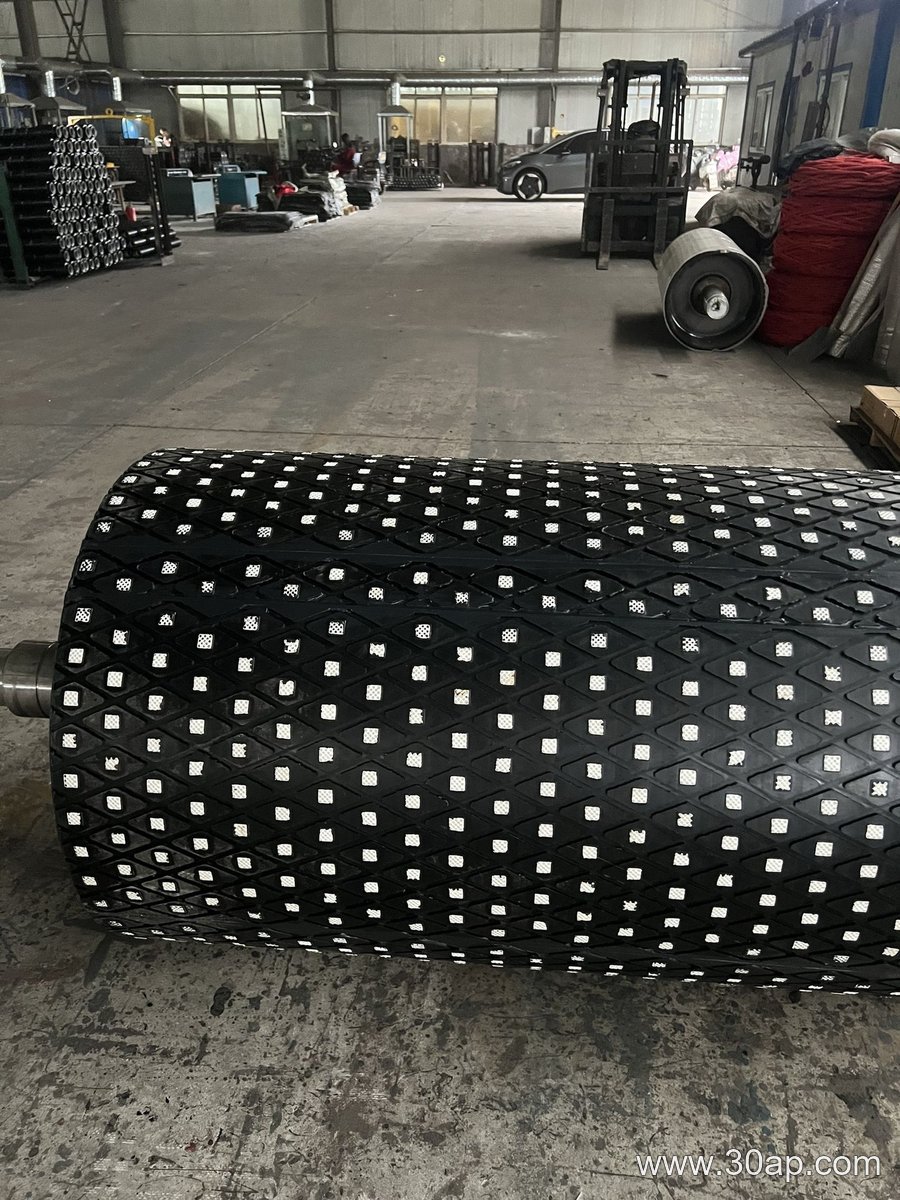
A typical port belt conveyor pulley consists of a cylindrical shell, two end discs, a shaft, and hubs or a welded shaft connection. The shell may be seamless pipe or rolled plate, machined at the ends for balance. The shaft is sized by torque and radial load, not by belt width alone. A common range of shaft diameters includes Ø50, Ø60, Ø70, Ø80, Ø90, Ø100, Ø120, Ø140, Ø160, Ø180, and Ø200 mm, but the final choice follows the drive calculation.
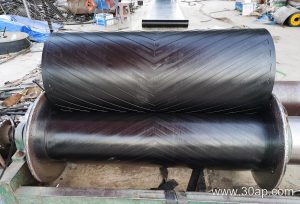
Surface treatment protects the belt and improves grip. Options include plain steel, cast rubber, cold-bonded rubber, hot vulcanized rubber, diamond grooving, herringbone grooving, ceramic lagging, and flat rubber sheet. Lagging thickness is often 8, 10, 12, 15, or 20 mm. For a wet coal terminal, diamond or herringbone lagging can help shed water; for a dry aggregate line, a plain or flat rubber surface may be sufficient.
Sizes and Belt Width Relationship
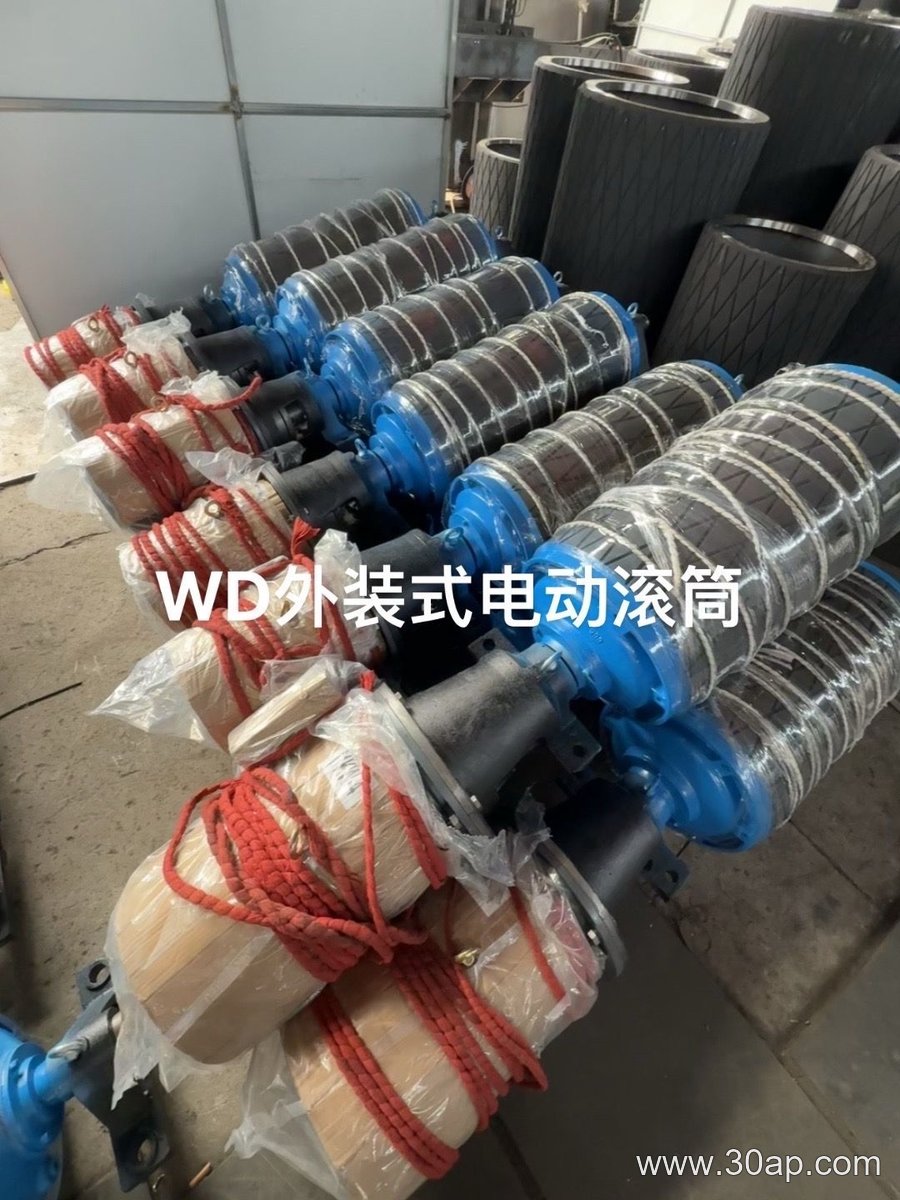
Pulley face width is usually wider than the belt itself. The face may extend about 100 mm beyond each belt edge so the belt can wander slightly without running off. Typical pairings include B800 with a 950 mm face, B1000 with a 1150 mm face, B1200 with a 1400 mm face, and B1400 with a 1600 mm face. Diameter is selected from belt tension, wrap angle, and speed. A B1200 system might use Ø1000, while a B800 system might use Ø500; neither is a fixed rule.
| Belt width | Typical pulley face | Example diameter range |
|---|---|---|
| B650 | about 750 mm | Ø315 to Ø630 |
| B1000 | about 1150 mm | Ø500 to Ø1000 |
| B1400 | about 1600 mm | Ø630 to Ø1250 |
These figures are reference examples, not universal matches. A larger diameter can reduce belt bending stress, but it also raises the frame height and cost. The engineer should confirm the shaft diameter from torque and bearing load, not from a simple belt-width table.
Where It Is Used in Port Operations
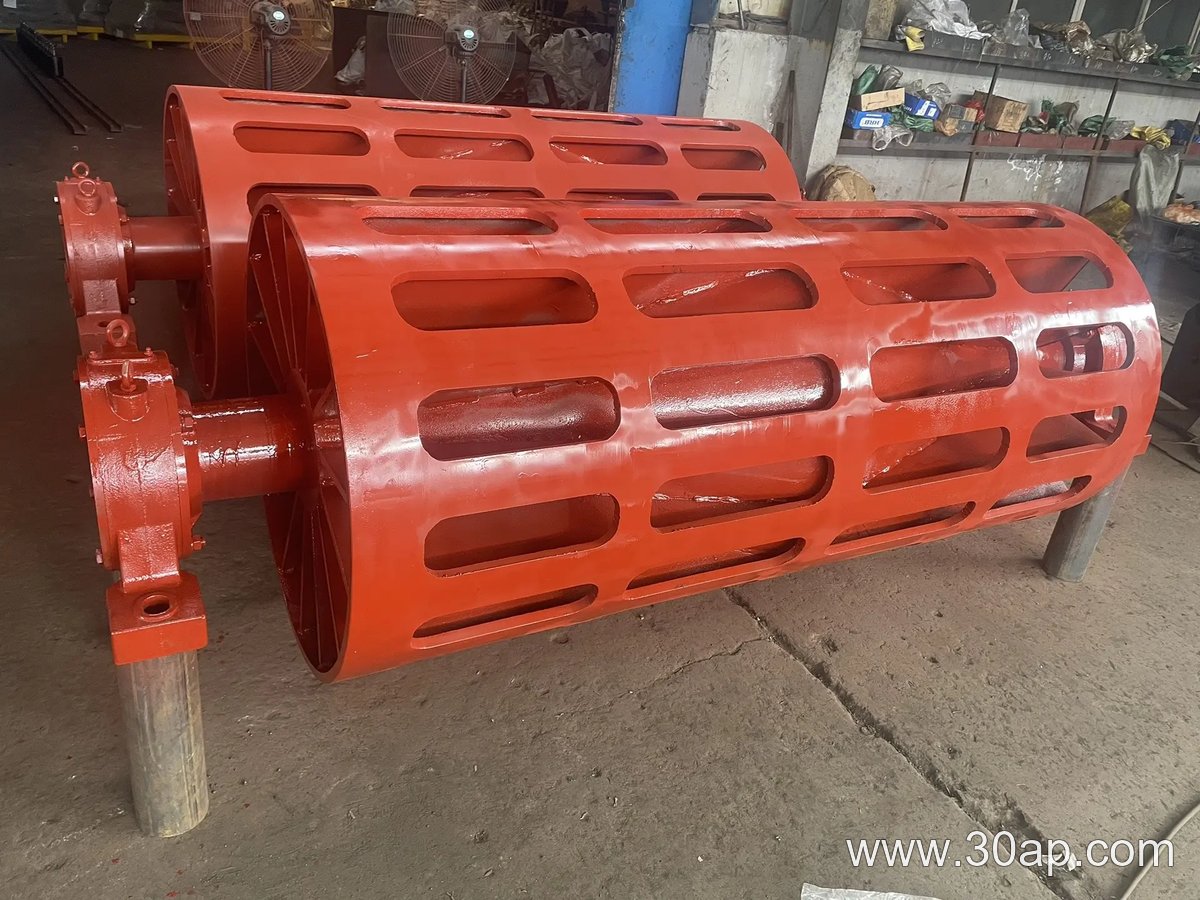
Port bulk terminals handle coal, iron ore, fertilizer, grain, and other free-flowing cargo. In a coal export terminal, the drive pulley on the shiploader boom must resist salt-laden air and abrasive dust. In a grain silo or fertilizer shed, the tail pulley may need a smooth surface to avoid damaging the belt. A bend pulley at a transfer tower redirects the belt around a tight angle, while a tension pulley keeps the belt from slipping on the drive.
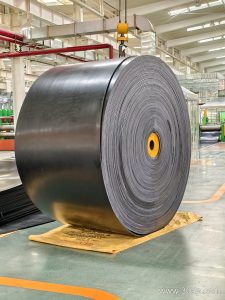
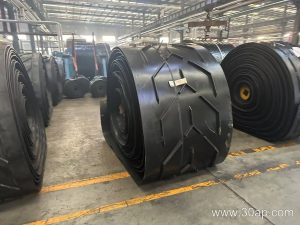
Related components such as the conveyor belt, idler roller, and conveyor bracket must be compatible with the pulley. The bracket carries the bearing housing and must align with the shaft. Misalignment between the pulley and the idler roller can cause edge wear and belt tracking problems.
Buyer Checklist
- Confirm the pulley position: drive, tail, bend, tension, or take-up.
- State the belt width, belt speed, and material characteristics.
- Specify the required lagging type and thickness for the environment.
- Provide the shaft diameter based on torque and load, not belt width alone.
- Check the bearing type and the conveyor bracket mounting dimensions.
- Ask for dynamic balance and runout tolerances for high-speed pulleys.
A port belt conveyor pulley is a long-life component, but it must be selected as part of the whole conveyor system. When the drive pulley, tail pulley, and bend pulley are correctly matched to the belt and the structure, the result is steady throughput and fewer unplanned stops.