What a 1000mm Diameter Conveyor Pulley Is
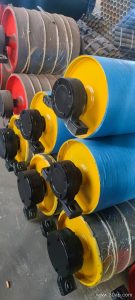
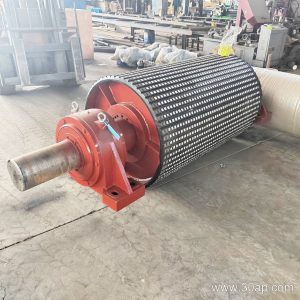
A 1000mm diameter conveyor pulley is a large rotating drum used to drive, redirect, or tension a conveyor belt. When the drum face is 1000mm across, the pulley is often called a Ø1000 conveyor pulley or a 1000mm pulley. This is not a small component. It belongs to the class of pulleys found on high-capacity belt conveyors where the belt carries heavy bulk material over long distances. It is a conveyor pulley in the full sense: a fabricated or cast drum with a shaft, end discs, and a lagging surface, designed to transmit force to the belt through friction or to guide the belt through a change in direction.
Do not confuse it with a drive pulley, a tail pulley, or a bend pulley. Those names describe the job a pulley does in a conveyor system, not the size of the drum. A 1000mm diameter conveyor pulley can serve as a drive pulley, but it can also be a tail pulley, a tension pulley, or a bend pulley depending on where it is installed. The function changes with position, while the dimensions stay with the hardware.
How It Is Built
The construction follows the same logic as smaller pulleys, scaled up for higher loads. The main parts are:
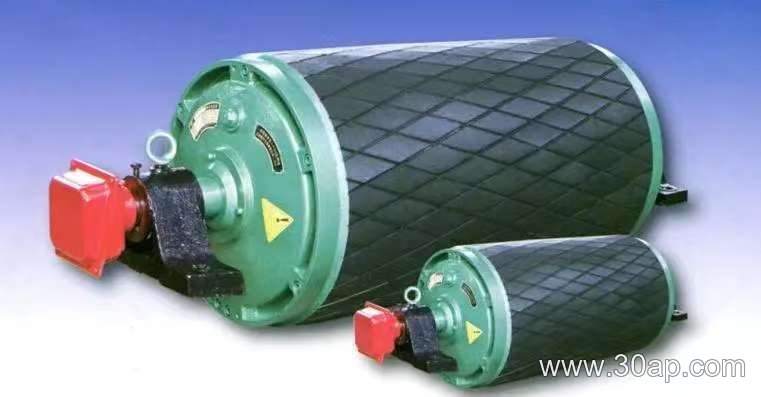
- A cylindrical shell, usually made from rolled steel plate, machined at the ends.
- End discs or dished ends welded to the shell to form a rigid drum.
- A shaft that carries the drum and transfers torque to the bearings.
- Lagging on the outer surface, which may be plain rubber, diamond grooved, herringbone, ceramic, or another form.
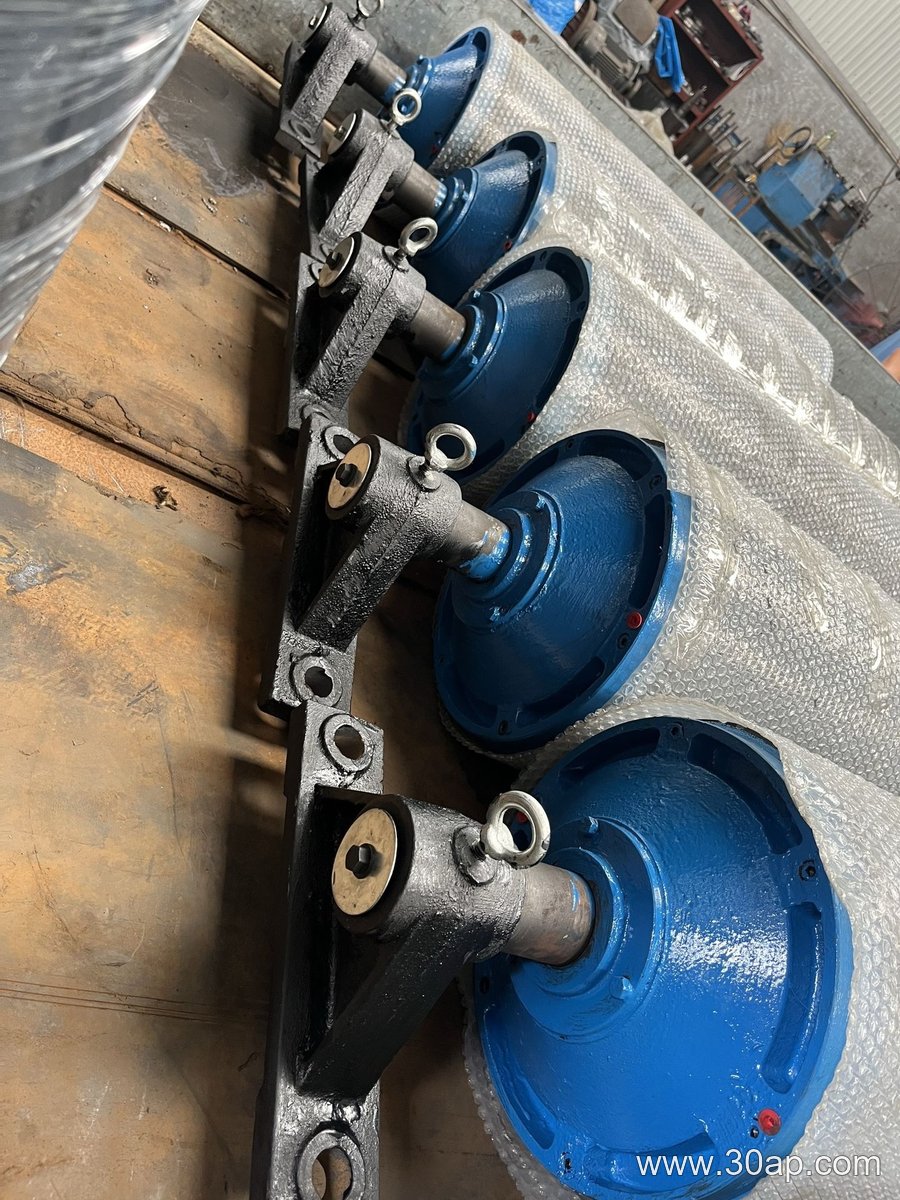
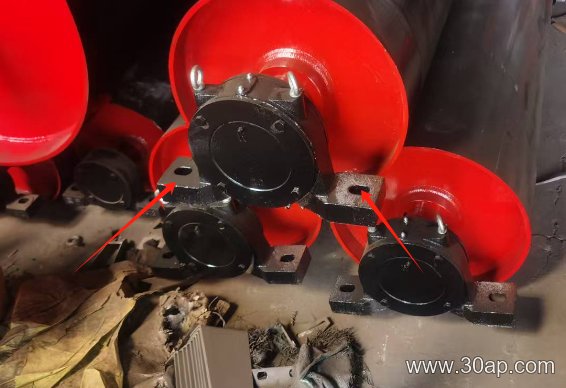
- Bearing housings and a conveyor bracket or frame that holds the assembly in place.
The shaft diameter is not chosen from belt width alone. It is determined by torque, bending load, bearing life, and the design of the conveyor. Common shaft sizes on large pulleys include Ø120, Ø140, Ø160, Ø180, and Ø200, but the final value comes from the engineering calculation. A 1000mm drum does not automatically require one fixed shaft size.
Where It Fits in a Conveyor
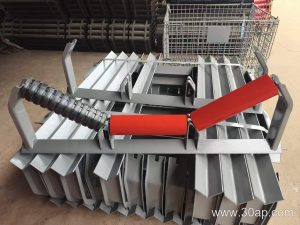
A pulley of this diameter is most often found at the head or drive station of a heavy-duty conveyor. It may also appear as a tail pulley on a long overland system, or as a bend pulley where the belt changes direction under high tension. Typical locations include a quarry, a limestone mine, an iron ore operation, a coal preparation plant, a port bulk terminal, or a cement clinker line. In each case, the pulley works with a conveyor belt, a series of idler rollers, and a supporting structure.
Because the drum is large, the belt wraps around it with a gentler curve. That reduces bending stress in the belt carcass and can help extend belt life when the conveyor carries a thick, heavy belt. A large diameter also gives more contact area for friction, which matters on a drive pulley where slip must be controlled.
Surface Forms and Grip
The surface of a 1000mm diameter conveyor pulley is usually lagged. Plain smooth steel is possible, but most bulk material conveyors use rubber or ceramic lagging to improve grip and protect the shell. Common lagging thicknesses are 8mm, 10mm, 12mm, 15mm, and 20mm. Diamond and herringbone patterns help shed water and fines. Ceramic lagging is chosen where abrasion is severe. Cold-bonded rubber and hot-vulcanized rubber are two different application methods, and each has its own place in a repair or new-build program.
What a Buyer Should Know
When specifying a 1000mm diameter conveyor pulley, a buyer should confirm the belt width, the pulley face width, the shaft diameter, the lagging type and thickness, the bearing type, and the mounting arrangement. The face width is normally wider than the belt. For example, a B1000 belt often runs on a pulley face around 1150mm, while a B1200 belt may use a face near 1400mm. These are common references, not fixed rules. A B1200 × Ø1000 combination is reasonable, but it is not the only valid match, and a 1000mm drum can be paired with other belt widths when the design calls for it.
Also ask about balancing, weld quality, shaft material, and the type of duty. A drive pulley, a tail pulley, and a bend pulley are not interchangeable. Each position imposes different loads and different demands on the lagging and the shaft. A pulley that works well as a bend pulley may not be suitable as a drive pulley without changes. The right approach is to treat the 1000mm diameter conveyor pulley as one part of a complete conveyor design, not as a standalone item chosen by size alone.