What Belt Conveyor Pulley Lagging Does
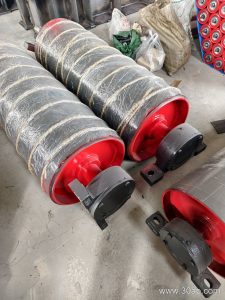
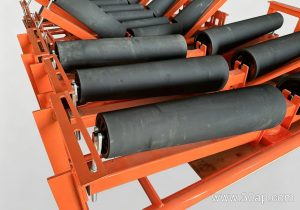
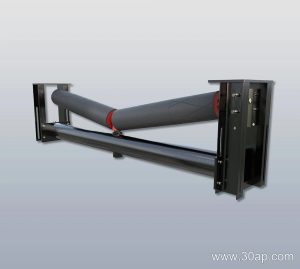
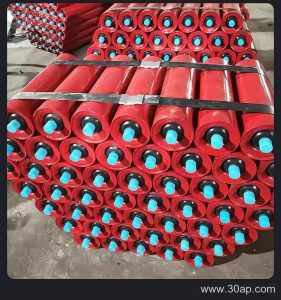
Belt conveyor pulley lagging is the rubber or ceramic layer bonded to the outer shell of a conveyor pulley. Its job is straightforward: improve grip between the pulley face and the conveyor belt, protect the steel shell from wear, and help keep the belt centered under load. Without it, a drive pulley may slip when the belt is wet or dusty, and a tail or bend pulley can wear unevenly. The product is not a stand-alone part; it works together with the conveyor belt, idler rollers, and conveyor brackets to keep material moving.
The same product is also called pulley rubber lagging or conveyor pulley rubber covering. These are accurate equivalent names for the same item, not different products.
How It Is Built and Applied
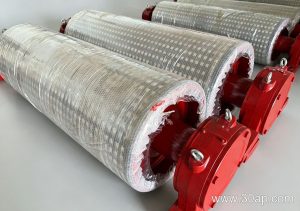
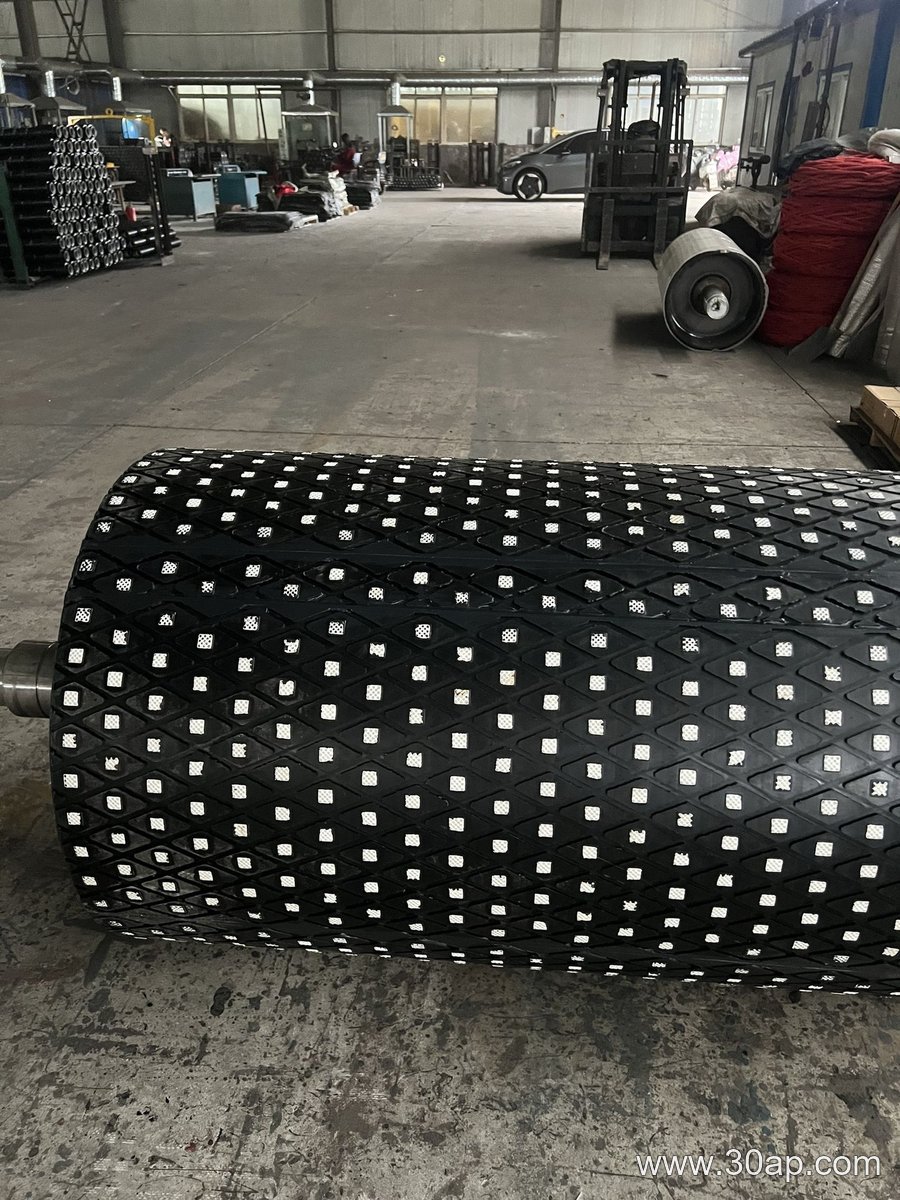
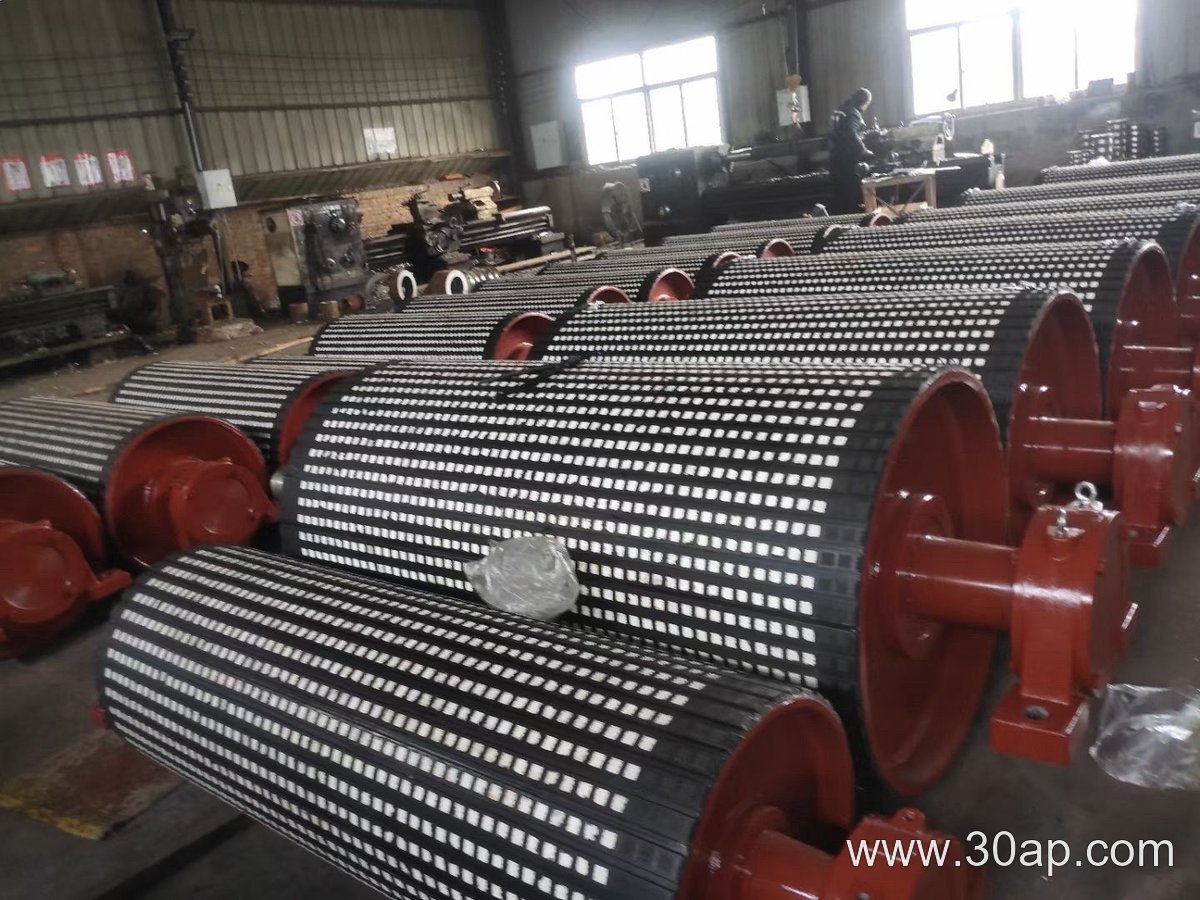
Lagging usually starts as a rubber sheet or a pre-formed strip. It is attached to the pulley shell by hot vulcanization, cold bonding, or mechanical fastening. Hot vulcanization creates a strong, seamless bond and is common for high-torque drive pulleys. Cold bonding is simpler and often used for tail or bend pulleys where downtime is limited. Surface forms include plain, diamond, herringbone, and ceramic. Plain rubber works well for general bulk handling; diamond or herringbone patterns help channel water and fines away from the contact area; ceramic lagging adds wear resistance for abrasive materials.
Thickness is often 8, 10, 12, 15, or 20 mm, chosen by duty and pulley diameter. A thicker layer can absorb more wear, but it also changes the effective pulley diameter slightly. For this reason, the lagging thickness should be considered when matching the pulley to the belt path.
Where It Is Used
Belt conveyor pulley lagging appears in quarry and limestone operations, sand and gravel lines, coal preparation plants, and port bulk terminals. It is fitted to drive pulleys that transmit power, tail pulleys that turn the belt, and bend or snub pulleys that change belt direction. Drive, tail, and bend pulleys are not interchangeable names. A drive pulley needs lagging mainly for traction; a tail pulley may use it for wear protection and belt tracking; a bend pulley may use a thinner cover to guide the belt without adding much mass.
For comparison, a wing pulley is sometimes used at the tail position to shed sticky material, but it is a different subtype and does not replace lagging on a drive pulley. The choice depends on the location and the job.
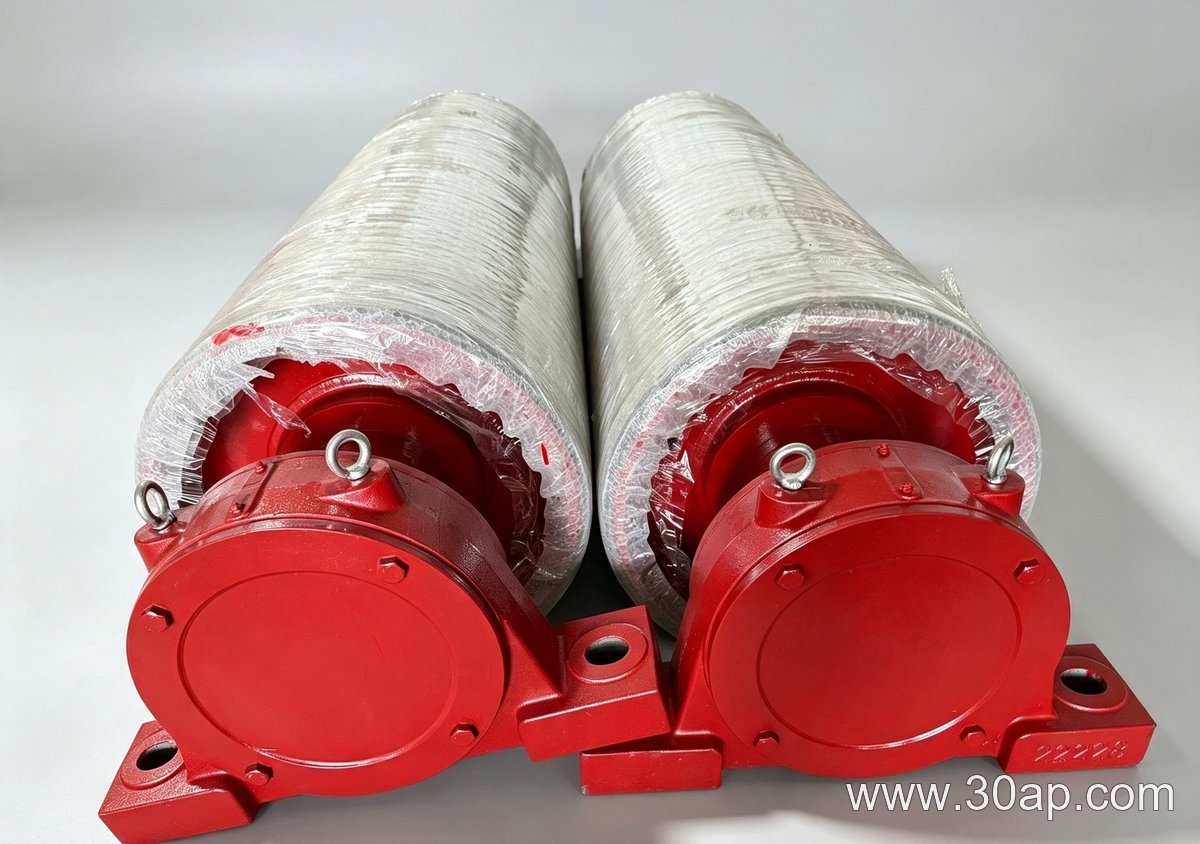
Matching Lagging to Belt Width and Pulley Diameter
Belt width and pulley diameter are related but not locked in a one-to-one ratio. A B800 belt may run on a Ø500 pulley in one conveyor and a Ø630 pulley in another, depending on belt tension, wrap angle, and shaft load. Common combinations include B800 × Ø500, B1200 × Ø1000, and B1400 × Ø800, but these are examples, not fixed rules. The pulley face width is usually wider than the belt; for instance, a B650 belt often uses a pulley face around 750 mm, and a B1000 belt around 1150 mm.
Shaft diameter is determined by torque and load, not by belt width alone. Common shaft sizes include Ø50, Ø60, Ø70, Ø80, Ø90, Ø100, Ø120, Ø140, Ø160, Ø180, and Ø200. A larger shaft does not automatically mean a larger belt, and a smaller belt does not force a specific shaft size.
What a Buyer Should Check
- Pulley position: drive, tail, bend, or snub. Each has different traction and wear needs.
- Surface form: plain, diamond, herringbone, or ceramic. Match it to material wetness and abrasiveness.
- Thickness: 8 to 20 mm is common. Thicker is not always better if the pulley diameter is small.
- Bonding method: hot vulcanized, cold bonded, or mechanically attached. Consider available downtime and torque.
- Belt width and pulley face: the face should exceed the belt width to allow tracking.
- Shaft and bearing load: confirm with the conveyor design, not with a guessed value from belt width.
For maintenance, inspect lagging for grooves, chunks, or polished spots. Worn lagging reduces grip and can damage the belt. Replacing it before the shell is exposed is cheaper than repairing a slipped or torn belt. When ordering, give the pulley diameter, face width, belt width, shaft diameter, and the material being conveyed. That information helps the supplier recommend a suitable belt conveyor pulley lagging without over- or under-specifying the cover.