What an EP300 Conveyor Belt Is
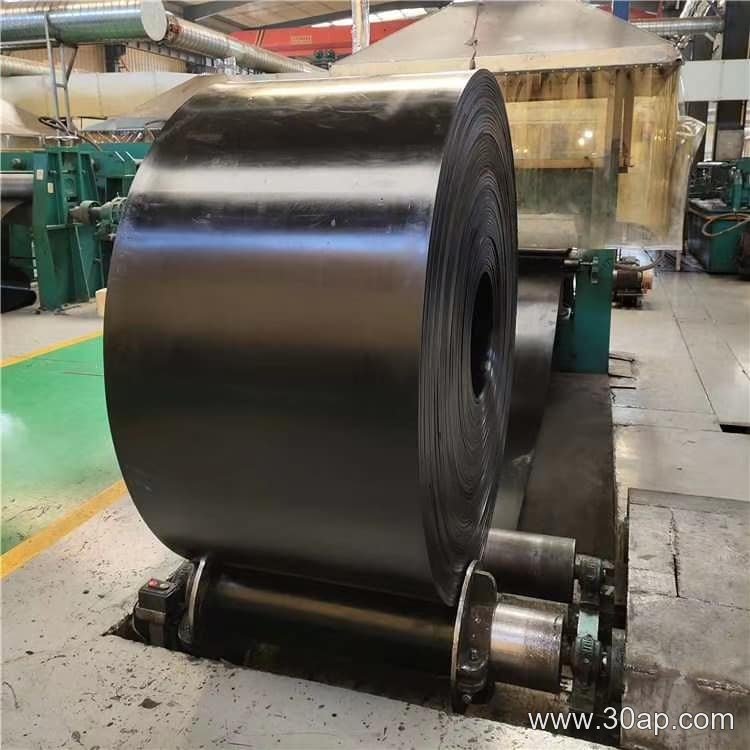
An EP300 conveyor belt is a multi-ply rubber belt built on a polyester warp and polyamide weft carcass, commonly called EP fabric. The number 300 refers to the nominal tensile strength of the carcass, usually expressed in newtons per millimeter of belt width. In everyday language, this is an EP belt with a rated breaking strength of 300 N/mm, positioned between lighter EP grades and the heavier EP400 or EP500 constructions. It is not a steel cord belt, and it is not a solid-woven PVC belt; it belongs to the fabric-reinforced rubber family.
How the Belt Is Put Together
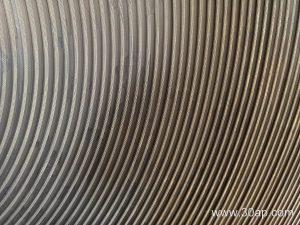
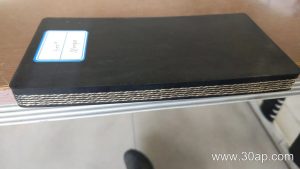
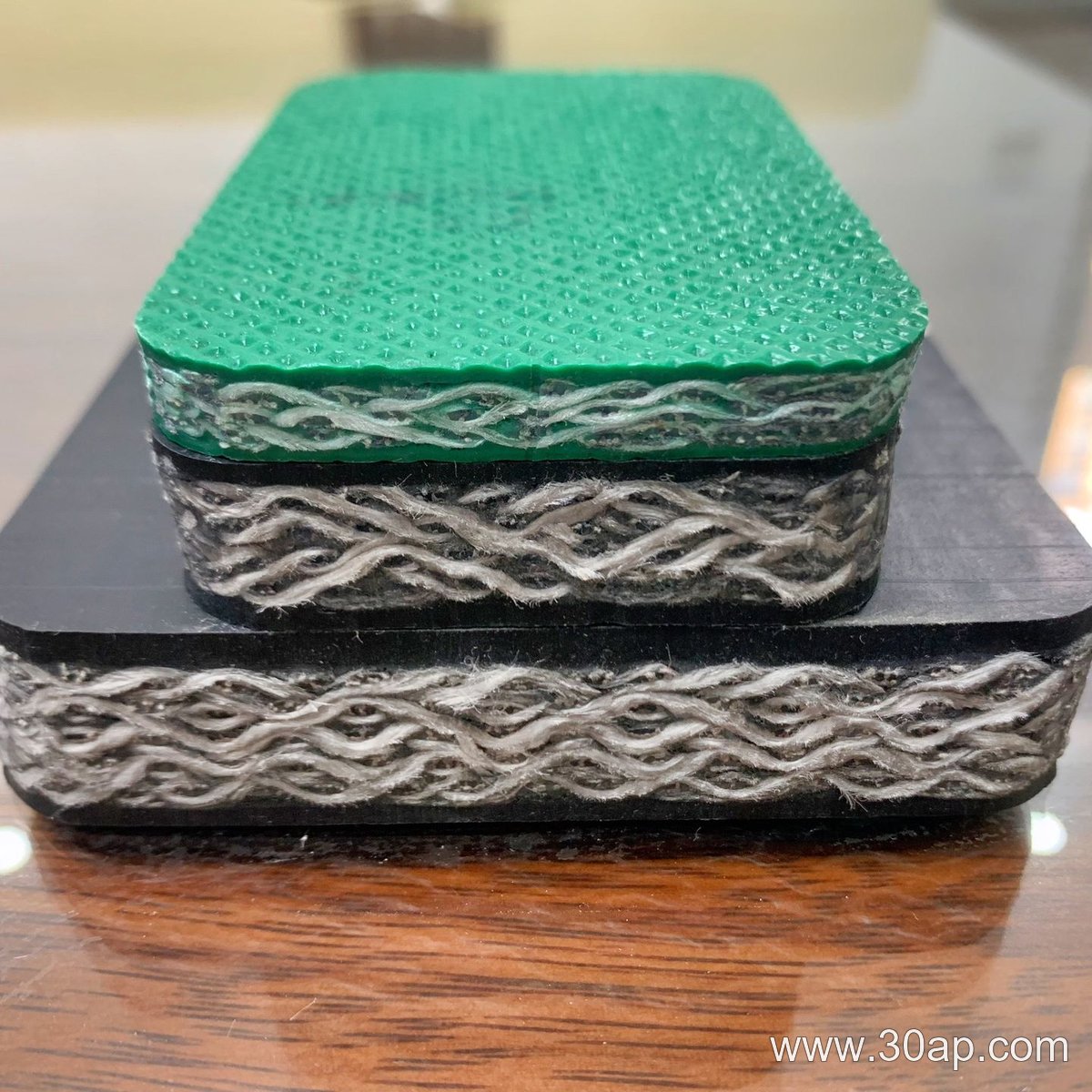
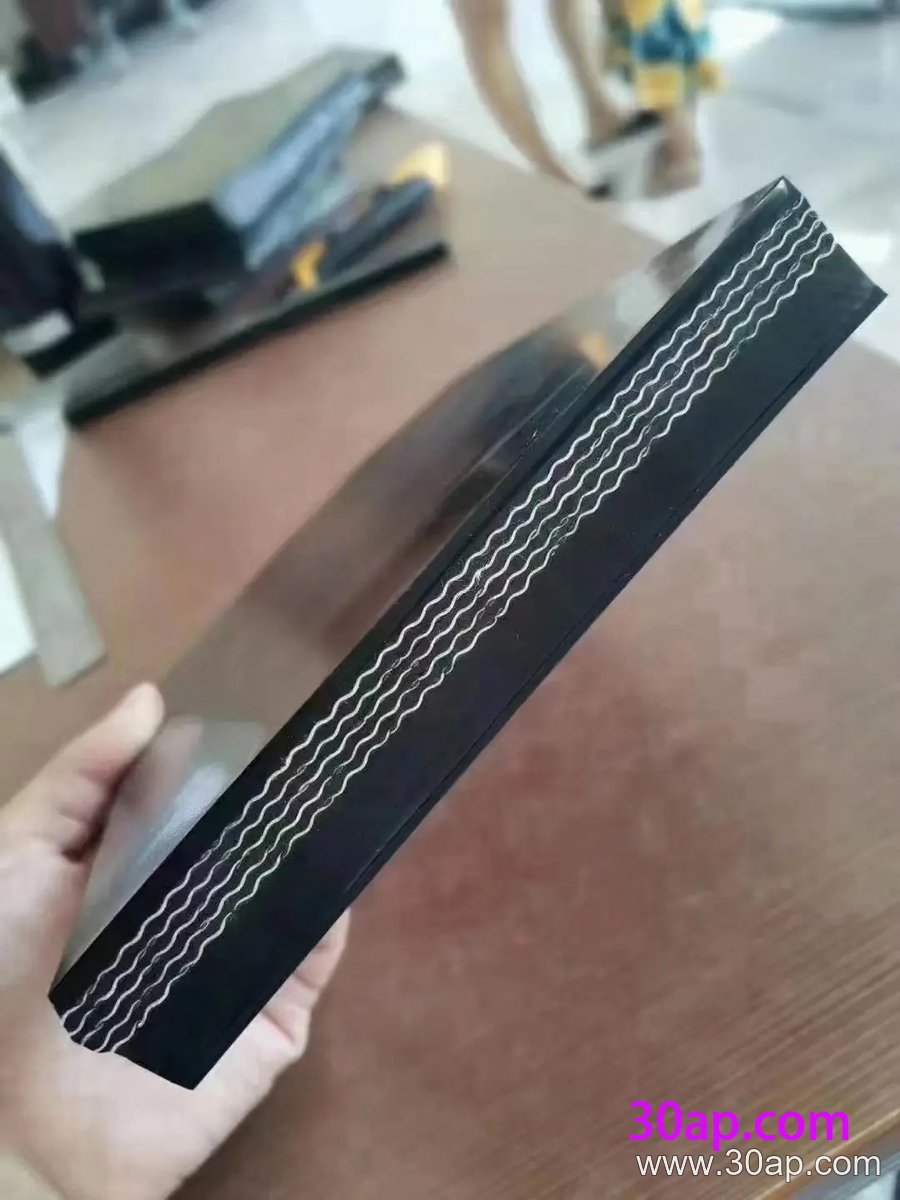
The carcass is the load-bearing part. EP fabric plies are bonded with rubber skim compound, then covered on both sides with cover rubber. A typical EP300 belt may use two to six plies depending on the duty, and common cover gauges include 4+2 mm, 5+2 mm and 6+2 mm. The top cover protects against abrasion and impact, while the bottom cover runs over the idler roller and conveyor pulley surfaces.
Because polyester stretches little under load and polyamide absorbs shock well, the EP carcass keeps splices stable and resists fatigue. That balance is why EP belts are widely chosen for medium and long conveyors where nylon belts might stretch and steel cord belts would be unnecessarily stiff and costly.
Where It Fits on a Conveyor
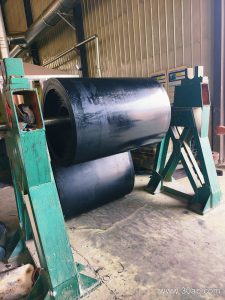
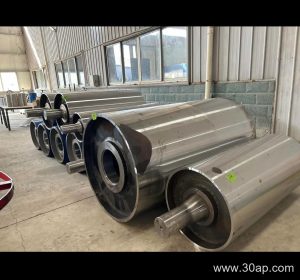
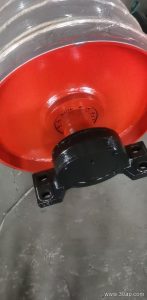
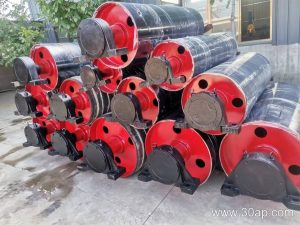
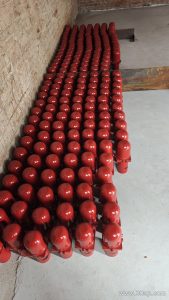
An EP300 belt is at home on bulk handling systems moving crushed stone, sand, gravel, coal, clinker, fertilizers and similar materials. It suits troughed belt conveyors with drive pulley diameters that match the carcass thickness, and it can also run on flat or gently inclined lines. When the route needs a bend, the belt passes over a bend pulley or a set of bend pulleys rather than a tail pulley, because those roles are different. The tail pulley is at the loading end, the drive pulley transmits power, and a bend pulley simply changes the belt direction. They are not interchangeable, and each is selected from its own duty.
Supporting equipment matters too. Carrying idler rollers shape the belt into a trough, return idler rollers support the empty strand, and a conveyor bracket holds the rollers or pulleys in alignment. A poorly aligned bracket or seized idler roller can damage the belt edge long before the carcass reaches its rated strength.
Common Configurations and Surface Forms
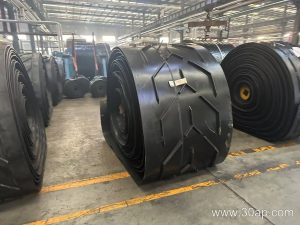
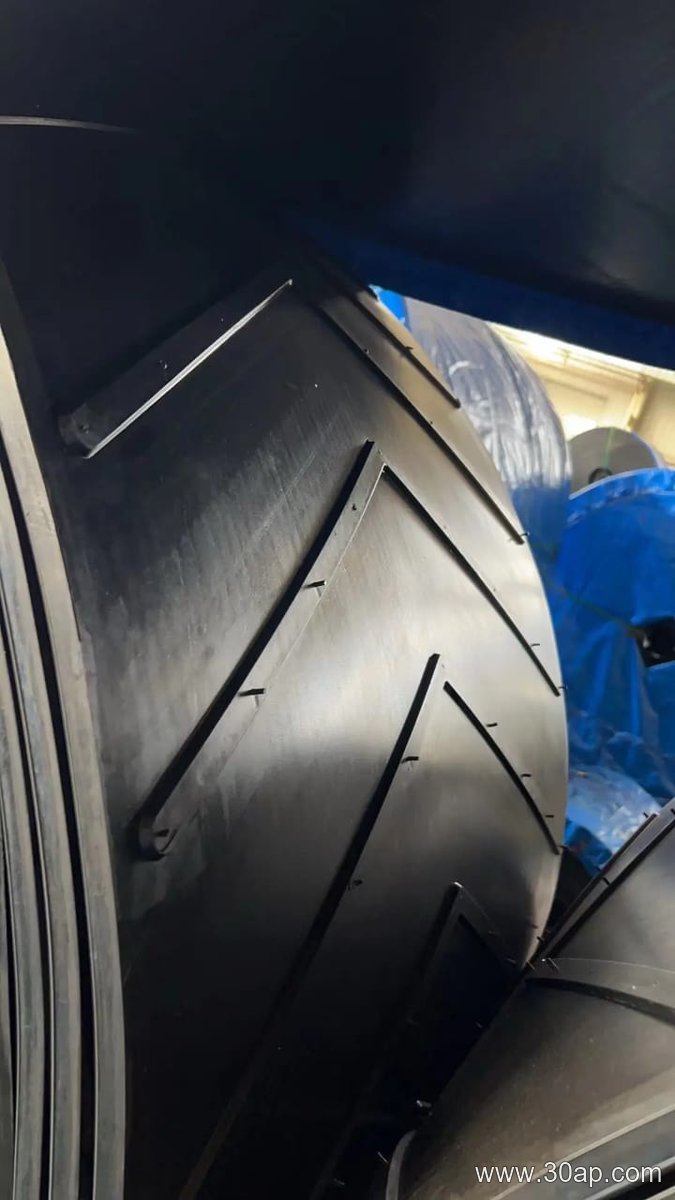
Buyers can specify an EP300 belt with different cover compounds for different conditions. Abrasion-resistant covers handle sharp rock, heat-resistant covers serve hot sinter or clinker, oil-resistant covers suit oily feed, and flame-retardant or antistatic covers are used where fire or static risk exists. For cold climates, a cold-resistant compound keeps the belt flexible. Patterned surfaces such as herringbone or chevron profiles improve grip on inclines, while corrugated sidewall belts contain material on steep or vertical sections. These are options on the same EP carcass, not separate belt families.
Widths commonly range from B500 to B2000, and strength grades step through EP200, EP315, EP400, EP500, EP630, EP800 and upward. An EP300 belt sits near the lower-middle of that range, so it is often paired with moderate pulley diameters and moderate lift heights.
What a Buyer Should Check
- Confirm the actual duty: material, lump size, tonnage per hour, incline and ambient temperature.
- Match the carcass strength to the calculated belt tension, not to a rule of thumb.
- Check cover thickness and compound against abrasion, heat, oil or fire risk.
- Verify pulley diameters and splice type with the belt manufacturer, since belt width alone does not fix shaft diameter or pulley size.
- Ask how the belt will be stored, installed and tensioned, because a correct EP300 belt can still fail early if the conveyor frame is misaligned.
There is no single EP300 belt that fits every conveyor. The right choice comes from the load, the environment and the pulley and idler arrangement working together, with the belt specified as one part of that system.