What the Carrying Trough Idler Does
A carrying trough idler is the idler assembly that supports the loaded run of a conveyor belt and shapes it into a trough. In most bulk handling lines it is simply called a trough idler or carrying idler, and it sits on the top side of the structure, directly under the material. Its job is not glamorous, but it decides how well the belt tracks, how much material spills, and how long the belt and bearings last. On a quarry conveyor moving crushed stone, or on a power plant coal line, a row of these idlers is often the first component an operator inspects after a belt misalignment complaint.
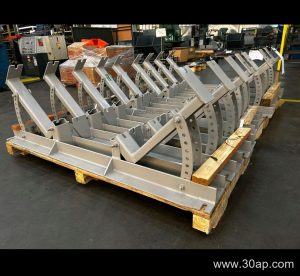
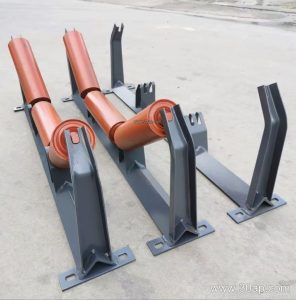
The assembly usually consists of two or three rollers held in a frame, mounted on a conveyor bracket fixed to the stringer. Three-roller sets are the common form for wider belts, while two-roller and single-roller sets appear on narrower or special-duty conveyors. The trough angle, the roll diameter and the roll length together set how the belt sits in the frame.
Construction Details That Matter
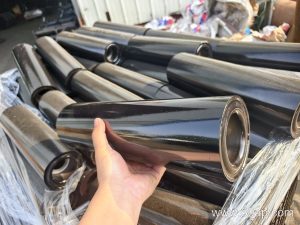
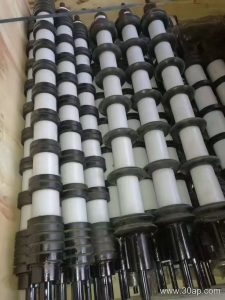
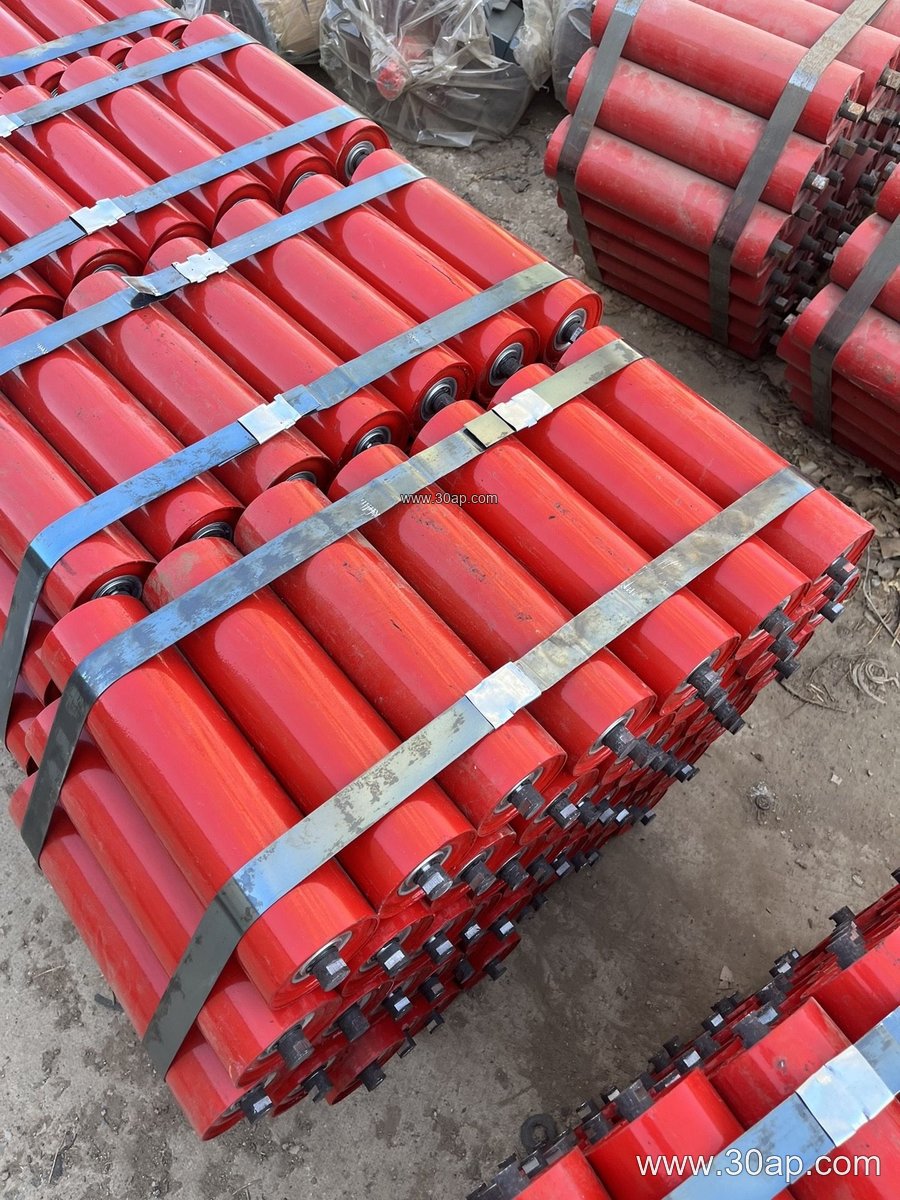
A typical carrying trough idler uses a steel tube shell, stamped or cast bearing housings, and sealed ball bearings. The shell may be plain steel, or it may carry a rubber ring, nylon or ceramic surface where abrasion or build-up is a concern. Bearing seats and labyrinth seals are the quiet heroes here: fine dust from a crusher or a cement plant will find any weak seal, and once grit reaches the bearing race, the roller stops turning and the belt starts to rub.
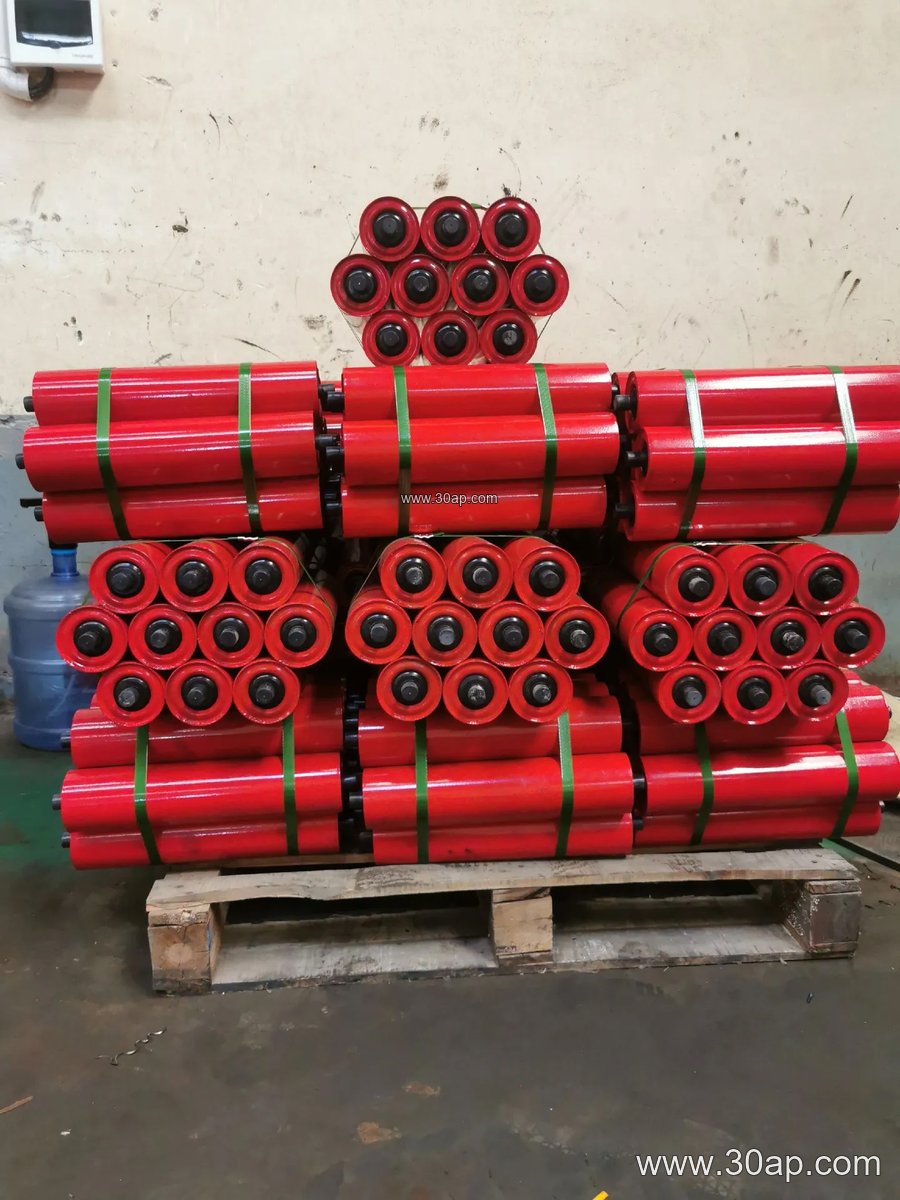
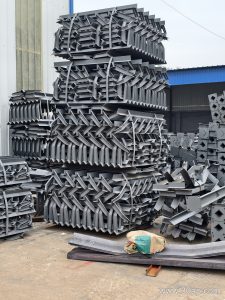
Frames are normally welded steel, painted or galvanized, with slots that allow a little adjustment during installation. The idler ends are usually fitted with a shaft that drops into the bracket hooks; the bracket type must match the frame, so the idler and bracket should be ordered as a pair rather than mixed from unrelated suppliers.
Common Sizes and Reference Data
The table below shows typical reference values, not fixed rules. Final dimensions follow the conveyor design, belt width, trough angle, and the load the idler must carry.
| Item | Common Reference Values |
|---|---|
| Roller diameter | Ø63, Ø76, Ø89, Ø102, Ø108, Ø127, Ø133, Ø159, Ø178, Ø194, Ø219 mm |
| Belt width | B400, B500, B650, B800, B1000, B1200, B1400, B1600, B1800, B2000 mm |
| Trough angle | 20°, 30°, 35°, 45° |
| Roll surface | Steel tube, nylon, ceramic, rubber ring |
| Bearing | 6204, 6205, 6305, 6306, 6308, 6310 |
| Roll length, three-roll set (example) | B500 about 200 mm, B650 about 250 mm, B800 about 315 mm, B1000 about 380 mm, B1200 about 465 mm, B1400 about 530 mm, B1600 about 600 mm, B1800 about 670 mm, B2000 about 750 mm |
These figures are starting points for discussion. Side rollers and the centre roller in one set can differ, and a wide belt does not automatically dictate one particular pulley diameter elsewhere in the drive. Matching a 1200 mm wide conveyor belt to a carrying idler is a design decision that involves load per idler, spacing, and belt stiffness.
Where These Idlers Are Used
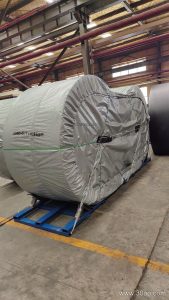
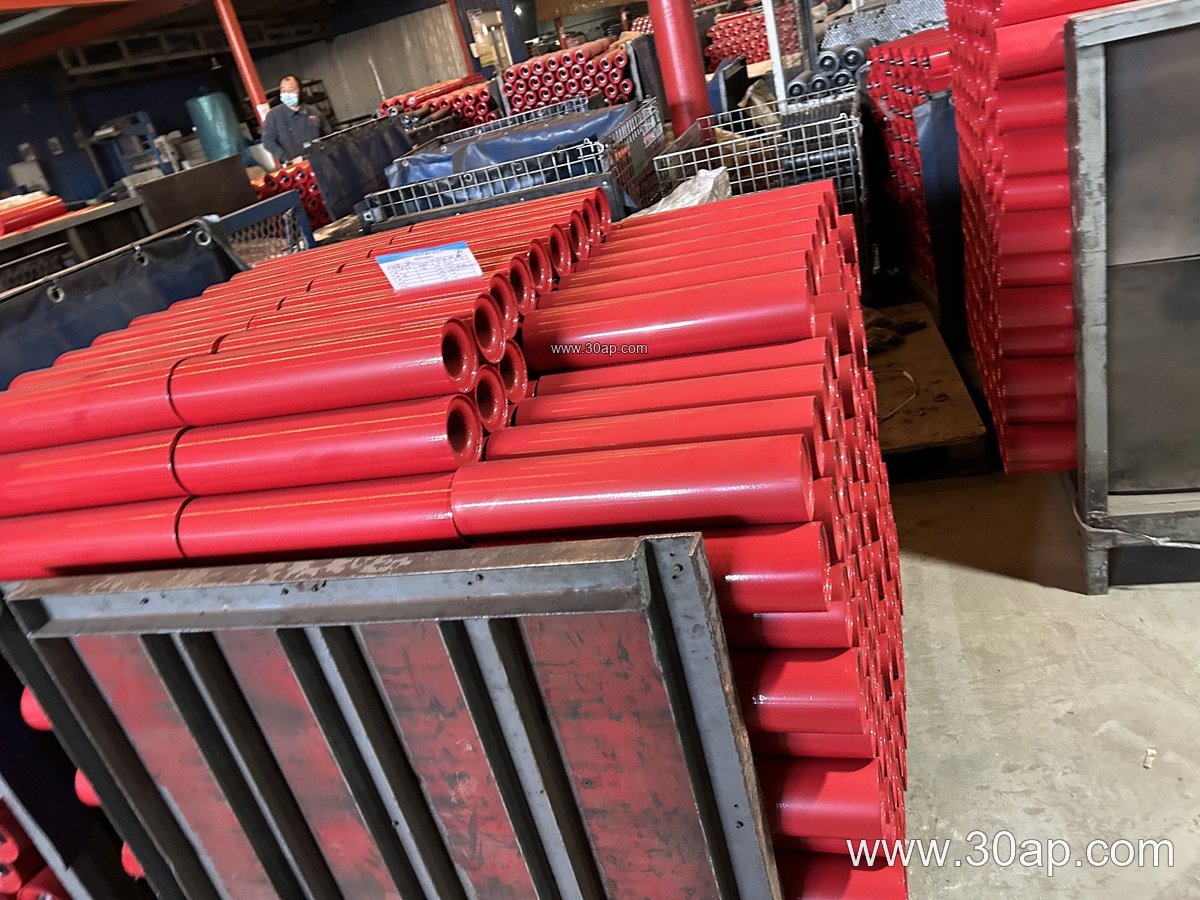
You will find carrying trough idlers in almost any plant that moves bulk material. In a limestone quarry or aggregate line they carry rock from the crusher to the screen. In a coal washing plant or a power station coal yard they handle damp, abrasive fuel. Cement plants use them on clinker and raw meal lines, where heat and fine dust both attack the roller. In a steel plant they may sit under sinter or ore, and in a port they support ship loading belts. The belt itself may be a heavy-duty mining conveyor belt, an abrasion resistant conveyor belt, or a flame retardant conveyor belt in an underground coal mine, so the idler specification should be read together with the belt type and the environment.
Selection and Maintenance Notes
- Check the trough angle against the material. A 20° or 30° set suits many free-flowing materials, while 35° and 45° give a deeper trough for higher capacity on the same belt width.
- Keep roller diameter in proportion to belt speed and load. Larger diameters turn more slowly and tolerate shock better, but they add weight and cost.
- Use impact or rubber-ring idlers at transfer points where lumps fall onto the belt; the standard carrying trough idler is not a substitute for impact protection.
- Confirm the bracket and frame interface before ordering, especially when replacing idlers on an older conveyor.
- Inspect for seized rollers, worn shells and material build-up. A single dragging idler can wear a belt through in a short time.
For anyone sourcing components, the practical approach is to describe the belt width, the material, the trough angle, the expected load, and the existing bracket pattern. That information is more useful than a single part number, and it lets the supplier propose a carrying trough idler that fits the conveyor rather than a generic catalogue item.