What a 500mm Diameter Conveyor Pulley Is
A 500mm diameter conveyor pulley is a cylindrical rotating assembly used to support and drive a conveyor belt at the head, tail, or intermediate positions of a bulk handling system. The 500mm dimension refers to the outside diameter of the shell, excluding any lagging. In metric notation this is often written as Ø500. It is a common size in medium to heavy conveyor drives where the belt width is typically in the B800 to B1400 range, although the exact match depends on belt tension, wrap angle, and the duty of the installation.
A 500mm diameter conveyor pulley should not be confused with a drive pulley, a tail pulley, or a bend pulley as if those names were interchangeable. Each describes a position and function on the conveyor. A drive pulley transmits torque from the gearbox to the belt. A tail pulley turns at the far end and may also serve as a tensioning point. A bend pulley changes the belt direction without driving. The 500mm diameter conveyor pulley can be any of these depending on how it is applied, so the specification must always state the role.
How the 500mm Diameter Conveyor Pulley Is Built
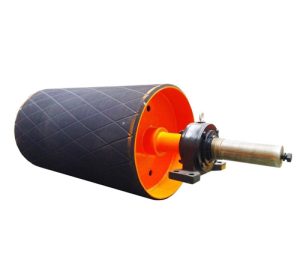
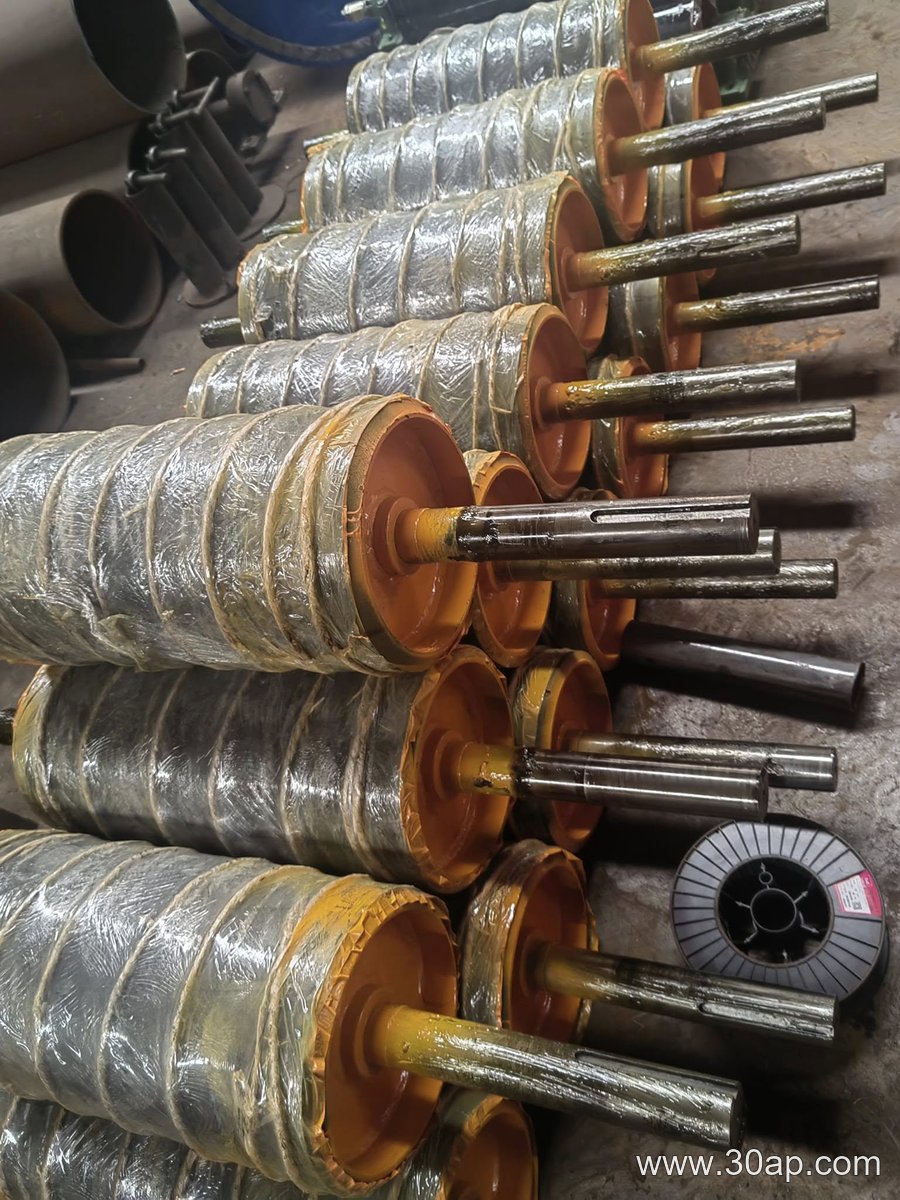
The typical construction includes a steel shell, two end discs, a shaft, and hub assemblies. The shell is usually rolled from plate and machined at the ends for concentricity. The shaft may be through-shaft or stub-shaft design. Common shaft diameters for pulleys of this size are Ø100, Ø120, Ø140, Ø160, or Ø180, but the final shaft size is determined by torque and load, not by belt width alone. A common mistake is to assume that a B1000 belt automatically requires a particular shaft diameter. It does not.
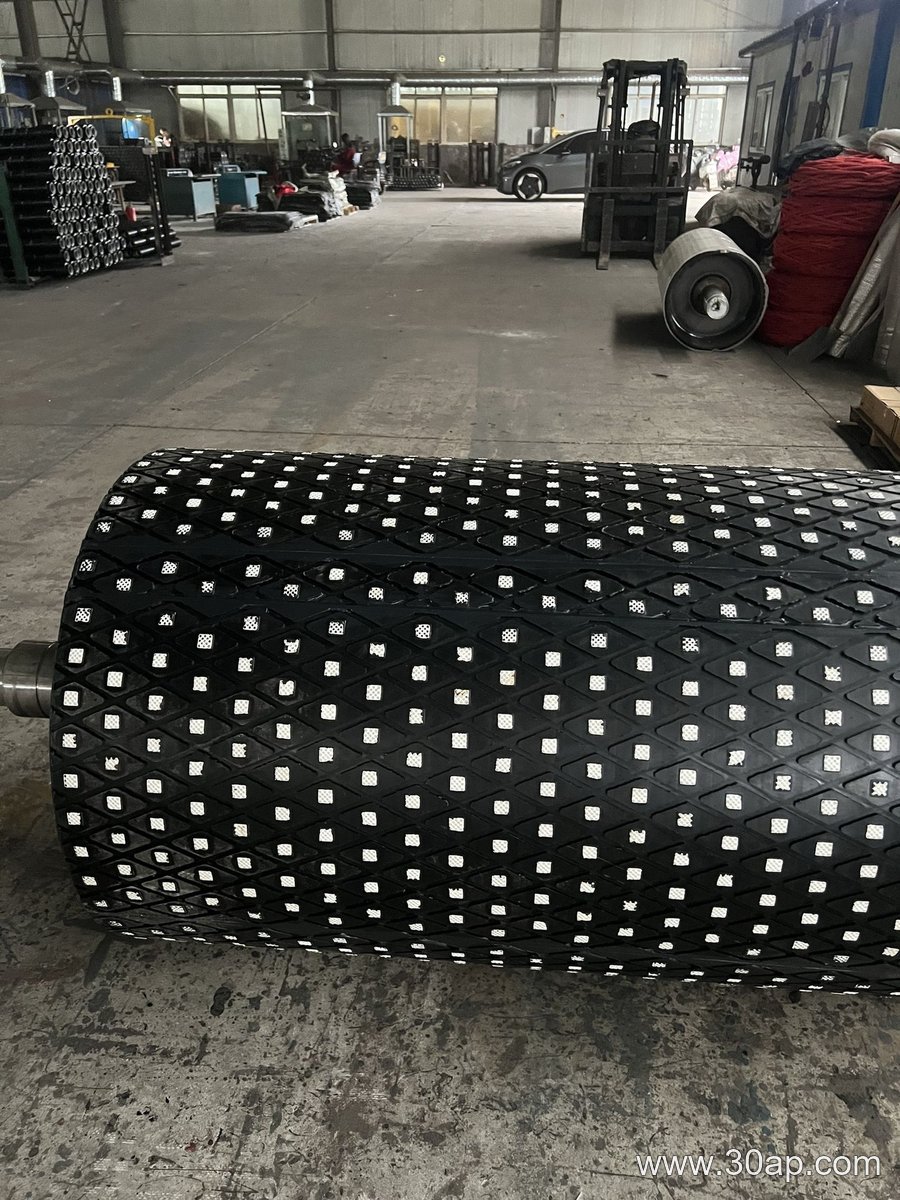
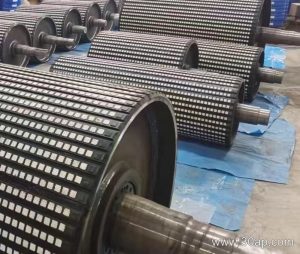
Surface treatment is another key decision. A 500mm diameter conveyor pulley may be supplied plain, or with rubber lagging applied by cold bonding, hot vulcanizing, or casting. Lagging thickness commonly ranges from 8mm to 20mm. Diamond and herringbone patterns improve grip in wet or dusty conditions. Ceramic lagging is used where slip is a serious concern. Plain finish is often chosen for bend and tail positions where traction is not the main requirement.
Where the 500mm Diameter Conveyor Pulley Fits
This pulley size appears in several bulk handling settings. In a limestone quarry, a 500mm diameter conveyor pulley may serve as a head pulley on a secondary conveyor. In a coal preparation plant, the same size might be used as a bend pulley to route the belt around a transfer tower. Other common locations include sand and gravel lines, crushed stone operations, and fertilizer handling systems. The choice between drive, tail, and bend duty depends on the conveyor profile, the required belt tension, and the available space.
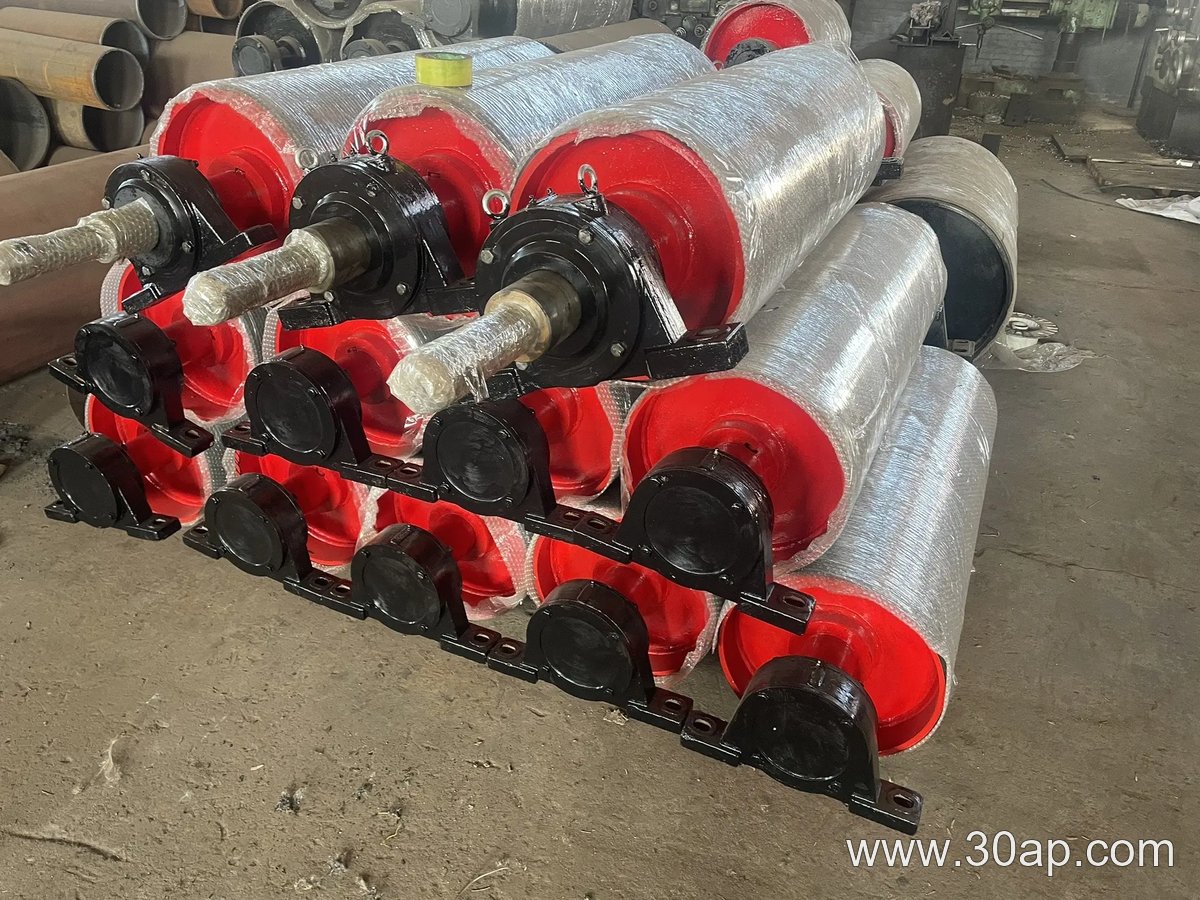
When the pulley is used as a drive, the wrap angle and the lagging surface become critical. When it is used as a tail or tension pulley, the focus shifts to bearing selection and take-up travel. When it is used as a bend pulley, the load is lower but the alignment must still be accurate to prevent belt mistracking.
Matching Belt Width and Pulley Diameter
Belt width and pulley diameter are related but not locked in a one-to-one ratio. A 500mm diameter conveyor pulley can be paired with more than one belt width. For reference, a B800 belt often uses a face width around 950mm, and a B1000 belt around 1150mm. A B1200 belt may use a face width near 1400mm. These are common practice figures, not universal rules. The pulley face width is normally wider than the belt to allow for belt tracking and edge clearance.
A 500mm diameter conveyor pulley is sometimes compared with a smaller 400mm or a larger 630mm pulley. The smaller diameter may be adequate for a lightly loaded bend position, while the larger diameter may be needed for a high-tension drive. The correct selection depends on the calculated belt tension, the allowable bearing pressure, and the space available in the conveyor bracket and frame.
What Buyers Should Check Before Ordering
Before purchasing a 500mm diameter conveyor pulley, confirm the following points with the supplier:
- The function on the conveyor: drive, tail, bend, take-up, or snub.
- The belt width and the required pulley face width.
- The shaft diameter and the bearing type, based on torque and load calculations.
- The lagging type and thickness, if any.
- The method of shaft-to-hub connection, such as keyed, shrink disc, or locking assembly.
- The mounting dimensions that must match the conveyor bracket and bearing housings.
It is also useful to ask about balancing, runout tolerance, and surface finish. These details affect vibration, belt wear, and bearing life. A 500mm diameter conveyor pulley that is well matched to its duty will run smoothly and last longer than one selected only by diameter.
Maintenance and Long-Term Use
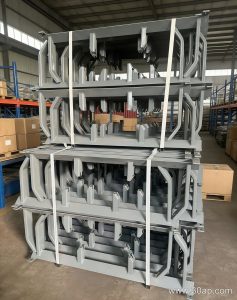
Once installed, a 500mm diameter conveyor pulley requires periodic inspection. Check the lagging for wear, cuts, or separation from the shell. Check the bearings for temperature rise, noise, or grease leakage. Check the shaft and hub connection for movement or fretting. Keep the conveyor belt aligned and the idler roller frames in good condition, because misalignment increases load on the pulley and shortens its life.
When replacing a pulley, record the original dimensions and the duty position. If the conveyor duty has changed, recalculate the tension and confirm that a 500mm diameter conveyor pulley is still the right choice. In some cases a different diameter or a different lagging pattern may be needed, but that decision should come from the application data, not from habit.