Why a Self-Centering Idler Earns Its Place
A self-centering idler is a training idler that uses angled rollers and a swivel-mounted frame to steer a drifting conveyor belt back toward the center line. In a quarry or a coal handling plant, a belt that wanders a few centimeters can rub the frame, spill material, and chew through edges in a matter of weeks. The self-centering idler, also called a self-aligning idler or training idler, corrects that drift continuously without an operator touching a thing.
The working principle is simple mechanics. When the belt shifts to one side, it presses against the vertical guide roller on that side. That force rotates the whole idler frame slightly around its pivot, which angles the carrying rollers so they push the belt back inward. Once the belt recenters, the frame returns to its neutral position. No motor, sensor, or control cabinet is involved.
How the Assembly Is Built
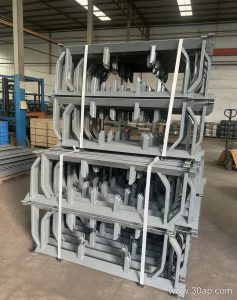
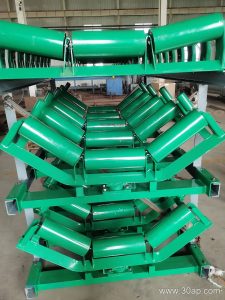
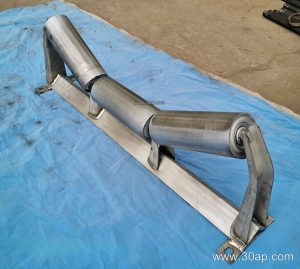
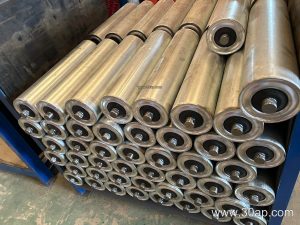
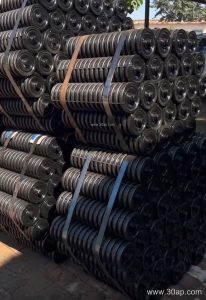
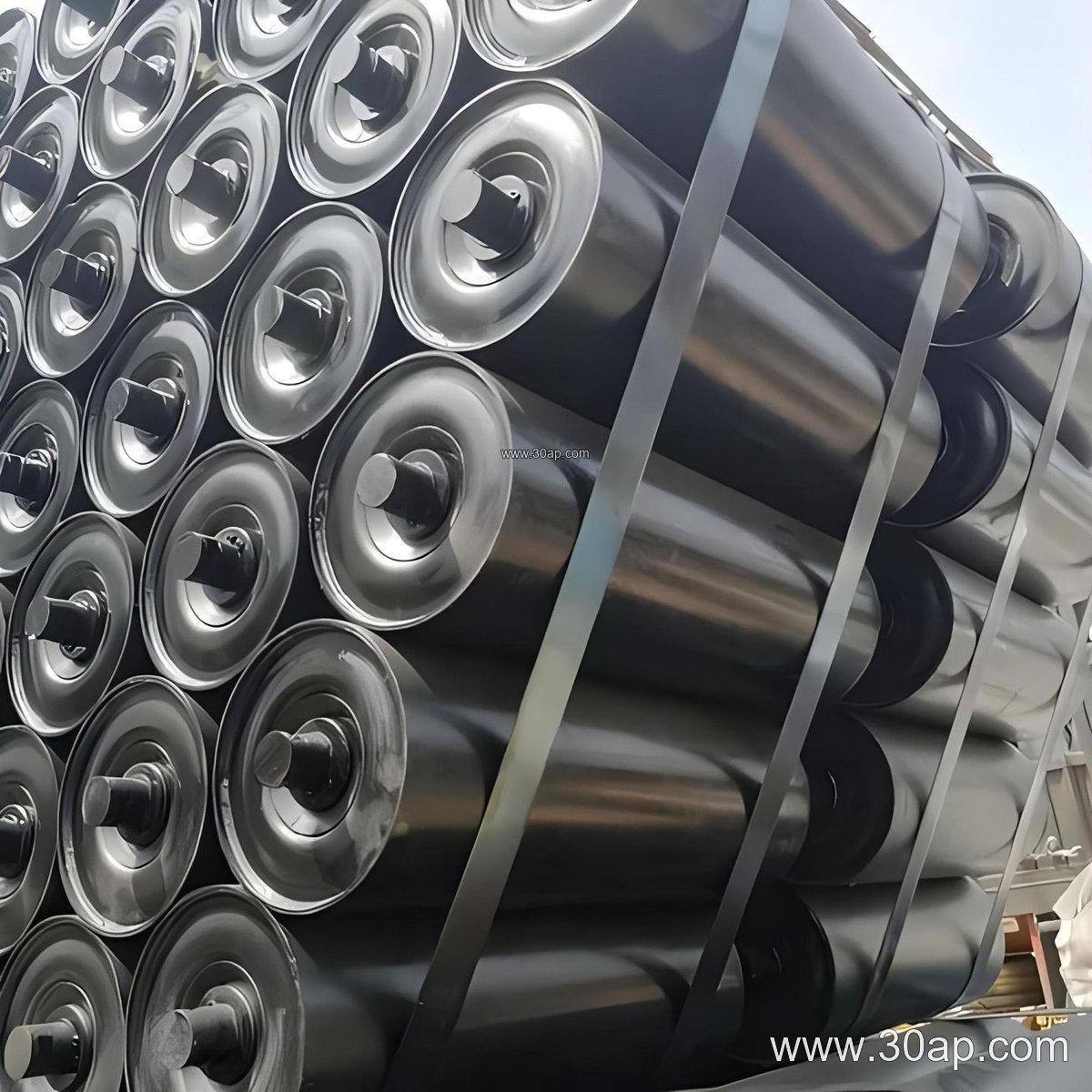
A typical self-aligning idler group combines a sturdy base frame, a rotating pivot, two or three carrying rollers, and at least one vertical guide roller. The rollers are usually mounted at a trough angle so they match the profile of the loaded belt. Common roll diameters range from Ø89 up to Ø159, with Ø102, Ø108, and Ø127 appearing frequently on medium-duty installations. Roll length follows belt width and trough geometry; a three-roll set on a B800 belt often uses rolls around 315 mm long, while a B1200 line may call for roughly 465 mm, though side and center rolls can differ.
Bearings are commonly 6205, 6305, or 6308, sealed against dust and water. Roll surfaces may be steel tube, nylon, or rubber-covered depending on the duty. In a cement plant or a limestone crushing circuit, dust ingress is the main enemy, so lip seals and greased-for-life bearing housings matter more than the roller finish.
Where It Fits on the Conveyor
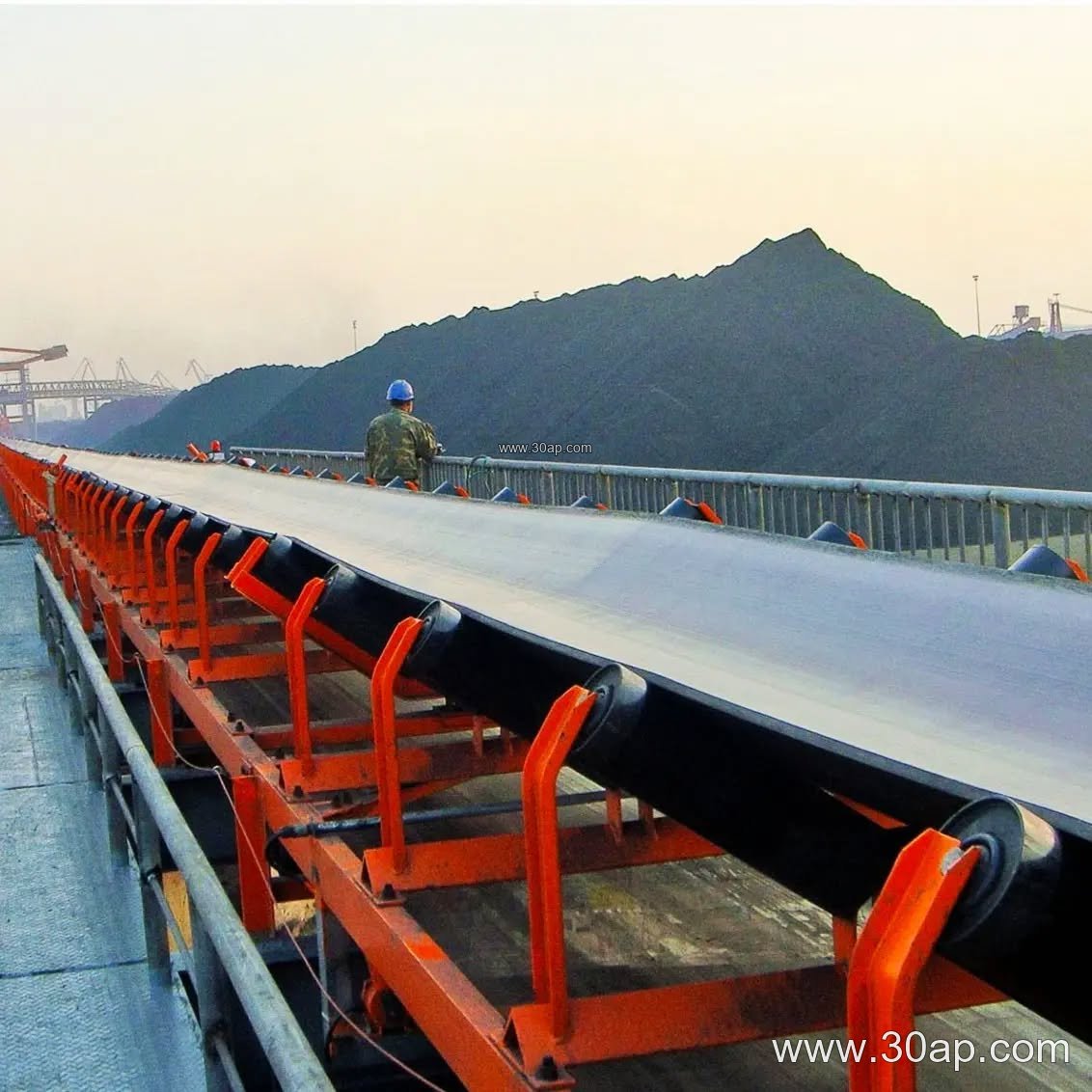
Training idlers are usually installed on the carrying side at intervals along a long run, and sometimes on the return strand where belt tracking is poor. They are not a substitute for a bend pulley or a drive pulley; those components change belt direction and transmit power, while a self-centering idler only corrects lateral position. On a coal mining conveyor belt or a heavy-duty mining conveyor belt carrying abrasive ore, a pair of training idlers spaced every 30 to 50 meters is a common arrangement, with the exact spacing set by the conveyor designer.
They are equally at home in a power plant coal yard, a sand and gravel line, a port ship loading conveyor, or a tunnel muck removal system. Wherever a rubber conveyor belt or an EP conveyor belt runs long and slightly misaligned, a training idler buys time between maintenance windows.
Matching the Idler to the Belt
Selection starts with belt width and trough angle rather than with the idler alone. A 20-degree trough suits many flat-to-moderate profiles, while 35 and 45 degrees are used where the belt must hold a deeper material load. The table below shows typical reference combinations; these are examples, not fixed rules, and final dimensions should follow the conveyor design.
- B500 belt: roll length about 200 mm, roll diameter Ø76 to Ø89
- B650 belt: roll length about 250 mm, roll diameter Ø89 to Ø102
- B800 belt: roll length about 315 mm, roll diameter Ø89 to Ø108
- B1000 belt: roll length about 380 mm, roll diameter Ø108 to Ø133
- B1200 belt: roll length about 465 mm, roll diameter Ø108 to Ø159
- B1400 belt: roll length about 530 mm, roll diameter Ø127 to Ø159
- B1600 belt: roll length about 600 mm, roll diameter Ø133 to Ø178
- B1800 belt: roll length about 670 mm, roll diameter Ø133 to Ø194
- B2000 belt: roll length about 750 mm, roll diameter Ø159 to Ø219
One belt width does not lock you to a single roll diameter or shaft size. A B1000 conveyor might run Ø108 rolls on a light aggregate duty and Ø133 rolls where lump size is larger. Shaft diameter is determined by load and bearing choice, not by belt width alone.
What a Buyer Should Check
Ask how the pivot is sealed, because a self-centering idler that seizes at the pivot becomes a fixed idler and stops training. Check that the guide rollers are replaceable and that the frame fits the existing conveyor bracket spacing. Confirm the bearing size and sealing arrangement for your dust level, and verify the roll surface: rubber-covered rolls grip better on wet or oily belts, while plain steel suits dry bulk.
Finally, consider the belt itself. A chevron conveyor belt or a corrugated sidewall conveyor belt has a raised profile that can interfere with guide rollers, so the training idler position must be planned around it. On a steel cord conveyor belt running at high tension, the training idler should be a heavy frame, not a light one. Get these details right and the self-centering idler will quietly do its job for years.