What a 1800mm Conveyor Belt Is
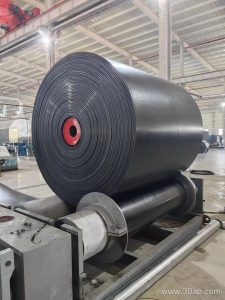
An 1800mm conveyor belt is a wide-format belt built for conveying systems that move large volumes of bulk material in a single pass. At this width, the belt is usually part of a heavy-duty circuit rather than a light package-handling line. It can be supplied as an EP conveyor belt, an NN nylon belt, or a steel cord belt, depending on the tension and impact conditions. The 1800 mm figure refers to the cut width of the belt itself, not the pulley face or the frame width. Because the belt is wide, the supporting structure, idler roller spacing, and conveyor pulley arrangement all need to be considered together during design.
In practice, a belt this wide is often described by its construction rather than its width alone. A buyer might ask for a 1800mm EP belt with a specific cover grade, or a wide steel cord belt for a long overland route. The same width can be built with different carcass strengths, cover thicknesses, and surface patterns, so the width is only one part of the specification.
How the Belt Is Built
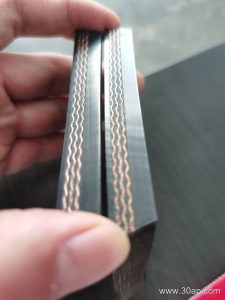
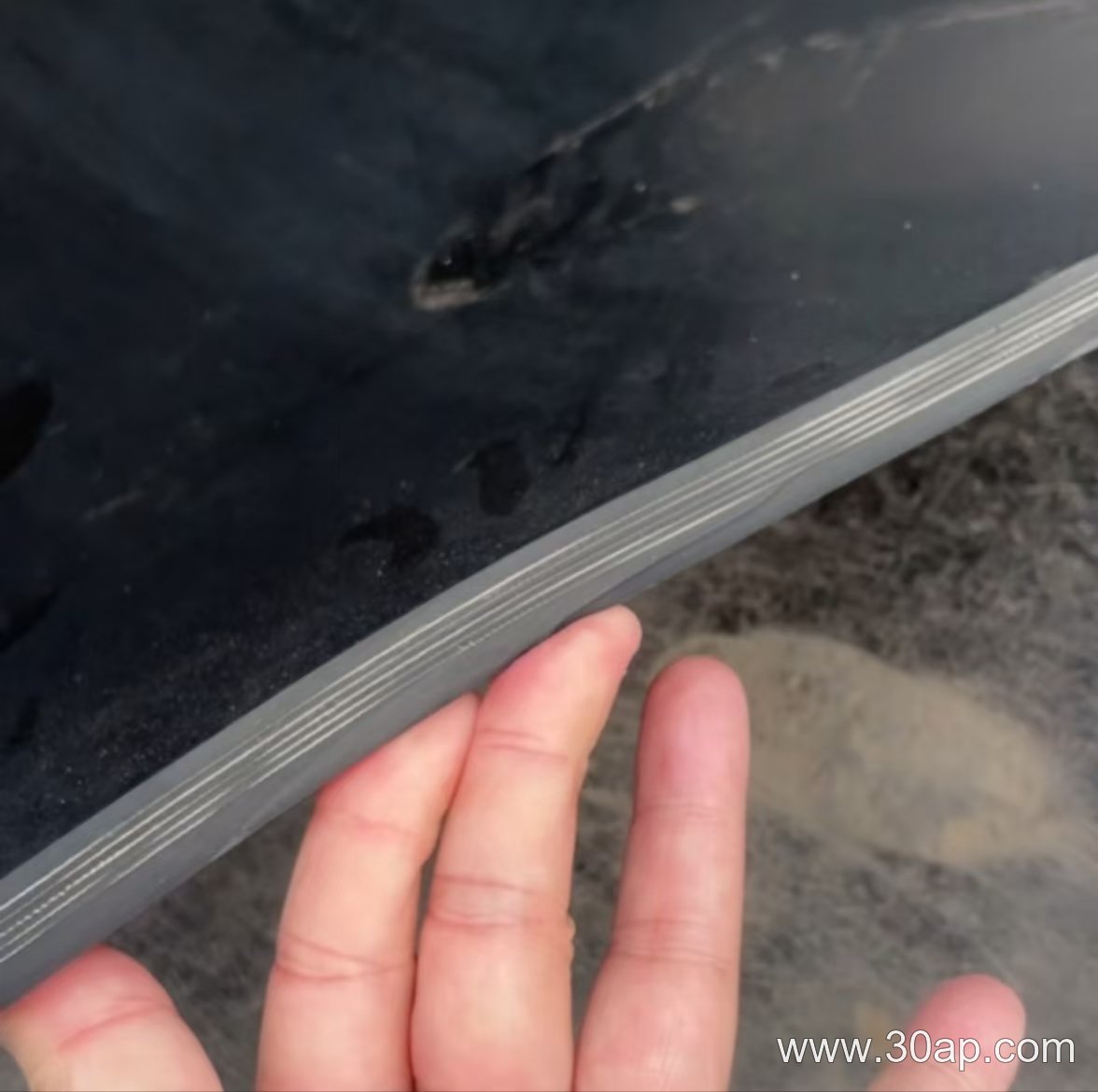
The carcass does the pulling. For a 1800mm conveyor belt, common carcass options include EP fabric, NN nylon, and steel cord. EP belts use polyester warp and nylon weft, which gives good length stability and low stretch under load. NN nylon belts offer high flexibility and impact resistance, which suits some loading zones. Steel cord belts are chosen when the system is long and the tension is high. The number of fabric plies usually ranges from two to six, and the strength grade is written as EP200, EP400, EP630, EP1000, EP1250, and so on. For example, an EP1000 Conveyor Belt is a common choice for medium-to-heavy duty bulk handling where the belt needs good tensile strength without excessive weight.
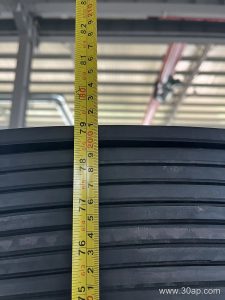
The covers protect the carcass. Common cover combinations are 3+1.5 mm, 4+2 mm, 5+2 mm, 6+2 mm, and 8+3 mm, with the first number being the top cover and the second the bottom cover. Top covers are thicker when the material is abrasive or when the belt takes direct impact from a chute. Bottom covers are often thinner because they run against the idler roller and pulley surfaces. Special cover compounds are available for heat, oil, flame resistance, antistatic behavior, cold conditions, and acid or alkali exposure.
Where a Wide Belt Fits
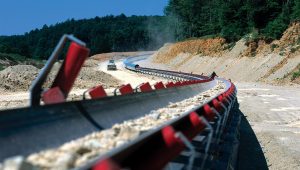
A 1800mm belt is often used in mining, quarrying, bulk ports, coal preparation, and large aggregate plants. The width helps reduce material spillage and allows a lower belt speed for the same tonnage, which can reduce wear on the conveyor pulley and idler roller. It is also common in bulk terminals where a single stream of material must be moved without excessive transfer points. In these settings, the belt works with a complete set of components: the drive pulley, tail pulley, bend pulley, tension pulley, and a series of idlers and brackets.
The type of belt should match the duty. A PVC Mining Conveyor Belt is typically used in underground or enclosed mining conveyors where flame resistance and antistatic properties are required, and where the belt may run in damp or dusty conditions. A steel cord belt, such as an ST1250 Conveyor Belt, is used on long-distance or high-tension routes where low elongation and high strength are important, for example in large mines or overland conveying systems. These names describe the construction and strength, not a fixed width, so an ST1250 or PVC belt can be produced in several widths, including 1800 mm, if the design calls for it.
Width, Pulleys, and Support Components
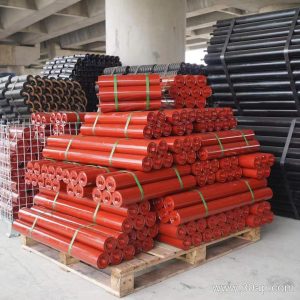
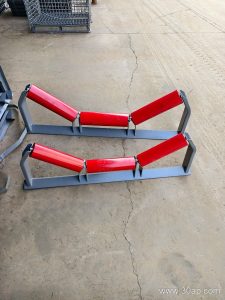
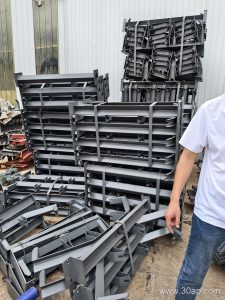
Wide belts need wide support. The idler roller set and conveyor bracket must match the belt width and the trough angle. Common trough angles are 30 degrees, 35 degrees, and 45 degrees, and the bracket is usually selected for the belt width and the roller diameter. Roller diameters such as 89 mm, 108 mm, 133 mm, and 159 mm are common, and the choice depends on load, speed, and belt tension rather than width alone. A 1800mm belt does not automatically require one specific roller diameter, and it should not be assumed that one belt width matches one pulley diameter.
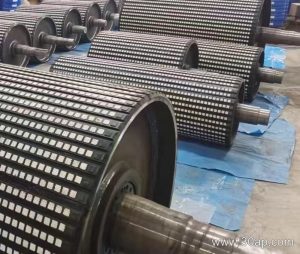
Pulley dimensions are also selected by calculation. Drum types include the drive pulley, head pulley, tail pulley, bend pulley, tension pulley, and motorized pulley. Pulley diameters such as 250 mm, 315 mm, 400 mm, 500 mm, 630 mm, 800 mm, 1000 mm, 1250 mm, and 1400 mm are available, and the face width is usually wider than the belt. For a B1800 belt, the pulley face may be around 2000 mm or more, but the exact figure depends on the manufacturer and the belt tracking requirement. Surface options include plain, rubber lagged, diamond lagged, herringbone lagged, and ceramic lagged. The lagging choice affects grip and wear, especially on the drive pulley.
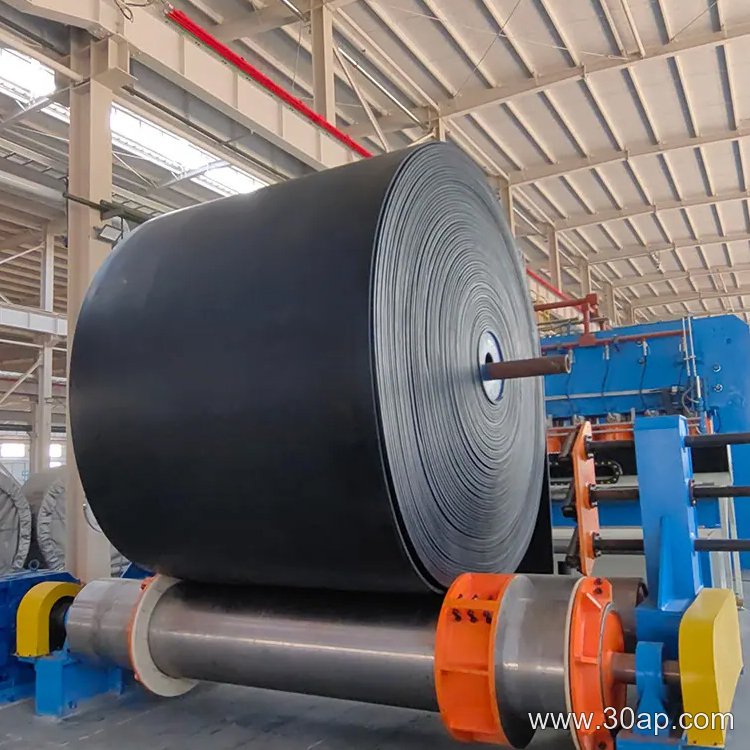
An Extra-Wide Conveyor Belt may be used where the material bed is very wide or where the conveyor receives material from a large crusher or a wide discharge chute. In such cases, the transition distance, the idler spacing, and the pulley face all need to be reviewed to avoid belt sag, edge damage, or mistracking. The belt is only one part of the system, and the conveyor pulley, idler roller, and conveyor bracket must be specified as a set.
What a Buyer Should Check
Before ordering a 1800mm conveyor belt, confirm the carcass type and strength grade, the number of plies, the cover thickness and compound, and the required surface pattern. Check the minimum pulley diameter recommended for the belt construction, because a thick or stiff belt may need a larger pulley than a thin one. Confirm the belt width, the edge condition, and whether the belt will be spliced on site or supplied as an endless belt. Also check the operating environment: temperature, moisture, dust, oil, and flame risk all influence the cover compound and the carcass choice.
Ask how the belt will be supported. The idler roller type, spacing, and trough angle affect belt life. The conveyor pulley diameter and lagging affect traction and tracking. The conveyor bracket and frame must be strong enough for the belt and material load. A wide belt carries more weight per meter, so the supporting structure and the take-up system should be sized accordingly.
Finally, remember that a 1800mm conveyor belt is not a single fixed product. It is a width class that can be built with different fabrics, steel cords, covers, and strengths. The right specification comes from the tonnage, the material, the route, and the available drive power. Working with a supplier who asks about the whole conveyor, not just the belt, will usually give a better result.