What a Belt Conveyor Impact Idler Does
A belt conveyor impact idler is the load-bearing roller set placed where material falls onto the belt. Instead of a rigid steel shell taking the hit directly, this idler absorbs the drop energy and keeps the belt from being pinched between falling lumps and a hard surface. It is still an idler roller in the ordinary sense, but its job is defined by position: directly under the chute, crusher discharge, or any transfer point where the trajectory of the material strikes the belt with force.
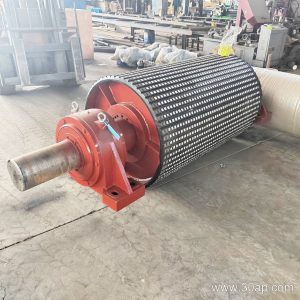
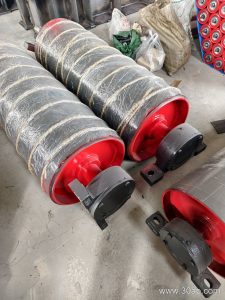
In practice, the impact idler is often described as a buffer idler or shock-absorbing idler. Those names point to the same component. It should not be confused with a conveyor pulley, which drives or redirects the belt at the ends of the conveyor. A drive pulley, tail pulley, and bend pulley do different work and are not interchangeable with an impact idler, even though all of them touch the conveyor belt.
How the Roller Is Built
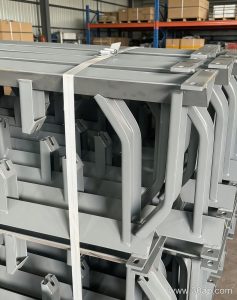
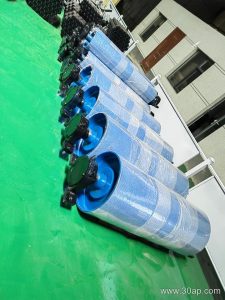
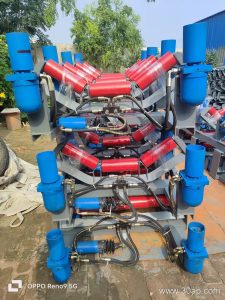
The frame usually follows a three-roll trough configuration, so the belt keeps its trough shape while the load is still settling. Roll diameter can range from small units around Ø63 and Ø76 up to Ø159, Ø178, or larger depending on belt width and drop height. Common impact rollers use rubber rings or rubber discs on the shell, which flatten slightly under impact instead of denting. Some designs use a steel tube shell with a thick rubber covering; others use a nylon or ceramic surface where abrasion is the main concern rather than impact.
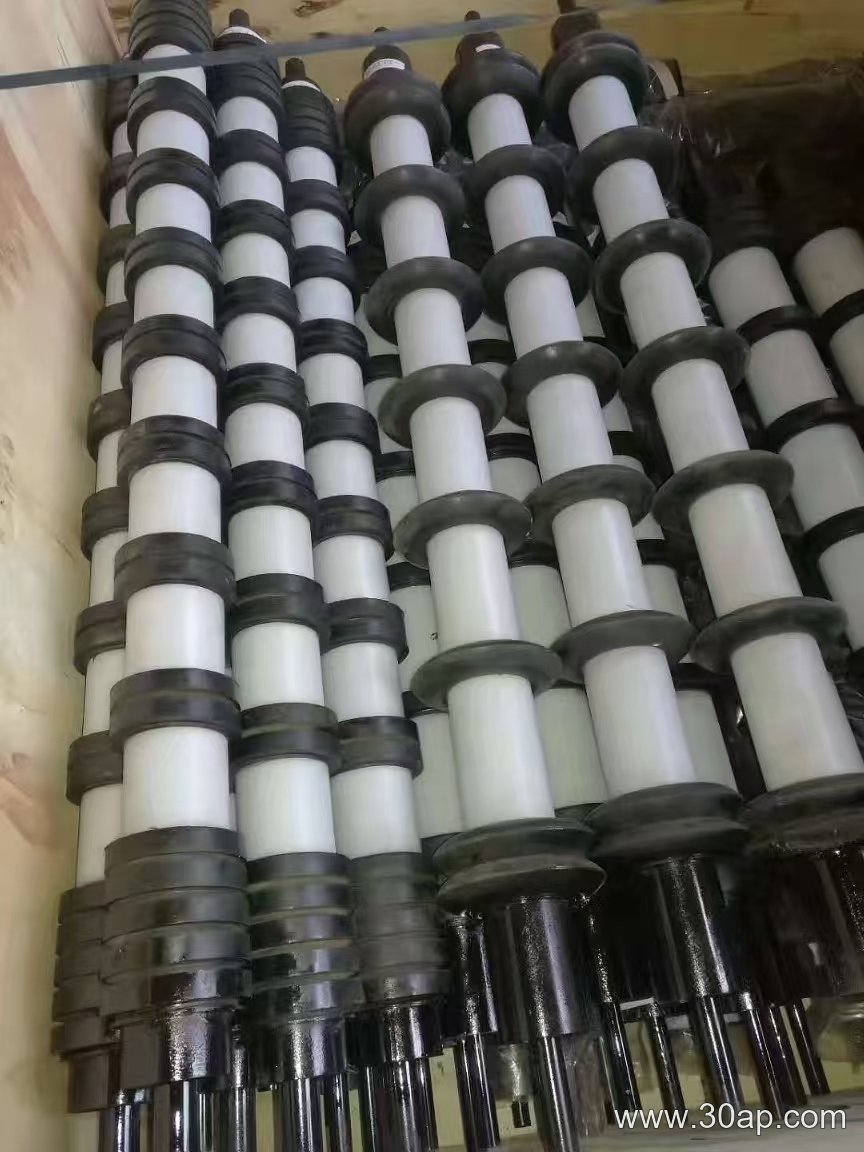
Bearings are selected to suit the load and speed. Typical bearing numbers include 6204, 6205, 6305, 6306, 6308, and 6310. A larger bearing is not automatically required for a given roller diameter, and a given belt width does not fix one shaft size. Those choices come from the conveyor design, the material, and the expected service life.
Where It Fits on the Conveyor
The usual location is the loading zone, between the skirt boards and just downstream of the chute. In a quarry or a limestone crushing line, the primary crusher discharge is a classic duty point: run-of-mine rock leaves the crusher and drops onto the belt, and the first idlers under that stream take the worst of it. A second common place is a coal handling transfer tower at a power plant, where the belt changes direction and the material falls from one conveyor to the next.
Only the first few idler positions need the buffered type. Further along the carrying run, standard troughing idlers are enough. On the return side, a flat return idler or a V-return idler handles the empty belt, and these are different components with different functions.
Sizes and Matching to the Belt
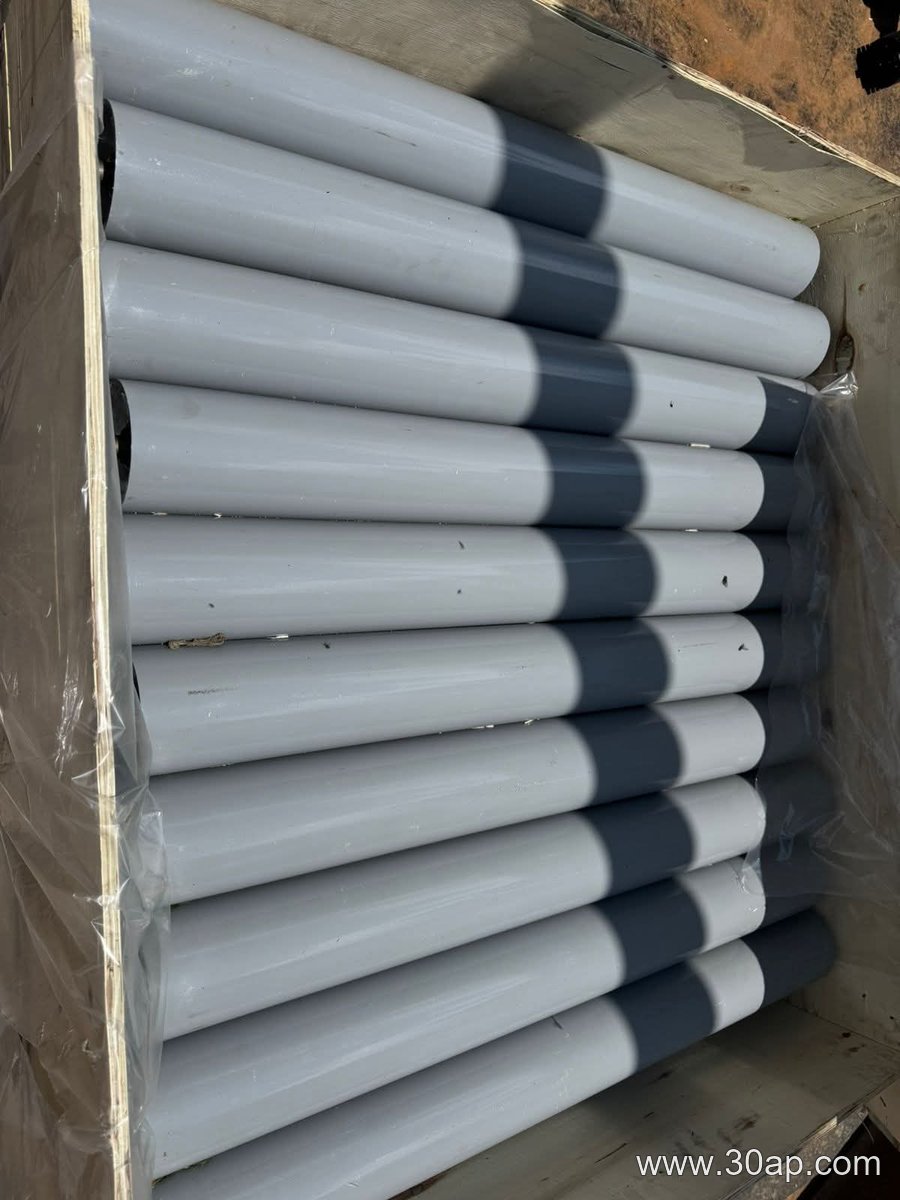
Impact idlers are made to match belt width and trough angle. Belt widths commonly run from B400 and B500 through B650, B800, B1000, B1200, B1400, B1600, B1800, B2000, B2200, and B2400. Trough angles are often 20, 30, 35, or 45 degrees, and the roll length changes with both the width and the angle. For a three-roll trough set, a rough guide to side roll length is shown below. These are common examples, not fixed pairings, and the center roll and side rolls can differ.
| Belt width | Typical side roll length |
|---|---|
| B500 | about 200 mm |
| B650 | about 250 mm |
| B800 | about 315 mm |
| B1000 | about 380 mm |
| B1200 | about 465 mm |
| B1400 | about 530 mm |
| B1600 | about 600 mm |
| B1800 | about 670 mm |
| B2000 | about 750 mm |
Roll diameter is chosen with the drop height in mind. A low drop on a narrow belt may only need Ø89 or Ø102 rubber-disc rolls, while a high drop on a wide belt may call for Ø133, Ø159, or larger. The conveyor bracket and frame must accept the chosen roll spacing and bearing housing.
What Buyers Should Check
- Drop height and lump size, because these decide whether rubber rings are needed and how thick they should be.
- Belt width and trough angle, so the roll set sits correctly under the conveyor belt.
- Roll diameter and bearing size together, not one without the other.
- Mounting dimensions, including the conveyor bracket spacing and shaft end shape.
- Whether the loading zone needs a full impact set or only the first two or three positions.
An impact idler is a wear part, so it is normally replaced rather than repaired. Buying one that matches the actual loading conditions keeps the belt running straighter and reduces the chance of belt damage at the transfer point.