What a Hot-Dip Galvanized Idler Is
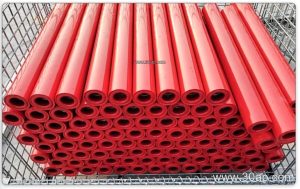
A hot-dip galvanized idler is a conveyor idler roller whose steel body has been dipped in molten zinc after fabrication, leaving a metallurgically bonded coating across the tube, end caps and welded joints. In a conveyor line, the idler roller carries the conveyor belt and the material load, so the coating is not decoration; it is the first line of defence in wet, dusty or corrosive service. The same product is also described accurately as a hot-dip galvanized conveyor idler or galvanized idler roller, and that is the item this article covers.
Plants handling abrasive or damp bulk materials often pair these idlers with an abrasion resistant conveyor belt or a heat resistant conveyor belt, depending on the duty. The galvanized frame and shell help the support structure survive where painted idlers would soon show rust bleed.
How the Galvanized Idler Is Built
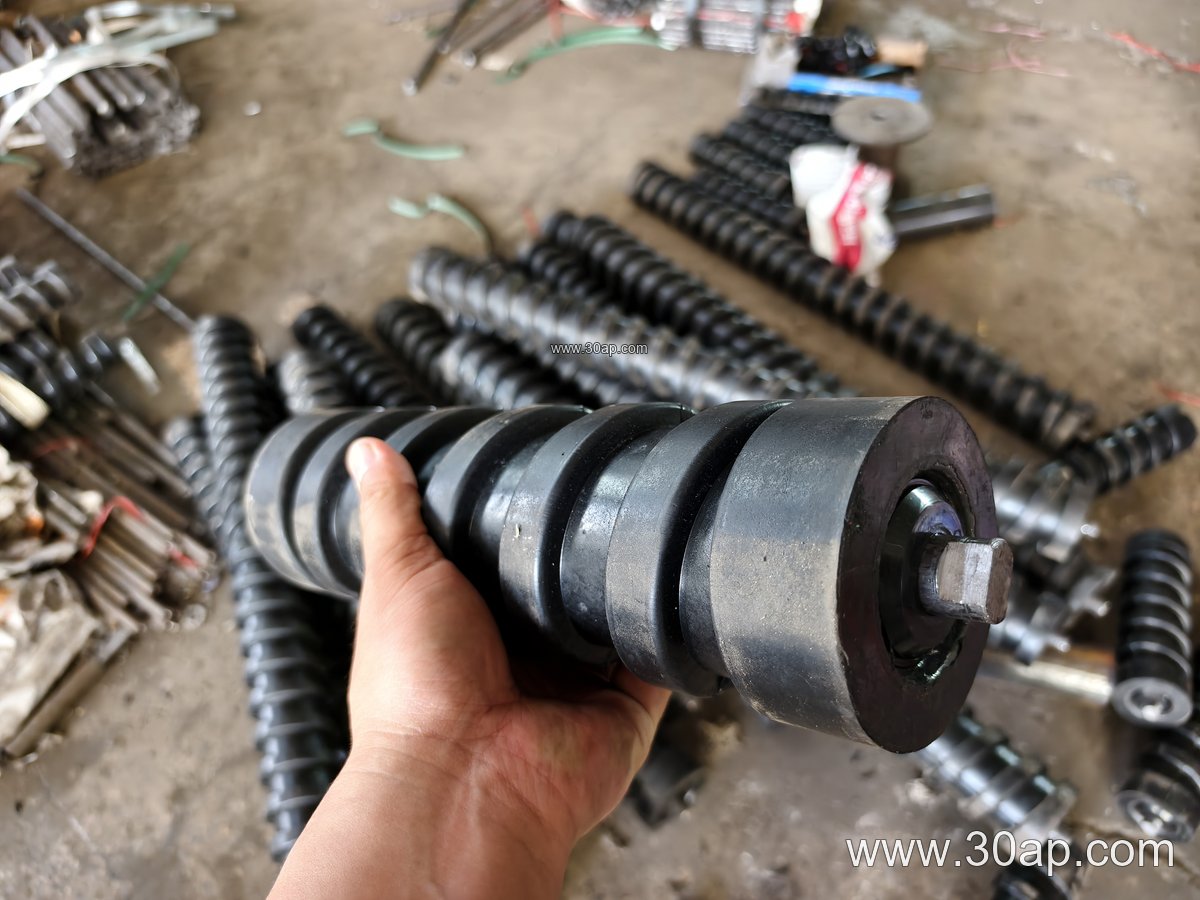
Manufacture starts with a steel tube cut to the required roller length, then machined bearing seats, welded end caps and a shaft that fits the conveyor bracket. After cleaning and fluxing, the whole assembly is immersed in molten zinc, so the coating reaches interior surfaces, seams and weld areas that a spray coating cannot cover evenly. Bearings and seals are fitted afterwards to keep the raceways clean.
Common surface forms include plain steel tube, nylon, ceramic and rubber rings. A rubber-ring impact idler may sit under a crusher discharge, while a plain galvanized shell suits general carrying runs. Sealing arrangements usually combine a labyrinth seal with a lip seal, and bearing sizes commonly range from 6204 up to 6310 depending on radial load and shaft design. None of these values is a universal rule; the final selection follows the conveyor design.
Where Galvanized Idlers Fit in a Conveyor
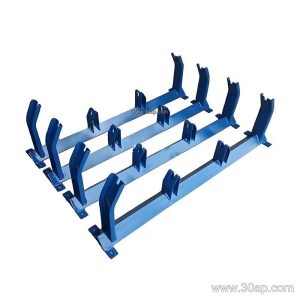
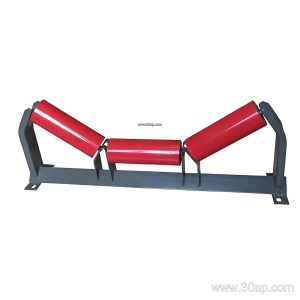
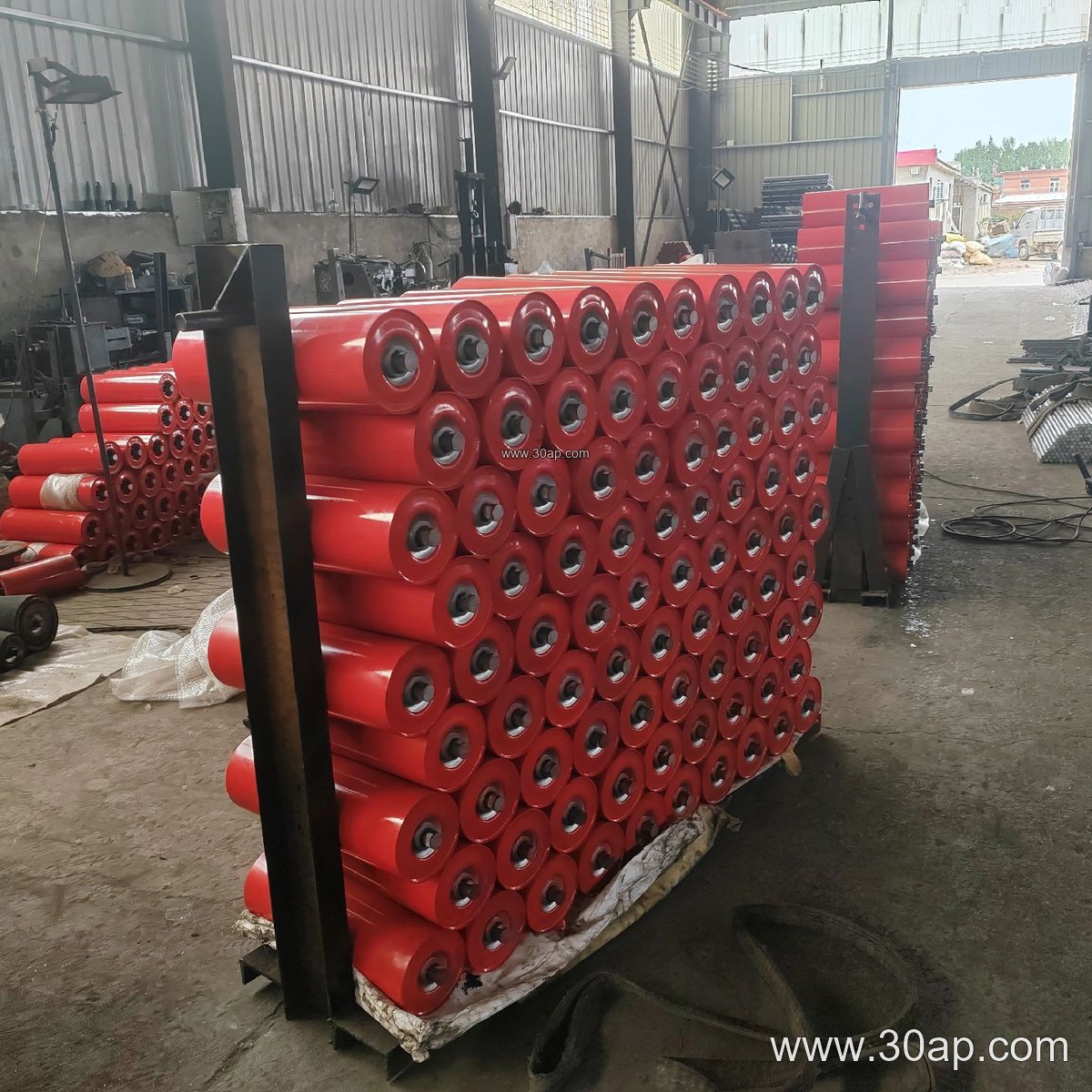
These idlers appear on the carrying side as single-roll, two-roll or three-roll troughing sets, and on the return side as flat or V-return rollers. Trough angles of 20, 30, 35 and 45 degrees are common, and a slight forward tilt of about 1.5 to 2 degrees is sometimes used on training idlers to help centre the belt. A galvanized troughing idler is a frequent choice in a limestone quarry, a coal washing plant or a power station coal yard, where moisture and fine dust attack ordinary painted surfaces.
Belt widths from B400 up to B2400 are seen in these installations, and roller length changes with belt width, trough angle and roll configuration. A three-roll troughing set might use roughly 200 mm rolls at B500, 315 mm at B800, 465 mm at B1200 and 600 mm at B1600 as common examples, while side rolls and centre rolls can differ. Diameters such as Ø89, Ø108, Ø133, Ø159 and Ø194 are typical, but the right roller diameter depends on belt speed, load and the conveyor pulley and frame dimensions rather than on belt width alone.
Choosing the Right Configuration
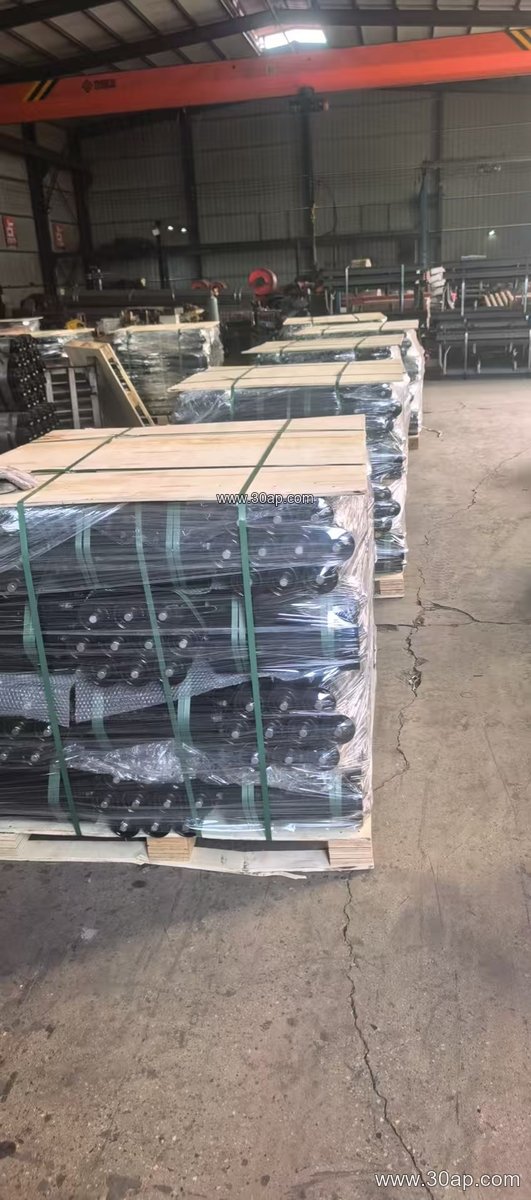
Buyers should confirm the belt width, trough angle, roll diameter, shaft end type, bearing size and mounting centres before ordering. It also helps to state the environment: a wet coal yard, a cement plant transfer point and a fertiliser store impose different demands. Where the belt carries hot clinker or sinter, a heat resistant conveyor belt and a suitably rated idler are needed together. Where oil or chemicals are present, an oil resistant conveyor belt or chemical resistant conveyor belt may be specified, and the idler coating should be checked for compatibility.
For long overland runs, steel cord conveyor belt and EP conveyor belt constructions both rely on steady idler rotation to keep friction low. Misalignment, seized bearings and worn shells raise power draw and damage the belt edge, so a galvanized idler that keeps turning is a small but valuable part of the whole conveyor.
Installation and Maintenance Notes
- Check that the idler rotates freely before mounting and that the shaft sits squarely in the conveyor bracket.
- Align troughing sets so the belt trains centrally; adjust training idlers gradually rather than forcing the belt.
- Inspect seals and coating at transfer points where dust and water collect, and replace rollers with damaged shells early.
- Keep a spare set of common diameters on hand so a seized roller does not stop the line.
For matching belts, pulleys and frames, buyers can review abrasion resistant conveyor belt and flame retardant conveyor belt options at conveyor belt and idler data at idler roller. A galvanized idler will not replace good conveyor design, but it will keep the support structure working longer in demanding bulk handling conditions.