Can a Fabric Core Conveyor Belt Handle Hot Clinker in a Cement Plant?
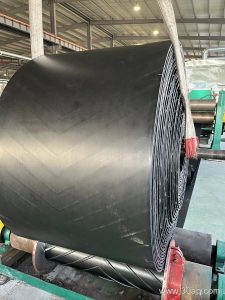
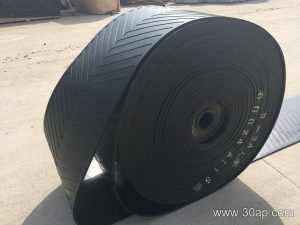
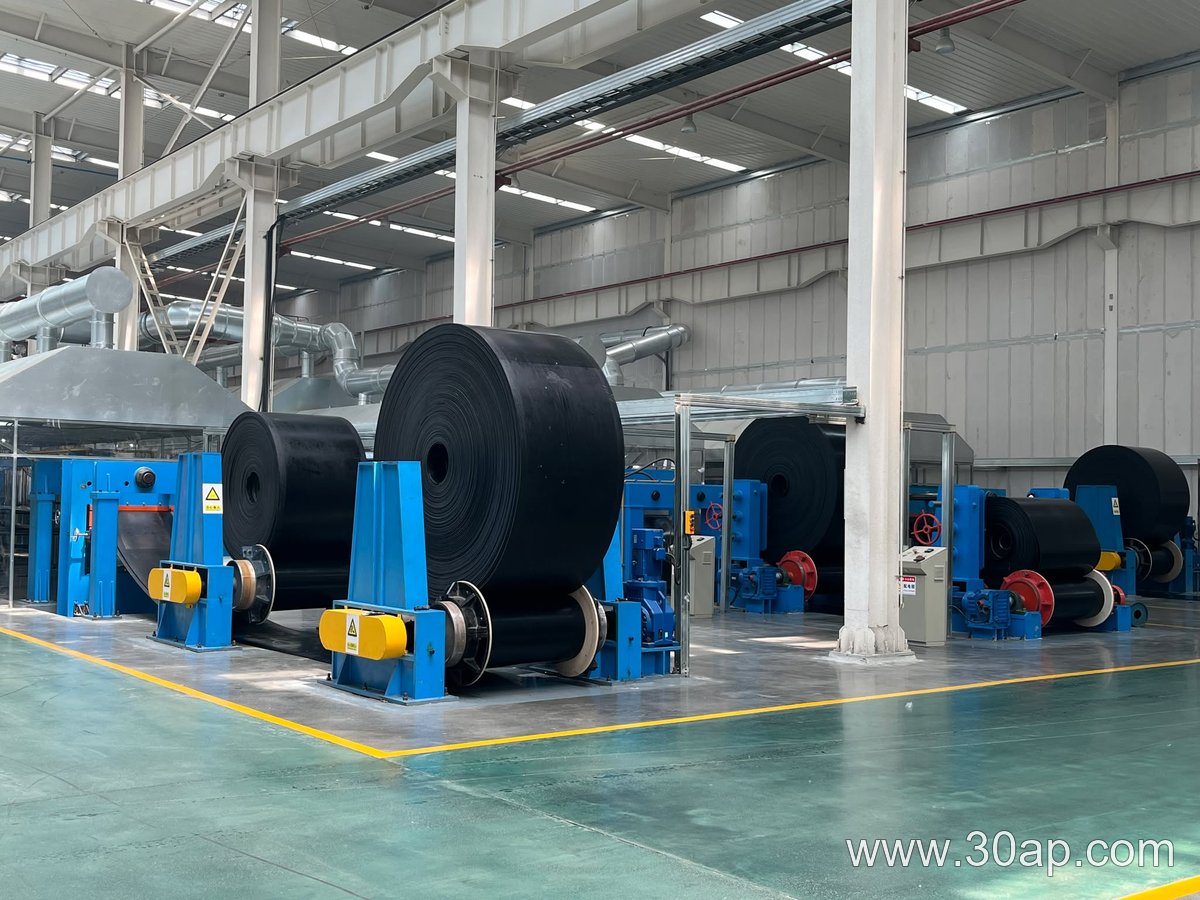
In a cement plant, moving hot clinker from the cooler to the storage silo presents a classic design trade-off: the conveyor belt must resist abrasion and heat while remaining flexible enough to trough and track reliably. A fabric core conveyor belt, built with multiple plies of synthetic fabric embedded in rubber, is often considered for this duty because it balances strength, flexibility, and cost. However, not every fabric core belt is suitable for hot clinker. The key lies in the cover compound and the carcass construction.
This article examines how a fabric core conveyor belt is used in a cement plant’s clinker handling line, the conditions it must endure, and the practical decisions that keep it running.
Why Clinker Conveying Is Demanding
Clinker exits the cooler at temperatures that can exceed 100°C, sometimes higher at the surface. It is also sharp, heavy, and abrasive. A conveyor belt in this service faces:
- Heat that can degrade rubber covers and fabric plies
- Abrasion from jagged clinker lumps
- Impact at transfer points
- Dust that penetrates splices and edges
A standard fabric core belt with general-purpose covers would fail prematurely. The belt must be engineered for heat and abrasion.
How a Fabric Core Conveyor Belt Fits the Duty
In a cement plant, a fabric core conveyor belt is typically used on relatively short to medium-length runs where high tensile strength is not the primary concern. Its advantages include:
- Good flexibility for troughing and small pulleys
- Easier splicing in the field compared to steel cord belts
- Lower cost for moderate-duty applications
For hot clinker, the belt’s cover compound is critical. Heat-resistant covers are formulated to resist hardening and cracking. The fabric plies may also be treated to withstand elevated temperatures. The belt’s construction—number of plies, ply thickness, and cover thickness—is selected based on the lump size, drop height, and expected tonnage.
Practical Considerations for the Cement Plant
When specifying a fabric core conveyor belt for clinker, engineers consider:
- Temperature rating: The belt must handle the maximum continuous and peak temperatures. Heat-resistant covers are available, but they have limits.
- Abrasion resistance: A high-abrasion cover grade extends life.
- Impact resistance: At transfer points, impact idlers and skirt rubber help, but the belt’s carcass must absorb energy without ply separation.
- Splice design: A properly vulcanized splice maintains strength and prevents dust ingress.
In a cement plant, a fabric core conveyor belt is not a universal solution for all clinker lines. Very high temperatures or long, high-tension runs may require a different belt type. But for many secondary clinker conveying tasks, a correctly specified fabric core belt offers a practical balance of performance and economy.
Idler Roller Challenges on a Wet Outdoor Conveyor
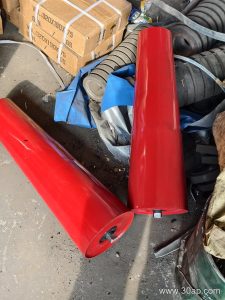
What causes a belt to wander and stick on an outdoor conveyor exposed to rain and humidity? The answer often lies with the idler rollers. Moisture ingress leads to bearing corrosion, while wet, sticky material builds up on roller surfaces, increasing friction and causing the belt to mistrack. These issues reduce efficiency and increase maintenance costs.
How Idler Roller Design Integrates into a Solution
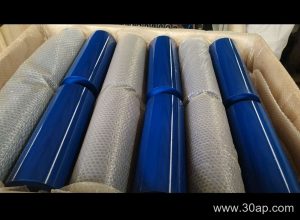
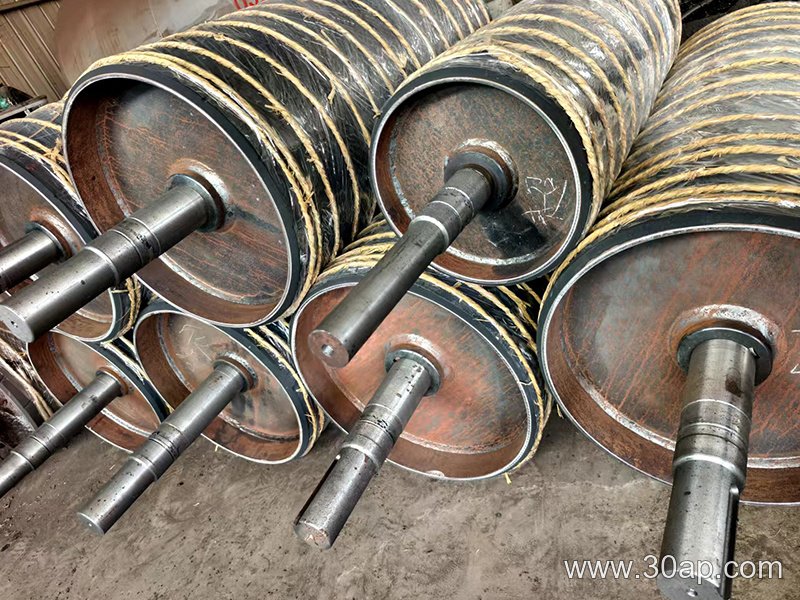
To address these challenges, select idler rollers with sealed bearings and corrosion-resistant materials. In wet conditions, an anti-material-buildup idler roller with a spiral or self-cleaning surface can prevent sticky material from adhering. The spiral idler roller, for example, uses a helical pattern to continuously shed water and debris, keeping the belt aligned and reducing friction. Additionally, using polymer or hybrid rollers can resist corrosion better than standard steel in humid environments.
Key Integration Steps
- Assess the conveyor’s exposure: identify areas where water pools or material accumulates.
- Choose idler rollers with labyrinth seals or contact seals to block moisture.
- For sticky loads, consider spiral idler rollers or anti-material-buildup designs.
- Ensure rollers are properly spaced and aligned to maintain belt tracking.
By integrating these idler roller features, the conveyor operates more reliably, with less downtime for cleaning and replacement. This approach is a practical industry solution for wet outdoor conveyors, extending component life and maintaining productivity.
When a Conveyor Pulley Stops Turning, the Belt Is Not Always the Problem
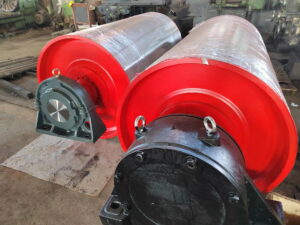
In a cement plant, operators often blame a slipping belt when a conveyor loses speed or stalls. But the fault frequently traces back to the conveyor pulley itself—or to how it interacts with the belt. A conveyor pulley that no longer rotates freely, grips unevenly, or develops a wobble can produce symptoms that look like belt misalignment, material overload, or drive failure. Distinguishing these causes early prevents unnecessary belt replacement and repeated downtime.
Common Symptoms and Their Plausible Causes
Three symptoms dominate conveyor pulley faults in cement service: belt slip under load, unusual noise or vibration, and rapid edge wear. Each can arise from several distinct mechanisms.
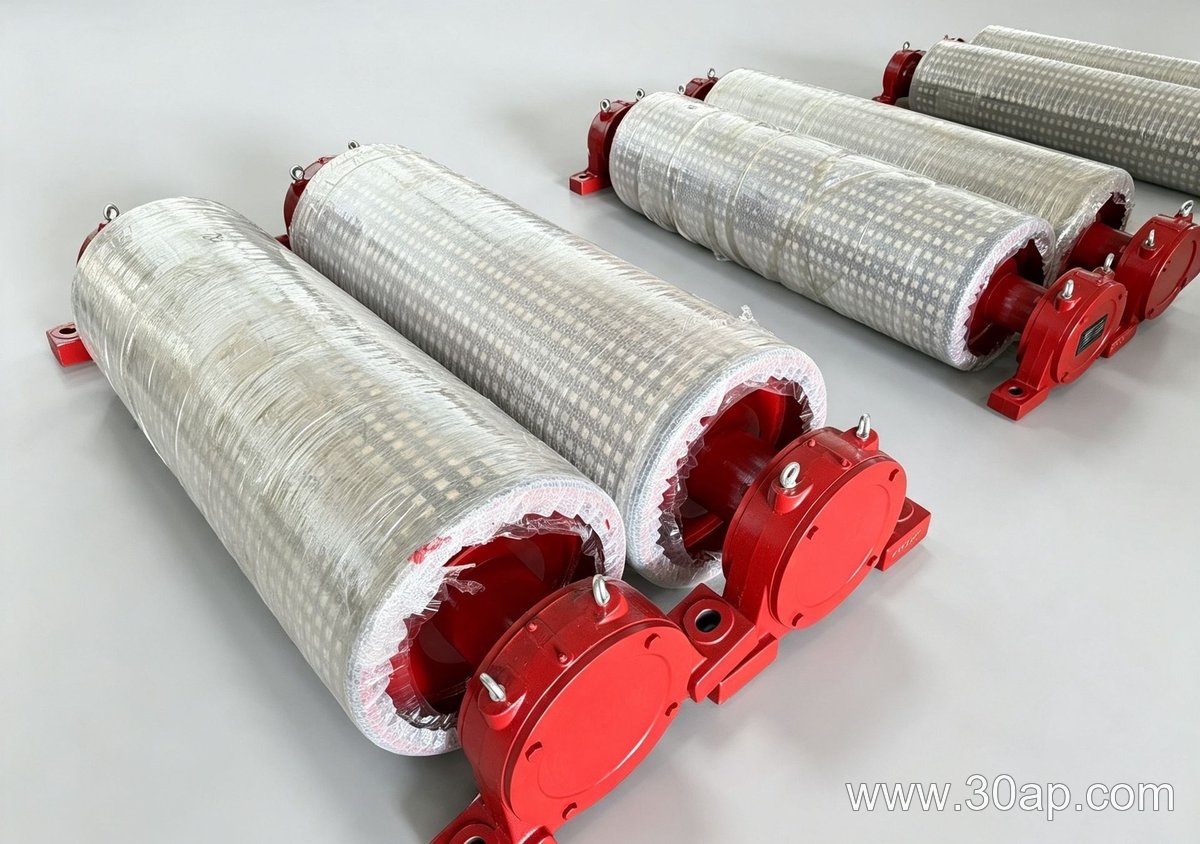
- Belt slip under load: The conveyor pulley may have insufficient lagging grip, a contaminated shell surface, or a seized bearing that prevents rotation. A worn lagging compound or polished drum surface reduces friction, while a failed bearing creates drag that the drive cannot overcome.
- Noise or vibration: A conveyor pulley with a cracked weld, loose hub connection, or unbalanced build can vibrate at speed. In dusty cement environments, material build-up on the shell or between the pulley and belt also creates rhythmic noise.
- Rapid edge wear: If the conveyor pulley is misaligned with the belt path, the belt edge rubs against the pulley edge or supporting structure. A crowned pulley profile can help center the belt, but excessive crown or a damaged end disc accelerates wear.
Separating Pulley Faults from System Faults
Before replacing a conveyor pulley, check whether the symptom follows the pulley or the system. For example, slip only at startup may indicate a drive torque issue, while slip throughout the run points to the conveyor pulley’s grip or bearing condition. Vibration that disappears when the belt is unloaded suggests a pulley balance or build-up problem; vibration that remains indicates a bearing or shaft fault. In a hypothetical cement plant scenario, a maintenance team found that a conveyor pulley with a seized bearing caused the belt to slip and the drive to overheat—replacing the belt alone would have wasted time and money.
Practical Diagnostic Steps
Inspect the conveyor pulley after lockout: rotate it by hand, check for roughness or play, examine lagging wear, and look for material build-up. Measure runout on the shell and end discs. Confirm that the pulley is square to the belt path. If the pulley is a cast-welded type, inspect welds for cracks; if it is a wing pulley, check for bent wings or trapped debris. These checks distinguish a failing conveyor pulley from a belt or drive problem.
Why Standards Matter for Conveyor Brackets at a Bulk Port
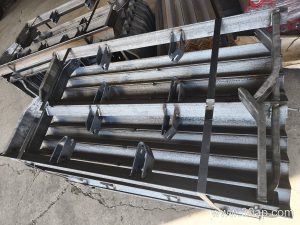
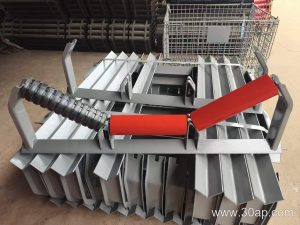
At a bulk-material port terminal, a conveyor bracket carries idler rolls that support a belt moving thousands of tonnes per day. Dust, salt air, and continuous impact make bracket selection more than a dimensional exercise. Standards and grades provide a common language, but they do not automatically certify a bracket for your site. This article explains the purpose and scope of relevant standards and material grades—without claiming certification or inventing clauses.
Standards That Commonly Apply to Conveyor Brackets
Several standards families may be referenced in a bracket specification. Each has a different scope:
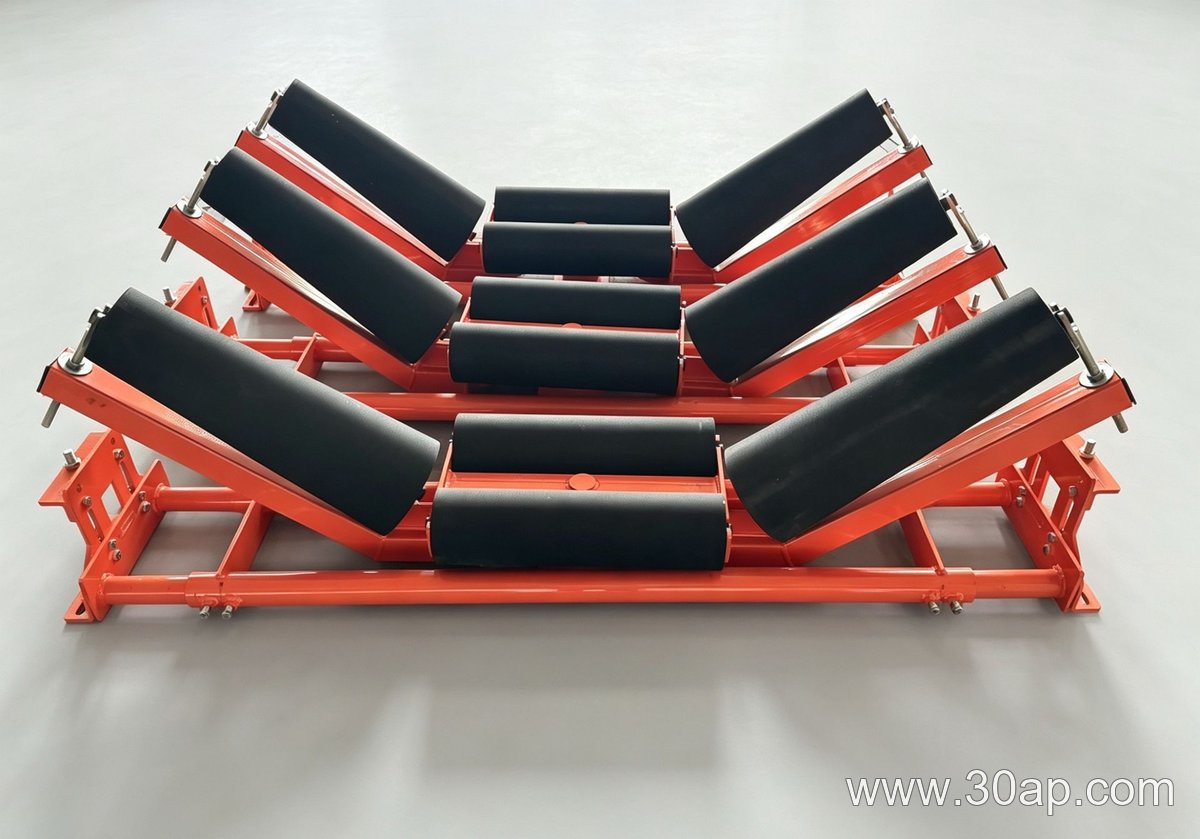
- Dimensional and interface standards – These define mounting hole patterns, idler shaft sizes, and drop dimensions so a conveyor bracket fits standard idlers and frame rails. They say nothing about load capacity.
- Material standards – These describe chemical composition, mechanical properties, and tolerances for steel plate or strip. A grade like S235 or Q235 is a material designation, not a bracket rating.
- Corrosion protection standards – For a galvanized conveyor bracket, standards may cover coating mass, adhesion, or salt-spray test methods. They define how to measure protection, not how long a bracket will last in a specific port atmosphere.
- Welding and fabrication standards – These govern procedure qualification and inspection of welded joints. They help ensure a bracket’s structural integrity but do not replace engineering analysis.
Reading Grades Without Overclaiming
A grade such as Q235 or S355 indicates minimum yield strength under standard test conditions. It does not promise performance under combined bending, fatigue, and corrosion. A heavy-duty conveyor bracket manufacturer may offer several grades; the correct choice depends on calculated loads, deflection limits, and environment. For a port terminal, a galvanized conveyor bracket may be preferred for atmospheric corrosion resistance, but the coating thickness and edge protection must be specified separately.
Practical Checklist for Specification Review
- Confirm the bracket’s dimensional standard matches your idler and frame.
- Ask which material grade is used and whether mill certificates are available.
- Clarify corrosion protection standard and coating mass.
- Request weld inspection requirements, if structural welds are present.
- Verify that any load or deflection figures are project-specific calculations, not generic ratings.
Standards and grades are tools for communication, not guarantees. At a bulk port, a conveyor bracket should be selected by matching documented properties to calculated demands—nothing more, nothing less.