What the Selection Really Decides
A belt alignment device is a small piece of hardware with an outsized effect on uptime. In a coal mining conveyor transfer tower, a cement plant clinker line, or a quarry aggregate circuit, a belt that walks to one side will fray its edges, spill material, and eventually damage the conveyor pulley and idler roller set. The Conveyor Belt Tracker Selection Criteria below are written for the people who specify, buy, and maintain these units, not for a catalogue page.
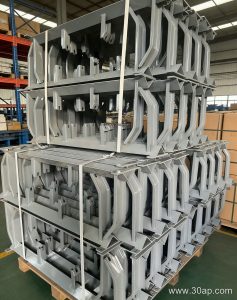
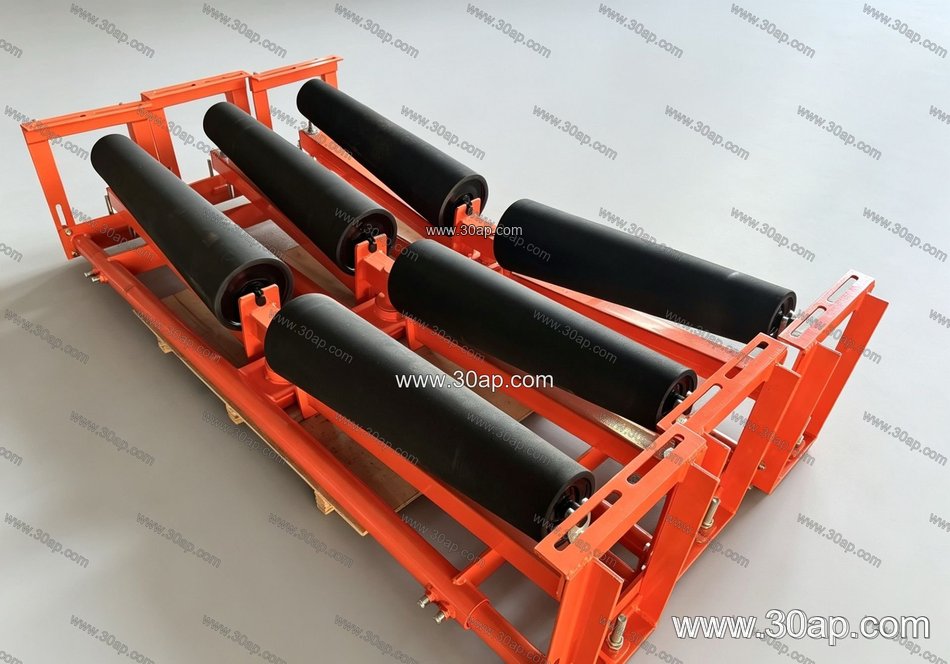
The tracker, also called a 输送带纠偏器 or self-aligning idler assembly, is a steering station that senses belt drift and applies a correcting force through angled rollers. It is not a substitute for proper belt training, and it cannot compensate for a badly skewed structure or a misaligned drive pulley.
Start With the Belt and the Duty
Before comparing mechanisms, confirm what the belt is doing. A steel cord conveyor belt on a long overland run behaves differently from a multi-ply fabric core belt on a short crusher discharge. Belt stiffness, splice type, and load profile all affect how much correction force is safe.
- Belt construction and tension rating, for example EP200 or ST1600 class
- Belt width and edge condition, including whether edges are already worn
- Belt speed and whether the conveyor is reversible
- Material: wet, sticky, abrasive, hot, or oily
- Carrying side or return side, and trough or flat profile
A tracker sized for a 650mm conveyor belt should not be assumed to suit a 1400mm belt simply because the frame looks similar. Roller length, shaft, and bracket geometry must match the actual conveyor bracket and frame drawing.
Mechanical, Hydraulic, or Powered
Selection often comes down to the correction principle. Mechanical and four-link trackers use belt contact to pivot the roller frame; hydraulic and electric units use actuators, and some add sensors with PLC feedback. None of these is automatically better. A mechanical unit suits a dusty quarry transfer with limited power availability, while a powered system may be justified where the belt is wide, fast, and the drift pattern is complex.
Distinguish detection and alarm from active correction. A sensor that warns of misalignment is not the same as a device that steers the belt. Also keep dynamic balancing of the tracker frame separate from idler roller rotation balancing; they are different checks.
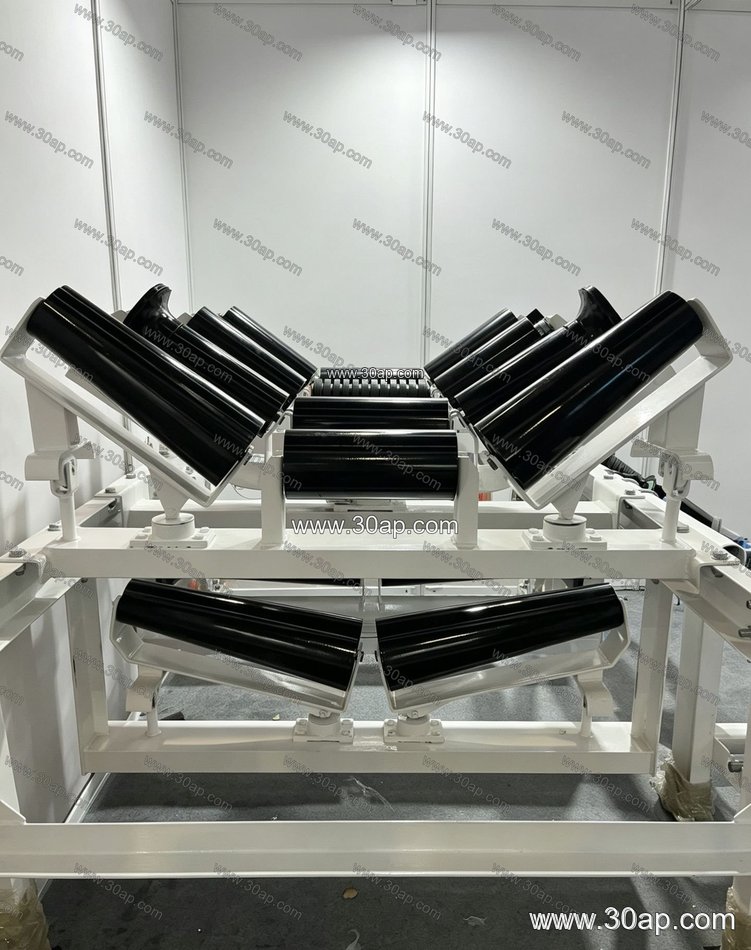
Comparison points worth tabulating
- Correction force and how it scales with belt width
- Response to gradual drift versus sudden shifts
- Behaviour on reversible or shuttle conveyors
- Mounting space and access for maintenance
- Spare parts availability and seal protection in dust
Installation Position and Quantity
Position matters as much as model. Trackers are commonly placed after the loading point, before the head pulley, and on the return strand ahead of the tail pulley. The number of units depends on conveyor length, drift history, and structure stiffness, not on a fixed rule per metre. On a power plant coal handling belt, one well-placed unit near the transfer chute may do more than three poorly located ones.
Check that the conveyor pulley alignment, idler roller squareness, and skirted conveyor belt loading are already correct. A tracker installed to hide a crooked tail pulley will keep fighting a problem it cannot solve.
What to Send With an Enquiry
Suppliers can only quote accurately when the request includes belt width, belt type, conveyor drawing or frame dimensions, running direction, carrying or return location, and a description of the drift. Mention the industry and environment, since a coal mining conveyor belt underground has different requirements from a port ship loading line. For reference, common belt families in these duties include flame retardant conveyor belt, abrasion resistant conveyor belt, and heat resistant conveyor belt grades.
Ask for the mounting interface, roller diameter range, and adjustment range in writing. Do not accept a shaft diameter inferred from belt width alone, and do not assume one belt width maps to one pulley diameter. The final Conveyor Belt Tracker Selection Criteria should be a short written checklist agreed between the maintenance team and the supplier, covering fit, correction principle, and spare parts, before any order is placed.