What a Conveyor Bracket Is and Why Its Price Varies
A conveyor bracket is the steel support that holds idler rollers in position along a conveyor frame. It sets the trough angle of the carrying side, keeps the return rollers aligned, and ties the whole roller set to the main structure. Because the bracket is a fabricated steel part rather than a wear item like the belt itself, buyers often treat it as a minor purchase, yet it directly affects tracking, belt life, and maintenance downtime. The conveyor bracket price reflects material, forming method, hole pattern, coating, and order quantity far more than any single dimension.
In a quarry, a cement plant, or a power plant coal yard, a poorly matched bracket can cause edge wear on the conveyor belt and uneven loading on the idler roller. That is why price should always be read together with the specification it covers.
How the Bracket Is Built
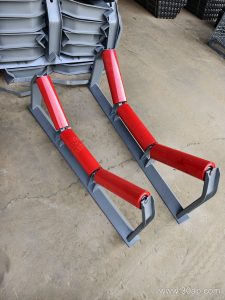
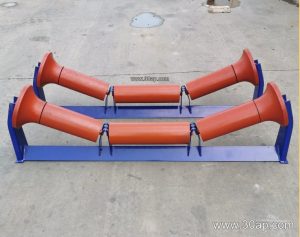
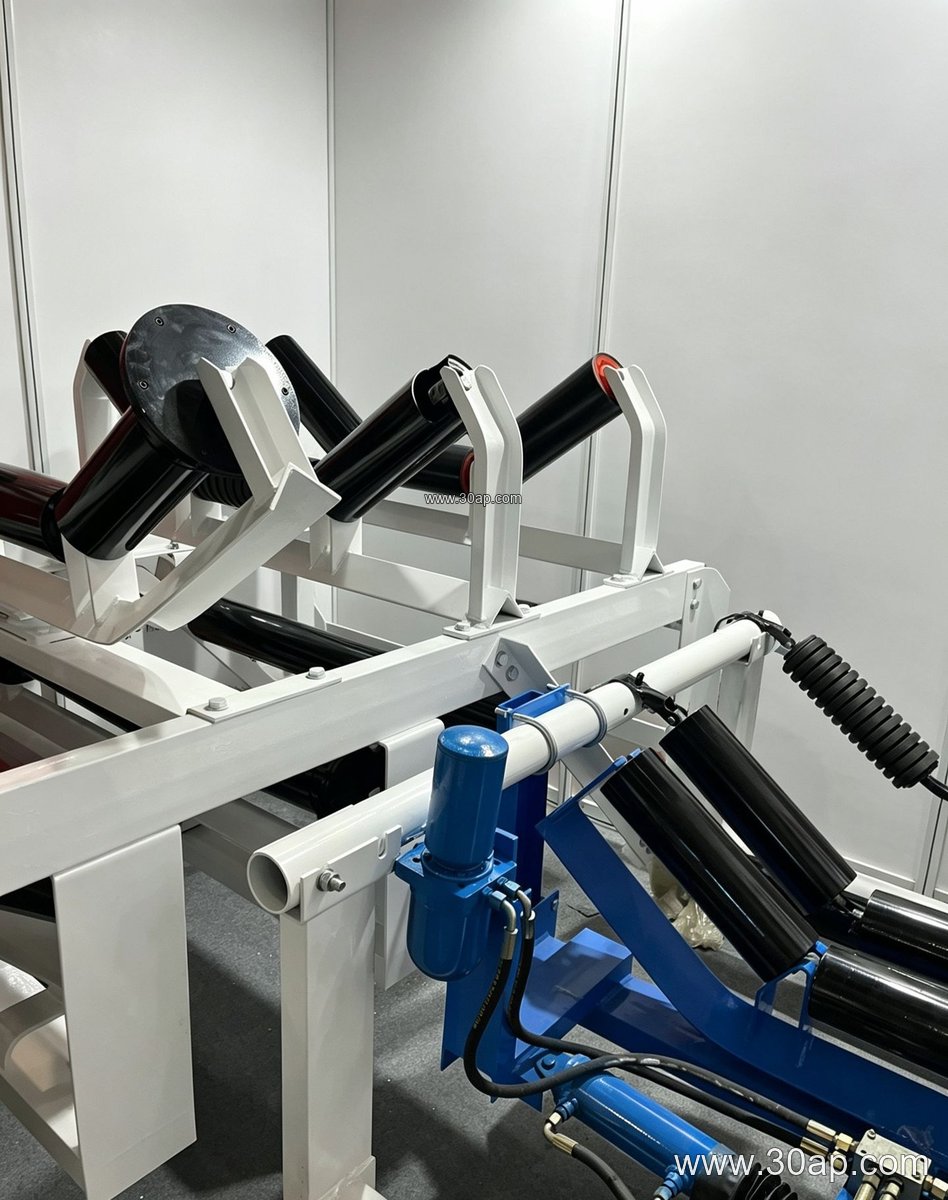
Most brackets are made from angle steel, channel steel, or bent steel plate. The frame is cut, punched, and welded, then finished with painting or galvanizing. A typical troughing bracket carries three rollers at a fixed or adjustable angle, while a return bracket supports a single flat or V-shaped roller set.
- Material: angle steel, channel steel, or folded plate
- Forming: cutting, punching, welding, surface treatment
- Mounting: bolt holes matched to the conveyor frame
- Adjustment: fixed or adjustable trough angle
Welding quality and hole accuracy matter more than steel thickness alone. A bracket with slightly offset holes will pull the roller out of line, and no price saving compensates for that.
Common Types and Reference Dimensions
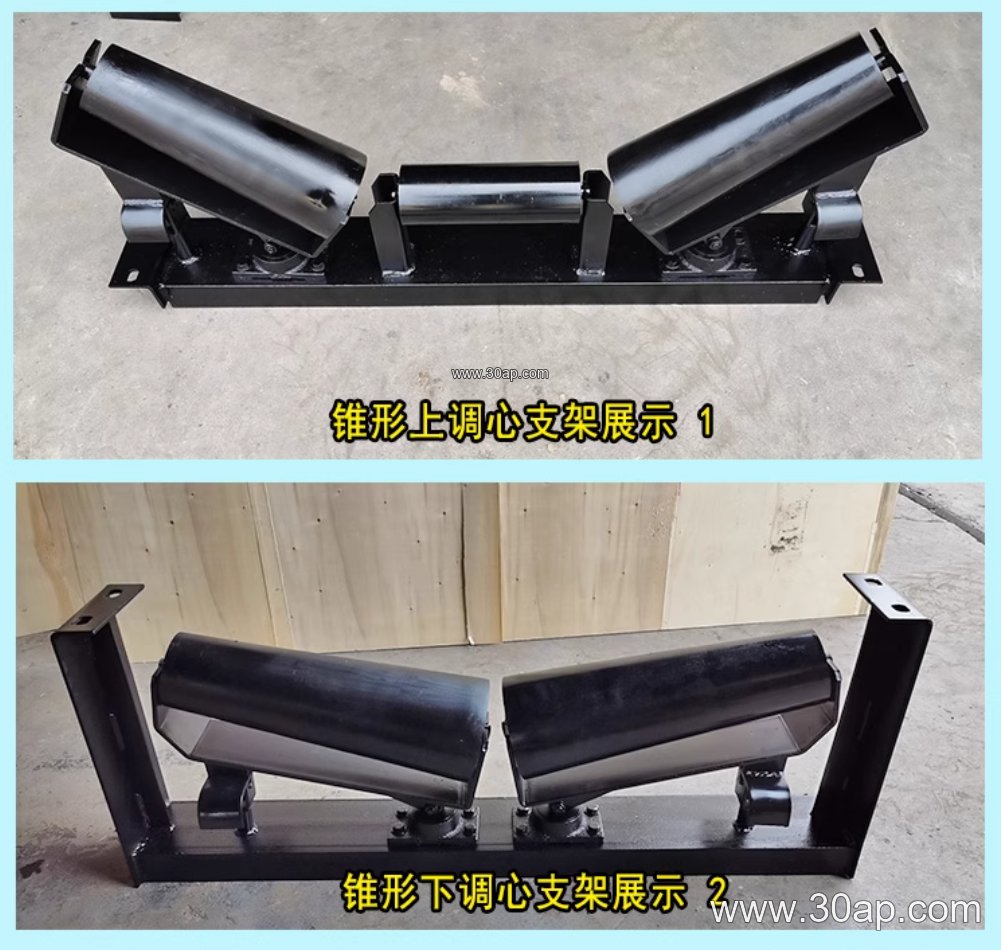
Bracket types follow the roller arrangement they carry. Troughing brackets, transition brackets, return brackets, impact brackets, and self-aligning brackets each serve a different position on the conveyor. The table below lists typical reference values; actual hole spacing and beam length are determined by belt width and trough angle, not by a fixed rule.
| Bracket Type | Belt Width Reference | Trough Angle | Roller Diameter |
|---|---|---|---|
| Troughing bracket | B500 to B2200 | 20, 30, 35, 45 degrees | Ø89, Ø108, Ø133, Ø159, Ø194 |
| Transition bracket | B650 to B1800 | 20 to 35 degrees | Ø89 to Ø159 |
| Return bracket | B500 to B2000 | Flat or V type | Ø89 to Ø159 |
| Impact bracket | B800 to B1800 | 30 to 45 degrees | Ø108 to Ø194 |
A useful way to write a specification is B800, 35 degrees, Ø108, or B1200, 45 degrees, Ø133. These are reference combinations, not fixed pairings; a wide belt can be designed with more than one trough angle depending on the material and the conveyor profile.
Where the Bracket Fits in the System
On a crushing and screening line, troughing brackets hold the rollers that shape the belt into a trough so that coarse rock stays centered. On a steel plant sinter line or a power plant coal handling system, heat and dust make rigid, well-aligned brackets important. In a fertilizer or grain silo, a smooth return bracket keeps the belt running clean.
Brackets work alongside the conveyor pulley, the drive and tail units, and the belting itself. A heavy-duty mining conveyor belt carrying abrasive ore puts more load on the roller set, and therefore on the bracket, than a light bulk material conveyor belt in a packing area. When the belt is a flame retardant conveyor belt used underground, bracket alignment also affects frictional heat and belt tracking in confined spaces.
What Buyers Should Check Before Comparing Quotes
Price comparison only makes sense when the same bracket is being quoted. Ask for the drawing or at least the belt width, trough angle, roller diameter, hole spacing, and surface treatment. Confirm whether the bracket is fixed or adjustable. An adjustable bracket usually costs more but allows the trough angle to be tuned between 20 and 45 degrees, which can reduce spare-part variety across a plant.
- Specify belt width and trough angle together
- State roller diameter and hole pattern
- Choose painted or galvanized finish
- Confirm quantity and packing method
- Request the drawing before ordering
For a large aggregate or iron ore project, buying brackets in batch with the idler roller sets often lowers the unit cost and simplifies installation. For a small replacement order, the freight and handling may weigh more than the bracket itself. Either way, the conveyor bracket price is best judged against the drawing, the steel grade, and the accuracy of the hole pattern, not against a single number pulled from a catalog.