What a Conveyor Bracket Assembly Does
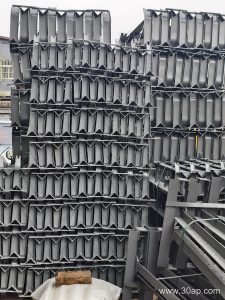
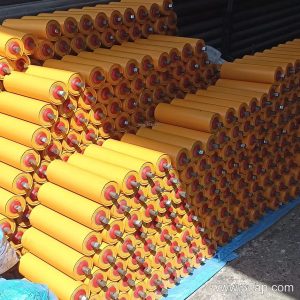
A conveyor bracket assembly is the structural interface between the idler roller and the conveyor frame. It holds each roller at the correct angle and spacing so the conveyor belt runs true, carries material without spillage, and returns cleanly on the lower strand. In a quarry or a coal handling plant, these assemblies are often the first components inspected when belt tracking problems appear, because a loose or misaligned bracket throws the whole idler station out of geometry.
The assembly is more than a single bracket. It typically includes the support frame, mounting plates, adjustment slots, and the hardware that locks the roller in place. For a 1200mm wide conveyor belt, the bracket span and mounting hole spacing are matched to the frame design, not chosen from a fixed table. The same bracket family may serve B800, B1000, or B1400 belts with different crossbeam lengths.
How the Assembly Is Built
Fabrication usually starts with angle steel, channel steel, or folded steel plate. The material choice depends on load and environment: a dusty cement plant may favor folded plate for clean surfaces, while an iron ore yard often uses channel steel for stiffness. Slotted holes allow the trough angle to be set on site, and locking bolts keep the setting under vibration.
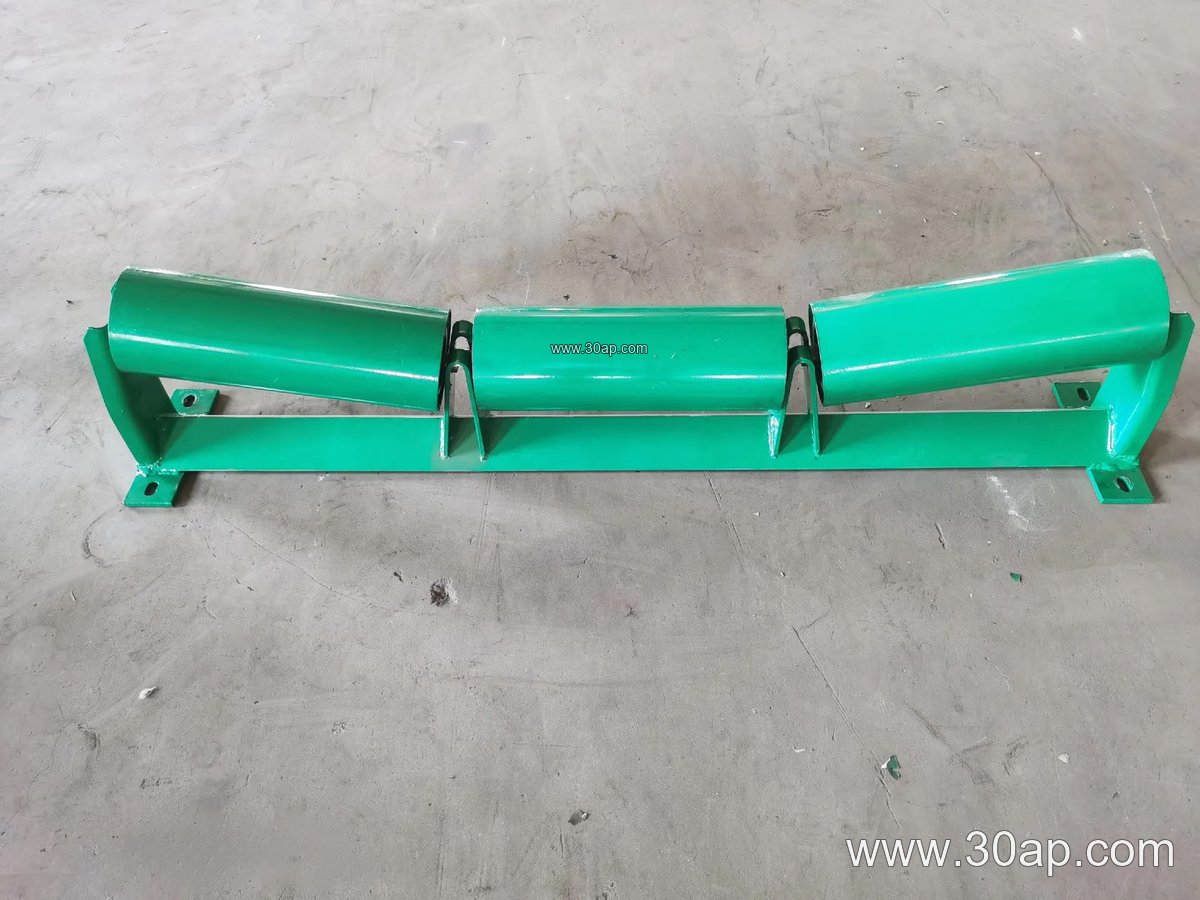
Common trough angles are 20, 30, 35, and 45 degrees. Adjustable brackets can move between these angles, while fixed brackets are welded or bolted at one preset angle. For training the belt, a forward tilt of about 1.5 to 2 degrees is sometimes built into the bracket design. Roller diameters such as Ø89, Ø108, Ø133, Ø159, and Ø194 are matched to the belt width and load, but no single belt width is limited to one roller diameter.
Typical bracket configurations
- Troughing bracket for the carrying side, often with three rollers
- Return bracket or V-return bracket for the lower strand
- Impact bracket under the loading point, paired with impact rollers
- Self-aligning bracket for belt training on long runs
Where These Assemblies Are Used
In a sand and gravel line, troughing brackets keep a heavy-duty mining conveyor belt centered through the crusher discharge. In a power plant coal yard, flame retardant conveyor belt and heat resistant conveyor belt grades run over bracket assemblies that must resist dust and occasional heat. A port ship loading conveyor uses wider brackets for 1800mm or 2000mm belts, while a tunnel muck line may use compact brackets for narrow frames.
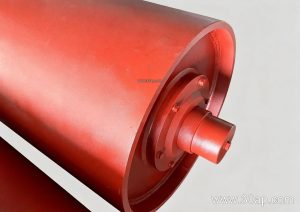
The assembly works with the conveyor pulley at the drive and tail positions, but it does not replace them. Drive, tail, and bend pulleys are separate components with their own bearing housings. Brackets only support the idler rollers between those pulleys.
Buyer Checklist for Conveyor Bracket Assembly
Before ordering, confirm the belt width, trough angle, roller diameter, and frame hole pattern. A bracket for a B650 belt at 30 degrees with Ø89 rollers is a different part from one for a B1200 belt at 45 degrees with Ø133 rollers. Ask for the mounting hole spacing and crossbeam length as part of the drawing, since these change with belt width and trough angle.
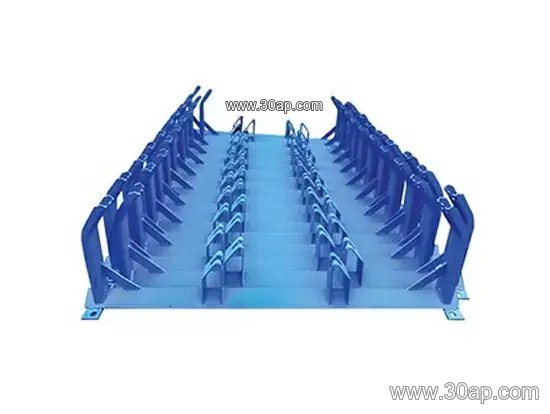
Also state the environment: an abrasion resistant conveyor belt in a quarry may need heavier bracket steel than a food grade conveyor belt in a grain silo. For corrosive areas, confirm the surface treatment. Spare parts should match the original bracket geometry so that idler roller changes do not disturb belt tracking.
Reference data for common bracket assemblies
| Belt width | Common trough angle | Roller diameter | Bracket note |
|---|---|---|---|
| B500 | 20–30 degrees | Ø89 | Light frame, fixed or adjustable |
| B650 | 30 degrees | Ø89–Ø108 | Adjustable slot common |
| B800 | 35 degrees | Ø108 | Troughing and return sets |
| B1000 | 35–45 degrees | Ø108–Ø133 | Heavier crossbeam |
| B1200 | 45 degrees | Ø133 | Impact bracket at load point |
| B1400 | 35–45 degrees | Ø133–Ø159 | Long span, check deflection |
| B1600 | 45 degrees | Ø159 | Mining and port duty |
| B1800 | 35–45 degrees | Ø159–Ø194 | Wide frame, heavy section |
| B2000 | 45 degrees | Ø194 | Custom hole spacing |
These values are common references, not fixed rules. Final dimensions follow the conveyor design and the roller manufacturer’s data. For EP conveyor belt or steel cord conveyor belt installations, the bracket load rating should be checked against the belt tension and material weight.
Installation and Maintenance Notes
Mount brackets square to the belt centerline and tighten hardware after the first few hours of running. Check for wear at the slot and bolt holes, since elongation there causes roller misalignment. In a dusty coal mining conveyor belt system, clean the bracket seats before fitting new rollers. Replace bent brackets rather than forcing a roller into a distorted seat.
Keep a small stock of bracket assemblies matched to the most common belt widths on site. That reduces downtime when a roller change turns into a frame repair. For more details on matching brackets with conveyor belt and idler roller selections, review the station layout before ordering.